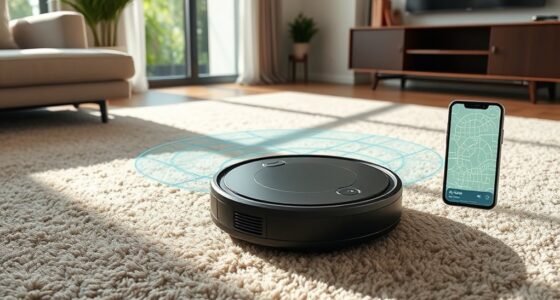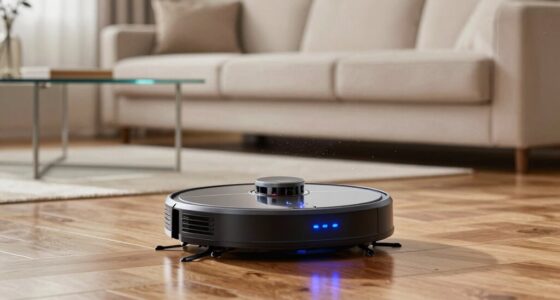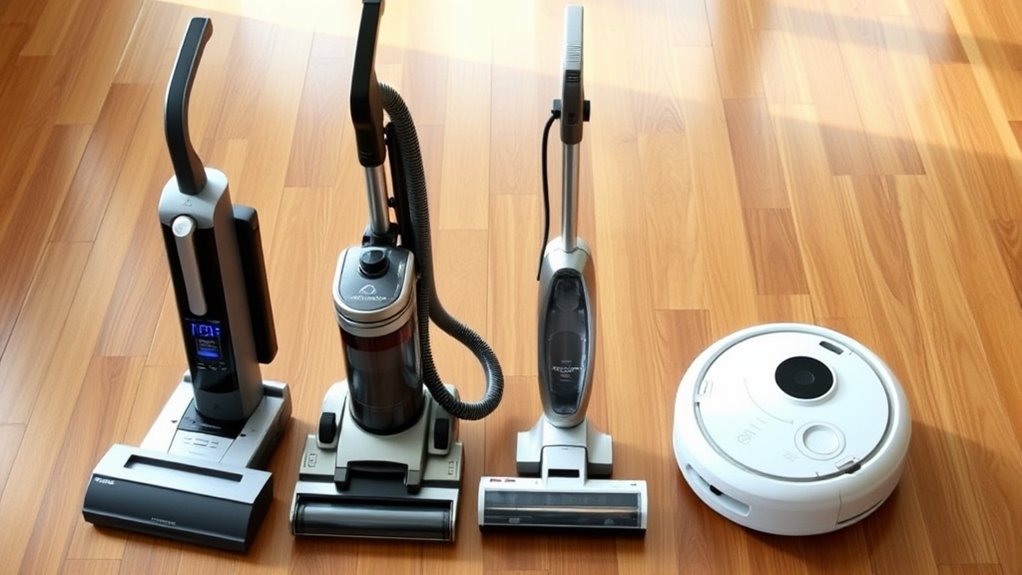

Upright vacuums are powerful and easy to handle, ideal for large carpeted areas. Canister models are versatile and lightweight, perfect for different floor types and above-floor cleaning. Stick vacuums are cordless and convenient for quick chores, especially on hardwood or tiles. Robot vacuums offer autonomous cleaning, saving your time. Each type has its benefits based on your needs. Keep exploring to find out more about choosing the right vacuum for you.

Get the little things that make your day delivered free with Prime
- Fast, free delivery on millions of items
- Prime Video, Amazon Music and more included
- Member-only deals all year
Key Takeaways
- Upright vacuums are large, powerful, and ideal for deep cleaning carpets in large areas.
- Canister vacuums feature a separate motor unit, offering versatile cleaning and easier maneuverability around furniture.
- Stick vacuums are lightweight, cordless, perfect for quick clean-ups and small spaces.
- Robot vacuums are autonomous, programmable, and best for routine maintenance on hard floors and carpets.
- Choosing the right vacuum depends on cleaning needs, space size, and preferences for portability or automation.

Have you ever wondered what different types of vacuums are available and which one suits your cleaning needs best? Understanding the main options can help you make a smarter choice. One of the first decisions is whether to go for a corded or cordless model. Corded vacuums typically deliver consistent power since they’re plugged into an outlet, making them reliable for heavy-duty cleaning. They’re ideal if you have large areas to cover and don’t want to worry about running out of battery. However, their cords can limit your movement and might require extension cords for bigger spaces. On the other hand, cordless vacuums offer unmatched convenience and portability. You can easily carry them from room to room without worrying about cords, making quick clean-ups a breeze. But, they usually have shorter battery life, which means you’ll need to recharge them periodically during big cleaning sessions. When choosing between the two, consider your space size, cleaning frequency, and whether mobility or power is your top priority.
To keep whichever vacuum you pick running smoothly and lasting as long as possible, proper maintenance is vital. Regularly emptying the dustbin or replacing the bag prevents clogging and maintains suction power. Check the filters frequently and wash or replace them as recommended by the manufacturer—clean filters improve air quality and extend the life of your vacuum. For corded models, inspect the power cord for wear and tear, and avoid tugging on it aggressively to prevent damage. For cordless models, ensure the battery is charged correctly and stored in a cool, dry place when not in use. Keep brushes and rollers free of hair and debris to prevent jams and maintain effective cleaning. Cleaning the filters and brushes regularly not only prolongs your vacuum’s lifespan but also ensures it performs at its best every time. Additionally, understanding the types of vacuums available can help you select the one optimized for your specific needs.
No matter which type of vacuum you choose, understanding the comparison of corded and cordless models helps you weigh the pros and cons suited to your lifestyle. Corded vacuums are powerful and reliable for extensive cleaning, while cordless options bring flexibility and ease of use. Paired with proper maintenance, your vacuum will serve you well for years. Remember, investing a little time in regular upkeep—like cleaning filters, checking for damage, and clearing obstructions—can profoundly extend your vacuum’s longevity. By choosing the right model and caring for it properly, you’ll ensure your cleaning routine is efficient, effective, and hassle-free.
upright vacuum cleaner for carpets
As an affiliate, we earn on qualifying purchases.
As an affiliate, we earn on qualifying purchases.
Frequently Asked Questions
Which Vacuum Type Is Best for Pet Hair Removal?
If you want the best vacuum for pet hair removal, go for a model with strong suction and versatile vacuum attachments. A canister or upright vacuum often works best, especially if it includes a motorized brush or upholstery tool. These attachments help lift pet hair from furniture, carpets, and tight spots. Regularly using these tools guarantees you effectively remove pet hair and keep your home cleaner and allergen-free.
How Often Should I Replace Vacuum Filters?
Did you know that replacing your vacuum filters on a regular schedule can improve cleaning and extend your vacuum’s lifespan? You should typically change filters every 3 to 6 months, depending on usage and filter type. Regular filter maintenance guarantees peak suction and air quality. Keep an eye on signs like reduced power or odors, and stick to your replacement schedule to keep your vacuum running efficiently and your home fresh.
Are Robot Vacuums Suitable for Thick Carpets?
Yes, robot vacuums can handle thick carpets, but you need the right model with strong suction power. For effective thick carpet cleaning tips, make sure your robot vacuum maintenance includes regularly cleaning brushes and filters. Adjust the suction settings if available, and clear any obstacles. Keep your robot in good condition, and you’ll enjoy better cleaning results on thick carpets, saving you time and effort.
What Is the Average Lifespan of a Canister Vacuum?
You can expect a canister vacuum to last around 8 to 10 years with proper vacuum maintenance. Regularly cleaning or replacing filters, checking the brush roll, and using suitable storage solutions help extend its lifespan. Proper storage keeps parts in good condition and prevents damage. By maintaining your vacuum and storing it correctly, you ensure it performs well over the years, making it a trustworthy cleaning tool for your home.
Do Stick Vacuums Have Better Battery Life Than Upright Models?
Think of stick vacuums as sprinters, often boasting better battery efficiency than upright models. They typically have smaller power capacity, which helps them run longer on a single charge. However, some high-end stick vacuums now pack more power, narrowing the gap. If you prioritize quick, light cleaning, a stick vacuum’s battery life might serve you better. Just keep an eye on the power capacity for longer tasks.
Conclusion
Now that you know the differences between upright, canister, stick, and robot vacuums, the choice might seem overwhelming. But what if the perfect vacuum is just around the corner, waiting to transform your cleaning routine forever? Imagine a cleaner home, freed from hassle and frustration—yet the final decision is yours to make. Will you take the leap and discover which vacuum truly fits your life? The next step could change everything.
NFL season / tailgating Picks
team gear
As an affiliate, we earn on qualifying purchases.