When choosing between water filter pitchers and fridge filters, consider your household’s water needs, budget, and convenience preferences. Pitchers are portable, easy to use, and let you adjust pH levels, but require frequent filter changes. Fridge filters handle larger volumes, last longer, and are more integrated but may cost more upfront. To learn more about which option fits your lifestyle and water quality goals, keep exploring the details ahead.
Key Takeaways
- Pitchers are portable, quick, and offer pH adjustments, while fridge filters are integrated, lower maintenance, and suited for high water volumes.
- Fridge filters generally last longer (around 6 months) and handle more water, making them more cost-effective over time.
- Pitchers require frequent filter changes (every 2-3 months) but allow easy portability and quick access.
- Some filters include mineral enhancement or antimicrobial features, influencing water quality and health benefits.
- Choose based on preferences for convenience, water chemistry modification, household water consumption, and budget considerations.
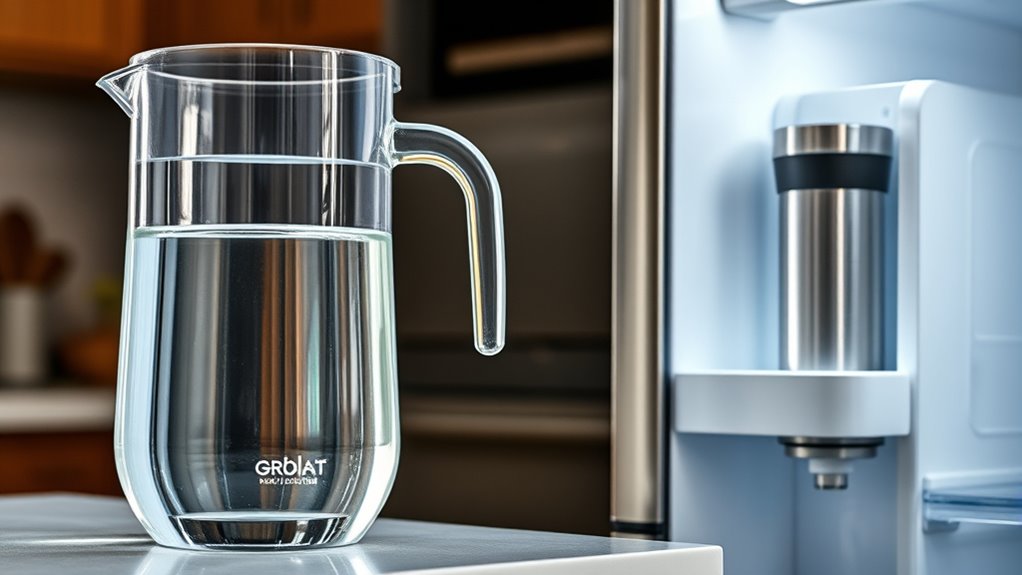
When it comes to choosing a water filtration system, you might wonder whether water filter pitchers or fridge filters are the better option. Both serve the purpose of improving your tap water, but they differ in features and functionality. One key aspect to contemplate is how each impacts your water’s pH level, which can influence taste and health benefits. Some filters are designed to adjust pH levels, making your water more alkaline or balanced, which can be appealing if you’re seeking water that feels smoother or has a certain mineral content. Pitchers often have filters that can slightly alter pH levels, providing a more neutral or slightly alkaline result. Fridge filters, on the other hand, tend to focus more on removing contaminants, with less emphasis on pH adjustments.
Choose between pitchers and fridge filters based on pH adjustment needs and convenience.
Another important factor is filter lifespan, which directly impacts your ongoing costs and convenience. Water filter pitchers usually have smaller filters that need replacing more frequently—every 2 to 3 months—depending on usage. This means you’ll be changing them more often, but the cost per filter is generally lower. Fridge filters tend to last longer, often around 6 months, because they are larger and are designed to handle higher volumes of water. This longer lifespan can be more convenient and cost-effective in the long run, especially if your household consumes a lot of water. However, the initial purchase price of fridge filters can be higher, and replacements might be less frequent but more expensive.
Additionally, the variety of available filters can influence your decision, as some models include additional features like mineral enhancement or antimicrobial properties. When you’re choosing between the two, think about your priorities. If you want quick, affordable filtration with the ability to fine-tune your water’s pH, a pitcher might suit you better. They’re portable, easy to use, and allow for frequent filter changes, giving you consistent water quality. Conversely, if you prefer a more integrated, maintenance-free option that filters larger volumes of water over a longer period, a fridge filter could be more suitable. It’s also worth considering whether your fridge’s filter replacement schedule aligns with your household’s water consumption and whether you’re willing to invest in higher upfront costs for longer-lasting filters.
Ultimately, both options can improve your tap water, but understanding the differences in pH level adjustments and filter lifespan helps you select the right system for your needs. You’ll get cleaner, better-tasting water, but the decision depends on how much you value convenience, cost, and water chemistry adjustments.
Frequently Asked Questions
Which Filter Type Is More Environmentally Friendly?
You’ll find that pitcher filters are generally more environmentally friendly because they produce less waste and often have longer-lasting filters, reducing the environmental impact. Fridge filters may generate more plastic waste due to frequent replacements. For better sustainability considerations, choose a system that minimizes waste and uses recyclable materials. By doing so, you help lower your environmental footprint and support eco-friendly practices in your daily water consumption.
How Often Should I Replace Each Filter?
You should replace your water filter pitcher every 2-3 months, depending on filter lifespan and usage, while fridge filters typically need changing every 6 months. Check your device’s replacement schedule, as overused filters can reduce water quality. Regularly inspecting and adhering to the recommended replacement schedule guarantees peak filtration, protecting your health and maintaining appliance efficiency. Remember, timely replacements keep your water clean and invigorating.
Can Both Filters Remove Bacteria and Viruses?
Think of your filters as gatekeepers. While they effectively block larger particles, most water filters in pitchers and fridges aren’t designed to remove bacteria and viruses, so they don’t guarantee microbial removal. Filter effectiveness varies, but generally, these filters mainly improve taste and reduce contaminants like chlorine. For thorough microbial removal, consider additional treatment methods like UV sterilizers or specialized filters designed specifically for bacteria and viruses.
Do Fridge Filters Improve Taste More Than Pitchers?
Fridge filters typically improve taste more than pitchers because they’re installed directly into your appliance, ensuring consistent water flow rate and easier filter maintenance. You can enjoy better-tasting water without the hassle of frequent refills or filter replacement. Plus, the filter installation process is straightforward, and the steady water flow rate helps improve overall water quality, making your drinking experience more satisfying compared to pitcher filters.
Are There Cost Differences Over the Long Term?
You’ll find that fridge filters often cost a fortune over time, making your wallet cry for mercy, while pitcher filters are gentler on your budget. The cost comparison shows pitchers usually save you hundreds in the long run, thanks to lower replacement prices. If you’re aiming for long term savings, pitchers are your best bet—they keep your water clean without draining your bank account!
Conclusion
When choosing between water filter pitchers and fridge filters, consider convenience and filtration needs. Did you know that fridge filters can filter up to 200 gallons of water before needing replacement, whereas pitchers typically last around 40 gallons? This means fridge filters often offer a more long-term solution, saving you money and hassle. Ultimately, pick the option that fits your lifestyle and water quality concerns—both can provide cleaner, better-tasting water right at home.