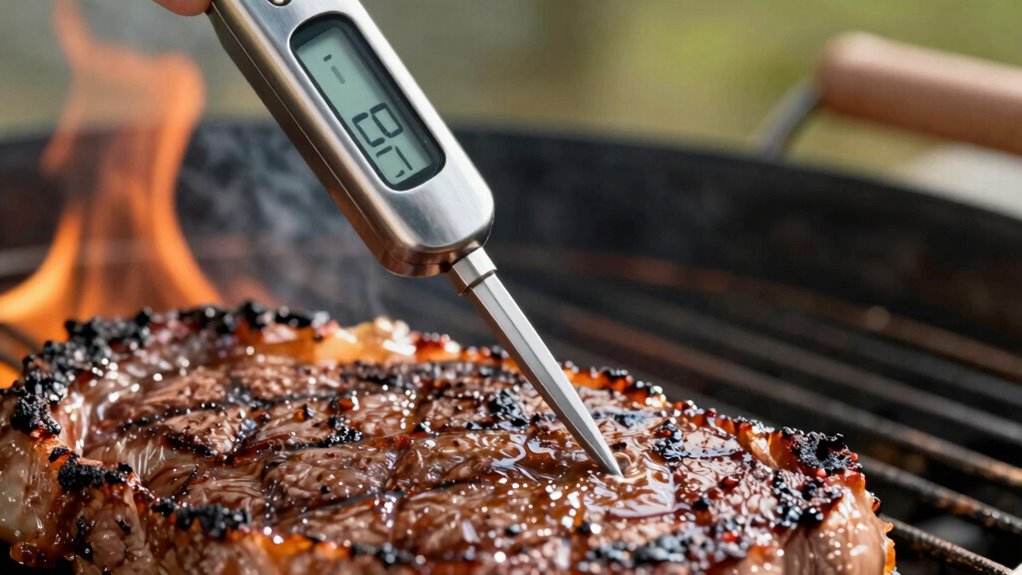

To get accurate results, you should place the probe in the meat’s thickest part, avoiding fat pockets, bones, or connective tissue that can give false signals. Proper placement guarantees your thermometer provides trustworthy data throughout cooking. Incorrect positioning can lead to overcooked or undercooked meat, so taking the time to insert the probe correctly makes a big difference. Keep reading to discover more tips for perfect, safe results.

Get the little things that make your day delivered free with Prime
- Fast, free delivery on millions of items
- Prime Video, Amazon Music and more included
- Member-only deals all year
Key Takeaways
- Incorrect probe placement near fat, bones, or connective tissue can cause inaccurate temperature readings.
- Inserting the probe into the thickest part of the meat ensures more reliable results.
- Placing the probe too close to the surface or edges may lead to early or misleading temperature signals.
- Proper depth and angle of insertion prevent interference and improve measurement consistency.
- Moving the probe during cooking or shifting its position can significantly alter the temperature data.
First, it’s crucial to consider temperature calibration. If your thermometer isn’t properly calibrated, you might be getting readings that are off—either overestimating or underestimating the actual temperature. Many wireless thermometers have a calibration feature, so you can fine-tune the device to guarantee its readings match a known accurate temperature. Always check calibration before starting a long cook, especially if you’ve dropped or bumped the device. Proper calibration ensures that the probe placement and the device’s internal sensors work together to provide trustworthy data. This is especially important when cooking meats to specific safety temperatures or aiming for perfect doneness.
Calibrate your thermometer before cooking to ensure accurate readings and perfect results every time.
Next, think about battery life, which plays a significant role during extended grilling sessions. A wireless thermometer with poor battery life can leave you guessing or force you to stop your cook to replace or recharge batteries. Make sure you select a device known for long battery longevity, and consider rechargeable options if you cook frequently. When placing the probe, avoid areas where it could experience excessive movement or vibration, as this can sometimes drain the battery faster if the device uses motion detection or other power-consuming features. Proper probe placement doesn’t just impact temperature accuracy—it also helps conserve battery life by reducing unnecessary sensor activity. Additionally, efficient probe placement can help maintain the overall performance of your device during prolonged cooking.
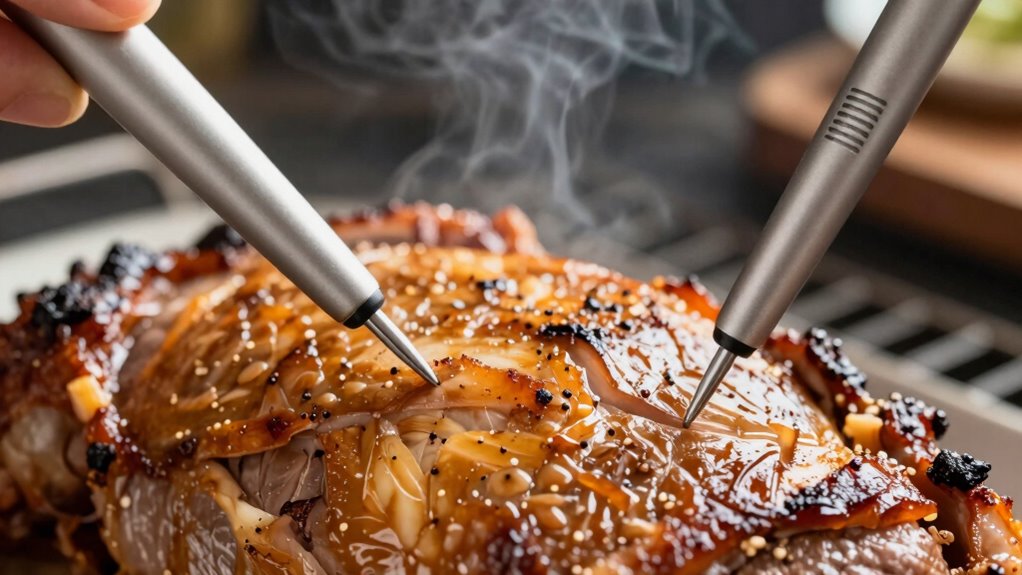
The position of the probe within the meat also matters. For the most accurate reading, insert the probe into the thickest part of the cut, avoiding fat pockets, bones, or connective tissue, which can distort readings. If you’re cooking multiple pieces, ensure each probe is placed consistently and securely so you get comparable data throughout your cook. Remember, probe placement techniques are essential for optimizing temperature accuracy and consistency. Proper placement can also help prevent the probe from interfering with the meat’s structure, which could lead to inaccurate readings or damage to the meat. It is also helpful to consider calibration verification regularly, especially if you notice inconsistent readings, to ensure ongoing accuracy. Keep in mind that improper placement can lead to misleading readings, which may cause you to overcook or undercook your meat. Additionally, understanding meat-specific probe placement can help you achieve more precise results.
wireless meat thermometer with calibration feature
As an affiliate, we earn on qualifying purchases.
As an affiliate, we earn on qualifying purchases.
Frequently Asked Questions
How Often Should I Calibrate My Wireless Meat Thermometer?
You should calibrate your wireless meat thermometer at least once a year to guarantee accuracy maintenance. However, if you notice inconsistent readings or after dropping the device, it’s a good idea to calibrate more frequently. Regular calibration helps you trust your temperature readings, especially when cooking meat to safe and precise temperatures. By staying on top of calibration frequency, you’ll enjoy perfectly cooked meals every time.
Can Wireless Thermometers Be Used for Other Types of Cooking?
Yes, wireless thermometers can be used for various types of cooking beyond grilling or smoking. They’re great for guaranteeing cooking safety in baking, roasting, or even sous-vide. Just ensure the wireless connectivity remains strong to monitor temperatures accurately. Using them across different cooking methods helps maintain food safety, prevents overcooking, and makes it easier to track progress remotely. Always follow manufacturer instructions for best results.
What Is the Maximum Range for a Wireless Meat Thermometer?
The maximum range for a wireless meat thermometer typically spans 150 to 200 feet, but Bluetooth interference from walls, electronics, or other devices can reduce this distance. Your thermometer’s battery life also impacts effective range; weaker batteries may cause signal drops. To guarantee accurate readings, keep the receiver within the recommended range, minimize interference, and regularly check and replace batteries when needed.
Are There Any Safety Concerns With Wireless Meat Thermometers?
You might think wireless meat thermometers are perfectly safe, but don’t be fooled—there’s potential for mishaps! Battery safety is vital; always use the recommended batteries to prevent leaks or explosions. Wireless interference could cause inaccurate readings or signal loss, which might lead to undercooked or overcooked food. Stay vigilant, keep batteries in check, and make sure your device isn’t near other wireless gadgets to avoid safety risks.
How Do Different Meat Types Affect Probe Placement?
You should adjust probe placement based on meat type because meat density varies, affecting internal temperature readings. For denser meats like roasts, insert the probe into the thickest part to get accurate results. For more delicate meats like fish or poultry, place the probe in the center, avoiding bones or fat. Proper placement guarantees you monitor the true internal temperature, preventing undercooking or overcooking.
Conclusion
So, next time you’re grilling, trust your probe placement more than any myth. It turns out, the idea that certain spots always give false readings isn’t entirely true—proper placement actually matters more. If you insert the probe correctly and avoid common mistakes, your thermometer will give you accurate readings every time. Don’t buy into the rumor that placement is a myth—your perfect cookout depends on it! Just focus on positioning, and you’ll master meat temps effortlessly.
Halloween Picks
halloween
As an affiliate, we earn on qualifying purchases.