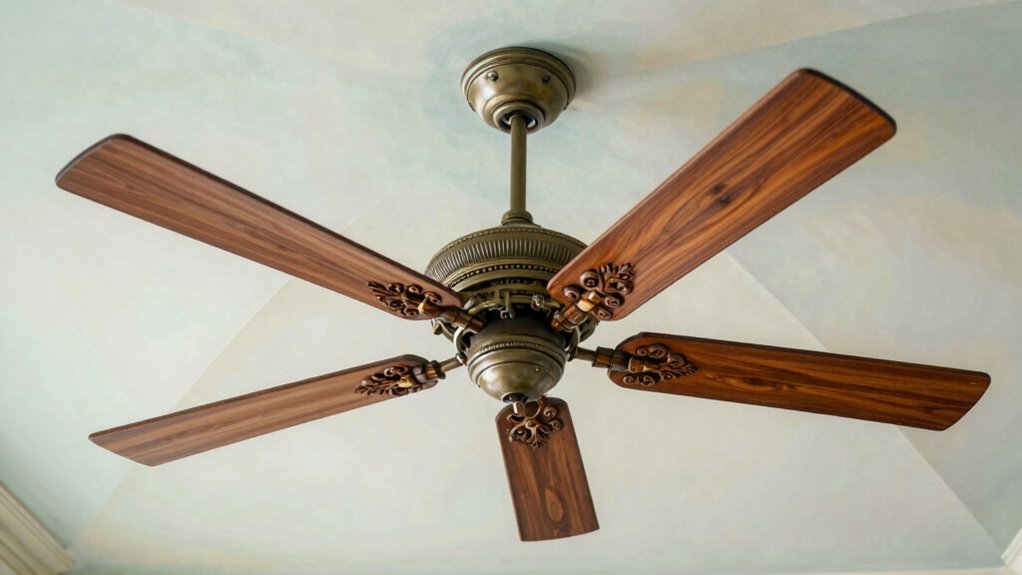

Choosing the wrong ceiling fan size can make it barely move air, leaving your room uncomfortable. If the fan is too small for your space, it won’t circulate enough air, making it feel stuffy or drafty. Conversely, a fan that’s too large can be noisy and cause drafts. Proper sizing guarantees effective airflow and comfort while saving energy. Keep exploring to discover how to select the perfect fan size for your room.
Key Takeaways
- Choosing an undersized fan in a large room results in inadequate airflow, making it barely move air.
- Oversized fans in small spaces can cause excessive noise and disrupt airflow efficiency.
- Incorrect fan size leads to poor circulation, reducing comfort and effectiveness of cooling or heating.
- Proper sizing ensures optimal airflow; wrong size causes the fan to struggle and move little air.
- Accurate measurement and selection prevent performance issues caused by fans that are too small or too large.

Choosing the right ceiling fan size is vital to guarantee ideal airflow and comfort in your space. When selecting a fan, size directly impacts how well it circulates air, which affects your comfort and energy efficiency. A fan that’s too small won’t move enough air to cool the room effectively, while one that’s too large can create excessive noise and waste energy. To enhance energy efficiency, you want a fan that matches your room’s dimensions—this ensures you’re not overworking the motor or wasting electricity. Proper sizing helps you achieve ideal airflow without increasing your energy bills or sacrificing comfort.
Before buying, measure your room accurately. For small rooms under 75 square feet, such as a powder room or walk-in closet, a fan with a blade span of 29 to 36 inches usually suffices. Medium-sized rooms, like bedrooms or small living rooms, typically need a fan with a 36 to 48-inch blade span. Larger spaces, such as open-concept living areas or family rooms, require fans with 52 inches or more to circulate air effectively. Remember, choosing a fan that’s too small for your room leads to poor airflow, making you feel stuffy or hot, while a fan that’s too large might make the space noisy or drafty. Proper sizing ensures you get the most out of your investment, reducing the need for additional cooling or heating. Additionally, selecting a fan with energy-efficient features can significantly lower your energy consumption and utility bills.
Installation tips are vital to maximize your fan’s energy efficiency and performance. Mount the fan at the correct height—generally 8 to 9 feet from the floor—to ensure ideal airflow. A fan installed too high or too low can diminish airflow effectiveness and increase noise. When installing, ensure the fan is securely mounted to support the weight and prevent wobbling, which can cause unnecessary strain and noise. Use a downrod if needed, especially in rooms with higher ceilings, to keep the blades at the perfect height. A stable installation not only prolongs the fan’s lifespan but also enhances safety and efficiency. Additionally, choosing a fan with energy-efficient features, such as reversible motors and LED lighting options, boosts overall energy savings. Proper installation and selecting the right size work together to ensure your ceiling fan delivers maximum airflow with minimal energy consumption, reducing your monthly utility bills.

Amico 42 Inch Black Low Profile Ceiling Fans with Lights and Remote
- Decorative and functional ceiling fan: Adds style and coolness to your home
- Energy-efficient LED lighting: Consumes less electricity with A rating
- Remote control operation: Adjust fan speed, light color, and timer
As an affiliate, we earn on qualifying purchases.
As an affiliate, we earn on qualifying purchases.
Frequently Asked Questions
How Do I Determine the Ideal Fan Size for My Room’s Shape?
To determine the ideal fan size for your room’s shape, measure the space and consider its dimensions. For rectangular rooms, select a fan with a blade span that fits comfortably—usually 36-42 inches for small rooms and 52-60 inches for larger ones. During ceiling fan installation, guarantee proper placement for maximum airflow. Regular ceiling fan maintenance keeps it running efficiently, preventing imbalance and noise that can affect airflow.
Can a Ceiling Fan Be Too Powerful for a Small Space?
A ceiling fan can be too powerful for a small space, creating excessive airflow and noise. If you choose a fan with large blades or heavy fan blade material, it may generate high noise levels and disrupt comfort. To avoid this, pick a fan with appropriate blade size and consider its noise level. An oversized fan will circulate too much air, making your room feel drafty and uncomfortable.
Do Blade Pitch and Size Affect Airflow Efficiency?
Yes, blade pitch and size greatly impact airflow efficiency. A steeper blade angle increases airflow, making your fan move more air with less effort. Larger blades also cover more area, boosting circulation. Additionally, motor efficiency plays a role—an efficient motor uses less energy while maximizing airflow. So, choosing the right blade size and pitch ensures your fan cools effectively without wasting power.
How Does Ceiling Height Influence Fan Size Selection?
If your ceiling is tall, imagine a giant spinning overhead, moving air efficiently. You should choose a fan with a larger diameter to reach the entire space. For higher ceilings, like over 10 feet, go for fans 52 inches or more. This guarantees the airflow travels down, cooling the room evenly. Picking the right fan diameter based on ceiling height keeps the air moving comfortably, no matter how high your ceiling soars.
Are Larger Fans More Energy-Efficient Than Smaller Ones?
Larger fans often consume more energy because of their bigger motors, but they can be more efficient in circulating air, reducing your overall energy use. However, they tend to generate higher noise levels, which might bother you. Smaller fans use less energy and are quieter, but may not cool larger rooms effectively. Consider your room size and noise preferences to choose a fan that balances energy consumption and comfort.
Conclusion
Remember, choosing the right ceiling fan size is key to keeping your space comfortable. An undersized fan is like trying to tame a tempest with a feather—ineffective and frustrating. Don’t be the one who learns the hard way, like a knight without armor, by settling for the wrong size. Measure twice, think once, and pick a fan that moves air like a mighty wind. Your comfort depends on it—don’t let poor sizing be your Achilles’ heel.