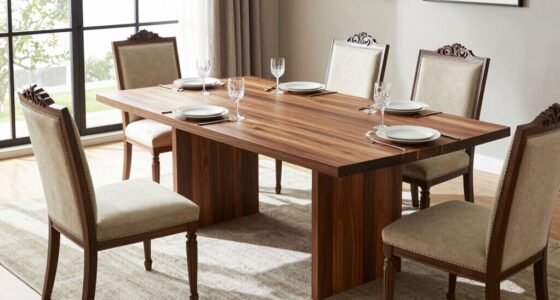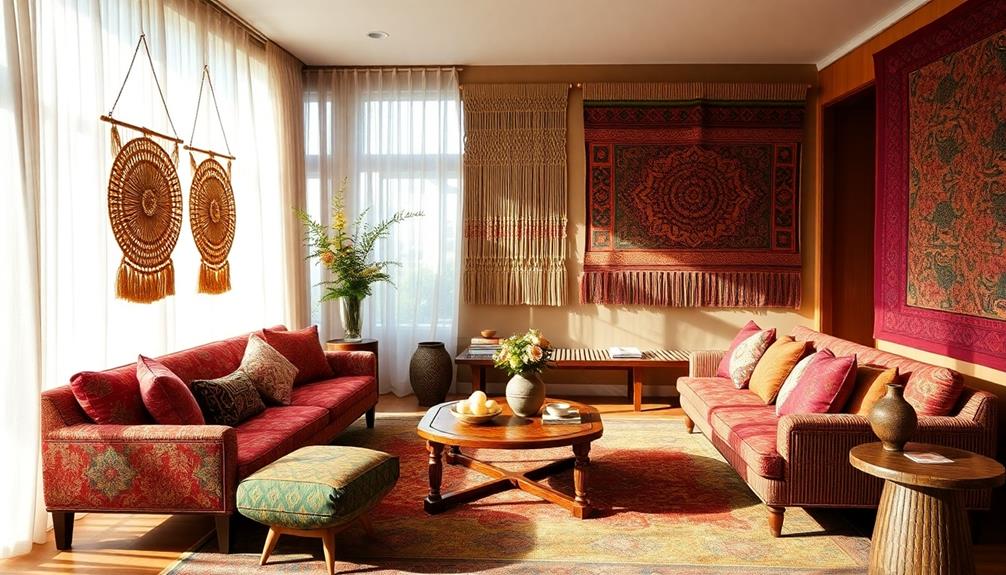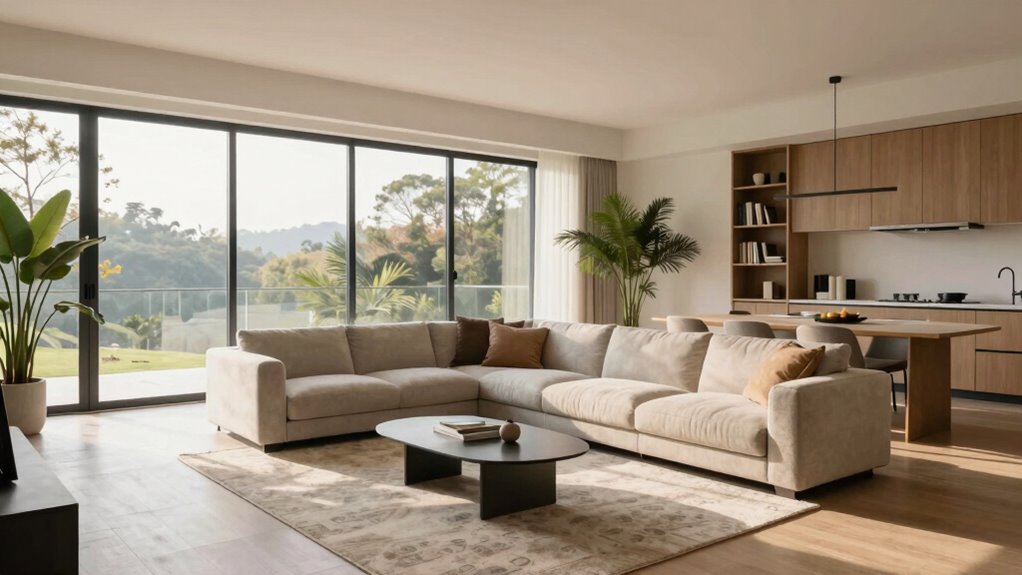

To make open-concept spaces feel defined, arrange furniture to create zones without walls—like placing a sofa perpendicular to a dining area. Use area rugs and vertical elements such as plants or shelves to anchor and guide the eye. Add visual boundaries with contrasting colors or accessories to reinforce different areas. Thoughtful furniture placement and scale help maintain openness while creating clear, inviting spaces. Keep exploring to discover even more tips for achieving a cohesive, organized layout.

Get the little things that make your day delivered free with Prime
- Fast, free delivery on millions of items
- Prime Video, Amazon Music and more included
- Member-only deals all year
Key Takeaways
- Arrange furniture to create distinct zones without physical walls, using orientation and placement to define each area.
- Use area rugs and vertical elements like tall plants or shelving to anchor and visually separate spaces.
- Incorporate contrasting or varied color schemes and accessories to subtly differentiate functional zones.
- Employ low-profile boundaries such as bookshelves or cabinets to create subtle visual boundaries.
- Design with thoughtful furniture scale and placement to promote openness while clearly delineating areas.
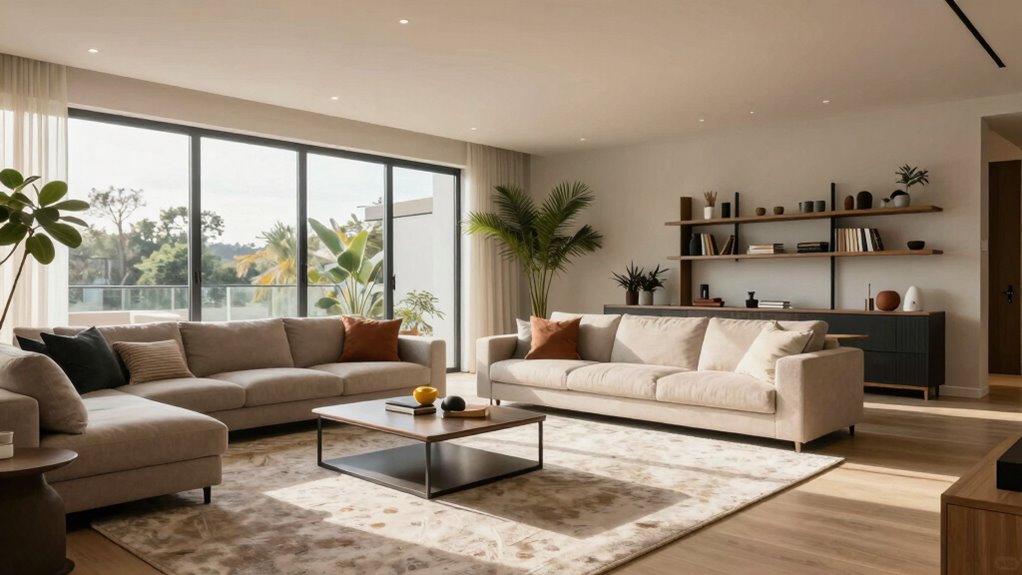
Open-concept spaces can feel spacious and modern, but without clear boundaries, they often lack a sense of definition. To create a cohesive look while still maintaining distinct areas, you need to focus on furniture placement and color schemes. Thoughtful furniture arrangement helps carve out zones without the need for walls or partitions. For example, placing a sofa perpendicular to a dining area can visually separate the living space from the kitchen, making each zone feel intentional. Use area rugs to anchor furniture groups and define specific spots within the open layout. A well-placed bookshelf or a row of low-profile cabinets can also serve as a subtle boundary, guiding the eye and creating separation without closing off the space.
Strategic furniture placement and subtle boundaries define open spaces beautifully.
Color schemes play a crucial role in establishing visual boundaries. You don’t have to paint entire walls different colors, but using varied shades or tones can subtly differentiate areas. Light, neutral hues like beige or gray can unify the space, while a bold accent wall or a different color palette in each zone signals a change in function. For instance, a deep blue in the living room can set it apart from a softer, pastel dining area. Incorporating contrasting or complementary colors through accessories, such as throw pillows, curtains, or artwork, helps reinforce the boundaries you’ve created with furniture and layout.
Additionally, vertical elements like tall plants, open shelving, or even a series of pendant lights can guide the flow within your open space. These elements draw attention upward or along specific lines, creating a visual pathway that naturally segments the area. When you’re placing furniture, consider the scale and proportion of each piece relative to the overall space. Oversized furniture can dominate a room, making it feel crowded, while smaller, well-chosen pieces preserve openness while still defining zones. Positioning furniture so that it faces the main activity areas encourages conversation and interaction, further emphasizing each space’s purpose. Incorporating spatial organization into your design ensures that the space remains functional and inviting.
In essence, making your open-concept space feel defined comes down to strategic furniture placement and careful use of color schemes. By thoughtfully arranging your furniture, using rugs and vertical elements, and selecting harmonious yet contrasting colors, you’ll craft a space that feels open but purposeful. Your goal is to create a seamless flow that still clearly indicates different areas, making the space feel both welcoming and well-organized. Paying attention to visual boundaries can greatly enhance the overall harmony and functionality of your open layout.
area rugs for open living spaces
As an affiliate, we earn on qualifying purchases.
As an affiliate, we earn on qualifying purchases.
Frequently Asked Questions
What Are the Best Color Schemes for Open-Concept Spaces?
You should opt for neutral color schemes, like soft grays, beiges, or warm whites, to create a calming, cohesive flow. Incorporate color psychology by adding accent walls in bolder hues, such as deep blue or forest green, to define spaces and add visual interest. These accent walls act as focal points, helping to visually separate areas while maintaining an open, inviting atmosphere in your space.
How Can Furniture Placement Enhance Space Definition?
Imagine your furniture as the cast of a play, each group telling a story. By strategically grouping pieces, you create intimate zones, like a cozy coffee nook or a lively dining scene. Use spatial dividers—rug boundaries, bookcases, or even stylish screens—to cue your brain where one space ends and another begins. This clever choreography makes your open-concept feel less like chaos and more like a thoughtfully staged masterpiece.
Are Rugs Effective in Dividing Open Areas?
Yes, rugs are effective in dividing open areas. Area rugs act as visual dividers, creating distinct zones within a large space. You can place different rugs to define specific functions, like a sitting area or dining section. By choosing varying colors, patterns, or textures, you enhance the separation visually. Rugs not only add style but also make your open-concept space feel more organized and cozy, without physical barriers.
What Lighting Techniques Create Zones Within Open Spaces?
You can create zones with layered lighting and accent lighting, which cast different tones and highlight specific areas. Imagine bright, focused lamps defining a reading nook, while softer, ambient lighting creates a cozy lounge. Layered lighting adds depth, and accent lights draw attention to artwork or architectural features. Together, these techniques visually divide your space, making each zone feel distinct without physical barriers, enhancing functionality and ambiance.
How Can Artwork Contribute to Space Differentiation?
Artwork serves as focal points, instantly drawing attention and creating a sense of purpose within your open space. By strategically placing pieces, you establish visual boundaries that differentiate zones without walls. Large, bold artwork can define a living area, while smaller, cohesive pieces delineate dining or workspaces. This approach adds personality, guides movement, and makes your open-concept layout feel organized and inviting.
Conclusion
By incorporating rugs, strategic furniture placement, and subtle color shifts, you can make your open-concept space feel cozy and defined. Remember, a well-placed piece can act as a guiding post, leading the eye and creating natural zones. Don’t be afraid to think outside the box—sometimes, the smallest change makes the biggest difference. With a little effort, your open layout will feel more like a carefully curated home, proving that sometimes, a little goes a long way.
Halloween Picks
halloween
As an affiliate, we earn on qualifying purchases.