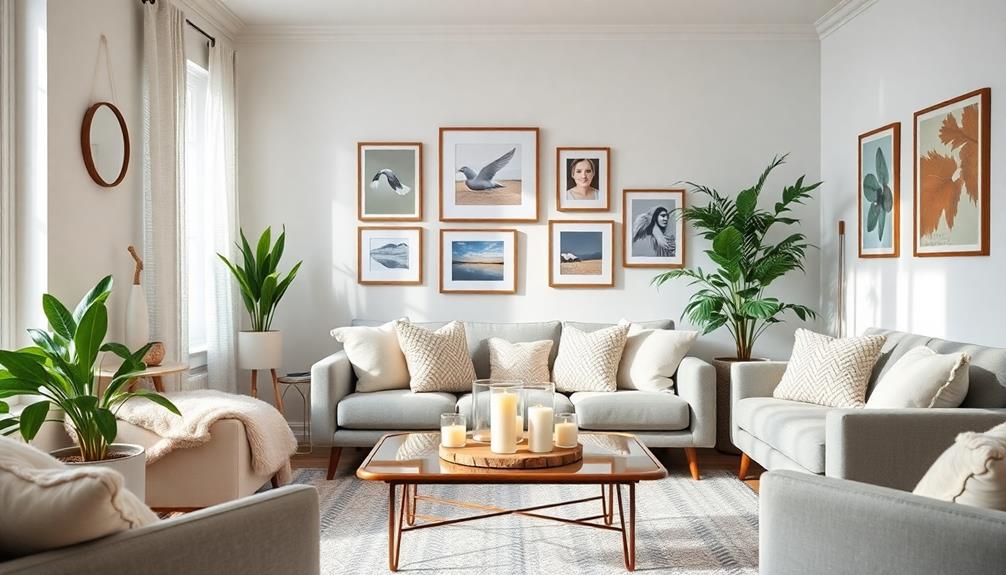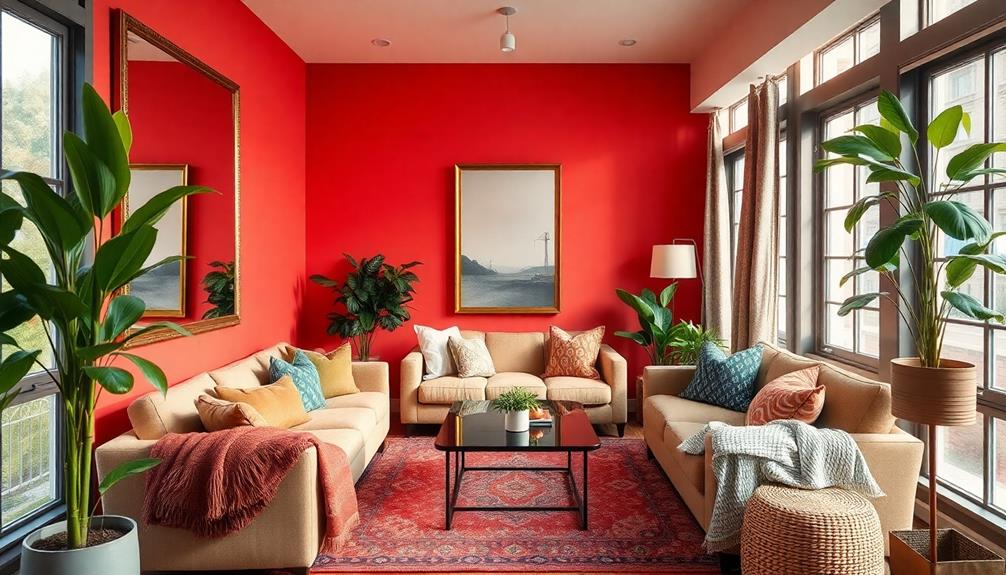
To prevent regrets with your gallery wall, plan your layout carefully before hanging. Experiment with arrangements on the floor or use painter’s tape to map out spacing and positioning. Mix frame styles and colors intentionally for harmony, and consider visual balance when choosing your layout style—like grid or freeform. Balancing proportions and spacing creates a polished, cohesive look. Keep in mind these tricks, and you’ll craft a stunning display that feels just right. Want to learn how?

Get the little things that make your day delivered free — and shop member deals
- Fast, free delivery on millions of items
- Access to Prime Big Deal Days deals on October 6–7
- Prime Video, Amazon Music and more included
Key Takeaways
- Use painter’s tape to outline different layout options on the wall before hanging.
- Experiment with floor arrangements of frames to visualize spacing and balance.
- Choose a layout style (grid, salon, or freeform) that reflects your personality and space.
- Maintain consistent spacing between frames to achieve visual harmony.
- Pre-visualize your gallery wall to prevent rearrangements and wall damage later.

Have you ever wondered how to turn a blank wall into a mesmerizing focal point? Creating a gallery wall is one of the most effective ways to do this. It’s a chance to showcase your personality, highlight your favorite images, and add visual interest to any room. The key to pulling off a stunning gallery wall lies in thoughtful planning, especially when it comes to choosing frame styles and color coordination. These elements make all the difference between a chaotic display and a harmonious, eye-catching arrangement.
Start by considering the different frame styles you want to incorporate. Mixing and matching frames adds texture and depth, but it’s important to strike a balance. You could combine sleek, modern frames with vintage or ornate ones for a curated yet eclectic look. Alternatively, sticking with a single frame style in varying sizes can create a clean, cohesive aesthetic. The goal is to find a style that complements your overall decor while allowing your photos or artwork to shine. Play around with different frame materials and finishes—metal, wood, or painted—to see what best suits the vibe you’re aiming for. Understanding the importance of visual harmony can help guide your choices and ensure your gallery wall looks intentional. Additionally, considering design principles can help you achieve a balanced and appealing layout. Paying attention to visual balance can further enhance the overall harmony of your display. Incorporating proportional spacing between frames also ensures a polished appearance and prevents clutter.
Mix and match frame styles and finishes to add texture and personality to your gallery wall.
Color coordination is equally vital. You don’t have to match every frame perfectly, but maintaining a cohesive color palette helps your gallery wall look intentional rather than chaotic. If your room features neutral tones, consider using frames in black, white, or metallic shades to keep things sophisticated. For more vibrant spaces, adding frames in bold colors or contrasting hues can create a lively focal point. You might also coordinate the colors within your artwork or photos to tie the entire display together. Think about the dominant colors in your room and pick frames that either complement or subtly contrast these shades. This way, your gallery wall becomes a natural extension of your decor, rather than an afterthought.
Once you’ve settled on your frame styles and color scheme, plan the layout carefully. Lay all your pieces on the floor first to experiment with different arrangements before committing to hanging. Use painter’s tape to map out the design on your wall, ensuring the spacing is even and balanced. This pre-visualization helps prevent regrets after hanging—no more rearranging or patching holes. Remember, the layout should feel intentional and reflect your personality. Whether you opt for a grid, salon style, or freeform arrangement, the careful consideration of frame styles and color coordination guarantees your gallery wall is both beautiful and meaningful. Additionally, utilizing CAD tools can help you visualize and perfect your layout before making any holes in the wall. With a little planning, you’ll create a stunning focal point that you’ll love for years to come.
As an affiliate, we earn on qualifying purchases.
Frequently Asked Questions
How Do I Choose the Right Frames for a Gallery Wall?
When choosing frames for your gallery wall, start with frame materials that match your style—wood for warmth, metal for modernity. Opt for color coordination by selecting frames in complementary hues or neutral tones to create harmony. Mix textures carefully to add interest without clutter. Measure your space and layout beforehand, ensuring your frame sizes vary yet work cohesively. This approach helps you select the perfect frames that enhance your art and prevent regrets.
What’s the Ideal Spacing Between Artwork Pieces?
Think of your gallery wall as a conversation—spacing should be just enough to give each piece room to breathe, usually 2-4 inches apart. Keep color coordination and theme consistency in mind; this creates harmony and visual flow. Too tight, and it feels cluttered; too far apart, and it loses connection. Find that sweet spot where each artwork speaks clearly, and your wall becomes a story waiting to be told.
Can I Create a Gallery Wall in a Small Space?
Absolutely, you can create a gallery wall in a small space by using miniature displays and vertical arrangements. Opt for smaller artwork pieces to avoid crowding and place them close together, maintaining a tight but balanced layout. Vertical arrangements work well by drawing the eye upward, making the space feel taller. Focus on a cohesive color palette and varied frame styles to add interest without overwhelming. This approach maximizes your small space beautifully.
How Often Should I Update or Change My Gallery Wall?
You should update your gallery wall every 6 to 12 months, like changing the seasons. Keep color coordination and theme consistency in mind to prevent visual chaos. When your style or decor changes, or if the wall starts feeling dull, it’s time for a refresh. Regular updates keep your space lively and engaging, ensuring your gallery wall remains a reflection of your evolving personality without losing its aesthetic harmony.
What Are Common Mistakes to Avoid When Designing a Gallery Wall?
When designing a gallery wall, avoid common mistakes like mismatched color coordination and inconsistent theme choices. You should guarantee that your frames and artwork complement each other in color and style, creating a cohesive look. Keep theme consistency in mind, so your gallery feels harmonious rather than chaotic. Measure carefully and plan your layout before hanging, preventing uneven spacing or accidental misalignment that can detract from the overall aesthetic.
Conclusion
By planning your gallery wall layout beforehand, you can avoid future regrets and create a stunning, cohesive display. Imagine designing a family’s living room with carefully measured frames, resulting in a perfectly balanced arrangement. They’re thrilled with how it showcases memories without feeling cluttered. Take your time, experiment with spacing, and visualize your design. With this trick, you’ll craft a gallery wall that elevates your space and brings joy every time you glance at it.
Fall Picks
fall essentials
As an affiliate, we earn on qualifying purchases.