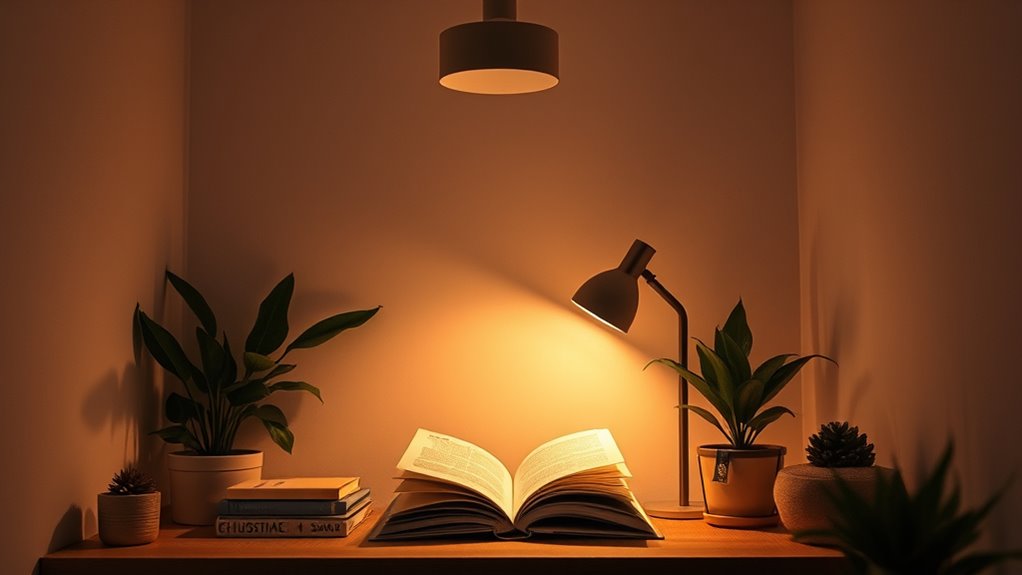

Lighting layers—ambient, task, and accent—are key for creating a balanced and dynamic scene. You control ambient light to set the overall mood and fill the space evenly, while task lighting focuses on illuminating specific areas for clarity. Accent lighting emphasizes textures and key features, adding depth and visual interest. Proper placement and adjustment of each layer help shape the scene’s mood and highlight important elements. Keep exploring to master creating mesmerizing lighting setups effortlessly.
Key Takeaways
- Lighting layers—ambient, task, and accent—are combined to create a balanced, visually interesting scene.
- Proper lamp placement is essential for controlling each layer’s effect and avoiding unwanted shadows or hotspots.
- Ambient lighting sets the scene’s overall mood and requires even, diffuse light coverage for natural results.
- Task lighting focuses light precisely where needed to enhance visibility without spilling over into other areas.
- Accent lighting highlights textures and features, adding depth and visual interest by emphasizing specific scene elements.
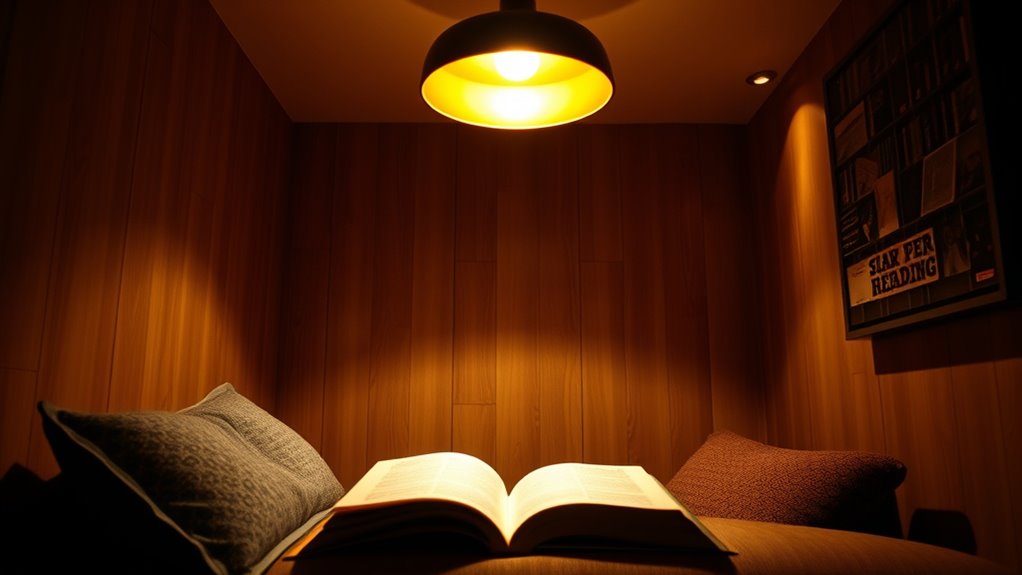
Lighting layers are essential for creating a balanced and dynamic scene, whether you’re working on photography, film, or digital art. They help you shape the mood, highlight key elements, and add depth to your composition. To achieve this, understanding how to effectively combine ambient, task, and accent lighting is vital. One of the first steps is mastering lamp placement, which directly impacts your lighting control. Proper lamp placement ensures your light sources are strategically positioned to produce the desired effects without unwanted shadows or glare. For example, placing a lamp too close or too far can dramatically alter the scene’s clarity and mood. When working with ambient lighting, you want your lamps to be positioned to fill the space evenly, avoiding harsh contrasts or overly bright spots. This creates a natural base layer that sets the overall tone. Additionally, lamp placement is influenced by the ambiance you wish to create and the specific textures or objects you aim to highlight. Lighting control becomes your best friend once you’ve planned your lamp placement. It involves adjusting the intensity, direction, and diffusion of your lights to fine-tune the scene. Dimmers, flags, and bounce surfaces are tools that give you greater precision. For ambient lighting, controlling the intensity can make a space feel warm and inviting or cool and sterile, depending on your goal. You might use softboxes or diffusers to spread light evenly, preventing hotspots and ensuring a smooth base layer. When adding task lighting, the focus shifts to directing light precisely where it’s needed. Here, lamp placement is critical; you want your lights to be close enough to illuminate specific areas without spilling into other parts of the scene. Think about angles and distances, adjusting your lamps to avoid unwanted shadows or reflections that could distract viewers. Accent lighting is all about highlighting specific features or creating visual interest, so lamp placement becomes even more strategic. You need to position your lights to emphasize textures, colors, or shapes without overpowering the scene. Using lighting control tools, such as barn doors or snoots, allows you to shape the beam and prevent spillover. This layer often requires fine-tuning in the setup phase to achieve the perfect balance. When you get it right, each lighting layer complements the others, giving your scene depth and dimension. The key is to control each layer independently but also see how they interact as a whole. With thoughtful lamp placement and effective lighting control, you’ll craft scenes that feel natural, intentional, and visually compelling.
Frequently Asked Questions
How Do I Balance Different Lighting Layers Effectively?
To balance different lighting layers effectively, you should use layering techniques that prioritize your lighting hierarchy. Start with ambient lighting as the base, then add task lights for functionality, and finally incorporate accent lights for mood. Adjust each layer’s brightness and color temperature to create a cohesive look. Regularly step back and evaluate the overall effect, ensuring no layer overwhelms the others and the space feels harmonious.
Can I Combine Multiple Lighting Layers in a Small Space?
Think of your small space as a puzzle where multiple lighting layers fit perfectly. Yes, you can combine them effectively by prioritizing the lighting hierarchy and using adjustable fixtures. Opt for compact, multi-functional lights that serve different purposes without cluttering. This approach maximizes space optimization while maintaining layered lighting, creating a balanced ambiance without overwhelming your cozy area. Proper layering guarantees your small space feels bright and inviting.
What Are the Best Bulbs for Ambient, Task, and Accent Lighting?
For ambient lighting, choose energy-efficient LED bulbs with a warm color temperature around 2700K to create a cozy atmosphere. For task lighting, opt for brighter, focused LEDs or halogen bulbs with a higher color temperature, around 3000K to 3500K, to enhance visibility. For accent lighting, use dimmable LEDs with adjustable color temperatures, typically between 2700K and 4000K, to highlight features effectively while maintaining bulb efficiency.
How Does Lighting Layering Impact Energy Consumption?
Lighting layering helps you optimize energy efficiency by allowing you to regulate each layer independently. When you use lighting control systems, you can adjust ambient, task, and accent lighting based on your needs, reducing unnecessary energy consumption. This targeted approach ensures you use only the light you need, saving electricity and extending bulb life. By balancing lighting layers, you create a comfortable environment while making your space more energy-efficient.
Are Smart Lighting Options Suitable for All Layers?
Smart lighting options are suitable for all layers because they offer customizable color options and adjustable brightness levels. You can easily switch between ambient, task, and accent lighting to suit your needs, saving energy while enhancing your space. With smart lighting, you get the flexibility to control each layer precisely, making it a versatile solution for your home or office. Plus, their energy-efficient features help reduce overall consumption.
Conclusion
By blending ambient, task, and accent lighting, you craft a space that feels as warm and inviting as a cozy fireplace. Think of each layer as a brushstroke on your home’s canvas, shaping the perfect mood for every moment. When you master these layers, your rooms transform into a symphony of light, guiding your senses effortlessly. With just a few simple choices, you turn your lighting into the masterpiece that makes your home truly shine.