TL;DR
Motivational quote wall art pairs a short, inspiring message with visual design to create décor and a personal reminder. Choose words that fit your life, make sure the lettering is readable from across the room, and match the material and placement to how you use the space. It can shape a room’s atmosphere, but it cannot replace practical support or action.
A quote can feel comforting on a quiet morning and irritating by Friday if it sounds like someone else’s advice. Motivational quote wall art works best when the words mean something to you and the design belongs in the room where you’ll see them.

Get the little things that make your day delivered free with Prime
- Fast, free delivery on millions of items
- Prime Video, Amazon Music and more included
- Member-only deals all year
This guide will help you choose a message, judge readability, pick a format, and find a good spot for your print. You’ll also see where a wall quote can help set a mood—and where a framed sentence can’t do the work of a plan, a conversation, or support from another person.
Choose a quote that sounds meaningful in your own voice and fits the room’s purpose.
Check readability at the print’s real size and viewing distance; short wording often works well in passing spaces.
Match material and style to the room, and check file quality and usage terms for digital downloads.
Tape up a paper mockup before hanging the final print to test scale, light, and placement.
Treat wall art as a reminder or part of a room’s atmosphere, not a guaranteed fix or substitute for practical support.
Choose a quote that still feels true on an ordinary day
Motivational quote wall art is a short written message presented as décor, with the goal of making an idea easy to revisit in a familiar space. A useful quote should feel relevant to the people who see it, rather than promising that a few words will fix a hard day. Think confidence, perseverance, gratitude, mindfulness, productivity, or self-compassion—and ask which one belongs in your room right now.
Imagine you’re setting up a study nook for a teenager who freezes before exams. A line about taking one step at a time may feel more usable than a grand claim about limitless success. That difference matters: the first can point toward a next action, such as opening the notebook, while the second may feel hollow when the desk is already crowded with practice papers.
Try reading a candidate quote aloud before you buy it. If it sounds natural in your own voice, and you can imagine seeing it on a rainy Tuesday without rolling your eyes, it may suit you. A motivational quote wall can serve as a personal reminder, but the reminder should connect to something you value, not pressure you to feel cheerful all the time.
There’s no universal best quote. A busy café owner might want a brief line about patience near the till; someone making a restful bedroom may prefer words about slowing down. Choose language that fits your actual life, including its limits and uneven days.
Popular right now

Vitamix Touch & Go Advance 32-Ounce Bar Blender, White

Ninja Combi 14-in-1 Multicooker, Air Fryer, Toaster Oven & Steamer (SFP701)

Vitamix 5200 Professional-Grade Blender
As an affiliate, we earn on qualifying purchases.
Make the words easy to read from where you’ll stand
Motivational quote wall art is easiest to enjoy when you can read its main line without walking across the room. Letter size, contrast, spacing, and viewing distance all affect legibility, and long passages ask more of the reader than a short phrase. A lovely design that looks sharp on a phone can turn into a blur above a desk.
Before ordering, check the print’s dimensions and view a mockup at roughly the size it will occupy on your wall. If the quote has six lines of thin, pale lettering, it may need a larger print than a three-word phrase in bold type. For a small home office, you might choose a compact 8-by-10-inch print with two clear lines; above a sofa, a larger design can hold more visual weight.
Lighting changes the result, too. Warm lamps can soften a low-contrast beige-on-cream print, while sunlight can produce glare on glass. Put a sample image on your screen, step back several paces, and see whether you can read it quickly. That simple check mimics the glance you’ll give it while carrying laundry or waiting for a video call to start.
Short wording is often easier to absorb at a glance, though a longer quote can work when the space invites you to pause. A reading corner may suit a full sentence; a hallway where people keep moving usually calls for fewer words and stronger contrast.
Match the print style and material to the room
Motivational quote wall art should feel like part of the room, not a sign that wandered in from somewhere else. Typography, colors, imagery, and material each set a different tone: clean black lettering can feel calm and spare, while colorful illustrated text can bring energy to a playroom or studio. Common styles include minimalist type, vintage prints, botanical artwork, bold lettering, and text mixed with illustration.
Look at what’s already in the space. If your living room has pale oak shelves, linen cushions, and green plants, a soft botanical design may sit comfortably among them. A neon-colored poster could still work, but it will draw the eye; choose it deliberately as the room’s loud note rather than hoping it disappears into the background.
Materials change both appearance and upkeep. A framed print protects paper from dust and handling and can make inexpensive art feel finished, but glass adds weight, may reflect windows, and needs secure hanging. Canvas avoids glazing and brings texture, though its depth and surface can make small lettering feel less crisp. A poster is light and affordable, which suits temporary displays, but it can crease or curl and may need a frame for a polished look. A decal can work where frames are awkward, such as a gym wall, but removal may damage paint and the surface must accept the adhesive.
Digital downloads give you control over paper, size, and finish, but that flexibility shifts the quality check to you. A low-resolution file enlarged for a big wall may look jagged, and a home printer may render colors differently from the preview. Check dimensions, resolution, and usage terms; then consider whether printing costs, paper choice, and framing still make the download the best value.
Personalized colors, names, and layouts can help artwork fit a room or feel more connected to its owner. The tradeoff is that customization does not guarantee good spacing or legibility: a name added beneath a quote can make the lettering smaller, and a preview can hide that problem. Review the design at its intended size and ask whether the personal detail adds meaning without competing with the message.
Use this four-step check before you hang your quote
Motivational quote wall art is more likely to feel at home when you choose the location before you choose the final size. Think about what happens in the room: where you pause, how far away you’ll be, and what the message should remind you to do. A print above a desk has a different job from one near the front door.
- Name the moment. Decide when you want to see the quote. A student might want a steadying message before opening a laptop; a runner might want a simple prompt near the shoe rack.
- Pick the wall. Choose a visible spot near that activity, such as above a desk, beside an entryway, or near a workout area. Avoid places hidden by an open door or a tall plant.
- Test the scale. Cut paper to the print’s proposed dimensions and tape it up. Stand where you’ll normally see it. If the words feel tiny from the chair, pick a larger format or shorter quote.
- Check the light and surface. Notice glare, shadows, and whether the wall can support the chosen hanging method. A sunny wall may call for matte paper rather than glossy glazing.
For example, a person who works from home might tape up a 12-by-16-inch paper mockup above the monitor for a day. They may discover that the quote sits right in their video-call background but feels distracting during focused work. Moving it to the wall beside the desk can preserve the reminder without putting it directly in their line of sight.
Viewing distance and the room’s use matter as much as decoration. A classroom print should be legible from the back row, while a small quote beside a bedside lamp can invite a closer look. Measure, test, and adjust before making holes.
Let a quote support your routine without asking it to do everything
Motivational quote wall art can contribute to a room’s atmosphere and offer a visible cue to pause or refocus. Its effect varies from person to person, so think of it as a small part of your surroundings rather than a source of guaranteed motivation. The words may prompt a useful thought; your next choice still comes from you.
Say you’re learning to stretch after long workdays. A brief, kind quote beside the yoga mat might remind you to make room for ten minutes of movement. It won’t loosen tight shoulders by itself, and a harsh line about never quitting could make rest feel like failure. Choose messages that encourage action while leaving room for ordinary limits.
Placement can connect a message to a routine. A gratitude quote beside the kitchen table may catch your eye while you wait for the kettle; a patience reminder near a shared family calendar may be useful during a hectic school morning. These small moments give the artwork a setting and a practical association. They don’t turn it into treatment or replace support from friends, family, or a qualified professional when you need it.
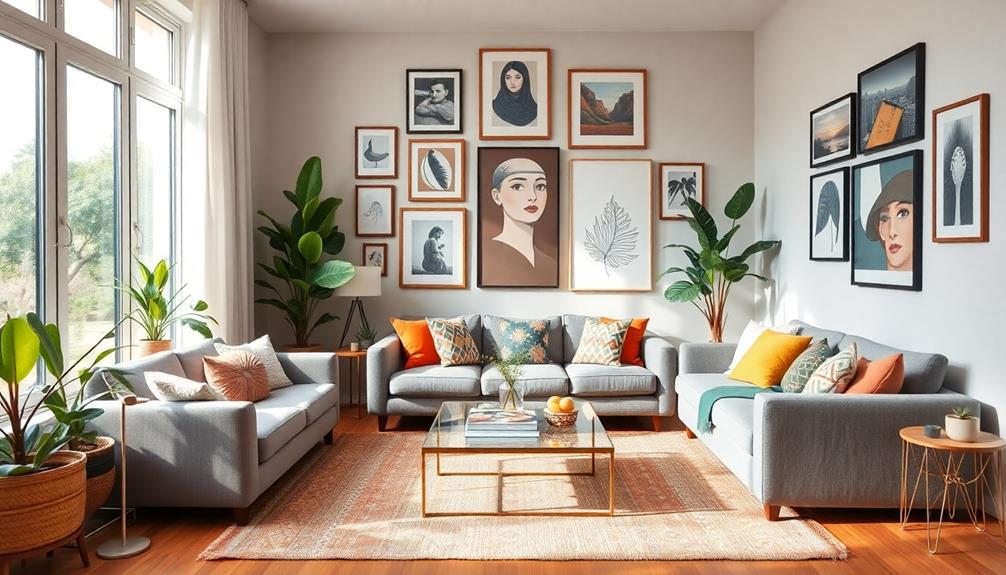
For a more personal display, combine a quote print with photographs, a calendar, or art made by someone you love. In a gallery wall, keep spacing reasonably consistent and give the words enough clear space around them. If the quote gets lost among busy images, move it toward the center or choose a simpler design.
Check permissions before you sell or reproduce a famous line
Motivational quote wall art can involve separate rights in the words, artwork, and typeface, so check each element before you make or sell copies. Some quotations are in the public domain; others may still be protected by copyright or subject to trademark or licensing restrictions. A quote appearing on many online shops does not, by itself, prove that commercial use is permitted.
Suppose you run a small print shop and want to put a famous line on 200 tote bags and matching posters. First identify the wording and its author, then check the relevant rights for your location and intended use. The illustration and font may also have licenses that limit resale or commercial use, even if the quote itself is free to use.
Attribution should be accurate when you credit a writer or speaker. A line often shared online may have a disputed or incorrect author, so look for a reliable source before printing a name beneath it. For a custom design, keep a record of the artwork and typeface licenses and use wording you have permission to reproduce.
Rules depend on the specific material and circumstances, so a seller with a commercial project may need advice from a qualified rights professional. For a single print in your home, the practical questions may differ from those involved in selling thousands of copies. Check the facts for your project rather than relying on an uncited social media graphic.
Frequently Asked Questions
What motivational quotes work well as wall art?
Short, clear lines often work well because you can read them at a glance. Choose wording that feels relevant to the people who will see it, such as a gentle prompt about patience in a shared workspace. A quote that feels personal usually lasts longer than one chosen only because it is popular.
Where should I hang motivational quote art?
Place it where you pause or spend time, and where the message fits the activity. A desk, entryway, study area, or workout corner may work; check that furniture, doors, and lighting won’t hide the print. A paper mockup can help you test the spot before you hang anything.
How large should a quote print be?
Choose a size based on the wall, viewing distance, and amount of text. Longer wording generally needs more space or larger letters, while a short phrase can work in a compact frame. Tape up paper in the proposed dimensions and check whether you can read it from your usual seat.
Is framed art better than canvas or a poster?
It depends on the look, budget, weight, and installation needs. A frame can protect a paper print but may reflect light; canvas offers a textured finish, and posters can be an affordable option. Consider the room and wall before you choose a material.
Can I print a digital quote download at home?
Often, yes, if your printer and paper suit the file. Check the image’s resolution, dimensions, and permitted uses before printing, especially at a large size. A print shop may give you more consistent results for oversized artwork or colors that need close matching.
Does motivational wall art actually improve motivation?
It may act as a reminder or help shape a room’s atmosphere, but the effect varies by person and situation. A quote beside your running shoes might prompt you to follow a routine you already chose; the print cannot make the choice for you. It is not a replacement for practical help or professional support when those are needed.
Conclusion
Choose the words first, then test the design on the wall where you’ll actually see it. If the message feels true, reads clearly, and suits the room, it can earn its place as décor and a personal reminder.
Let it be one small bright mark in the day: a sentence you notice while the kettle hums, the morning light reaches the desk, and you decide what to do next.