When planning your pergola, it’s easy to overlook how the angle of shade will change with the sun’s movement throughout the year. If you don’t analyze the sun’s path and consider seasonal changes, you might end up with inadequate shade or blocked views—problems that become clear only after installation. To avoid this common mistake, understanding how to optimize shading angles now can make a big difference. Keep going and you’ll discover how to guarantee your pergola is both functional and beautiful year-round.
Key Takeaways
- Properly analyze the sun’s path throughout the year to determine optimal pergola shading angles.
- Consider seasonal sun angles to prevent inadequate shading during peak sunlight hours.
- Use solar studies or shading tools during planning to avoid shadow-related design mistakes.
- Ensure pergola height and post placement align with sun angles for effective shade coverage.
- Regularly review and adjust shading plans to account for changes in sun position over different seasons.
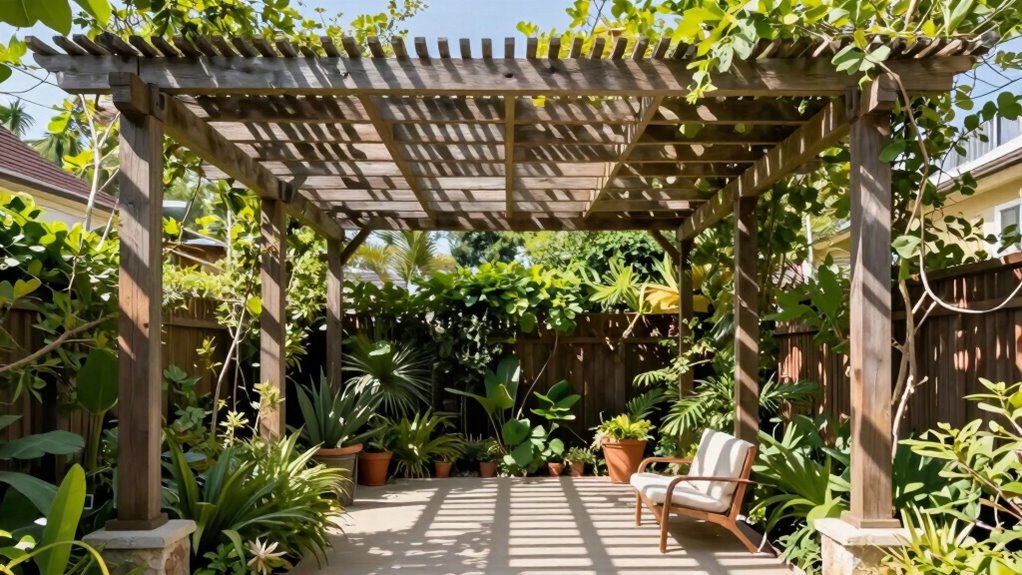
Planning a pergola begins with understanding your outdoor space and how you want to use it. You need to consider the size, shape, and existing features of your yard to determine what kind of structure will complement your environment. Once you’ve assessed the space, the next step involves choosing the right material selection and design aesthetics. These elements are vital because they influence not only the look of your pergola but also its durability and maintenance needs. When selecting materials, think about how they will withstand weather conditions in your area. Wood offers a natural, warm appearance but requires regular upkeep. Metal, such as aluminum or steel, provides strength and low maintenance but can look more modern or industrial. Vinyl or composite materials might strike a balance, offering durability with less upkeep while mimicking the look of wood or other finishes. Your choice should align with your lifestyle, budget, and the overall style of your home.
Design aesthetics are equally important, shaping how your pergola integrates with your outdoor environment. Whether you prefer a rustic, traditional look or a sleek, contemporary vibe, your design choices should reflect your personal taste and the architecture of your home. For example, a pergola with ornate details and a natural wood finish might suit a cottage-style yard, while a minimalistic metal structure could complement a modern landscape. The visual harmony between your pergola and your existing outdoor features will make the space feel intentional and cohesive. Think about the height, width, and overall shape—these elements can dramatically impact both the function and the visual appeal of your structure. The design aesthetics also influence how you will use the space; a more open design invites social gatherings, while a more enclosed style offers privacy and shade.
While material selection and design aesthetics are key, many people overlook the importance of shading angles during planning. This often leads to a shade‑angle mistake that becomes obvious only after installation, when the pergola either provides too little protection from the sun or blocks views you wanted to enjoy. To avoid this mistake, you need to carefully analyze the sun’s path throughout the year and how your pergola’s angles will cast shadows. Proper planning ensures you get the right amount of shade when you need it most, enhancing comfort and usability. Additionally, understanding solar angles can help optimize your pergola’s placement for maximum shade during peak sunlight hours. In the end, thoughtful consideration of materials, aesthetics, and shading angles during your planning process will help you create a pergola that’s both beautiful and functional, perfectly tailored to your outdoor lifestyle.

Catheralysia 4"x4" Heavy Duty Roof Riser Brackets, 180° Adjustable Angle Pergola Roof Brackets, Black Metal Roof Riser Brackets for Patio Cover, Pergola, Gazebo, Wood Post (3 Pack)
Adjustable Roof Riser Brackets: Our pergola roof brackets accommodate dimensions of wooden columns of market-standard sizes like 4"x4"…
As an affiliate, we earn on qualifying purchases.
As an affiliate, we earn on qualifying purchases.
Frequently Asked Questions
How Do I Calculate the Optimal Shade Angle for My Pergola?
To calculate the ideal shade angle for your pergola, start with a shade analysis based on your location’s sun path. Track the sun’s position throughout the day and year, noting its highest point at solar noon. Adjust your pergola’s slats to block the sun at its peak, typically by setting the shade angle equal to your latitude. This guarantees maximum shade during peak sunlight hours, keeping your space cooler and more comfortable.
What Materials Best Withstand Changing Sun Angles Throughout the Year?
For materials that withstand changing sun angles, opt for durable, weather-resistant options like aluminum, cedar, or composite wood. These materials handle shifting sunlight and weather better over time. When planning your garden layout design, consider how solar panel placement influences shade patterns. Choosing flexible, sturdy materials guarantees your pergola remains functional and attractive, regardless of the sun’s position throughout the year.
Can Adjustable Pergola Angles Adapt to Seasonal Sun Position Changes?
Yes, adjustable pergola angles can adapt to seasonal sun position changes, giving you better control over shade and comfort. By adjusting the tilt, you optimize solar panel integration for energy efficiency and enhance outdoor lighting options for evening use. This flexibility allows you to enjoy your outdoor space year-round, responding to the sun’s movement and creating a more functional and enjoyable area.
How Do Existing Structures Affect Pergola Shade Effectiveness?
Ever wondered if your existing structures affect your pergola’s shade? They definitely do! Existing trees and neighboring buildings cast shadows that can limit your pergola’s effectiveness, especially during certain seasons or times of day. You might think your pergola provides all-day shade, but these structures can block sunlight unexpectedly. To maximize shade, consider their placement carefully and plan for adjustments, so you stay comfortable year-round without surprises.
What Are Common Mistakes in Pergola Design Related to Sun Exposure?
You often make the mistake of neglecting landscape integration and aesthetic balance when designing your pergola for sun exposure. Focusing solely on functionality, you may overlook how the shade angles complement your surroundings, resulting in inadequate shade during peak sunlight hours. To avoid this, consider the sun’s path, incorporate natural elements, and guarantee your pergola’s design harmonizes with your landscape, providing ideal shade while enhancing overall visual appeal.

Metal Solar Angle Guide for Solar Panel – Ideal Solar Tracker Tool Find The Optimal Angle for Solar Panels Tools
Magnet Adsorption: This solar angle guide will not scratch the solar panels, easy to move, patch or suction…
As an affiliate, we earn on qualifying purchases.
As an affiliate, we earn on qualifying purchases.
Conclusion
Don’t let the shade-angle mistake cast a shadow on your pergola dreams. By planning carefully, you can avoid the frustration of inadequate shade and enjoy your outdoor space fully. Remember, a well-designed pergola isn’t just about aesthetics; it’s about creating a sanctuary you’ll love, rain or shine. So, take the time to get it right—the difference between a fleeting project and a lasting retreat is just one smart angle away.
pergola sun path analysis kit
As an affiliate, we earn on qualifying purchases.
As an affiliate, we earn on qualifying purchases.

Zephyr Place Outdoor Roller Shades for Patio, 8' W x 6' H Cordless Patio Shades Roll Up Outdoor Blinds with Splicing Design, 90% UV Protection for Porch Gazebo Pergola, 2 Poles & 1 Fabric, Mocha
Premium UV Protection & Outdoor Comfort: Enjoy a cooler space with our outdoor roller shades for patio. Block…
As an affiliate, we earn on qualifying purchases.
As an affiliate, we earn on qualifying purchases.