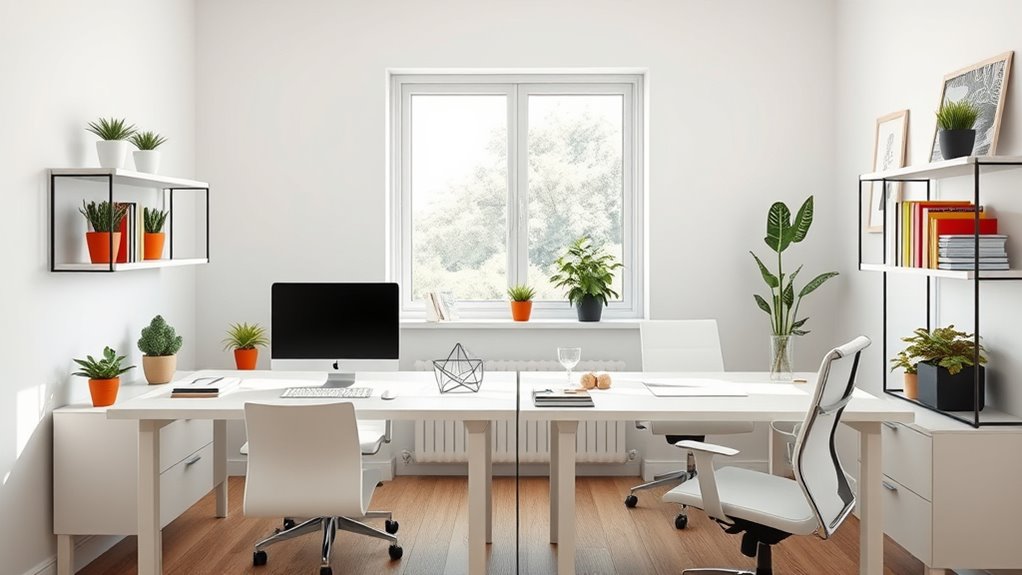

To design a clutter-free shared home office, prioritize ergonomic furniture that promotes comfort and reduces strain. Use effective storage solutions like labeled containers, wall-mounted shelves, and under-desk drawers to keep items organized and out of sight. Set clear boundaries by assigning shared resources and responsibilities to prevent conflicts. Maintaining a tidy workspace enhances focus and productivity. Keep these strategies in mind, and you’ll discover more ways to create a harmonious, functional environment that works for everyone.
Key Takeaways
- Implement designated storage solutions with clear labels to prevent clutter and ensure easy access for all users.
- Establish shared boundaries and routines for use of common areas and equipment to minimize conflicts.
- Use ergonomic furniture that promotes comfort and encourages organized workspace habits.
- Communicate openly about organizational expectations and responsibilities to foster collaboration.
- Regularly review and adjust storage and routines to maintain a tidy, functional shared environment.

Creating a shared home office can boost productivity and foster collaboration, but it also requires careful planning to guarantee everyone’s needs are met. The key to a successful shared workspace lies in designing an environment that balances functionality with comfort. Ergonomic furniture should be a top priority. When you choose ergonomic chairs and desks, you reduce the risk of discomfort and long-term health issues, especially since you and your coworkers will be spending hours at your workstations. Adjustable chairs, height-friendly desks, and proper lumbar support ensure that everyone can work comfortably, which directly impacts focus and efficiency. Taking the time to invest in quality ergonomic furniture pays off by creating a healthier, more productive atmosphere.
Prioritize ergonomic furniture to ensure comfort, health, and productivity in your shared home office.
In addition to comfortable furniture, effective storage solutions are essential to prevent clutter from taking over your shared space. When everyone has their own designated storage spots, it’s easier to keep personal items, supplies, and documents organized. Consider using vertical storage options like wall-mounted shelves or pegboards to maximize space without encroaching on the work area. Under-desk drawers or filing cabinets can help keep paperwork out of sight but within easy reach. Clear storage bins or labeled containers make it simple for each person to find what they need quickly, reducing chaos and wasted time. Proper organization and vertical storage solutions can significantly enhance the overall tidiness of your shared office. When storage is well-planned, you create a tidy environment that promotes focus and minimizes distractions.
Another aspect to consider is establishing clear boundaries and routines around your shared resources. Set specific rules for shared items, such as printers, stationery, or tech equipment, and assign responsibilities for maintaining cleanliness and organization. This prevents conflicts and ensures everyone feels responsible for keeping the workspace functional. Moreover, incorporating ergonomic furniture and thoughtful storage solutions into your design makes it easier for everyone to respect these boundaries because the space remains inviting and user-friendly.
Ultimately, designing a shared home office without clutter wars involves intentional choices. Prioritize ergonomic furniture to support health and comfort, and invest in smart storage solutions to keep the space tidy. Communicate openly with your coworkers about organizational expectations and routines. By implementing these strategies, you’ll create a collaborative environment that’s both efficient and enjoyable to work in, where productivity is boosted and frustrations are minimized. This careful planning transforms your shared workspace into a place where everyone can thrive without the chaos of clutter or discomfort.
Frequently Asked Questions
How Can I Personalize a Shared Workspace Without Causing Clutter?
To personalize your shared workspace without causing clutter, try incorporating personalization tips like adding individual decor or personalized storage solutions. Use clutter prevention strategies such as designated zones for each person’s items and clear labeling. Keep shared surfaces clean and organized, and limit personal items to a few meaningful pieces. This way, you create a space that feels personal and inviting, yet remains functional and tidy for everyone.
What Are the Best Storage Solutions for Limited Space?
You should utilize wall-mounted shelves to maximize vertical space, keeping your work area clear and organized. Multi-functional furniture, like desks with built-in storage or fold-away units, helps save space while offering essential functionality. These solutions keep clutter at bay, making your shared home office more efficient and personalized without sacrificing valuable room. Combining these strategies guarantees your workspace remains tidy, accessible, and tailored to your needs.
How Do I Set Boundaries in Shared Home Office Areas?
You set boundaries in your shared home office by creating clear privacy zones with boundary indicators like colorful tape or small dividers. Think of it as claiming territory in a jungle of chaos—your space deserves a fortress. Politely enforce these borders, so your coworker knows when you’re off-limits. Respecting these boundaries keeps the peace, prevents chaos, and transforms your workspace into a sanctuary rather than a battleground.
What Eco-Friendly Materials Are Suitable for Shared Office Furniture?
You can choose eco-friendly materials like recycled plastics for your shared office furniture, which reduces waste and supports sustainability. Bamboo furniture is also an excellent option because it’s fast-growing, renewable, and durable. These materials not only help protect the environment but also create a modern, stylish workspace. Incorporate recycled plastic chairs or desks and add bamboo shelving or desks to make your shared office eco-conscious and functional.
How Can I Incorporate Noise Reduction in a Shared Environment?
To reduce noise in your shared workspace, start by adding soundproofing options like acoustic panels, rugs, and heavy curtains to absorb sound. Incorporate noise-canceling devices such as headphones or desk microphones to block out distractions. Arrange furniture strategically to create barriers, and set clear boundaries for quiet zones. These steps help you maintain focus and minimize disturbances, making your shared office more productive and peaceful.
Conclusion
With clear boundaries and thoughtful organization, your shared home office transforms into a peaceful garden, where productivity blossoms and clutter stays at bay. Like a well-tended landscape, it nurtures collaboration without chaos, allowing ideas to flourish and focus to thrive. When you establish harmony in your space, you create a sanctuary where every task feels like a gentle breeze, and the stress of clutter simply drifts away, leaving you inspired and in control.