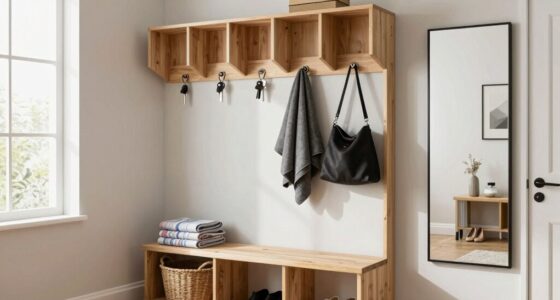
To make your small kitchen both functional and inviting, focus on creating distinct zones for cooking, prep, cleaning, and storage that flow seamlessly. Place your sink, stove, and fridge in a triangle layout for efficiency, and keep prep areas close to these key points. Use clever storage like open shelves and under-cabinet hooks to maximize space and keep countertops clutter-free. Thoughtful lighting and smart organization will transform your space into a highly usable kitchen—see how to optimize every inch.

Get the little things that make your day delivered free with Prime
- Fast, free delivery on millions of items
- Prime Video, Amazon Music and more included
- Member-only deals all year
Key Takeaways
- Divide the kitchen into dedicated zones for cooking, prep, cleaning, and storage to streamline workflow.
- Position sink, stove, and refrigerator in a triangle to maximize efficiency and ease of movement.
- Use open shelving and smart storage solutions to keep essentials accessible without cluttering surfaces.
- Layer lighting with ceiling, task, and under-cabinet lights to brighten the space and enhance functionality.
- Ensure smooth flow by placing zones close together and maintaining clear pathways for easy navigation.
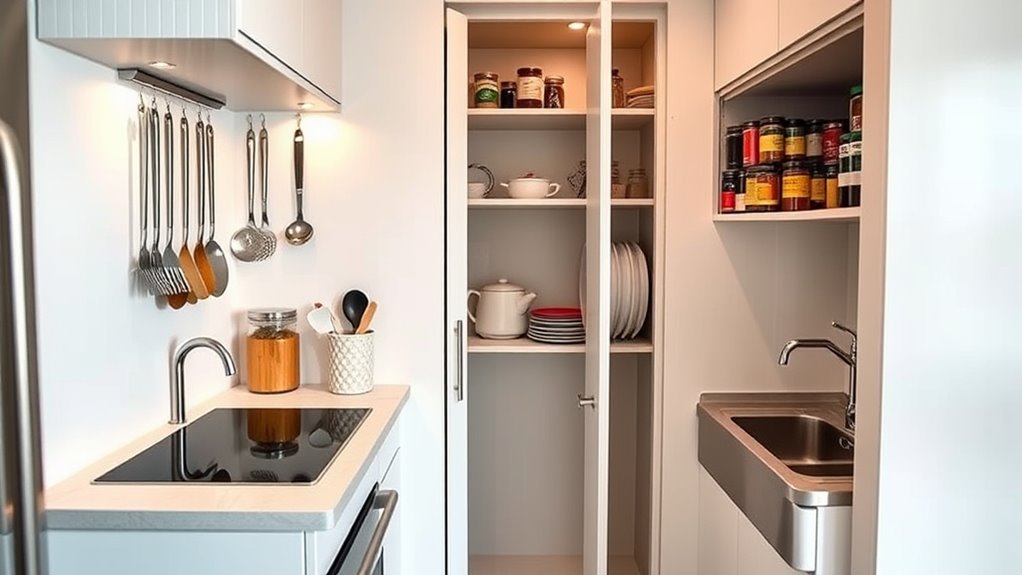
Designing small kitchen zones requires careful planning to maximize space and guarantee smooth flow. You need to think about how each area functions and how they connect, so you don’t end up with cluttered or inefficient spaces. When organizing countertops, it’s essential to keep essentials within reach but clear of unnecessary items. Use clever storage solutions like vertical racks, under-cabinet hooks, or slim trays to keep your countertops tidy and accessible. This not only creates a clean look but also makes cooking and prep work more efficient. Remember, a clutter-free countertop enhances your ability to work quickly and keeps the space feeling open. Incorporating natural materials like wood or stone into your kitchen design can further enhance the sense of openness and warmth.
Maximize space with smart storage and clutter-free countertops for an efficient, open kitchen.
Lighting strategies play a pivotal role in small kitchens. You want to make the most of natural light whenever possible, so keep window treatments minimal or use light-colored blinds that reflect sunlight. For artificial lighting, layer your sources—combine ceiling lights with task lighting under cabinets or above work zones. LED strips are a great choice because they’re slim, bright, and energy-efficient. Proper lighting makes your kitchen feel larger and more inviting, while also providing the visibility you need for detailed tasks. Avoid harsh, single-source lighting that can create shadows or make the space feel cramped. Instead, aim for even, diffused light that brightens every corner without overwhelming the senses.
When planning your zones, think about the flow of movement. Place your sink, stove, and refrigerator in a triangle layout to minimize unnecessary steps. Keep your prep area close to your sink and fridge, so you can easily gather ingredients and wash up without crossing the entire kitchen. Use open shelving or compact cabinets to keep frequently used items within easy reach, but avoid overcrowding. Consider how you’ll use each zone—designate specific areas for cooking, prep, cleaning, and storage—so everything has its place. This organization ensures that your workflow isn’t interrupted, making cooking more enjoyable and less stressful.
Finally, integrate lighting and countertop organization seamlessly. Use under-cabinet lighting to illuminate your workspace precisely where you need it, and keep your countertop clear of clutter by storing small appliances and utensils in drawers or cabinets. This combination creates a functional, bright environment that feels larger than it really is. With thoughtful zoning, effective lighting strategies, and smart countertop organization, you transform your small kitchen into a highly functional space that caters to your needs without sacrificing style.
As an affiliate, we earn on qualifying purchases.
Frequently Asked Questions
How Do I Maximize Storage in a Small Kitchen?
To maximize storage in your small kitchen, you should explore smart storage solutions like installing vertical shelving, hanging pots and pans, and using under-cabinet organizers. Embrace space-saving ideas such as using stackable containers and magnetic strips for knives. Keep countertops clear by storing seldom-used items elsewhere, and utilize every inch efficiently. These strategies help you make the most of limited space while keeping everything accessible and organized.
What Are the Best Lighting Options for Small Kitchens?
You should prioritize layered lighting with a combination of task and ambient lighting. Use bright, focused task lighting under cabinets for food prep and bright ceiling fixtures or recessed lights for overall illumination. Incorporate dimmable options to modify brightness based on your needs, creating a welcoming atmosphere. This combination ensures your small kitchen is both functional and inviting, making every task easier and your space more comfortable.
How Can I Create a Sense of Openness in a Tiny Space?
To make your small kitchen feel more open, use a visual illusion of space by choosing light colors and reflective surfaces. Incorporate vertical storage to draw the eye upward, freeing up counter space and creating a sense of height. Keep clutter minimal and opt for streamlined furniture to enhance flow. These strategies will help you maximize your tiny kitchen’s potential and make it feel more spacious and inviting.
What Color Schemes Work Best for Small Kitchens?
Did you know that light colors can make small spaces feel 50% larger? For your kitchen, opt for color schemes rooted in color psychology, like soft blues or greens, which create calmness. Contrasting palettes, such as white with navy or pastel with charcoal, add depth without crowding the space. These choices help maximize your small kitchen’s openness while making it visually appealing and functional.
How Do I Incorporate Appliances Without Cluttering the Space?
You can incorporate appliances seamlessly by choosing integrated appliances that blend into your cabinetry, keeping surfaces clean and uncluttered. Opt for concealed storage options like pull-out drawers or hidden compartments to hide appliances when not in use. This approach maintains a streamlined look, maximizes space, and prevents clutter from taking over. Prioritize multifunctional pieces and smart storage solutions to keep your small kitchen functional and visually appealing.
Conclusion
Remember, a well-designed small kitchen proves that size isn’t everything. By thoughtfully creating zones and ensuring smooth flow, you make the most of your space. Keep in mind the adage, “A place for everything, and everything in its place.” When each area serves a purpose and movements are effortless, your kitchen becomes both functional and inviting. Embrace the power of smart design—you’ll find that even small spaces can make a big impact.
NFL season / tailgating Picks
team gear
As an affiliate, we earn on qualifying purchases.