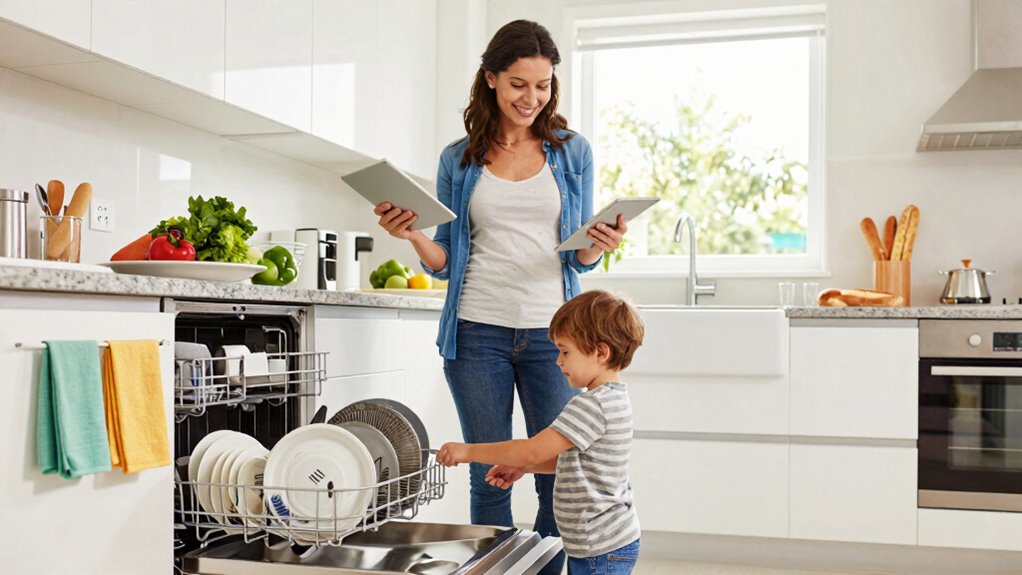

To stop chore wars, create an appliance ownership plan by recognizing shared resources and assigning responsibilities. Agree on maintenance schedules, rotate chores for fairness, and keep open communication about appliance issues. Using technology can help streamline schedules and repairs. By clarifying who handles each appliance and promoting teamwork, resentment decreases, and cooperation improves. If you want to learn more ways to implement this system effectively, there’s plenty to discover that can make household chores smoother.
Key Takeaways
- Treat appliances as shared resources, not personal property, to foster cooperation and reduce ownership disputes.
- Clearly assign maintenance responsibilities for each appliance to ensure accountability without blame.
- Establish and stick to maintenance schedules to prevent last-minute chores and appliance breakdowns.
- Rotate chores periodically to ensure fairness and prevent resentment over repetitive tasks.
- Use open communication and technology to address issues promptly and coordinate shared appliance upkeep.

Managing household chores often feels like a battle between who owns which appliances and how responsibilities are divided. It’s easy to get caught up in household negotiations, especially when appliances seem to become symbols of ownership or control. Who’s responsible for fixing the dishwasher? Who’s in charge of cleaning the coffee maker? These questions can spark tension, but they don’t have to. Creating a clear plan around appliance ownership can simplify things and reduce resentment. The key is establishing a system that everyone understands and agrees on, especially when it comes to appliance maintenance.
First, recognize that appliances are shared resources, not personal property. When everyone understands that, it becomes easier to approach chores collaboratively rather than competitively. You might start by listing out all the major appliances—washer, dryer, refrigerator, microwave, vacuum, and so on—and deciding who will be responsible for their upkeep. This isn’t about assigning blame but about creating accountability. For example, if the fridge needs cleaning or the vacuum requires repairs, there’s a predefined person who handles those tasks. This way, chores don’t fall through the cracks, and no one feels burdened with everything.
Household negotiations become smoother when you set clear expectations from the start. Agree on who will handle appliance maintenance and how often it should be done. For instance, scheduling regular fridge cleanouts or filter replacements ensures appliances run efficiently and last longer. When everyone knows their responsibilities upfront, it reduces the last-minute scramble or disputes about who should do what. It also encourages proactive communication—if an appliance starts acting up, you already have a plan to address it, rather than waiting until it becomes a major issue.
Another effective approach is to rotate responsibilities periodically, so no one feels stuck with the same chores forever. Rotation keeps things fair and gives everyone a chance to learn about appliance maintenance. Plus, it prevents resentment from building up if one person constantly handles the same task. When chores are shared equitably and responsibilities are clearly outlined, household negotiations become less tense. Everyone feels more in control because they know their role and what’s expected.
Finally, keep open lines of communication. If an appliance needs repairs or isn’t functioning properly, discuss it promptly. Addressing issues early prevents escalation and keeps appliances running smoothly. Remember, the goal isn’t just to get chores done but to maintain a cooperative environment where responsibilities are shared fairly. When appliance ownership is clear and household negotiations are handled thoughtfully, you’ll find that chores become less of a battleground and more of a team effort. Additionally, understanding the role of technology in maintenance can help streamline repairs and scheduling, making household management even more efficient.

Agreatby Solid Wood Board Game Table for 4–6 Players, Dining & Gaming Table with 57.5" x 33.8" Big Play Area, Removable Top, Neoprene Play Mat, Leaf Storage Rack, 6 Cup Holders & Trays, Nature
🎲THE ONLY TABLE THAT SAVES YOUR GAME — AND YOUR NIGHT: Don’t restart your game. Don’t lose your...
As an affiliate, we earn on qualifying purchases.
Frequently Asked Questions
How Is Appliance Ownership Divided Among Household Members?
You establish clear ownership of appliances by assigning responsibilities to each household member. This promotes shared responsibilities and prevents disputes. Everyone knows which appliances they’re responsible for, ensuring accountability and reducing resentment. Regularly review and update these roles to keep ownership clarity. By doing so, you foster a cooperative environment where chores and appliance management feel fair and organized, making household life smoother and more harmonious.
What Happens if Someone Damages the Shared Appliance?
If someone damages the shared appliance, you should check your appliance insurance policy to see if repairs are covered. Typically, damage liability falls on the person responsible, but having clear agreements helps prevent disputes. Encourage open communication to resolve issues quickly, and consider adding protection plans to minimize costs. Taking these steps guarantees everyone feels accountable and reduces resentment over accidental damage.
Can This Plan Adapt to Different Household Sizes?
Did you know that households with 4+ members often face more disputes over appliances? This plan easily accommodates different household sizes, helping manage privacy concerns and shared responsibilities. Whether you live in a rental property or your own home, you can customize rules to suit your needs. It encourages fairness, keeps resentment at bay, and ensures everyone respects shared appliances, regardless of how many people are involved.
How Are Maintenance Costs Managed and Shared?
You manage shared maintenance costs by setting up a clear system where everyone contributes to appliance replacement and upkeep. You can use a shared fund or divide expenses based on usage to guarantee fairness. Regularly schedule inspections and maintenance to prevent costly repairs, and document all expenses. This way, you keep everyone accountable, avoid resentment, and make sure appliances stay in good condition without unexpected financial burdens.
What if Someone Refuses to Participate in Appliance Ownership?
When someone refuses to participate in appliance ownership, it’s like a silent barrier blocking shared expenses and participation incentives. You can’t force involvement, but you can encourage dialogue, emphasizing fairness and teamwork. Offer flexible options or incentives that highlight the benefits of shared responsibility. If resistance persists, consider revisiting agreements, ensuring everyone understands their role and the collective effort needed for smooth, cooperative living.

Board Game Table with Removable Table Top, Seats 4 to 6 Players with 57in x 33in Play Area, Includes Play Mat, Detachable Cup Holders and Dice Trays, Minimal Assembly Required
Elevate your game night with this purpose-designed board game table! Built with a 4ft-9in x 2ft-9in recessed "vault"...
As an affiliate, we earn on qualifying purchases.
Conclusion
By embracing shared appliance ownership, you turn the tide of resentment into harmony. This plan isn’t just about dividing chores; it’s about crafting a symphony of cooperation where everyone feels valued. Imagine a household where resentment dissolves like sugar in tea, leaving only sweetness behind. When you prioritize fairness and collective effort, you create a home that sings with unity—proof that, in the grand dance of chores, harmony is always within reach.

Board Game Table w/ Removable Top & PU Leather Mat, 2-in-1 Dining and Gaming Table for 4–6 Players, w/ Storage Shelves, Cup Holders, and Corner Protectors, for Card Games, DND, Poker, Building Blocks
【2-in-1 Dining & Gaming Table】Easily switch between dining and gaming! Lift the removable tabletop to reveal a recessed...
As an affiliate, we earn on qualifying purchases.

LYNSLIM Board Game Table, 65"x 39" Solid Wood Dining and Gaming Table with Removable Table Top, Seats 4 to 6 Players with 58in x 34in Play Area, Includes Play Mat, Detachable Cup Holders & Trays
Board Game Table
As an affiliate, we earn on qualifying purchases.