
TL;DR

Get the little things that make your day delivered free with Prime
- Fast, free delivery on millions of items
- Prime Video, Amazon Music and more included
- Member-only deals all year
Becoming Minimalist published a personal essay recalling how a childhood with limited spending money taught its writer lessons about trade-offs, saving, giving and earning. The piece is a reflection, not a new study or policy announcement; its advice comes from the author’s experience and is not presented as financial research.
Becoming Minimalist has published a personal essay in which its writer recalls how growing up with limited money taught him lessons about spending, saving, giving and work. The account describes childhood experiences rather than new financial research, offering readers a firsthand perspective on how early household routines shaped one person’s later choices.
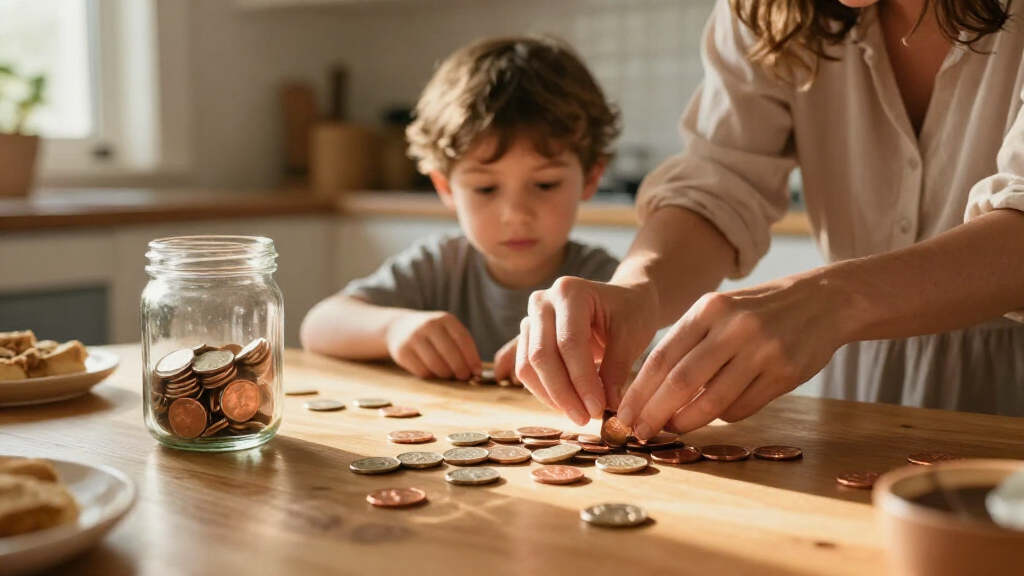
The writer says he grew up mainly in Aberdeen, South Dakota, and Wahpeton, North Dakota, in a family of five. His parents gave the children an allowance of 50 cents on Sunday mornings: one quarter to keep and one quarter for the church offering. He writes that he still thinks about the practice decades later as a lesson in generosity.
Other memories center on limits and earning. As a child, he had to choose between buying candy or a toy, rather than both. In high school, he saw his twin brother receive a stereo after saving for it, while he had already spent his own money on smaller purchases. Later, his parents allowed the children to earn extra allowance by doing chores; after the allowance ended, he says, getting money meant working for it.
The essay also connects money with everyday life beyond purchases. The author recalls having a loving, stable home despite the family’s limited means, and says time with friends—riding bikes, playing football or spending time in a basement—was more rewarding than owning many things. He describes a nearby store about 0.7 miles away along a busy road, making an impulse purchase require more effort than ordering something online does today.
How Childhood Limits Shape Spending
The essay’s relevance lies in its contrast between deliberate purchases and easy access to buying. The writer argues that having to choose, save or make an effort to reach a store made the consequences of spending more visible. In his view, digital shopping and credit cards can make limits feel less immediate, even though money and other resources remain finite.
That argument is the author’s interpretation, not a measured finding about consumer behavior. Still, the examples give readers a concrete way to think about everyday decisions: whether a purchase is worth giving up another use for the money, whether waiting and saving changes the choice, and whether belongings take time away from relationships or other priorities. The piece also frames generosity and work as habits learned through small, repeated experiences rather than abstract financial rules.
Popular right now

Ninja Foodi Air Fryer 10 Qt DualZone XL 6-in-1 Grey (DZ401)

Vitamix Touch & Go Advance 32-Ounce Bar Blender, White

Breville Barista Express Espresso Machine with Built-In Grinder, Black Sesame
As an affiliate, we earn on qualifying purchases.
Allowance, Saving and Small Choices
The article is written as a personal recollection, drawing on family routines rather than presenting a survey, expert interview or financial data. The writer describes two allowance arrangements: first, the weekly two-quarter split between personal spending and giving; later, an arrangement in which additional chores could bring additional allowance. He says he does not remember exactly when his parents stopped giving the allowance, but believes it was before junior high school.
The source lists ten lessons, but the supplied text ends partway through the seventh, which concerns how the effort required to make a purchase can affect whether someone buys. The available material specifically describes childhood trips to a gas station for baseball cards or candy and contrasts them with modern online shopping. It does not provide the remaining lessons, so this account sticks to the points included in the source excerpt.
““When we receive, we give first.””
— The essay’s author, describing the childhood allowance
Limits of the Personal Account
The supplied source does not establish when the essay was published, and it contains only part of the author’s list. The remaining lessons are not available in the provided material. The essay also does not include financial data or outside evidence to test its broader observations about credit cards, online shopping, work or the value of possessions.
Details such as the family’s income, the value of the allowance in today’s money and how the author’s views affected his later financial decisions are not given. The account should be read as one person’s recollection and interpretation, not as a universal description of childhood or a substitute for individualized financial guidance.
No Further Development Reported
The source describes a published essay and provides no scheduled follow-up, official response or forthcoming event. Readers seeking the complete list can consult the original Becoming Minimalist article; the supplied excerpt does not include all ten lessons. Any broader conclusions about how childhood allowances or shopping access affect adult finances would require evidence beyond the personal account.
Key Questions
What is the essay about?
It recounts how the author says childhood experiences taught him about trade-offs, saving, generosity, earning money and finding enjoyment in relationships rather than possessions.
He says his parents gave each child two quarters every Sunday: one to keep and one to put in the church offering. A later system let the children earn extra allowance by doing additional chores.
Does the article provide financial research or professional advice?
No. The supplied material is a personal essay based on the author’s memories and opinions. It does not present a study, financial data or individualized advice.
Are all ten lessons included in the source material?
No. The provided text contains the opening and part of the seventh lesson, then cuts off. The remaining lessons cannot be confirmed from the supplied excerpt.
Source: becomingminimalist.com