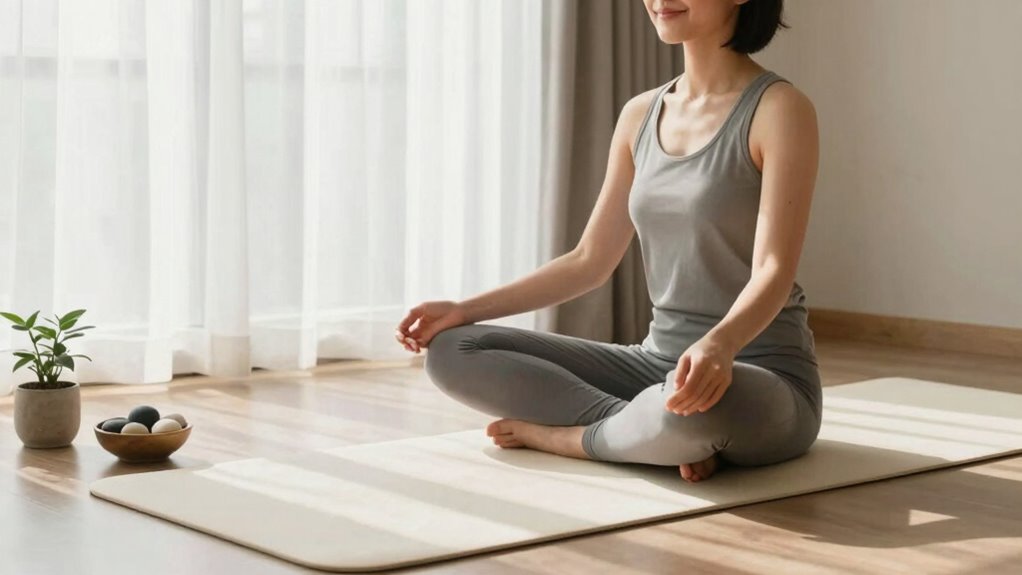

Starting breathwork is simple—you just sit comfortably, close your eyes if you like, and focus on your breath. Techniques like deep belly breathing or box breathing are easy to learn and can be done anywhere, anytime. Keep your inhaling and exhaling slow and controlled. Practice a few minutes daily, and you’ll notice more calm and clarity over time. Stick with it, and you’ll discover even more ways to make breathwork feel natural and effortless.

Get the little things that make your day delivered free with Prime
- Fast, free delivery on millions of items
- Prime Video, Amazon Music and more included
- Member-only deals all year
Key Takeaways
- Start with simple, comfortable seated positions and observe your normal breathing to ease into the practice.
- Focus on slow, deep belly breaths, inhaling and exhaling through the nose for natural relaxation.
- Practice easy techniques like box breathing or diaphragmatic breathing that require minimal effort to learn.
- Incorporate 3-5 minutes daily to build consistency without feeling overwhelming.
- Use breathwork to enhance relaxation, reduce stress, and improve mental clarity effortlessly over time.

If you’re new to breathwork, you might wonder how to get started and what benefits it can offer. The good news is that breathwork is simple to begin, and you don’t need any special equipment or prior experience. At its core, it’s about paying attention to your breath—using specific techniques to help calm your mind, manage stress, and improve your overall well-being. Many people find that breathwork complements other relaxation practices like meditation techniques, making it a versatile tool for stress management. Whether you’re dealing with daily pressure or seeking a moment of peace, breathwork can be a straightforward way to find calm.
Getting started is easier than you might think. You can begin by sitting comfortably in a quiet place, closing your eyes if you like, and just observing your normal breathing for a few moments. From there, you can try simple techniques such as deep belly breathing. Focus on inhaling slowly through your nose, filling your lungs completely, then exhaling just as slowly through your mouth or nose. This practice naturally encourages your nervous system to relax, reducing the tension that often accompanies stress. As you become more comfortable, you can explore other techniques, like box breathing or diaphragmatic breathing, which build on the same principle of controlled, mindful inhaling and exhaling. These methods are easy to learn and can be practiced anywhere—at your desk, before bed, or during a break. Incorporating mindful breathing into your routine can also enhance your overall relaxation and mental clarity.
The key to making breathwork feel easy is consistency, not complexity. You don’t need to spend hours or master complicated routines. Even a few minutes a day can make a big difference. As you practice regularly, you’ll notice that it becomes more natural, and your ability to use it during stressful moments improves. Incorporating breathwork into your daily routine can also enhance your meditation techniques, deepening your overall relaxation and mindfulness. This synergy helps you manage stress more effectively, preventing it from building up over time. Developing a simple breathwork routine can help you stay consistent and make the practice feel more approachable.
As an affiliate, we earn on qualifying purchases.
Frequently Asked Questions
Can Breathwork Help With Specific Medical Conditions?
Breathwork can offer medical benefits for certain conditions by improving your overall well-being. Using specific breathing techniques, you may reduce symptoms of anxiety, depression, and stress. It can also help manage respiratory issues like asthma or COPD by strengthening your lungs and enhancing airflow. However, it’s crucial to consult your healthcare provider before starting breathwork, especially if you have serious medical conditions, to guarantee it’s safe and effective for your needs.
How Often Should I Practice Breathwork for Best Results?
You should practice breathwork daily, ideally dedicating 10 to 15 minutes to foster consistent progress. By focusing on breath awareness and mindful breathing, you deepen your connection with your body and mind. Coincidentally, many find that regular sessions help reduce stress and improve focus. With daily practice, you’ll notice subtle shifts in your well-being, making breathwork an effortless yet powerful part of your routine.
Are There Any Risks or Side Effects of Breathwork?
Breathwork is generally safe, but some people might experience dizziness, emotional release, or increased anxiety. If you have underlying health conditions or mental health concerns, consult a healthcare professional first. During practice, listen to your body and stop if you feel uncomfortable. Be mindful that breathwork can enhance mental clarity and emotional release, so proceed gently, especially if you’re new, to avoid any adverse reactions.
What Equipment or Space Do I Need to Start?
To start breathwork, you don’t need much equipment—just a quiet, comfortable space where you can focus. Find a spot that allows for relaxed breath control and minimal distractions. You might want a cushion or chair for comfort. Your main tools are your breath and focus, so prioritize a calm environment to practice relaxation techniques. Keep your space simple, peaceful, and free from interruptions to make the most of your sessions.
Can Children or Pregnant Women Safely Do Breathwork?
Breathwork can be a game-changer, but safety is paramount. Children and pregnant women should approach breathwork with caution. Child safety means avoiding intense techniques, and pregnant women should consult their healthcare provider before starting any new practice. Gentle, modified exercises are usually safe, but always prioritize individual needs. If in doubt, seek professional guidance to guarantee a safe, beneficial experience for everyone involved.
Conclusion
As you start your breathwork journey, remember that simplicity often holds the greatest power. It’s easy to overcomplicate, chasing complex techniques, but true ease comes from gentle, mindful breathing. Like a peaceful lake reflecting the sky, your practice becomes clearer when you let go of unnecessary effort. Breathwork isn’t about perfection; it’s about connection. Embrace the simplicity, and you’ll find that even the most profound calm can emerge from your very first, effortless breath.
Halloween Picks
halloween
As an affiliate, we earn on qualifying purchases.