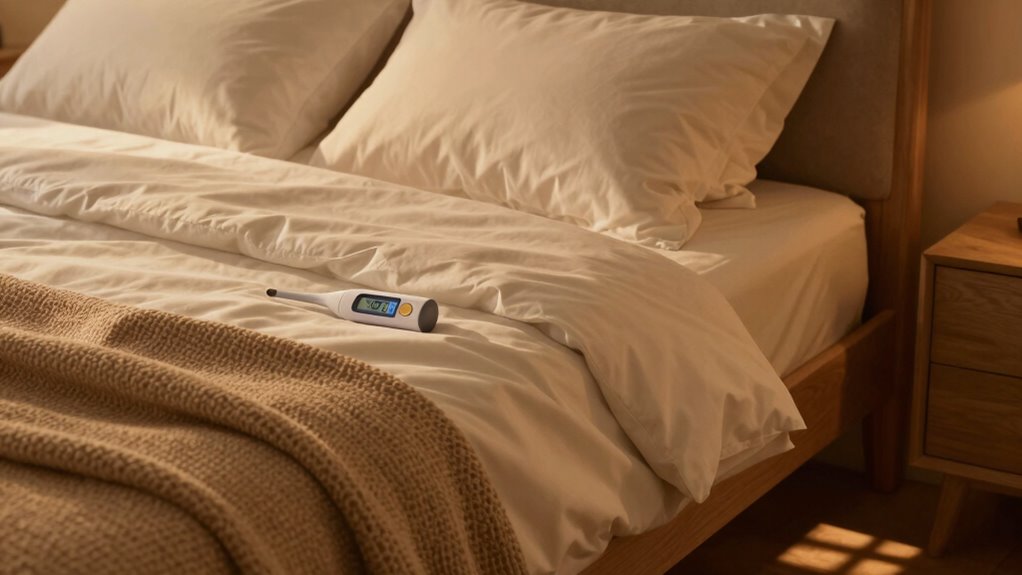

To sleep deeper tonight, focus on maintaining your bedroom temperature within 60 to 67°F (15.5-19.5°C), the ideal range for thermoregulation. Use a thermostat, fan, or heater to keep the environment steady and choose breathable, moisture-wicking bedding to prevent overheating. Consistently controlling your sleep environment helps your body cool naturally and promotes restorative sleep. Keep this in mind, and you’ll uncover how small adjustments can profoundly improve your sleep quality.
Key Takeaways
- Set your bedroom temperature between 60-67°F (15.5-19.5°C) to optimize sleep thermoregulation.
- Use a programmable thermostat or fan to maintain a consistent sleep environment each night.
- Choose breathable, moisture-wicking bedding like cotton or linen to help regulate body temperature.
- Adjust your sleepwear and blankets to prevent overheating or feeling too cold during sleep.
- Keep the room dark and quiet to support natural sleep cycles and temperature regulation.

Understanding how sleep temperature affects your rest is essential for optimizing your sleep quality. Your bedroom climate plays a significant role in how well you sleep, directly influencing your body’s ability to regulate its temperature through sleep thermoregulation. When your bedroom is too hot or too cold, it can disrupt your natural sleep cycles, making it harder to fall asleep and stay asleep. To improve your sleep, you need to pay attention to the environment you create.
Your body naturally lowers its core temperature as part of the sleep process, signaling that it’s time to rest. If your bedroom environment isn’t conducive to this process, your sleep thermoregulation becomes impaired. For example, a room that’s too warm can prevent your body from cooling down properly, leading to restless nights and early awakenings. Conversely, a room that’s too cold can cause discomfort, making it difficult to relax and drift into deep sleep. Finding the right temperature balance is key.
Proper sleep depends on a balanced room temperature that supports your body’s natural cooling process.
The ideal bedroom climate for most people hovers between 60 and 67 degrees Fahrenheit (15.5 to 19.5 degrees Celsius). This range supports your body’s natural cooling process, allowing you to fall asleep faster and enjoy more restorative sleep cycles. To achieve this, you might consider adjusting your thermostat or using fans and space heaters as needed. Additionally, lightweight bedding and breathable pajamas can help regulate your body temperature throughout the night.
It’s also helpful to contemplate how sleep thermoregulation interacts with your bedding choices. Using materials that wick away moisture and promote airflow can prevent overheating. Natural fibers like cotton or linen are excellent options for sheets and pillowcases. If you tend to get cold during the night, layering with a lightweight blanket allows you to adjust your warmth without overheating. Remember, consistency is vital; maintaining a steady bedroom temperature each night helps your body adapt and optimize its natural sleep processes.
Maintaining a consistent bedroom temperature each night can significantly improve your sleep quality by supporting your body’s natural processes.
programmable thermostat for bedroom
As an affiliate, we earn on qualifying purchases.
As an affiliate, we earn on qualifying purchases.
Frequently Asked Questions
How Does Sleep Temperature Affect REM Cycles?
Sleep temperature directly impacts your REM cycles by affecting thermoregulation efficiency and metabolic rate. When your room is too warm or cold, your body struggles to maintain ideal temperature, disrupting your sleep stages. A cooler, comfortable environment helps your body regulate temperature better, allowing for deeper REM sleep. You sleep more soundly, with less interruption, because your body’s natural processes function smoothly, promoting restorative sleep and better overall health.
Can Changing Temperature Improve Sleep for Shift Workers?
Yes, changing the temperature can improve your sleep as a shift worker by optimizing your thermal comfort. Adjust your sleep environment to stay cooler if you sleep during the day or warmer at night, helping your body relax and fall asleep faster. A comfortable sleep environment promotes better quality rest, enabling you to recharge effectively despite irregular schedules. Small temperature tweaks can make a significant difference in your sleep success.
Does Room Temperature Impact Sleep Quality Differently for Men and Women?
Room temperature affects sleep quality differently for men and women, like tailored suits fitting each perfectly. Your thermoregulation differences mean women often need slightly cooler environments, while men might sleep better in warmer settings. Gender-specific sleep needs influence how temperature impacts your rest. By adjusting your room’s temperature accordingly, you optimize your sleep, helping you wake up refreshed and ready to conquer the day.
What Is the Ideal Sleep Temperature for Children?
You should aim for a pediatric sleep temperature of around 65-70°F, as this helps support proper temperature regulation for children. Maintaining this range creates a cozy environment that promotes better sleep quality and comfort. Keep in mind that each child is unique, so adjust the room temperature if your child seems uncomfortable or restless. Ensuring a consistent, cool room helps your kid’s body regulate temperature and sleep more soundly through the night.
How Quickly Does Body Temperature Adjust to Sleep Environment Changes?
Your body typically adjusts to sleep environment changes within 15 to 30 minutes, thanks to thermoregulation efficiency. During this time, your core temperature begins to drop, signaling your body to prepare for sleep. The quicker your sleep environment adapts—like lowering the room temperature—the faster your body can regulate temperature effectively. This process helps you fall asleep faster and enjoy deeper, more restorative sleep tonight.
breathable moisture-wicking bedding
As an affiliate, we earn on qualifying purchases.
As an affiliate, we earn on qualifying purchases.
Conclusion
If you want to unseal truly deeper sleep tonight, don’t overlook the power of your sleep temperature. Just one small change could dramatically transform your rest — but the real secret lies in what you do next. Will you experiment with your room’s temperature tonight, or let another night slip by? The choice is yours, and the difference it makes could surprise you. Sleep better—if you dare to try something different tonight.
adjustable sleep blankets
As an affiliate, we earn on qualifying purchases.
As an affiliate, we earn on qualifying purchases.
sleepwear for temperature regulation
As an affiliate, we earn on qualifying purchases.
As an affiliate, we earn on qualifying purchases.