To stop arguments from spiraling, practice slow, deliberate breathing during heated moments. Focus on inhaling deeply through your nose and exhaling slowly through your mouth or nose. This activates your body’s relaxation response, helping you stay calm and centered. Pausing to breathe gives you time to think rather than react impulsively. Consistent use of this technique strengthens your emotional control and improves communication. Keep exploring these strategies to handle conflicts more effectively and maintain healthier interactions.
Key Takeaways
- Practice slow, deep breathing during conflicts to activate the relaxation response and reduce emotional escalation.
- Focus on inhaling through the nose and exhaling slowly to promote calmness and prevent spiraling.
- Use brief pauses to consciously regulate your breathing, creating space for thoughtful responses instead of reactive ones.
- Incorporate breathing exercises before arguments to increase emotional resilience and maintain composure during disputes.
- Consistently applying these techniques helps develop self-control and minimizes the tendency for conflicts to escalate.
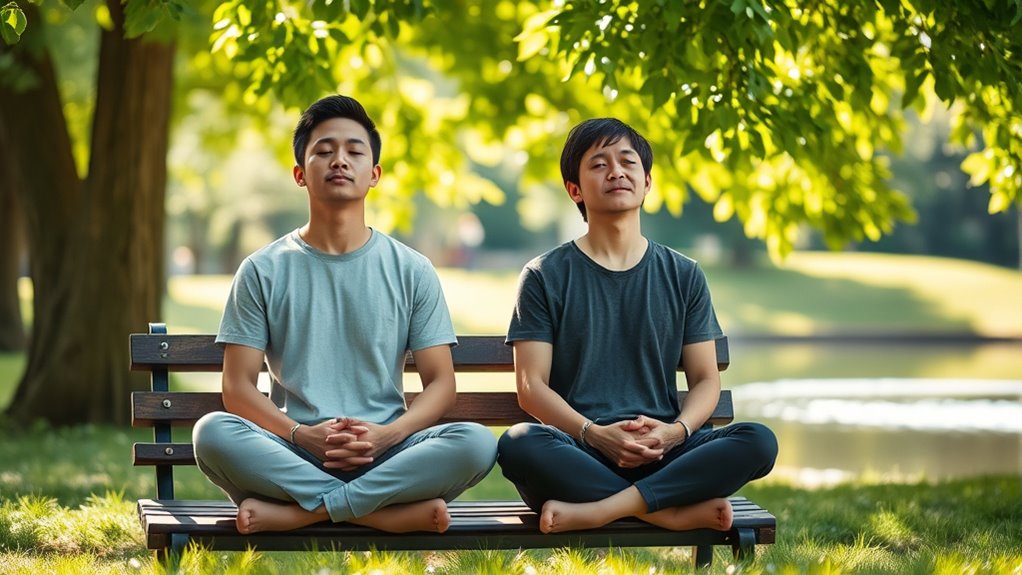
When emotions run high during an argument, taking a moment to focus on your breath can prevent the situation from spiraling out of control. This simple act is a powerful tool for emotional regulation, helping you stay grounded instead of reacting impulsively. When you consciously control your breathing, you interrupt the surge of anger, frustration, or defensiveness that fuels conflict. As a result, you create space to respond thoughtfully rather than impulsively, making it easier to navigate disagreements calmly. This practice also enhances conflict resolution because it fosters a sense of control and clarity, allowing you to communicate more effectively and listen without bias.
You might notice that during heated moments, your breathing becomes shallow or rapid. That’s natural, but it’s exactly what you want to change. Slow, deliberate breaths help signal to your nervous system that there’s no immediate threat, calming your mind and body. When you inhale slowly through your nose, filling your lungs completely, and then exhale just as deliberately through your mouth or nose, you activate the parasympathetic nervous system—the part responsible for relaxation. This shift reduces the intensity of your emotional response, making it easier to approach the conflict with a clear head.
Slow, deliberate breaths activate relaxation and calm your emotional response during heated moments.
Practicing this breathing technique before or during an argument can greatly improve your emotional regulation. Instead of reacting with hurtful words or shutting down, you can pause—breathe—and choose a more constructive way to engage. It’s helpful to remind yourself that taking a brief pause doesn’t mean avoiding the conflict; it means handling it more effectively. Over time, this practice becomes second nature, and you’ll find yourself more capable of managing difficult conversations without losing your composure. In terms of conflict resolution, this translates to fewer misunderstandings and less escalation, as you’re more present and attentive to the actual issues rather than getting caught up in emotional turbulence.
Incorporating controlled breathing into your conflict toolkit requires consistency. Whenever you notice yourself getting agitated, take a deep breath, count to three as you inhale, then count to three as you exhale. Repeat this a few times until your heart rate slows and your thoughts stabilize. This simple technique is accessible anywhere—whether you’re at home, at work, or in a heated debate—and it can make all the difference in how you handle disagreements. By mastering your breath, you empower yourself to stay emotionally regulated and improve your conflict resolution skills, leading to healthier interactions and stronger relationships.

EHINI Sauna Blanket for SPA
Sauna Blanket for SPA
As an affiliate, we earn on qualifying purchases.
Frequently Asked Questions
Can Breathing Techniques Work in High-Stress Emergencies?
Yes, breathing techniques can work in high-stress emergencies. When panic attacks or intense stress hit, focusing on slow, deep breaths helps calm your nervous system quickly. You regain control, reduce anxiety, and improve your decision-making. Practicing these techniques beforehand makes them more effective when needed. So, in urgent situations, your ability to breathe intentionally can be a powerful tool for stress reduction and maintaining clarity.
How Long Should I Practice Breathing Exercises Daily?
Think of your mindfulness practice as planting a small seed each day. You should aim for 5 to 10 minutes daily, gradually nurturing it into a calming routine. Consistency is key—set aside time in your daily routine to breathe intentionally, helping you stay centered. Over time, this small daily practice transforms your ability to manage stress and prevent arguments from spiraling, like a garden flourishing with patience.
Are There Specific Breathing Methods for Different Types of Arguments?
Yes, different arguments may benefit from specific breathing methods. For emotional regulation, try mindful breathing—slowly inhaling through your nose and exhaling through your mouth to calm your nerves. During heated exchanges, focus on deep, diaphragmatic breaths to reduce tension and stay centered. Adjust your technique based on the situation, using mindful breathing to maintain control and prevent the argument from escalating.
Can Breathing Techniques Replace Professional Anger Management?
Think of breathing techniques as a trusty compass guiding you through emotional storms. While they help you regain emotional regulation and practice mindfulness training, they can’t substitute professional anger management. Like a map, these techniques support your journey, but a trained guide ensures safe navigation through complex terrain. So, use breathing methods as tools alongside professional help to better manage anger and maintain healthy relationships.
What Are Signs I Should Seek Help Beyond Breathing Exercises?
If you notice that breathing exercises aren’t enough, it’s time to seek mental health support or professional therapy. Signs include persistent anger, frequent arguments, feeling overwhelmed, or if your reactions hurt your relationships. You might also feel numb or hopeless. Don’t ignore these signs; talking to a mental health professional helps address underlying issues and develop effective coping strategies, ensuring you get the support you need to manage your emotions healthily.

RRGFB Infrared Sauna Blanket for Home, Low EMF Carbon Crystal Heating, Portable Dry Sauna Bag for Relaxation, Detoxification, 5.9ft×2.6ft, Sleeveless
【Infrared Sauna Blanket】The heat from our infrared sauna blanket penetrates deep into your body’s tissues, helping to boost...
As an affiliate, we earn on qualifying purchases.
Conclusion
Remember, calmness is contagious. When arguments heat up, take a deep breath and pause. Using simple breathing techniques can help you regain control, think clearly, and prevent issues from spiraling out of hand. As the saying goes, “A gentle answer turns away wrath.” So next time tensions rise, breathe deeply, stay calm, and choose your words wisely. It’s a powerful way to keep relationships healthy and conflicts manageable.

yamxun Infrared Sauna Blanket for Home: Portable Full Body Detox Wrap with Deep Heat Relaxation - Adjustable 86-176°F Far Infrared Therapy 20-60 Min Timer Waterproof Foldable Design 71 x 31.5 Inch
Deep Infrared Detox: This sauna blanket uses infrared heat to raise your body temperature, promoting deep sweat, improved...
As an affiliate, we earn on qualifying purchases.

Lifepro RejuvaWrap Infrared Sauna Blanket for Detox & Relaxation – Low EMF Carbon Fiber Heating, 9 Temp Levels, 5 Colors – Portable Sauna Blanket Infrared with Waterproof Interior & Carry Bag
DEEP INFRARED HEAT THERAPY: Experience full-body warmth with far infrared carbon fiber heating that penetrates deeply for relaxation,...
As an affiliate, we earn on qualifying purchases.