
Burnout sneakily drains your energy and impacts your well-being long before it fully takes hold. You might notice feelings of exhaustion, irritability, or emotional detachment, even if you’ve had enough sleep. Physical signs like headaches, muscle tension, or sluggishness can also appear. Recognizing these early cues and paying attention to your mental, emotional, and physical states help prevent burnout from hurting your home life. To learn more about spotting these signs early, keep exploring this topic.
Key Takeaways
- Recognize emotional exhaustion signs like irritability, detachment, and feeling overwhelmed to address issues early.
- Notice physical fatigue indicators such as constant tiredness, aches, and sluggishness to prevent burnout escalation.
- Identify progression signs like loss of motivation and joy, which can affect your home life and relationships.
- Be aware that ignoring early symptoms may lead to anxiety, depression, and physical health problems.
- Prioritize self-care and workload management to maintain balance and avoid burnout’s negative impact on home life.
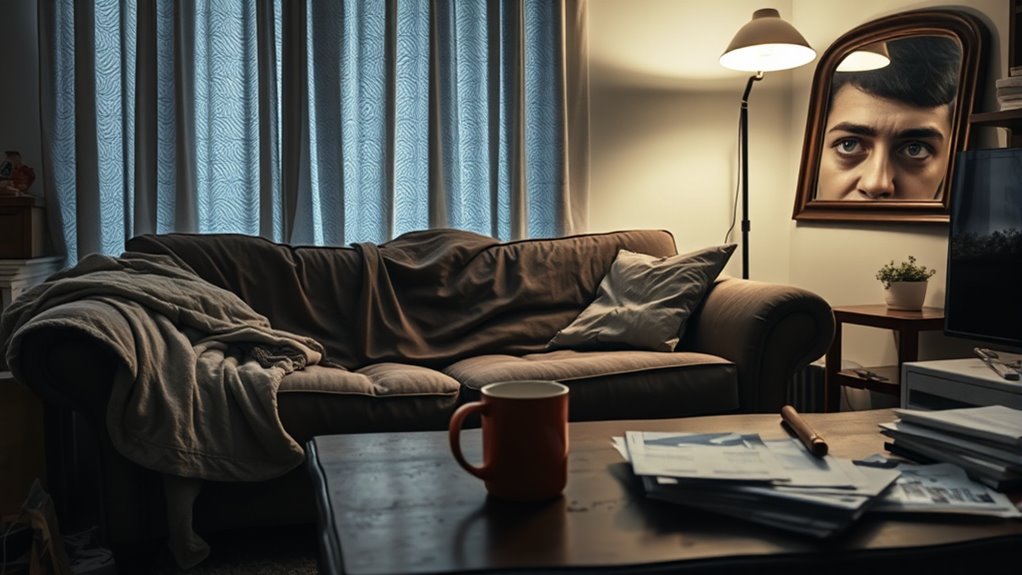
Burnout can sneak up on you, often quietly manifesting through subtle signs before it becomes overwhelming. One of the earliest indicators is emotional exhaustion. You might find yourself feeling drained, overwhelmed by everyday tasks that once seemed manageable. It’s like your emotional reserves are running on empty, leaving you unable to respond to situations with the usual patience or enthusiasm. Small frustrations may seem magnified, and even minor setbacks can feel like insurmountable obstacles. You may notice a persistent sense of irritability or detachment, as if your emotional energy has been depleted. This exhaustion isn’t just mental; it’s visceral, affecting how you connect with others and how you handle your responsibilities.
Emotional exhaustion signals burnout, draining your patience, enthusiasm, and emotional reserves, making everyday tasks feel overwhelming.
Alongside emotional exhaustion, physical fatigue often makes its presence felt. You might wake up feeling exhausted despite a full night’s sleep or find yourself yawning frequently during the day. Tasks that once required minimal effort now seem intimidating, and your body feels heavy, sluggish, or achy. It’s common to experience muscle tension, headaches, or stomach discomfort as your body reacts to prolonged stress. This physical fatigue isn’t simply tiredness from lack of sleep but a deeper, more persistent exhaustion that wears you down day after day. You could notice that even small physical activities, like walking or climbing stairs, leave you breathless or drained, which adds to your sense of frustration and helplessness.
As burnout progresses, these signs become more noticeable and harder to ignore. You might start to feel emotionally numb, unable to find joy or satisfaction in things you once loved. Your motivation diminishes, and you may find yourself procrastinating or avoiding responsibilities entirely. This emotional and physical toll can create a cycle where your fatigue feeds into emotional exhaustion, and vice versa, making it harder to break free. Recognizing these early signs is vital because they often appear before burnout hits its peak, giving you a chance to take action. Ignoring these cues can lead to more severe consequences, such as anxiety, depression, or physical health issues.
Understanding the connection between emotional exhaustion and physical fatigue helps you catch burnout early. Pay attention to how you’re feeling—mentally, emotionally, and physically. When you start noticing these signs, it’s a clear signal to pause, reassess your workload, and prioritize self-care. Addressing burnout early can prevent it from wreaking havoc on your home life and overall well-being, ensuring you maintain the balance and energy you need to face each day.
Frequently Asked Questions
Can Burnout Affect My Relationships With Family and Friends?
Burnout can definitely affect your relationships with family and friends. When you’re emotionally exhausted, you might become irritable or distant, making it hard to connect. This often leads to communication breakdown, where you may stop sharing your feelings or listening effectively. As a result, your loved ones might feel neglected or misunderstood, which worsens the situation. Recognizing burnout early helps you protect your relationships and maintain healthy, supportive connections.
How Long Does It Typically Take to Recover From Burnout?
Recovery time from burnout varies based on your workload management and emotional resilience. It can take anywhere from a few weeks to several months, depending on how effectively you address stressors and prioritize self-care. During this period, focus on setting boundaries, seeking support, and rebuilding your emotional resilience. Be patient with yourself, and remember that consistent effort in managing stress is key to a healthy recovery.
Are There Specific Habits That Can Prevent Burnout?
Prevent burnout by building balanced habits like practicing mindfulness and managing your time wisely. Start your day with mindfulness practices to clear your mind and boost your mood. Use effective time management to prioritize tasks and set boundaries, avoiding overload. Consistent self-care, scheduled breaks, and healthy habits create a fortress against fatigue. By blending mindfulness and time management, you protect your well-being and prevent burnout before it begins.
Does Burnout Only Occur in High-Stress Professions?
Burnout doesn’t only happen in high-stress professions. Workplace stress and emotional exhaustion can affect anyone, whether you’re in a demanding job or managing household responsibilities. If you ignore signs like fatigue, irritability, or feeling overwhelmed, burnout can creep in. It is crucial to recognize these early symptoms and take steps to manage stress, set boundaries, and prioritize self-care, no matter what your daily routine involves.
Can Burnout Lead to Physical Health Problems?
Yes, burnout can lead to physical health problems. When you experience prolonged stress symptoms, your body reacts with health consequences like headaches, fatigue, and weakened immunity. Ignoring burnout symptoms may increase your risk of more serious issues such as heart problems or chronic fatigue. Recognizing early signs helps you take action to reduce stress and protect your health before burnout causes lasting damage.
Conclusion
So, here’s the irony: if you ignore those burnout signs, you might just end up feeling worse—more exhausted, less productive, and missing out on life’s joys. It’s funny how pushing yourself too hard can backfire, isn’t it? But don’t worry, catching those early warning signs now means you can prevent the crash later. Take care of yourself; the only thing worse than burnout is realizing too late you should’ve slowed down.