
When using a cable machine, choose handles that feel comfortable and secure to improve control and reduce joint strain. Adjust angles by changing pulley heights to target different muscles and make your workout more effective. Always maintain proper form by engaging your core and controlling your movements to prevent injuries and guarantee safety. Regularly inspect your equipment for wear, and secure attachments properly. Keep these basics in mind, and you’ll get the most from your workouts as you explore further.
Key Takeaways
- Select appropriate handles (single, double, ropes, bars) for comfort, security, and specific exercise movements.
- Adjust pulley angles and heights to target different muscle groups effectively.
- Vary resistance by changing handle types and angles to customize workout intensity.
- Ensure all attachments are securely fastened and equipment is well-maintained for safety.
- Maintain proper form with controlled movements, engaging core and avoiding joint overextension.
Have you ever wondered how to effectively target multiple muscle groups with one versatile piece of equipment? The cable machine is a perfect solution, offering a range of exercises that can adapt to your fitness goals. To maximize your workout, understanding handles, angles, and proper form is essential. These elements directly influence resistance variation, which allows you to customize intensity and challenge different muscles effectively, and guarantee equipment safety, preventing injuries and optimizing performance.
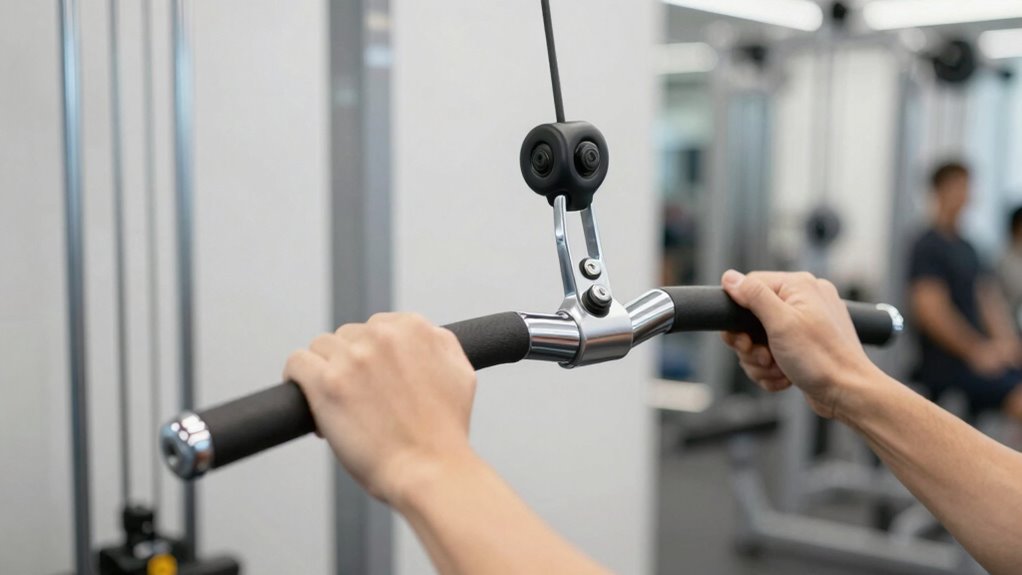
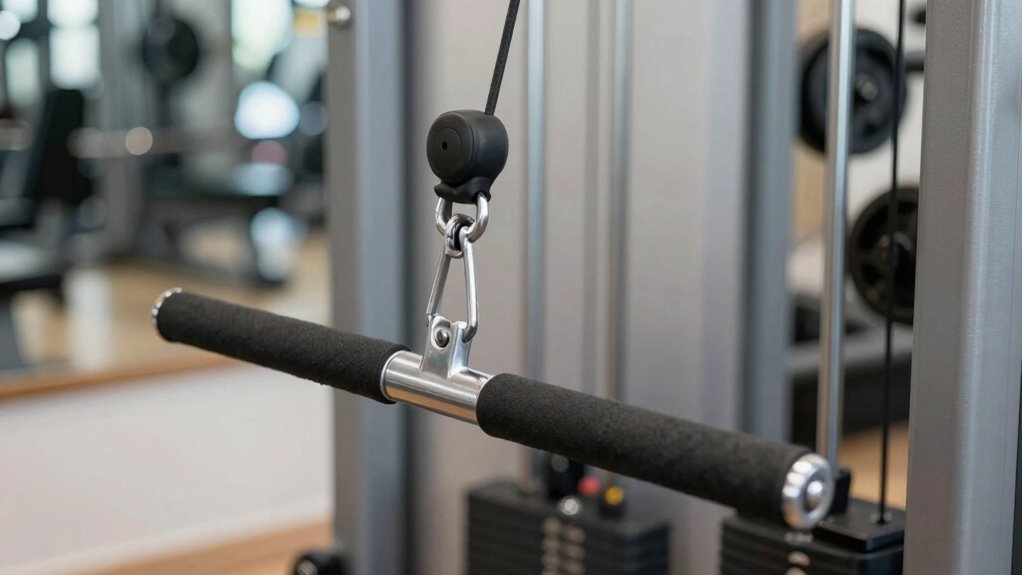
Handles are a fundamental part of the cable machine because they determine how comfortably and securely you can grip during exercises. They come in various styles—single handles, double handles, ropes, or bars—each serving different purposes. Using the right handle for each movement enhances your control and reduces strain on your joints. For example, a rope attachment provides a natural grip for pulling or rowing motions, while a straight bar may be better for bicep curls. When switching handles, double-check that they’re securely attached to avoid accidents, which ties into equipment safety. Properly securing attachments prevents sudden releases that could cause injury. Regularly inspecting the equipment for wear and tear**** ensures all parts function correctly and safely.
Choosing the right handle and securing it properly ensures control, safety, and effective muscle engagement during your cable workouts.
Angles are another essential aspect to consider, as they influence which muscles are targeted during your workout. Moving the cable at different angles changes the resistance pattern, allowing you to engage muscles from multiple perspectives. For example, pulling the cable from high to low targets your lower chest and lats, while pulling from low to high emphasizes the upper chest and shoulders. Adjusting the pulley height and your body’s position creates varied resistance levels, giving you a thorough workout. Always guarantee that the pulley system is correctly aligned and functioning smoothly—this is key for both resistance variation and equipment safety. Misaligned or damaged pulleys can lead to uneven resistance or mechanical failure, risking injury. Understanding resistance variation is crucial for customizing workouts to meet different fitness levels and goals.
Finally, proper form is the foundation of a safe and effective cable workout. Keep your core engaged, avoid overextending joints, and control the movement throughout. Use smooth, controlled motions to prevent jerking or sudden pulls that could strain muscles or damage the equipment. Regularly inspect the cable, handles, and pulleys for wear and tear; replacing worn parts helps maintain safety and consistent resistance. Being aware of wear and tear on the equipment can help prevent unexpected failures during exercise. Additionally, understanding equipment safety and how it relates to the maintenance and proper use of the machine can help you avoid accidents and injuries. By paying attention to these details—handles, angles, and form—you’ll tap into the full potential of the cable machine, targeting multiple muscle groups efficiently while maintaining a safe workout environment.
As an affiliate, we earn on qualifying purchases.
Frequently Asked Questions
How Do I Safely Adjust Cable Machine Weights?
To safely adjust cable machine weights, first check the weight calibration to guarantee accuracy. Always start with a lighter weight to prevent injury and gradually increase. Follow safety precautions by securely locking the weight plates or pins before use. Keep your hands clear when adjusting and double-check the settings. By paying attention to calibration and safety, you’ll prevent accidents and get the most effective workout.
Can Cable Machines Target Every Muscle Group Effectively?
While cable machines aren’t a magic wand for every muscle, they come pretty close with the right approach. You can achieve excellent muscle engagement across most muscle groups by adjusting handles and angles, and incorporating a variety of exercises. The key is to diversify your routine, challenge different muscles, and maintain proper form. With consistency and smart planning, cable machines can become a powerful tool in your workout arsenal.
What Are Common Mistakes When Using Cable Machine Handles?
When using cable machine handles, you often make mistakes like choosing the wrong handle grip variation, which can limit your range of motion or target muscles improperly. Additionally, not checking cable attachment compatibility can cause safety issues or equipment damage. To avoid these mistakes, make certain you’re selecting the appropriate handle grip for your exercise and verify that attachments are compatible with your cable machine, maintaining proper form and safety.
How Often Should I Change Handle Attachments During Workouts?
You should change handle attachments every 10-15 minutes during your workout to keep things fresh and maximize handle versatility. Switching handles frequently prevents workout boredom and guarantees you’re targeting muscles from different angles. Always check attachment compatibility before swapping to avoid accidents. By rotating handles regularly, you keep your routine exciting and effective, making your workout feel like a powerhouse session where every movement hits differently.
Are Cable Machines Suitable for Rehabilitation Exercises?
Yes, cable machines are suitable for rehabilitation exercises, but you should prioritize safety and injury prevention. Use light resistance and controlled movements to avoid overstressing your muscles or joints. Always follow your healthcare provider’s guidance and start with gentle routines. Cable machines allow for adjustable angles and handles, making them versatile for targeted rehab. Remember, proper form and cautious progression are key to ensuring a safe and effective recovery.
Conclusion
As you grasp the handles and set your angles, remember you’re holding the key to unleashing your strength. Each pull and release symbolizes your journey—building resilience, dedication, and progress. The cable machine isn’t just equipment; it’s a mirror reflecting your commitment. With every workout, you’re forging a stronger version of yourself, shaping not only your body but your spirit. Keep pushing, and let the machine remind you: your potential is limitless, waiting to be unlocked with every movement.