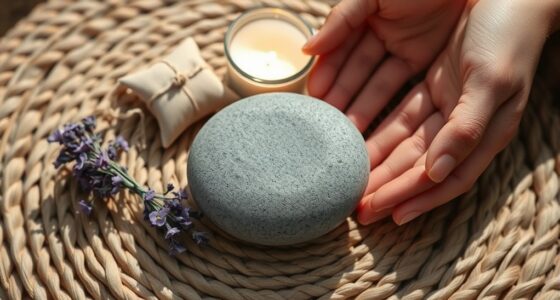
When anxiety moves in and disrupts your house vibes, take control by grounding yourself with simple techniques. Focus on your breath—inhale slowly through your nose, exhale gently through your mouth—to soothe your nervous system. Engage your senses by noticing textures, sounds, or scents around you, helping you reconnect with the present. Practicing these steps regularly can create a calmer space inside and out, and if you keep exploring, you’ll discover even more ways to restore balance.
Key Takeaways
- Use mindful breathing to anchor yourself and reduce internal chaos.
- Engage your senses by observing and touching surrounding objects to ground your mind.
- Practice deep breaths before or during grounding exercises for added calmness.
- Create simple routines combining breathing and sensory focus for effective anxiety management.
- Regularly practicing these techniques helps maintain calm vibes in your home environment.

When anxiety moves in, it can feel like an uninvited guest taking over your mind and body. Your heart races, your thoughts spiral, and suddenly, peace feels out of reach. During these moments, taking control might seem impossible, but grounding yourself is easier than you think. One effective way to do this is through mindful breathing. Focus on your breath—inhale slowly through your nose, feeling the air fill your lungs, then exhale gently through your mouth. Repeat this process intentionally, paying attention to each breath. Mindful breathing anchors you to the present moment, helping to quiet the chaos inside your mind. It shifts your focus away from worries and into the simple act of breathing, which is always within your control.
In addition to mindful breathing, grounding exercises are a powerful tool to bring you back to the here and now. These exercises involve engaging your senses and surroundings to reduce anxiety’s grip. For example, find five objects around you and observe them closely—note their textures, colors, and shapes. Touch each item, feeling its surface, temperature, and weight. Listen for distinct sounds nearby or focus on the scent of your environment. By actively involving your senses, grounding exercises help disconnect your mind from anxious thoughts and reconnect you with the present moment. They act as a mental reset, reducing feelings of overwhelm and restoring a sense of stability.
You can combine mindful breathing with grounding exercises to create a simple, effective routine when anxiety strikes. Start with a few deep, mindful breaths to calm your nervous system, then shift into a grounding activity—like holding onto a textured object or focusing on your surroundings. This dual approach anchors your awareness externally and internally, creating a sense of safety amidst the storm. As you practice, you’ll notice these techniques becoming more natural and accessible, allowing you to respond to anxiety with confidence rather than panic.

InnoGear Aromatherapy Diffuser & 10 Essential Oils Set, 400ml Diffuser Ultrasonic Diffuser Cool Mist Humidifier with 4 Timers 7 Colors Light Waterless Auto Off for Valentine's Gift, Dark Wood Grain
Reminder: To ensure proper mist function, please do not refill under tap (use measuring cup only to prevent...
As an affiliate, we earn on qualifying purchases.
Frequently Asked Questions
Can Pets Help Reduce Household Anxiety?
Yes, pets can help reduce household anxiety. Engaging in pet therapy provides comfort and companionship, easing your stress. Pets naturally create calming energy, and their presence can lower your heart rate. Using calming scents like lavender while caring for your pet enhances relaxation. Together, these elements foster a peaceful environment, making your home a sanctuary where anxiety diminishes and tranquility prevails.
How Does Lighting Affect Anxiety Levels at Home?
Lighting psychology shows that natural light helps lower anxiety by boosting your mood and creating a calming environment. You should aim to maximize natural light during the day, using curtains or blinds to control brightness. Artificial lighting, especially harsh or fluorescent lights, can increase stress levels. Opt for warm, soft bulbs in the evening to promote relaxation. Balancing natural and artificial lighting can make your home feel more peaceful and reduce anxiety.
Are Certain Colors More Calming for a House?
Certain colors are more calming for a house, according to color psychology and decorating tips. Soft blues and gentle greens promote relaxation and reduce stress, making them ideal choices for creating a peaceful environment. Avoid loud reds and bright yellows, which can increase energy and anxiety. Use these soothing hues in your living spaces to help you feel calmer and more centered, transforming your home into a tranquil retreat.
What Are Quick Relief Strategies for Sudden Anxiety?
When anxiety hits suddenly, try focusing on your breath with breathing exercises—inhale slowly through your nose, hold, then exhale through your mouth. Incorporate mindfulness techniques by grounding yourself: feel your feet on the ground, notice your surroundings. These quick steps help slow your heart rate and clear your mind, providing immediate relief. Repeat as needed, and remind yourself that this feeling will pass.
How Does Clutter Influence Household Anxiety?
Clutter can heighten your household anxiety by creating visual chaos that overwhelms your senses. To reduce this, try organizational tips like decluttering regularly and designating storage spaces. Incorporate scent therapy with calming aromas like lavender or chamomile to create a soothing atmosphere. These strategies help clear your environment, promote relaxation, and make your home feel more peaceful, ultimately easing your anxiety and restoring a sense of calm.

Waterless Essential Oil Diffuser, Rechargeable Scent Diffusers with 3 Mist Levels & Timers, Portable Aromatherapy Diffuser for Home Car Room Studio Office, Black Metal
【Pure Aroma, No Water or Heat Needed】Experience fragrance in its purest form with our heatless, waterless essential oil...
As an affiliate, we earn on qualifying purchases.
Conclusion
Remember, you hold the power to reclaim your space. Just like a gentle breeze can clear storm clouds, small calming rituals can sweep away anxiety’s shadows. When you create a peaceful environment, you’re planting seeds of tranquility that grow stronger each day. So, open your windows, breathe deeply, and let your home become a sanctuary where calmness blossoms. You’re the gardener of your house vibes—tend to them with love and watch serenity bloom.

InnoGear Essential Oil Diffuser, Ultrasonic Diffusers for Home Aromatherapy Humidifier for Bedroom Room 7 Colors LED 2 Mist Mode Auto Off, Basic White
Trusted Brand with Quality Assurance: At InnoGear, we don't just promise quality, we assure it. As a leading...
As an affiliate, we earn on qualifying purchases.

InnoGear 150ml Essential Oil Diffuser, 5-in-1 Diffusers for Home Scent 8 LED Color Aromatherapy Diffuser Air Desk Mini Humidifier Small Vaporizer Aroma Diffuser for Computer Laptop Office, Medium
For your convenience, a Type-C cable is placed inside the water tank; please note that a power adapter...
As an affiliate, we earn on qualifying purchases.