

To stay calm during disagreements, focus on simple, whole foods that boost your mood. Opt for meals with complex carbs like oats or brown rice, paired with healthy proteins such as turkey or beans. Incorporate greens, nuts, or seeds for magnesium, which helps reduce stress. Mindful eating of nourishing, balanced foods supports emotional stability and resilience. Keep your meals light yet satisfying, and you’ll find ways to maintain calm—more helpful tips await if you continue exploring.
Key Takeaways
- Incorporate complex carbs like oats or brown rice to boost serotonin and promote calmness during disagreements.
- Include healthy proteins such as eggs or beans to support mood stability and emotional resilience.
- Use magnesium-rich foods like leafy greens and nuts to reduce stress and enhance relaxation.
- Practice mindful eating with whole, nutrient-dense foods to maintain emotional balance and prevent mood swings.
- Prepare simple, nourishing meals to foster patience and a sense of control during tense moments.
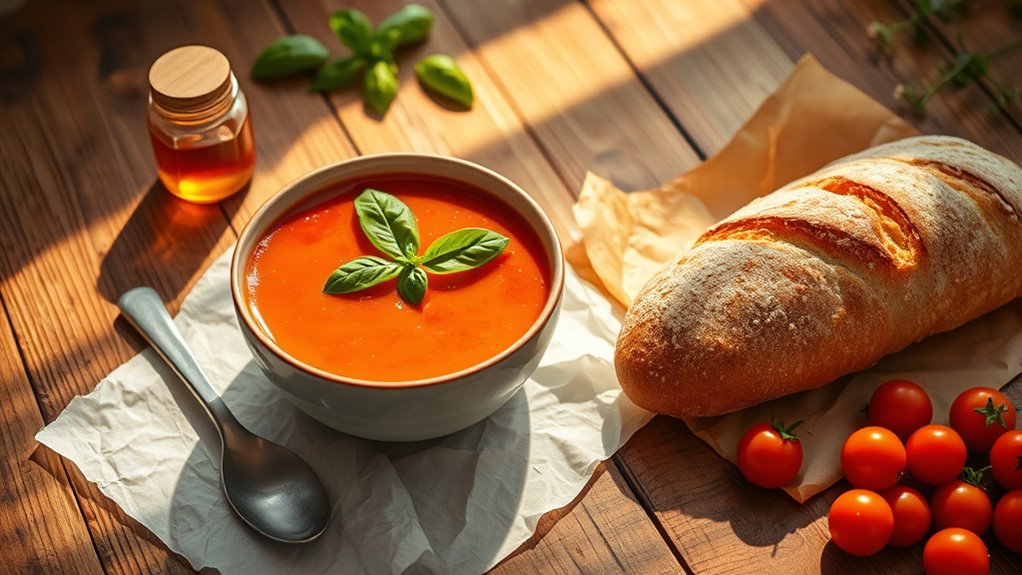
Have you ever noticed how certain foods can lift your spirits while others drain your energy? It’s no coincidence. Food has a powerful impact on your mood, and understanding which meals promote calmness can help you navigate tense moments more easily. When emotions run high, many people turn to comfort food—those familiar, soothing dishes that make you feel safe and cared for. Comfort food isn’t just about taste; it’s about the emotional connection you have with certain flavors, textures, and memories. During stressful times, emotional eating becomes a common response, as you seek to soothe your nerves and find a moment of relief. While emotional eating might sometimes lead to overeating or guilt, it also reveals your innate desire for comfort and stability. Recognizing this can help you choose better options that genuinely support your mood.
Certain foods can boost your mood and promote calm during stressful moments.
Simple meals that calm arguments often incorporate ingredients known to boost serotonin or promote relaxation. For instance, complex carbohydrates like oats, brown rice, and whole-grain bread help increase serotonin levels, which can make you feel more calm and centered. Pair these with healthy proteins such as turkey, eggs, or beans, which contain amino acids essential for serotonin production. Adding foods rich in magnesium, like leafy greens, nuts, and seeds, can also help reduce stress and promote a sense of calm. The goal is to create meals that stabilize blood sugar levels and prevent mood swings, so you remain composed even during disagreements.
Choosing foods that foster emotional balance also involves mindful eating. When you sit down to a simple, nourishing meal, focus on savoring each bite. This practice can ground you and slow down racing thoughts, making it easier to respond thoughtfully rather than react impulsively during conflicts. Avoid highly processed foods and sugar-laden snacks, as they can cause spikes in energy followed by crashes, intensifying mood swings. Instead, opt for whole, nutrient-dense foods that support your brain health and overall well-being.
Finally, preparing these meals can be an act of self-care, reinforcing your control over emotional triggers and helping you stay composed. When tensions rise, reaching for a comforting, balanced meal can serve as a gentle reminder to prioritize your mental health. It’s about creating a food environment that nurtures both your body and mind, making it easier to resolve disagreements with patience and clarity. In this way, food becomes not just sustenance but a tool for emotional resilience and harmony.
Frequently Asked Questions
Can Specific Foods Instantly Reduce Mood Swings?
Yes, certain foods can help instantly reduce mood swings, especially when you practice mindful eating. When you pay attention to how your body feels, you’re more likely to choose calming options like nuts or dark chocolate that boost serotonin. Avoid emotional eating by recognizing your triggers and choosing nourishing, simple meals that stabilize blood sugar levels. These mindful choices can quickly improve your mood and prevent impulsive emotional eating.
Are There Foods That Can Prevent Conflicts Before They Start?
Think of certain comfort foods as emotional shields that can prevent conflicts from brewing. By choosing meals rich in calming ingredients like complex carbs, healthy fats, and proteins, you can soothe emotional triggers before they ignite arguments. These foods help stabilize your mood, making you less reactive. Incorporating them into your routine creates a buffer, so you’re better equipped to handle stress and reduce the chances of disputes before they start.
How Do Dietary Habits Influence Long-Term Mental Health?
Your dietary habits play a vital role in long-term mental health by preventing nutritional deficiencies that can affect mood and cognitive function. When you prioritize balanced meals rich in essential nutrients, you strengthen your emotional resilience, making it easier to handle stress and setbacks. Consistently nourishing your body with healthy foods helps maintain mental stability, reduces anxiety, and supports overall well-being over time.
Can Food Allergies Contribute to Irritability or Aggression?
Food allergies can be silent culprits, stirring up irritability and aggression like a volcano ready to erupt. When you have a food intolerance, your body reacts emotionally to certain triggers, often causing mood swings or heightened frustration. These emotional triggers aren’t just in your head; they’re biochemical signals that your body sends. Recognizing allergy symptoms helps you manage your mood better, preventing food from turning into an unseen adversary.
Is There a Link Between Gut Health and Emotional Stability?
Yes, there’s a strong link between gut health and emotional stability. Your gut-brain connection means that a healthy gut supports better mood regulation and reduced stress. Nutritional psychiatry highlights how eating gut-friendly foods can improve mental well-being. By nourishing your gut with probiotics, fiber, and balanced nutrients, you can positively influence your emotional resilience and reduce irritability, creating a calmer, more stable mood overall.
Conclusion
Just like the calming influence of a gentle river, the right foods can soothe your mood and ease tensions. Remember, a simple meal can be your secret weapon against arguments, turning chaos into calm. As the wise say, “You are what you eat,” so choose nourishing, peaceful foods to nourish your mind and relationships. Embrace these mindful meals, and watch your mood—and your moments—become more harmonious.