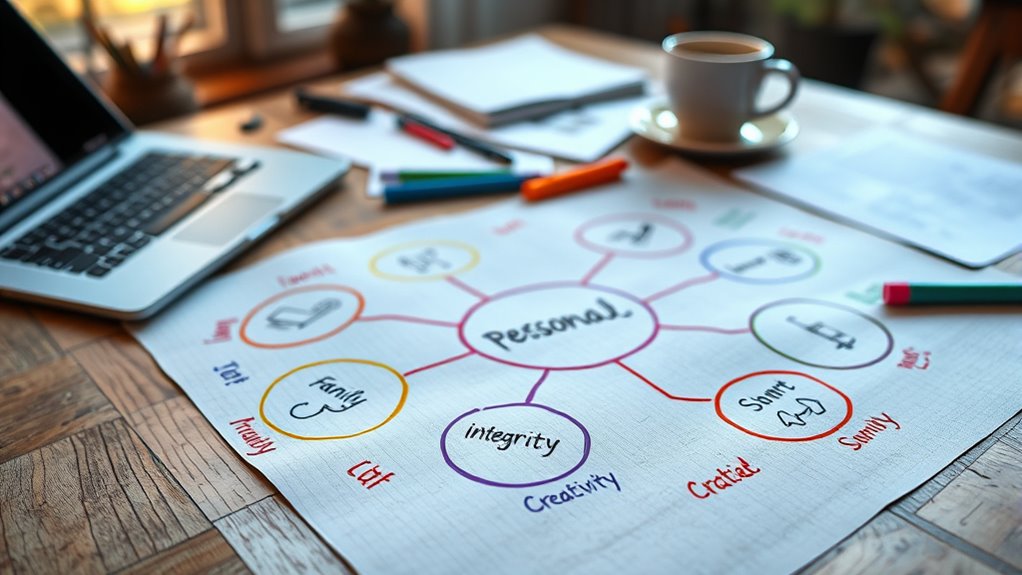

A personal values map helps you identify and prioritize what truly matters in your life, acting as a compass for authentic and ethical decisions. By reflecting on moments of pride and fulfillment, you clarify core principles like honesty, compassion, or independence. Using this map regularly keeps your actions aligned with your true self, creating a foundation for a purposeful life. Keep exploring to discover how this simple tool can transform your decision-making and deepen your connections.
Key Takeaways
- Create a Values Map by reflecting on moments of pride and fulfillment to identify core principles.
- Use your Values Map as a decision-making compass to align actions with your authentic self.
- Regularly revisit and update your Values Map to accommodate changing circumstances and priorities.
- Clarify your priorities to improve relationships, communicate boundaries, and navigate conflicts with integrity.
- Leveraging your Values Map fosters self-awareness, ethical choices, and a purposeful, fulfilling life.
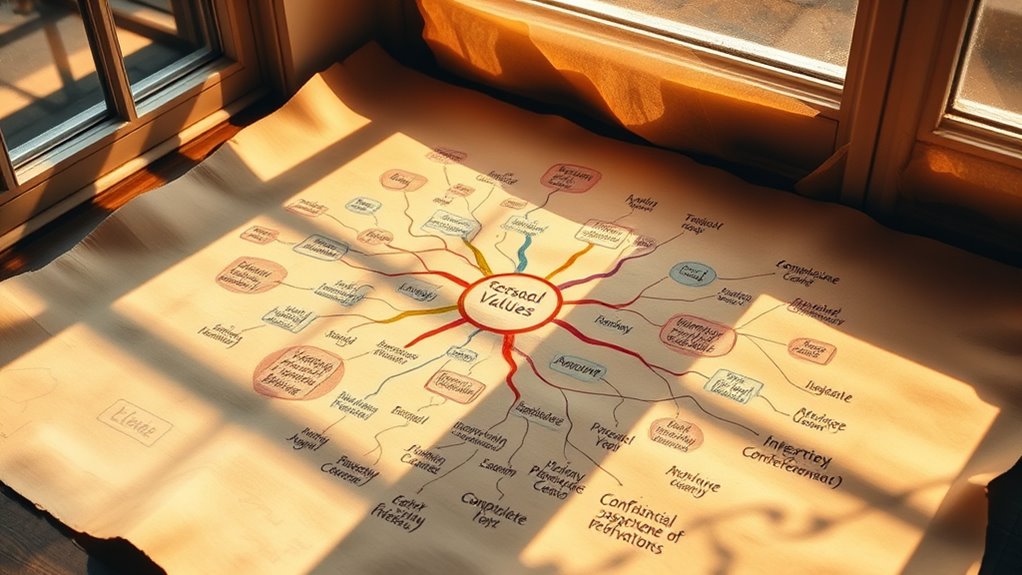
Have you ever wondered what truly guides your decisions and actions? Understanding that begins with exploring your personal values. A Personal Values Map can help you visualize what matters most, allowing you to align your daily choices with your core beliefs. When you take the time to identify and prioritize these values, you gain clarity and confidence in your decision-making process. It’s especially useful in situations where ethical decision making is required, as it provides a framework that reflects your true priorities and moral compass. By consciously engaging in value prioritization, you ensure that your actions support your authentic self rather than external pressures or fleeting desires.
Creating your values map involves reflecting on moments when you felt proud, fulfilled, or at peace. What qualities or principles were present then? Was it honesty, compassion, independence, or perhaps curiosity? As you identify these themes, start categorizing them by importance. This step isn’t about ranking every single value perfectly but about gaining insight into what you cherish most deeply. When faced with difficult choices, your values map acts as a compass, guiding you toward decisions that honor your principles. It helps you resist temptations to compromise your integrity and keeps you aligned with what truly matters.
Reflect on moments of pride and peace to identify your core principles and align your decisions with what truly matters.
Value prioritization isn’t a one-time activity; it’s an ongoing process. Life’s circumstances change, and so do your perspectives. Regularly revisiting your map ensures your actions stay consistent with your evolving self. It also fosters greater self-awareness, enabling you to recognize when your behavior drifts from your core values. This awareness empowers you to course-correct before you make decisions you might regret. When your values are clear, ethical decision making becomes more intuitive. You no longer have to second-guess if a choice aligns with who you are—your map serves as a reliable guide.
Moreover, a personal values map enhances your relationships and professional life. It provides a shared understanding of your priorities, making it easier to communicate your needs and boundaries. When conflicts arise, you can refer back to your map to navigate difficult conversations with integrity. Ultimately, this process deepens your connection with yourself and others by fostering authenticity and consistency. As you develop your personal values map, you’re not only clarifying what matters most but also creating a foundation for a more intentional and fulfilling life. It’s a powerful tool that transforms abstract principles into tangible actions, helping you live with purpose and conviction every day.

InnoGear Aromatherapy Diffuser & 10 Essential Oils Set, 400ml Diffuser Ultrasonic Diffuser Cool Mist Humidifier with 4 Timers 7 Colors Light Waterless Auto Off for Valentine's Gift, Dark Wood Grain
Reminder: To ensure proper mist function, please do not refill under tap (use measuring cup only to prevent...
As an affiliate, we earn on qualifying purchases.
Frequently Asked Questions
How Can I Update My Personal Values Map Over Time?
You can update your personal values map over time by regularly reflecting on your core beliefs and experiences. As you grow, revise your value priorities to stay aligned with your evolving identity and goals. Make it a habit to revisit your map periodically, consider new insights, and adjust your priorities accordingly. This ongoing process guarantees your values remain authentic and relevant, guiding you effectively through life’s changes.
What Tools Are Recommended for Creating a Values Map?
You should explore values visualization tools like MindMeister, Canva, or Miro to create your personal values map. These platforms offer intuitive interfaces and templates that make mapping your core beliefs simple and engaging. Additionally, use values assessment tools such as the Barrett Values Centre or VIA Character Strengths to gain insights into your priorities. Combining these resources helps you visually understand and continually refine what matters most to you.
Can My Values Change, and How Does That Affect My Map?
Yes, your values can change over time as your identity evolves. This values evolution reflects new experiences, insights, and priorities, which may lead you to update your values map. When your identity changes, your map should also adapt to stay aligned with who you are now. Regularly revisiting and refining your map guarantees it remains a true reflection of your current beliefs and what matters most to you.
How Do I Prioritize Conflicting Personal Values?
When facing value conflicts, you should evaluate which value aligns most with your long-term goals and core beliefs. Consider the impact of each choice on your well-being and integrity. Use your Personal Values Map to guide your decision making, prioritizing what truly matters most. Remember, sometimes you’ll need to make tough choices, but staying true to your highest values will help you navigate conflicts with clarity and confidence.
Is There a Way to Share My Values Map With Others?
Yes, you can share your values map with others using sharing templates, making it simple and structured. However, be mindful of privacy concerns—only share what you’re comfortable revealing. You might choose to anonymize details or use secure platforms. Sharing selectively helps you stay safe while still fostering meaningful conversations. So, confidently share your map, but always prioritize your privacy, protecting precious personal details from potential pitfalls.

InnoGear Essential Oil Diffuser, Ultrasonic Diffusers for Home Aromatherapy Humidifier for Bedroom Room 7 Colors LED 2 Mist Mode Auto Off, Basic White
Trusted Brand with Quality Assurance: At InnoGear, we don't just promise quality, we assure it. As a leading...
As an affiliate, we earn on qualifying purchases.
Conclusion
Your Personal Values Map is a compass guiding you through life’s intricate maze. Like a lighthouse illuminating your true north, it keeps you anchored to what matters most. Trust this inner beacon to steer your choices, ensuring your actions align with your core beliefs. As you navigate each turn, remember: your values are the steady stars guiding your journey, reminding you that staying true to yourself is the greatest adventure of all.

JOYOLO Essential Oil Diffuser 120ML Metal Aromatherapy Diffuser with Timer, Cool Mist Humidifier with Auto Shut-Off & 7 Color Lights for Home Office Spa (Tree)
NOTE: The charging cord is placed inside the water tank.
As an affiliate, we earn on qualifying purchases.
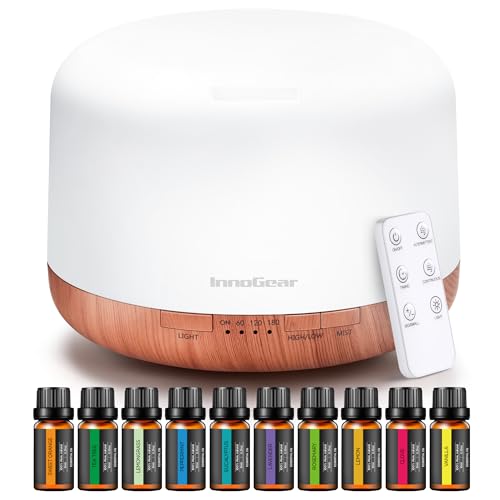
InnoGear Aromatherapy Diffuser & 10 Essential Oils Set, 500ml Essential Oil Diffuser with Remote Control Ultrasonic Cool Mist Scent Humidifier Vaporizer Auto-Off Timer for Room Office Home, Yellow
Premium 10-Piece Essential Oil Set - Ten 10ml bottles of 100% pure natural oils (peppermint, orange, lavender, tea...
As an affiliate, we earn on qualifying purchases.