To protect your back while rowing, master the 3-part sequence: start at the catch with a tall posture and arms extended; then push with your legs, keeping your back straight and core engaged; finally, lean back slightly, pull the handle to your ribs with elbows close, and prepare for recovery. Focus on smooth, controlled movements and proper ergonFlowmic setup. Keep practicing these steps to improve your technique and stay safe—exploring further details will help you perfect your form.

Get the little things that make your day delivered free with Prime
- Fast, free delivery on millions of items
- Prime Video, Amazon Music and more included
- Member-only deals all year
Key Takeaways
- Master the 3-part sequence: catch, drive, and recovery, to ensure proper form and back safety during rowing.
- Adjust ergonomic settings: foot straps, footrests, and seat position for optimal posture and movement.
- Maintain a straight back and engage core during the drive phase to prevent strain.
- Coordinate breathing: inhale during preparation, exhale during exertion to support proper technique.
- Practice controlled, fluid movements consistently to develop muscle memory and reduce injury risk.
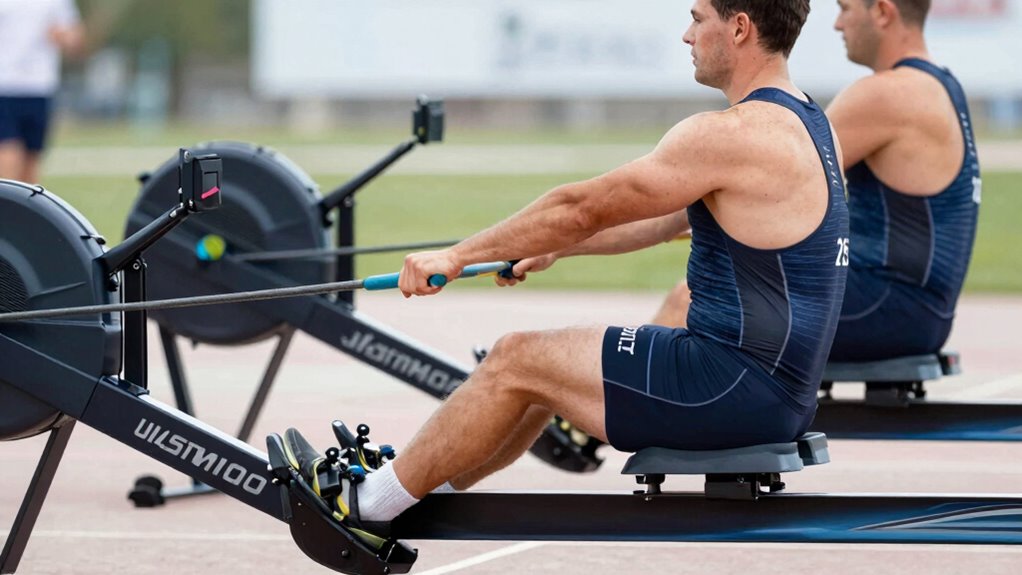
Are you getting the most out of your rowing machine workout? If not, your form might be to blame. Proper technique is essential to prevent injury and maximize your efforts. One of the most effective ways to do this is by mastering the 3-part sequence of rowing, which keeps your back safe and ensures efficient movement. Before diving into the sequence, make sure you’ve made ergonomic adjustments on your machine. Adjust the foot straps so your feet are secure but not overly tight, and set the footrests to a height that allows your knees to extend comfortably at the catch. The seat should be at a height where your hips aren’t overly bent but can move freely through each stroke. Proper ergonomic adjustments create a stable base, making it easier to maintain good form throughout your workout. Additionally, understanding the importance of proper rowing technique can help you avoid common mistakes and improve your overall performance. Developing awareness of your body positioning is key to maintaining correct posture and avoiding strain. Paying attention to your muscle engagement during each phase will also enhance your efficiency and reduce fatigue. Focusing on controlled movements ensures smooth transitions and helps prevent unnecessary stress on your joints. Incorporating mindful movement patterns can lead to better muscle activation and overall technique.
Now, focus on your breathing techniques. Proper breathing fuels your muscles and helps you stay relaxed, especially during longer sessions. Inhale as you prepare for the drive—when you push back with your legs—and exhale as you complete the drive, engaging your core and pulling the handle toward your chest. Coordinating your breath with your movement not only improves oxygen flow but also keeps your body relaxed, reducing tension that could lead to injury. When your breathing is in sync with your rowing rhythm, you’ll find it easier to maintain consistent power and form.
The 3-part sequence begins with the catch, where you sit tall with your shins vertical and arms extended forward. As you push off with your legs, keep your back straight and core engaged. This is the drive phase, where your legs do most of the work, followed by a slight lean back as you pull the handle towards your lower ribs. During this pull, keep your elbows close to your sides and shoulders relaxed. As you finish the drive, the recovery phase begins—extend your arms forward, hinge at the hips, and bend your knees to return to the catch position smoothly. Repeat this cycle with controlled, fluid movements, maintaining your ergonomic setup and breathing rhythm. Practicing consistent technique will help you develop a more efficient and safe rowing pattern over time.
ergonomic rowing machine foot straps
As an affiliate, we earn on qualifying purchases.
As an affiliate, we earn on qualifying purchases.
Frequently Asked Questions
How Often Should I Practice Proper Rowing Form?
You should practice proper rowing form daily or at least 3-4 times a week to build muscle memory. Focus on maintaining proper posture during each session, paying attention to your spinal alignment and core engagement. Incorporate breathing techniques by exhaling during the drive and inhaling during the recovery. Consistent practice helps prevent injury, improves efficiency, and guarantees you’re rowing safely while maximizing your workout benefits.
Can Incorrect Form Cause Long-Term Injuries?
Incorrect form is like a ticking time bomb, quietly risking long-term injuries if ignored. Poor technique can compromise your ergonomic considerations and lead to strain on your back, shoulders, and knees. Over time, this increases injury risk and hampers your progress. To prevent this, focus on maintaining proper rowing posture, and always prioritize injury prevention by practicing the correct 3-part sequence, ensuring your workouts stay safe and effective.
What Are Common Mistakes to Avoid During Rowing?
To avoid common mistakes during rowing, focus on proper muscle engagement and breathing techniques. Don’t lean back too far or use only your arms; engage your core and legs for power. Keep your breathing steady—inhale during the recovery and exhale during the drive. Rushing the stroke or overextending can strain your back. Maintain good posture, stay controlled, and always prioritize technique over speed to prevent injury.
How Do I Adjust My Form for Different Resistance Levels?
They say, “adapt and conquer,” and that’s true for rowing too. When adjusting resistance levels, focus on form modifications: maintain a strong, straight back, and engage your core during higher resistance. Use resistance adjustments gradually, ensuring your technique stays steady. For lower resistance, you can incorporate more controlled recovery strokes. Always listen to your body, and remember, proper form is key to safe, effective workouts at any resistance level.
Is There a Difference in Technique for Beginners Versus Advanced Rowers?
Yes, there’s a difference in rowing technique for beginners versus advanced rowers. Beginners should focus on proper form, making beginner adjustments to guarantee they don’t strain their back or muscles. Keep your movements controlled, emphasize a smooth sequence, and avoid rushing through strokes. As you progress, you can refine your technique, increase resistance, and add intensity. Prioritize proper rowing technique to prevent injuries and build strength effectively at any level.
Conclusion
Remember, practice makes perfect, and maintaining proper form keeps you safe and efficient. By mastering the 3-part sequence, you’ll protect your back and enjoy a more effective workout. Stay mindful of your technique, and don’t rush through each step. As the saying goes, “A smooth sea never made a skilled sailor”—so take your time, stay committed, and you’ll see progress while avoiding injury. Happy rowing!
Halloween Picks
halloween
As an affiliate, we earn on qualifying purchases.