
If your treadmill is getting loud, start by lubricating the belt with a silicone-based lubricant designed for treadmills. Apply it sparingly along the edges while the belt runs at a slow speed. Check the belt tension and adjust it if it feels loose or too tight. Regular maintenance like this keeps your treadmill quiet and running smoothly. Keep going to discover more simple tips to restore quiet and performance to your machine.

Get the little things that make your day delivered free — and shop member deals
- Fast, free delivery on millions of items
- Access to Prime Big Deal Days deals on October 6–7
- Prime Video, Amazon Music and more included
Key Takeaways
- Regularly lubricate the belt with a silicone-based lubricant to reduce friction and noise.
- Check and adjust belt tension to ensure it’s snug but not overly tight, preventing slippage and squeaks.
- Inspect the belt and deck for wear, cracks, or rough spots, replacing worn components promptly.
- Turn on the treadmill at a slow speed during lubrication to evenly distribute the lubricant.
- Follow manufacturer guidelines for belt maintenance and replacement to keep the treadmill quiet and smooth.
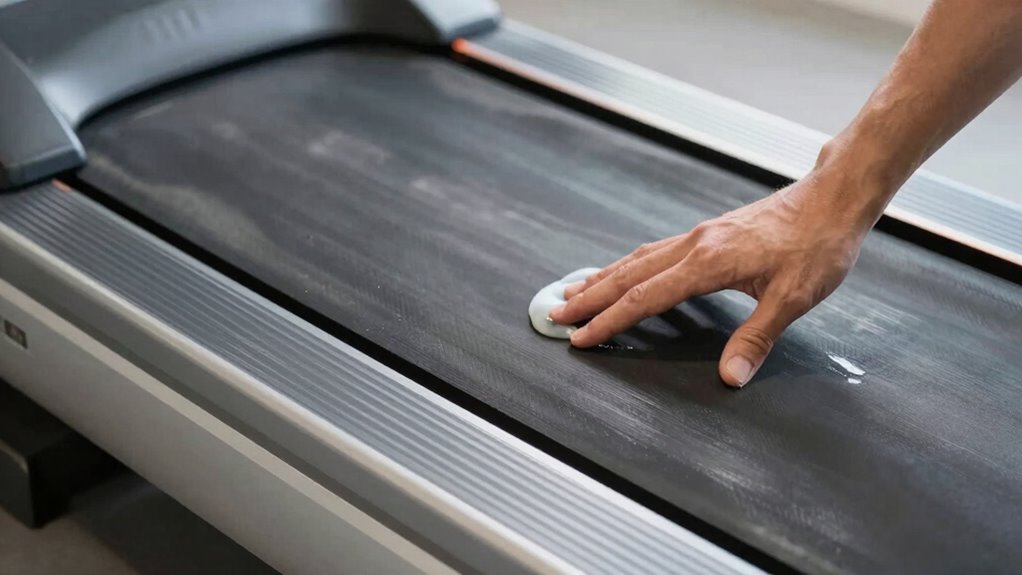
Keeping your treadmill belt in good condition is essential for safe and effective workouts. When your treadmill starts making loud noises, it’s often a sign that the belt needs some attention. One of the simplest ways to fix this is by following proper lubrication tips. Regularly lubricating your treadmill belt reduces friction between the belt and deck, preventing squeaks and grinding sounds. Use a silicone-based lubricant specifically designed for treadmills, and apply it sparingly along the edges of the belt. Make sure to turn on the treadmill at a slow speed during application so the lubricant spreads evenly. Avoid over-lubricating, as excess oil can attract dust and debris, which may cause more noise or damage over time. Consistent lubrication not only quiets the treadmill but also extends its lifespan, guaranteeing smooth operation for longer periods.
However, if your treadmill continues to be loud despite regular lubrication, it might be time to consider belt replacement. Over time, the belt can become worn, cracked, or misaligned, which contributes to noise and decreased performance. When replacing the belt, carefully follow the manufacturer’s instructions—most involve removing the deck cover, loosening the motor, and carefully sliding out the old belt. Before installing a new belt, check the deck for signs of wear or rough spots, as these can also cause noise and should be addressed. Proper belt alignment is vital; an improperly aligned belt will slip or produce squealing sounds. Use the tension adjustment screws to ensure the belt is snug but not too tight, as excessive tension can strain the motor and other components. Additionally, paying attention to drive system maintenance can help keep your treadmill running quietly.
Maintaining a regular routine of lubrication and inspecting your belt can prevent many common noise issues. If you notice persistent squealing or grinding, don’t hesitate to replace the belt—it’s a straightforward process that can dramatically improve your treadmill’s quietness and longevity. Keeping an eye on signs of wear and performing timely belt replacement ensures your treadmill runs smoothly without interruptions. Remember, a well-maintained belt not only minimizes noise but also provides a safer, more enjoyable workout experience. By sticking to these lubrication tips and knowing when to replace your belt, you’ll keep your treadmill running quietly and efficiently for years to come.
treadmill belt lubricant silicone
As an affiliate, we earn on qualifying purchases.
As an affiliate, we earn on qualifying purchases.
Frequently Asked Questions
How Often Should I Perform Belt Maintenance?
You should perform belt maintenance every three to six months, depending on your treadmill usage. Regularly check the belt for wear and apply belt lubrication as needed to keep it running smoothly. Following a consistent maintenance schedule helps prevent noise and prolongs your treadmill’s life. Keep an eye on the belt’s tension and alignment, and don’t forget to clean the deck regularly for ideal performance.
Can I Use Household Products to Clean the Treadmill Belt?
Think of your treadmill belt as a delicate scroll needing gentle handling. You should avoid household cleaners and DIY solutions, as they can damage the belt’s surface or internal components. Instead, use a damp cloth with mild soap or a manufacturer-approved cleaner. This careful approach guarantees your belt remains smooth and quiet, preserving its longevity. Always follow your treadmill’s manual for cleaning instructions to keep it running quietly and efficiently.
What Signs Indicate My Treadmill Belt Needs Professional Repair?
If your treadmill belt is misaligned or you notice unusual motor issues, it’s time for professional repair. Signs include the belt slipping or stopping unexpectedly, excessive noise despite cleaning, or uneven wear. You might also see the belt drifting to one side, indicating alignment problems. Don’t overlook these signs; a technician can correct belt alignment, inspect motor issues, and guarantee your treadmill operates safely and smoothly.
Does Belt Tension Affect Treadmill Noise Levels?
Yes, belt tension can affect treadmill noise levels. When your belt isn’t properly aligned or tensioned, it can cause uneven wear and increase motor noise. If the belt is too tight, it strains the motor; if too loose, it creates slapping sounds and noise. Regularly checking and adjusting belt alignment and tension helps reduce noise and keeps your treadmill running smoothly. Proper maintenance prevents unnecessary motor strain and loud operation.
Are There Specific Lubricants Recommended for Treadmill Belts?
You should use silicone-based lubricants or treadmill-specific lubricants for your belt. Avoid petroleum or WD-40, as they can damage the belt or motor. Regular maintenance tips include turning off the treadmill, lifting the belt, and applying the lubricant sparingly along the deck. This keeps the belt running smoothly and quietly, extending its lifespan and preventing unnecessary noise. Always follow your treadmill manufacturer’s recommendations for best results.
Conclusion
Regularly maintaining your treadmill belt can reduce noise and extend its lifespan. Did you know that neglecting proper belt care can lead to premature motor failure, costing you up to $500 in repairs? By following simple cleaning and lubrication routines, you keep your machine running smoothly and quietly. Don’t wait for the noise to worsen—taking a few minutes now can save you time and money later, ensuring your treadmill stays quiet and reliable for years to come.
Fall Picks
fall essentials
As an affiliate, we earn on qualifying purchases.