
To avoid knee pain on a walking pad, focus on proper posture and foot placement. Keep your head up, shoulders relaxed, and engage your core. Land softly with each step, striking midfoot or forefoot instead of heels, and slightly bend your knees during foot strike. Maintain body alignment, avoid overstriding, and make small adjustments if discomfort arises. Paying attention to these tips helps protect your knees and makes your workouts safer and more comfortable—discover more ways to improve your walk.
Key Takeaways
- Maintain proper posture with an upright head, relaxed shoulders, and engaged core to reduce knee strain.
- Land midfoot or forefoot softly beneath hips, avoiding overstriding to minimize knee impact.
- Slightly bend knees at foot strike to absorb shock and prevent excessive joint stress.
- Keep feet pointed straight ahead or slightly outward for proper alignment and knee safety.
- Make small posture adjustments if discomfort occurs, focusing on body alignment and smooth movement.

Using a walking pad can be a convenient way to stay active, but proper form is essential to maximize safety and effectiveness. When you walk on a pad, maintaining the correct running posture helps you avoid unnecessary strain and prevents knee pain. Keep your head up, shoulders relaxed, and engage your core to support your back. This alignment ensures that your body moves naturally and reduces undue stress on your joints. As you walk, focus on a smooth, controlled gait rather than rushing or overstriding. Proper running posture will help you conserve energy and promote a more comfortable workout.
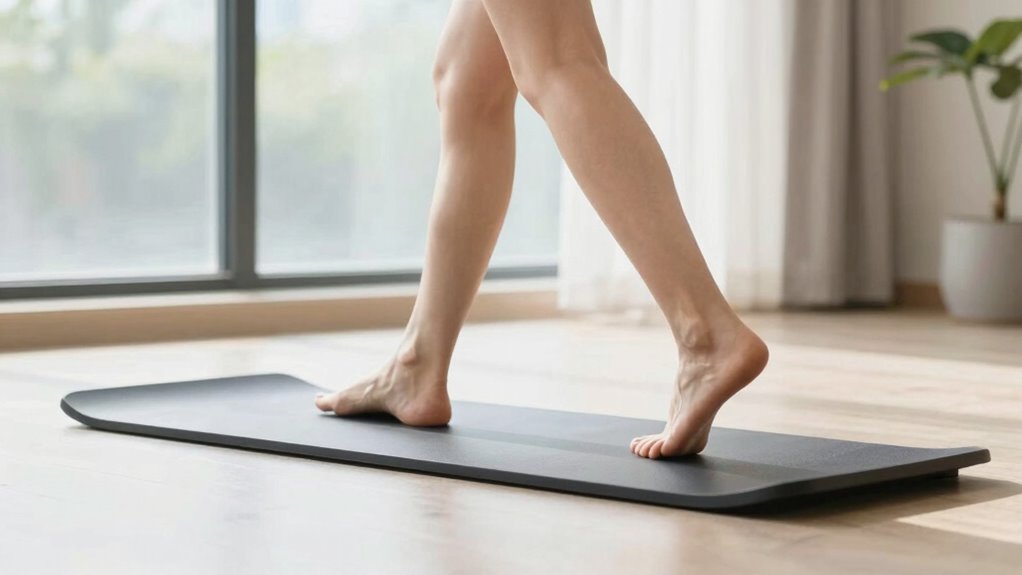
Foot placement is equally important to prevent knee pain and improve your walking efficiency. You want to land your foot softly beneath your hips, avoiding overextending your stride. When your foot strikes the pad, aim for a midfoot or forefoot landing rather than relying solely on your heels. This promotes better shock absorption and reduces impact on your knees. Pay attention to how your foot rolls through each step; a natural, gentle roll from heel to toe is ideal. Avoid walking with your feet turned excessively inward or outward, as this can lead to misalignment and discomfort. Keeping your feet pointed straight ahead or slightly outward helps maintain proper alignment and balance.
As you use your walking pad, remember that your posture and foot placement work together. If you notice discomfort or knee pain, check your form first. Are you leaning forward or slouching? Are your feet landing too far in front of your body? Small adjustments can make a big difference. For example, keeping your knees slightly bent at the moment of foot strike can absorb shock better and reduce joint strain. Additionally, focusing on body alignment during your workout can help optimize your posture and prevent discomfort. Incorporating regular movement patterns that promote proper biomechanics can also enhance your overall walking efficiency. Paying attention to muscle engagement during your steps can further support joint health and stability. Remember that maintaining a consistent and mindful walking rhythm can help reinforce good habits and reduce the risk of pain. Do not push yourself into a faster pace if you start feeling pain; instead, slow down and focus on maintaining good form. Developing awareness of your body mechanics can lead to better performance and fewer issues over time. Over time, your muscles will strengthen and support your joints more effectively, making your workout safer and more enjoyable.
As an affiliate, we earn on qualifying purchases.
Frequently Asked Questions
How Do I Choose the Right Walking Pad Size?
To choose the right walking pad size, focus on your walking surface needs and padding thickness. Measure your available space to guarantee the pad fits comfortably. Opt for a width that provides stability and enough room for natural stride length. Consider padding thickness too—thicker padding offers more comfort and impact absorption, reducing knee strain. A well-sized walking pad with appropriate padding helps you walk safely and comfortably without knee pain.
Can I Use a Walking Pad on Uneven Flooring?
Using a walking pad on uneven flooring is like trying to walk on shifting sands; it can compromise surface stability and increase risk. To stay safe, place a sturdy, level mat underneath the pad to create a stable surface. This helps prevent wobbling or tipping, ensuring your workouts remain smooth and safe. Always check your flooring for any uneven spots and address them before starting your walk.
What Are Safety Precautions for Beginners?
As a beginner, you should wear proper footwear to prevent slips and guarantee stability on the walking pad. Always familiarize yourself with the emergency stop feature so you can quickly halt the device if needed. Start at a slow pace, keep your posture straight, and avoid overextending your steps. Regularly check the surface for any debris or uneven spots, and stay attentive to your surroundings for safe, comfortable use.
How Often Should I Clean My Walking Pad?
Think of your walking pad as a trusty steed that needs regular grooming. You should clean your walking pad weekly to keep it running smoothly. Follow a simple maintenance schedule, including wiping down the surface with a damp cloth and vacuuming underneath. Use gentle cleaning techniques to remove dust and debris without damaging the motor or belt. Staying consistent with cleaning helps prevent wear and keeps your workout safe and enjoyable.
Is It Safe to Walk Barefoot on the Pad?
Walking barefoot on your pad isn’t recommended because barefoot safety can be compromised, increasing the risk of slips or injuries. Walking pad grip is essential for your safety, and shoes provide better traction and support. To stay safe, wear proper athletic footwear that offers good grip and cushioning. This way, you protect your knees and joints, avoid slips, and guarantee a comfortable, secure walking experience.
Conclusion
By following these walking pad form tips, you can enjoy a comfortable, pain-free workout. But here’s a fun fact: some experts believe that maintaining proper posture during walking can also boost your mood and energy levels. So, not only are you protecting your knees, but you’re also giving yourself an emotional lift. Keep mindful of your form, stay consistent, and you might just find walking becomes the highlight of your day—pain-free and uplifting.