

In week one of therapy together, couples learn key skills like open, honest communication and active listening, which help create a safe space for sharing. You also identify and break negative patterns, so conflicts become opportunities for growth instead of battles. Handling disagreements with kindness and “I” statements becomes more natural, fostering teamwork. These foundational skills set the stage for deeper connection and ongoing relationship growth—if you keep moving forward, more insights await.
Key Takeaways
- Open communication focuses on talking better, not just more, through active listening and creating a safe, valued space.
- Couples identify and break negative conflict patterns like blame and defensiveness to foster respectful dialogue.
- Honest emotional expression using “I” statements and pausing before reacting improve conflict resolution skills.
- Building a teamwork mindset shifts perspectives from adversaries to growth partners, strengthening connection.
- Foundational skills for effective communication and conflict handling set the stage for ongoing relationship growth.
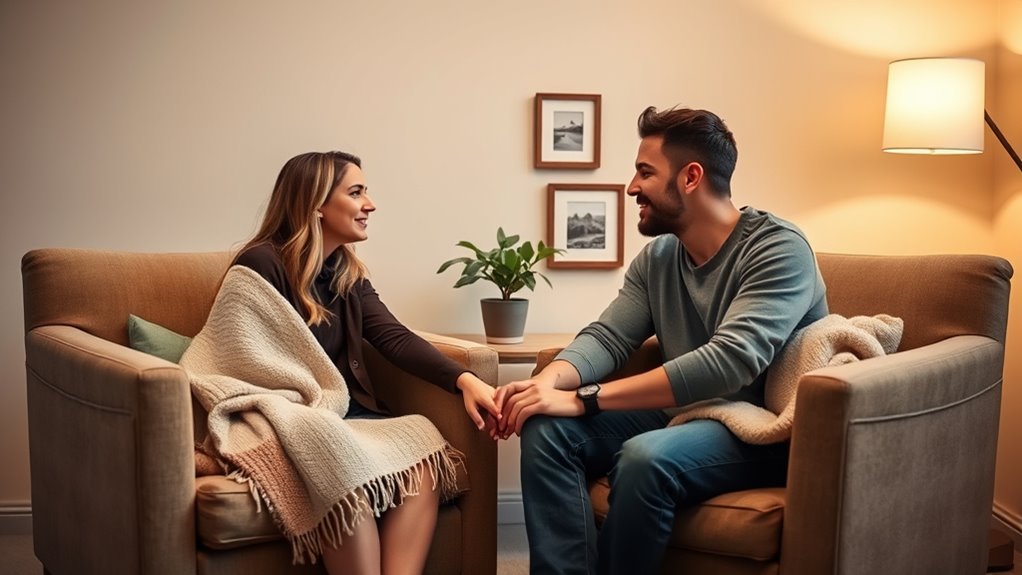
Have you ever wondered how therapy can be more effective when done together? “Therapy Together” emphasizes the power of shared healing, encouraging couples or groups to work through challenges collectively. When you step into this approach, you quickly realize that open communication is the foundation for change. In week one, many couples discover that improving communication skills isn’t just about talking more; it’s about talking better. Learning to listen actively, without interrupting or jumping to conclusions, helps you understand your partner’s perspective. This creates a safe space where both of you feel heard and valued.
Shared healing begins with better communication and active listening.
You also start to recognize the patterns that lead to conflict. It’s common to fall into cycles of blame or defensiveness, but therapy sessions focus on breaking these patterns. Conflict resolution becomes a shared goal, not a battleground. Instead of avoiding disagreements or letting them fester, you learn how to approach conflicts with patience and clarity. This involves identifying the real issues beneath surface arguments, and working together to find solutions rather than winning battles. The therapist guides you through exercises that encourage respectful dialogue, helping you stay calm and focused during disagreements.
In week one, many couples realize that conflict isn’t inherently bad; it’s how you handle it that matters. You are encouraged to express your feelings honestly, but with kindness. This means avoiding accusations and instead using “I” statements that communicate your feelings without assigning blame. As you practice these skills, you begin to see how effective conflict resolution can strengthen your relationship rather than weaken it. You learn to pause before reacting, giving yourselves space to process emotions and respond thoughtfully. Over time, these techniques become second nature, and conflicts that once seemed insurmountable become manageable.
The shared experience of working on communication skills and conflict resolution fosters a sense of teamwork. Instead of feeling like adversaries, you start viewing each other as partners in growth. Week one often leaves you with a sense of hope, as you see tangible improvements in how you relate to each other. The therapist’s guidance helps you build a toolkit for navigating future challenges, reinforcing that healing is a collective effort. As you continue in therapy together, these foundational skills will serve as a cornerstone for deeper connection and mutual understanding. The journey toward better communication and conflict resolution begins here, setting the stage for meaningful progress ahead.
Frequently Asked Questions
How Long Does Each Therapy Session Typically Last?
Each therapy session usually lasts about 60 minutes, giving you enough time to focus on your relationship goals and improve communication skills. During this hour, you can openly share concerns, practice new techniques, and work toward stronger understanding. The sessions are designed to be effective yet manageable, so you stay engaged without feeling overwhelmed. Consistent attendance helps you and your partner build a healthier, more connected relationship over time.
Are There Any At-Home Exercises Couples Can Practice?
You can definitely try at-home exercises like communication exercises and trust-building activities. These are your secret weapons to strengthen your bond. For example, set aside time daily to practice active listening or share one thing you appreciate about each other. By doing so, you’re killing two birds with one stone—improving communication and building trust. Consistency is key, so make these exercises a regular part of your routine.
What if Only One Partner Wants to Continue Therapy?
If only one partner wants to continue therapy, you can focus on addressing commitment challenges and emotional readiness. Encourage open communication to understand their hesitations, and suggest individual sessions if needed. Remember, progress is personal, and respecting their pace can foster trust. Keep in mind that continued effort, even from one side, can positively influence the relationship over time. Patience and understanding are key.
How Soon Can We Expect to See Improvements?
You can typically expect to see progress markers within a few sessions, but patience expectations vary. Some couples notice improvements in communication or understanding early on, while others might take longer. Keep in mind that therapy is a process, and consistent effort is key. Trust the journey, and celebrate small victories along the way, knowing that meaningful change often unfolds gradually.
Is Individual Therapy Recommended Alongside Couples Therapy?
Yes, individual therapy can be beneficial alongside couples therapy. It helps you work on personal issues that affect emotional intimacy and communication skills, making your overall progress smoother. When you address individual challenges, you’re better equipped to contribute positively to joint sessions. Combining both approaches often accelerates relationship growth, fostering deeper understanding and stronger connections. Consider discussing this option with your therapist to determine what best supports your specific needs.
Conclusion
By the end of week one, you’ve learned that open communication and vulnerability build stronger bonds. Imagine Sarah and Mike, who started sharing their feelings honestly for the first time. Within days, they felt more connected and understood. Just like them, your willingness to listen and share will set the foundation for deeper intimacy. Keep practicing these skills—you’re already on the path to transforming your relationship. The journey ahead is worth every step.