

In interfaith love, creating authentic rituals that honor both partners’ beliefs can strengthen your bond. Participate together in each other’s religious traditions, attend ceremonies, or share special prayers, showing genuine respect and interest. Develop new rituals that blend elements from both faiths, symbolizing unity. Set boundaries for traditions you wish to adopt or adapt, ensuring everyone feels respected. Building such meaningful practices fosters understanding and lasting harmony—if you continue exploring, you’ll discover even more ways to honor both traditions.
Key Takeaways
- Create personalized rituals blending traditions from both faiths to symbolize unity and respect.
- Attend and participate in each other’s religious ceremonies to demonstrate commitment and understanding.
- Incorporate shared values like compassion and kindness into new, meaningful rituals.
- Respect and honor significant rituals from both religions without requiring full adoption.
- Communicate openly about boundaries and traditions to ensure mutual comfort and respect.
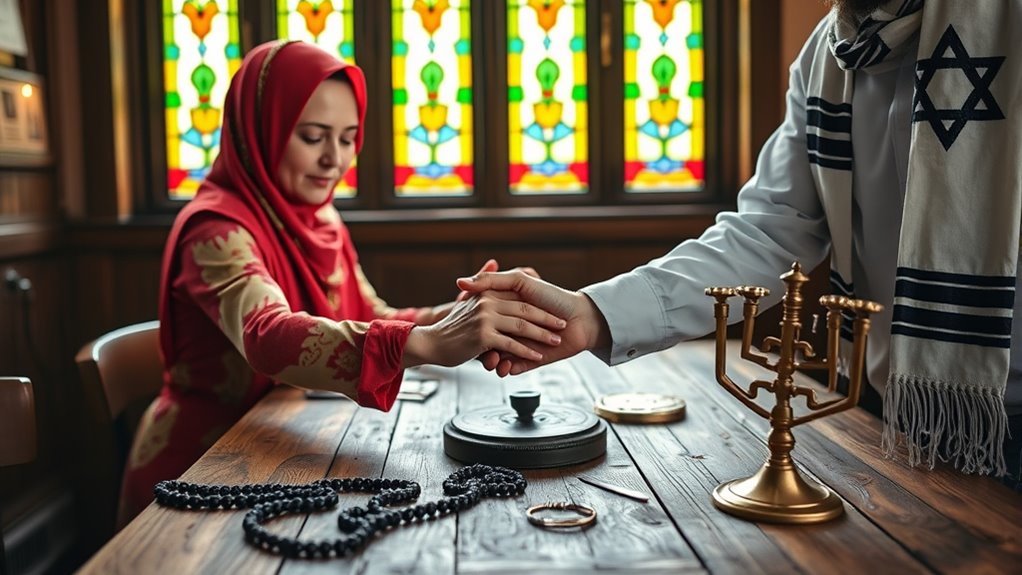
Interfaith love brings together people from different religious backgrounds, challenging them to navigate unique beliefs and traditions. When you’re in a relationship where cultural differences are significant, it’s essential to approach these differences with respect and open-mindedness. Understanding that each person’s faith and customs shape their worldview can help you find common ground. One of the hardest hurdles you might face is gaining family acceptance. Families often have deep-rooted traditions and expectations that can make interfaith relationships seem unfamiliar or even threatening. You may worry about how your partner’s beliefs will be received or how your own family will react. It’s natural to want to please everyone, but it’s equally important to establish a respectful dialogue. Start by communicating honestly with your loved ones—explain your feelings and why your partner’s faith matters to you. Sharing your perspective gently can help them see beyond their initial reservations. Patience is key; family acceptance doesn’t happen overnight. As you introduce your partner and involve your family in meaningful conversations, you create opportunities for understanding to grow. It’s also helpful to highlight the shared values that underpin many faiths—compassion, kindness, love—reminding everyone that these principles can bond rather than divide. Building bridges through shared experiences can soften cultural differences and foster acceptance. Attending each other’s religious events or participating in traditions shows your commitment to honoring both faiths. Respecting rituals, even if they’re unfamiliar or different from your own, demonstrates your genuine interest and respect for your partner’s background. Remember, it’s okay to have boundaries; you don’t need to fully adopt every tradition. Instead, focus on creating new rituals that incorporate elements of both faiths, symbolizing your unity. Over time, family members may come to see your relationship as a bridge between cultures rather than a barrier. Their acceptance often grows when they observe your sincere efforts to honor both traditions. Ultimately, interfaith love thrives on mutual respect, understanding, and patience. By acknowledging cultural differences and working to gain family acceptance, you’re building a foundation grounded in love and respect that can withstand challenges. Your willingness to navigate these complexities shows your commitment not just to your partner but also to creating a harmonious shared life rooted in shared values and genuine understanding.

Mangodan Cloud Sectional Couch, Boneless Sofa for Living Room, Fluffy Comfy Couch with Deep Seat, Modular Sectional Sofa with L-Shaped Chaise, No Assembly Required, Dark Grey
Soft Corduroy Fabric: Upholstered in smooth, breathable corduroy, this Cloud Sectional Couch features an L-shaped chaise sofa design...
As an affiliate, we earn on qualifying purchases.
Frequently Asked Questions
How Can Couples Navigate Religious Differences During Wedding Ceremonies?
You can navigate religious differences during your wedding ceremony by fostering open interfaith dialogue with your partner and families. Focus on spiritual integration by creating rituals that honor both traditions, like blending symbols or prayers. Communicate your intentions clearly, and consider involving a spiritual leader from each faith. By respecting each other’s beliefs and finding common ground, you’ll craft a meaningful celebration that truly reflects your shared love and diversity.
What Are Common Challenges Faced by Interfaith Couples?
You might face challenges like balancing cultural integration and achieving spiritual harmony, which can lead to disagreements or feelings of exclusion. Different traditions may clash, making it hard to create a unified celebration. Communication becomes essential; you need to openly discuss expectations and find ways to honor both backgrounds. Embracing compromise helps foster mutual respect, ensuring that your interfaith relationship stays strong and meaningful despite these common hurdles.
How Do Families Typically React to Interfaith Relationships?
You might notice family reactions range from warm acceptance to hesitant skepticism. Often, they struggle with cultural blending, unsure how to honor traditions from both sides. Some families embrace the love, seeing it as a bridge between worlds, while others wrestle with fears and misunderstandings. Your patience and respectful dialogue can help foster family acceptance, transforming initial doubts into appreciation for the rich, shared journey ahead.
Are There Legal Considerations for Interfaith Marriages?
You should be aware of legal implications and religious recognition when planning an interfaith marriage. Laws vary by location, and some places require specific documentation or ceremonies to guarantee your marriage is legally valid. It’s essential to research local regulations, understand how your union will be recognized religiously, and consider consulting legal or religious advisors. This way, you protect your rights and honor both faiths in your marriage.
How Can Interfaith Couples Celebrate Holidays Together Respectfully?
Did you know 60% of interfaith couples find ways to celebrate holidays together? To do so respectfully, you can incorporate interfaith traditions that honor both faiths, like sharing meaningful rituals or creating new ones together. Communicate openly, set boundaries, and learn about each other’s practices. Respectful practices foster understanding and unity, making holiday celebrations enriching and inclusive for both of you.

VASAGLE Boneless Couch, Modern Cloud Couch with Deep Seat, Corduroy Sofa for Living Room, Bedroom, Modular Sectional Sofa with Right-Facing Chaise, 108.3 Inches, Slate Gray ULCS182GN01
No Assembly Hassle: This boneless couch arrives ready for use—simply unpack, pat to fluff, and within 72 hours...
As an affiliate, we earn on qualifying purchases.
Conclusion
As you navigate the delicate dance of interfaith love, remember that true harmony blooms when respect softly guides your steps. Embracing each other’s sacred traditions with gentle understanding creates a space where differences become a quiet melody rather than discord. In this tender balance, your shared journey becomes a subtle affirmation to the beauty found in blending diverse faiths. By honoring each other’s sacred spaces, you weave a quiet tapestry of love that speaks volumes beyond words.

HONBAY Sectional Sleeper Sofa with Pull Out Bed, Sleeper Sectional Couch for Living Room, Sleeper Sofa Bed with Storage Chaise, Velvet Black
【Sectional Sleeper Sofa Bed】Invisible pull-out bed saves space and can be easily converted between sectional sofa and sleeper...
As an affiliate, we earn on qualifying purchases.

Yaheetech Sectional Sofa L-Shaped Sofa Couch Bed w/Chaise & USB, Reversible Couch Sleeper w/Pull Out Bed & Storage Space Living Room Beige
Comfort & Durability Mix: Sink into plush foam and soft upholstery covering on a sturdy wood-metal frame. This...
As an affiliate, we earn on qualifying purchases.