
Fasting and feasting help you connect with tradition, spirituality, and community. When you fast, you shed distractions and ego, fostering humility and self-awareness, often as preparation for sacred moments. Feasting brings people together to celebrate, honor heritage, and reinforce bonds through shared meals and rituals. Both practices embody cultural values and deepen your sense of belonging. Exploring these customs reveals how they nurture your spiritual and social life—continuing stories that shape human meaning across cultures.
Key Takeaways
- Fasting and feasting serve as spiritual tools to foster reflection, humility, gratitude, and renewal across various cultural and religious traditions.
- These practices strengthen social bonds by facilitating communal participation, shared rituals, and cultural remembrance.
- Fasting symbolizes purification and preparation for sacred moments, while feasting celebrates joy, gratitude, and cultural identity.
- Both rituals reinforce cultural values, connecting individuals to ancestors, traditions, and divine or spiritual realms.
- Together, fasting and feasting embody a balanced rhythm of discipline and joy that nurtures body, mind, and community.
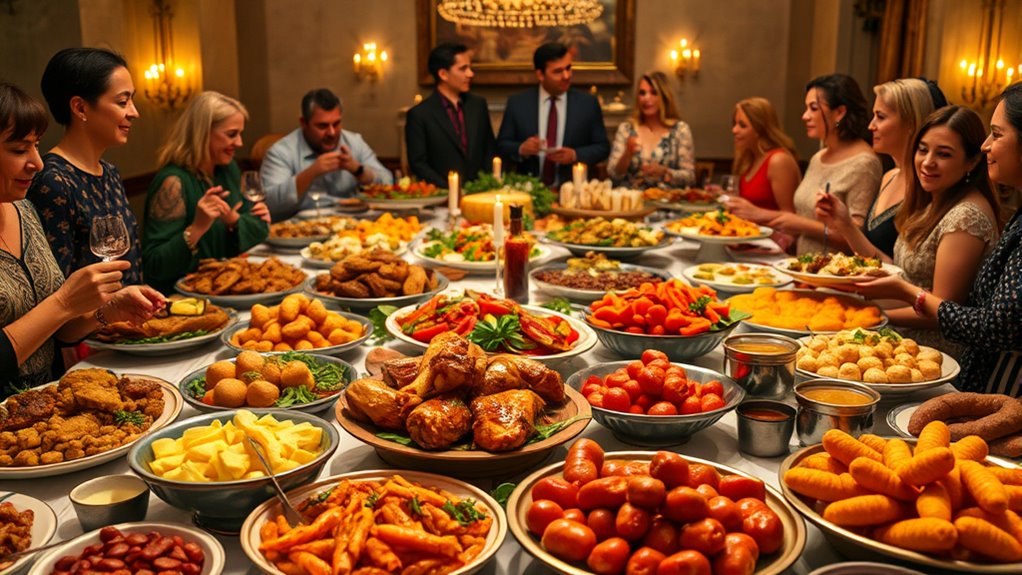
Have you ever wondered why humans have long practiced both fasting and feasting? These rituals go beyond simple acts of eating or abstaining; they serve as powerful tools for spiritual purification and cultural celebrations. Throughout history, societies have used fasting to cleanse the body and mind, creating space for reflection, renewal, and a deeper connection to the divine or the community. Conversely, feasting marks moments of joy, gratitude, and shared identity, reinforcing social bonds and honoring traditions. Together, these practices form a meaningful rhythm that sustains cultural values and spiritual growth.
When you engage in fasting, you’re often seeking more than just physical discipline. It becomes a deliberate act of spiritual purification, helping you shed distractions and ego, fostering a sense of humility and heightened awareness. Many traditions see fasting as a way to purify the soul, preparing oneself for sacred moments or divine encounters. It’s a period of introspection, where you can detach from material concerns and focus on inner growth. During fasting, you might also experience a heightened appreciation for the abundance in your life, which in turn deepens your gratitude. This act of self-denial is intertwined with cultural celebrations, where fasting is observed as part of religious festivals, seasonal rites, or communal observances. These occasions often involve rituals, prayers, or reflections that reinforce shared beliefs and cultural identities.
Cultural celebrations further emphasize the significance of feasting, transforming food into a symbol of unity and tradition. When you participate in these communal gatherings, you’re not just indulging in delicious meals; you’re actively engaging in a collective act of remembrance and identity. Feasting during holidays or festivals often involves traditional dishes and rituals passed down through generations, connecting you to your ancestors and cultural roots. It’s a way of expressing gratitude for the harvest, honoring deities, or commemorating historical milestones. These celebrations bring people together, fostering a sense of belonging and continuity that sustains cultural narratives over time. Additionally, the act of sharing food during feasts can serve as a form of sustainable community bonding.
Both fasting and feasting are deeply embedded in human history because they serve essential purposes. They allow you to connect with your spirituality and your community, creating a rhythm that nurtures your body and soul. Whether you’re seeking spiritual purification through fasting or celebrating life’s blessings with a feast, these practices remind you of the importance of balance—of discipline and joy, solitude and community, tradition and renewal. In this way, fasting and feasting become more than mere rituals; they become meaningful expressions of your shared human experience.
spiritual fasting kit
As an affiliate, we earn on qualifying purchases.
As an affiliate, we earn on qualifying purchases.
Frequently Asked Questions
How Do Fasting and Feasting Influence Mental Health Across Cultures?
Fasting and feasting impact your mental health by strengthening mindfulness practices and emotional resilience. During fasting, you become more aware of your body and mind, fostering clarity and self-control. Feasting, on the other hand, enhances social bonds and gratitude, boosting your emotional well-being. Across cultures, these rituals help you manage stress, build resilience, and develop a balanced outlook, ultimately supporting your mental health through meaningful traditions.
Are There Universal Benefits or Risks Associated With Fasting and Feasting?
You’ll find that fasting and feasting have universal benefits like improved metabolic health and mental clarity, but they also carry risks such as nutritional deficiencies and social isolation. Their physiological impacts can boost resilience and self-control, while social implications might strengthen communal bonds or cause feelings of exclusion. It’s essential to balance these practices carefully, considering individual health and cultural context, to maximize benefits and minimize risks.
How Do Modern Lifestyles Alter Traditional Fasting and Feasting Practices?
Modern lifestyles are like a river flowing fast, altering traditional fasting and feasting practices. You often get caught in digital distractions and social media, making it harder to focus on meaningful rituals. Instead of mindful eating or fasting, you might snack mindlessly or skip rituals altogether. These habits dilute the cultural and spiritual significance, turning sacred acts into fleeting moments amid the noise of modern technology.
What Role Do Fasting and Feasting Play in Community Cohesion?
Fasting and feasting strengthen community bonds through ritual bonding, creating a shared experience that unites members. You participate in these practices to affirm social identity, fostering a sense of belonging and cultural continuity. As you engage in collective rituals, you reinforce group values and create lasting connections, making community cohesion more resilient. These traditions serve as powerful symbols that bring people together, emphasizing unity through shared spiritual and social expressions.
Can Fasting and Feasting Impact Long-Term Spiritual Development?
Fasting and feasting can profoundly impact your long-term spiritual development by strengthening your connection to historical rituals and fostering personal discipline. When you engage in these practices, you honor tradition and deepen your understanding of spiritual values. Consistent fasting and feasting help you cultivate self-control, reflect on your beliefs, and integrate meaningful practices into your daily life, ultimately guiding you toward spiritual growth and a more profound sense of purpose.
communal feast serving dishes
As an affiliate, we earn on qualifying purchases.
As an affiliate, we earn on qualifying purchases.
Conclusion
As you reflect on fasting and feasting across traditions, you see they’re like two sides of the same coin, each shaping meaning in its own way. Whether you’re abstaining or indulging, these practices weave a rich tapestry of cultural identity and spiritual growth. Embrace both with an open heart, for they’re the dance of life’s balance—reminding you that in every pause and feast, there’s a deeper story waiting to be told.
cultural celebration ritual items
As an affiliate, we earn on qualifying purchases.
As an affiliate, we earn on qualifying purchases.
religious fasting accessories
As an affiliate, we earn on qualifying purchases.
As an affiliate, we earn on qualifying purchases.