
To make holidays inclusive in interfaith families, focus on open dialogue and mutual respect for each tradition. Involve everyone in planning and share what each holiday means to foster understanding. Be flexible by adapting or combining traditions to suit your family’s needs. Learning about the symbols and customs deepens appreciation, while embracing diversity turns celebrations into meaningful, shared experiences. If you want to create joyful and inclusive memories, exploring these steps can help you build stronger family bonds.
Key Takeaways
- Engage in open, honest interfaith dialogue to understand and respect each family member’s holiday traditions.
- Involve everyone in planning to create inclusive celebrations that reflect diverse beliefs and customs.
- Educate family members about the significance of each tradition to foster appreciation and mutual respect.
- Be flexible by blending or adapting rituals to accommodate different beliefs and preferences.
- Focus on shared values and meaningful experiences to build unity and love during holiday celebrations.
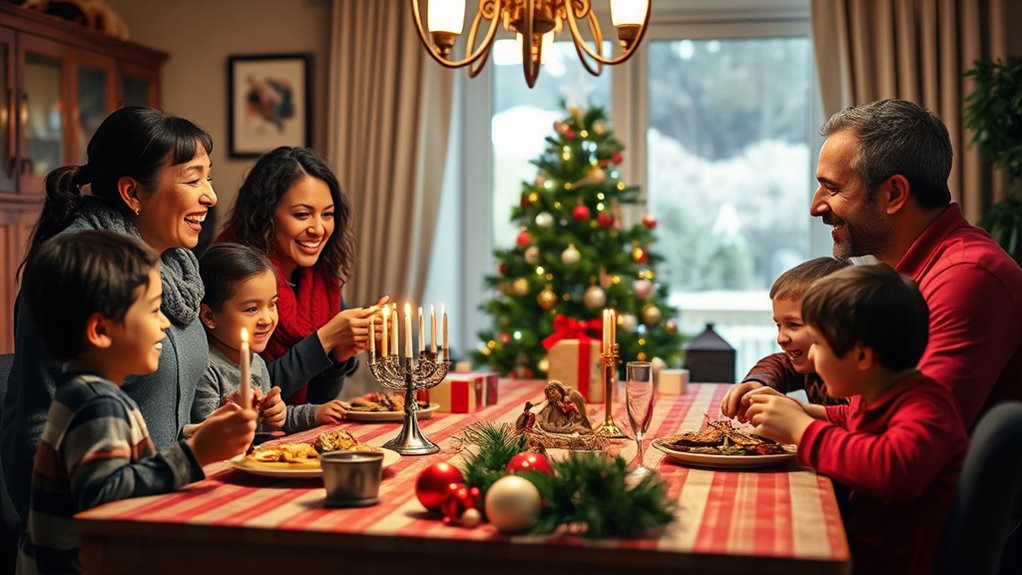
Have you ever wondered how interfaith families can make holiday celebrations meaningful for everyone involved? Finding ways to honor both faiths and traditions can seem challenging, but it’s entirely possible through open interfaith dialogue and thoughtful planning. When you engage in honest conversations with your loved ones about each person’s beliefs and customs, you create a foundation of understanding and respect. These discussions aren’t just about sharing information but about listening actively and showing genuine interest in each other’s perspectives. As you explore the different holiday traditions, you’ll uncover ways to weave them together, creating new rituals that reflect your family’s unique blend of faiths.
Open honest conversations to honor and blend diverse holiday traditions with understanding and respect.
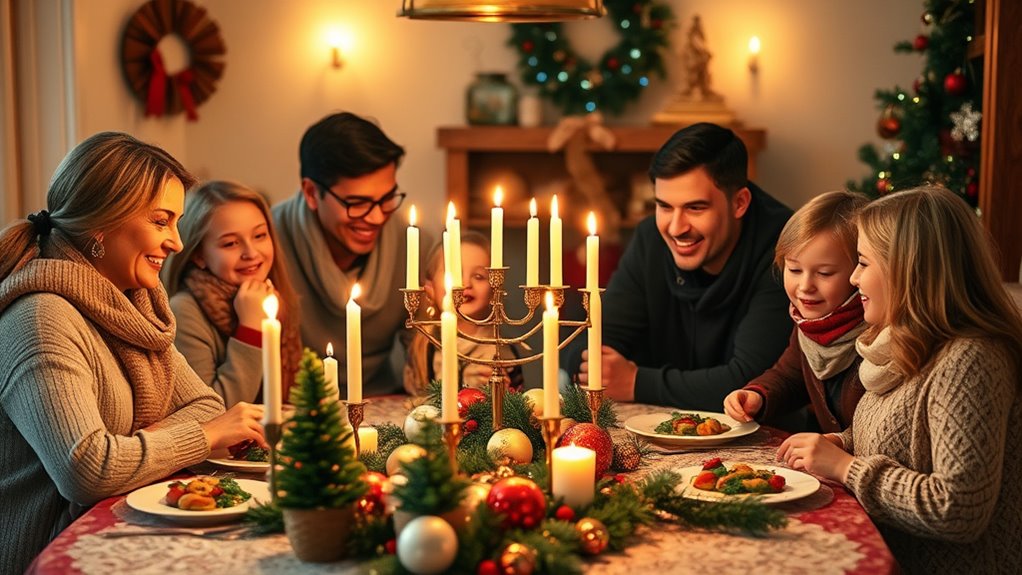
Involving everyone in planning holiday activities can also foster a sense of inclusivity. Encourage family members to share what holidays mean most to them and brainstorm ways to incorporate elements from each tradition. For example, if one partner observes a religious holiday with specific rituals, consider how those rituals can be adapted or combined with the other person’s customs. This collaborative approach reinforces that all beliefs and practices are valid and valued. It also helps prevent feelings of exclusion or favoritism, ensuring that no one feels marginalized during these special times.
Another key step is to educate yourself and your family about each other’s religious backgrounds. Understanding the significance of certain symbols, foods, or practices can deepen your appreciation and help you approach celebrations with sensitivity. For instance, learning about the meaning behind certain holiday foods or the symbolism of specific decorations can turn a simple meal or gathering into a meaningful experience. When everyone feels informed and respected, it becomes easier to create a festive atmosphere that celebrates diversity rather than highlighting differences. Additionally, embracing interfaith understanding can help bridge gaps and foster unity within your family.
Flexibility is essential when guiding interfaith holiday celebrations. Sometimes, traditions may need to be adjusted or combined to suit your family’s unique circumstances. Don’t be afraid to experiment and find what works best for everyone. The goal is to create an environment where all family members feel seen, heard, and appreciated. Remember, making holidays inclusive isn’t about diluting traditions but about enriching them through mutual respect and shared experiences. With open interfaith dialogue and a willingness to adapt, you can turn holiday celebrations into opportunities for connection, learning, and love that reflect the beautiful diversity of your family.
Frequently Asked Questions
How Can I Involve Children in Interfaith Holiday Celebrations?
You can involve children in interfaith holiday celebrations by engaging them in storytelling activities that highlight both traditions. Encourage them to share stories from their own backgrounds, fostering understanding. Incorporate cultural crafts related to each tradition, allowing kids to create meaningful decorations. This hands-on approach makes the celebrations inclusive and fun, helping children connect emotionally and learn about different faiths through interactive and creative experiences.
What Are Some Respectful Gift-Giving Ideas for Interfaith Families?
Imagine a gift that bridges worlds—think books, artwork, or handcrafted items that reflect both faiths. You can give cultural exchanges or respectful gestures like a shared prayer book or a holiday recipe. These thoughtful gifts honor each tradition, fostering understanding. Your kindness becomes a bridge, showing love and respect without boundaries. Such gestures strengthen bonds, turning gift-giving into a celebration of unity and shared values within your interfaith family.
How Do I Handle Family Disagreements About Holiday Traditions?
You handle family disagreements about holiday traditions by practicing cultural sensitivity and encouraging open dialogue. Listen actively to everyone’s perspectives and acknowledge their feelings. Facilitate tradition negotiation by finding common ground and blending practices that respect both faiths. Keep the focus on shared values and celebrating together, which helps reduce conflicts. Your goal is to foster understanding and compromise, creating a warm, inclusive atmosphere for all family members.
Are There Specific Resources for Planning Inclusive Holiday Events?
Imagine a map guiding you through diverse traditions—that’s what interfaith holiday resources offer. You can find helpful guides and toolkits online that support inclusive celebration planning. These resources, from community organizations and interfaith groups, provide ideas for blending customs respectfully. Use them to create joyful, meaningful holidays that honor everyone’s beliefs, making your celebrations welcoming and inclusive for all family members.
How Can We Honor Both Faiths Without Favoritism?
You can honor both faiths by fostering open interfaith dialogue and practicing cultural sensitivity. Encourage sharing traditions and stories from each faith, creating a respectful space where everyone feels included. Avoid favoritism by balancing celebrations and emphasizing common values. By actively listening and learning from each other, you promote understanding and respect, ensuring both faiths are celebrated equally and meaningfully during holiday gatherings.
Conclusion
By embracing interfaith holidays, you create a welcoming space where everyone feels valued. Research shows that 68% of interfaith families incorporate traditions from multiple faiths, fostering understanding and unity. Your efforts to include all beliefs not only strengthen family bonds but also promote respect in a diverse world. Keep celebrating with openness and creativity—your inclusivity can inspire others to honor and understand different faiths, making every holiday meaningful for everyone involved.