In an interfaith marriage, you can build a shared spiritual rhythm by fostering open communication, respecting each other’s beliefs, and creating new traditions that blend both faiths. Be patient and flexible with religious practices, celebrating each other’s festivals and finding common ground. By embracing differences as opportunities for growth, you nurture mutual understanding and deepen your connection. Continuing exploration will help you discover more ways to harmonize your spiritual lives for lasting harmony.
Key Takeaways
- Engage in open dialogue to understand each other’s spiritual perspectives and establish mutual respect.
- Create shared rituals or traditions that honor both faiths and foster spiritual connection.
- Adapt religious practices with patience and flexibility to accommodate both partners’ needs.
- Celebrate each other’s festivals and observe holy days together to build common spiritual experiences.
- Cultivate curiosity and appreciation for differences, turning them into opportunities for growth and deeper understanding.
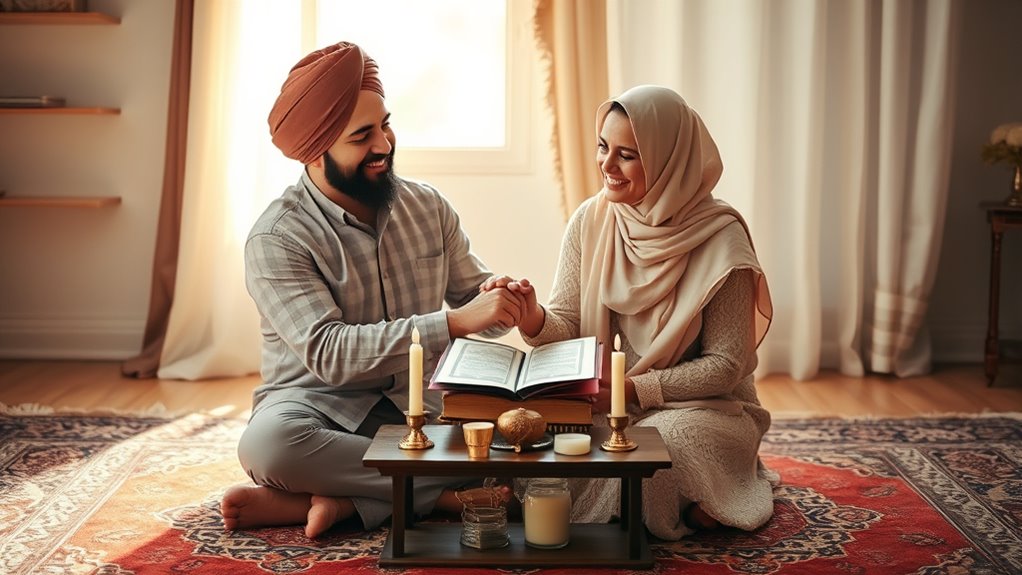
Have you ever wondered what it takes to steer love across different faiths? When you’re in an interfaith marriage, you quickly realize that cultural differences and religious integration are at the heart of creating a harmonious life together. These differences can be both enriching and challenging. On one hand, they offer a unique opportunity to learn about each other’s backgrounds, traditions, and worldviews. On the other hand, they can spark misunderstandings or disagreements if not handled thoughtfully. To build a shared spiritual rhythm, you need open communication and a genuine willingness to understand where your partner is coming from. It’s about finding common ground while respecting each other’s beliefs, even if they don’t always align perfectly.
Navigating love across faiths requires open dialogue, mutual respect, and embracing differences as opportunities for growth.
Cultural differences often influence how you approach religious practices and daily routines. For example, one of you might observe certain rituals or holidays with fervor, while the other may see those traditions as optional or symbolic. Charting this landscape requires patience and flexibility. You might decide to celebrate each other’s festivals or create new traditions that blend elements from both cultures. This way, you’re not just accommodating differences—you’re weaving them into the fabric of your shared life. Religious integration doesn’t mean giving up your faith or compromising your beliefs; it’s about creating a space where both can coexist peacefully and meaningfully. It involves dialogue, mutual respect, and sometimes, a little creative compromise.
Building a shared spiritual rhythm also involves making intentional choices about how you practice your faith together. You might attend services, pray, or meditate side by side, adapting these practices to suit both of your spiritual needs. It’s essential to recognize that your relationship can be a place of spiritual growth, where each partner learns from the other’s perspectives. Sometimes, this means exploring each other’s holy days, attending religious events, or simply discussing what faith means to each of you. These shared experiences can strengthen your bond and deepen your understanding. Additionally, understanding the importance of color accuracy in your shared visual experiences can help in creating a comfortable and inviting home environment that respects both faiths’ symbolism and aesthetics.
Ultimately, successful interfaith marriage hinges on your ability to nurture mutual respect and curiosity. When you embrace your differences and see them as opportunities rather than obstacles, you start to develop a shared spiritual rhythm that’s authentic and resilient. It’s about finding harmony in diversity—creating a life together that honors both your backgrounds and your love. With patience and open hearts, you can turn the challenge of cultural differences and religious integration into a beautiful symphony of shared faith and understanding.
Frequently Asked Questions
How Can Couples Navigate Differing Religious Holidays Effectively?
To navigate differing religious holidays effectively, you should prioritize holiday compromises and ritual synchronization. Talk openly about each other’s traditions, and find ways to blend or alternate celebrations. Planning ahead guarantees both feel valued, and you can create new shared rituals. Flexibility and mutual respect help maintain harmony, making each holiday meaningful. By working together, you build a respectful, inclusive approach that celebrates both faiths and strengthens your partnership.
What Are Common Challenges Faced During Interfaith Wedding Planning?
Think of planning your wedding like weaving a tapestry—each thread representing your beliefs and traditions. Common challenges include cultural misunderstandings and communication barriers, which can cause tension. For example, misinterpreting customs might lead to overlooked traditions. To overcome this, you need open dialogue and mutual respect, ensuring every thread aligns. Addressing these challenges early helps create a beautiful, harmonious blend that reflects both your backgrounds.
How Do Children’s Religious Identities Develop in Interfaith Families?
Children’s religious identities develop through a process of active engagement and open communication. You encourage cultural integration by sharing traditions from both faiths, fostering a sense of belonging. As they grow, children naturally explore their religious identity formation, influenced by family practices, community involvement, and personal experiences. This balanced approach helps them appreciate both backgrounds, shaping a unique, inclusive spiritual perspective that respects and celebrates their diverse religious roots.
Can Interfaith Couples Find Common Spiritual Practices?
You can definitely find common ground, like two rivers flowing side by side. By creating shared rituals and exploring each other’s spiritual traditions, you foster spiritual harmony. These practices don’t have to be elaborate; simple acts like meditating together or celebrating meaningful holidays can bridge differences. Embracing open communication and mutual respect helps build a strong spiritual connection, making your relationship richer and more unified despite diverse beliefs.
How Does Interfaith Marriage Influence Extended Family Relationships?
Interfaith marriage can markedly influence your extended family relationships by shaping family dynamics and encouraging cultural integration. You might face misunderstandings or differing traditions, but open communication helps bridge gaps. Embrace opportunities to educate and share your unique backgrounds, fostering respect and unity. Your effort to balance these elements strengthens bonds, making your family more inclusive. This process ultimately enriches everyone’s understanding and creates a harmonious environment rooted in mutual appreciation.
Conclusion
You might worry that interfaith marriage will lead to constant conflict or compromise. But with open hearts and honest conversations, you can create a shared spiritual rhythm that honors both traditions. Imagine celebrating holidays together, learning from each other’s beliefs, and building a deeper connection through mutual respect. It’s about blending your paths in a way that strengthens your bond—proving that love and understanding can truly unite diverse faiths into a beautiful, shared journey.