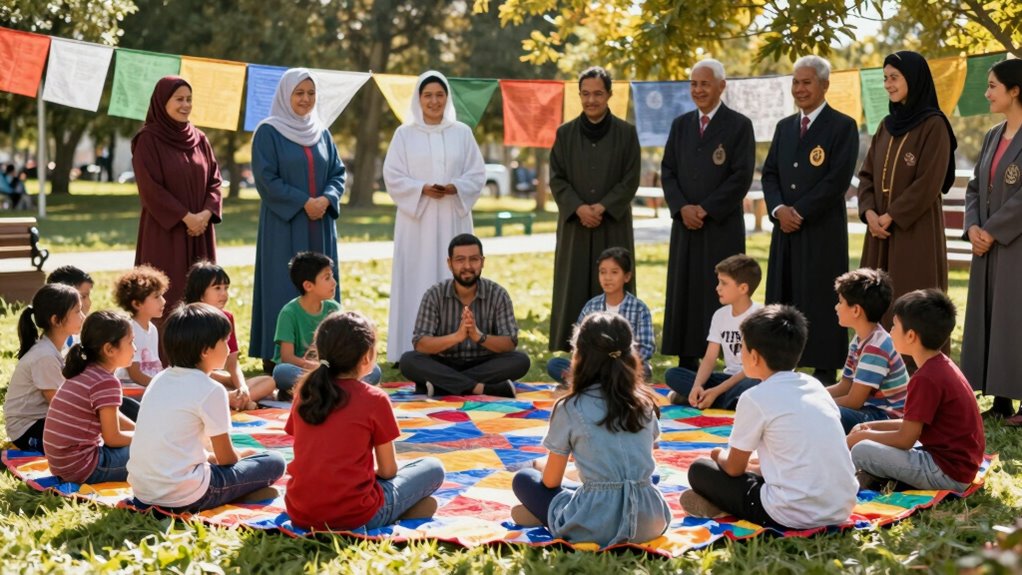

To raise kids around religious diversity respectfully, encourage open conversations and model curiosity without judgment. Expose them to different faith traditions through visits to places of worship and participation in cultural events. Teach them to listen and ask questions with respect, fostering empathy and understanding. Emphasize that differences are worth exploring, not fearing. Building this foundation helps children appreciate diversity and develop cultural humility—keep exploring to see how these practices can shape their worldview.

Get the little things that make your day delivered free with Prime
- Fast, free delivery on millions of items
- Prime Video, Amazon Music and more included
- Member-only deals all year
Key Takeaways
- Model respectful curiosity by asking questions and listening actively to children’s thoughts about different faiths.
- Educate children about various religions through stories, holidays, and community visits to foster understanding.
- Encourage open, honest conversations about faith differences, emphasizing respect and empathy.
- Participate in interfaith events or visit places of worship to provide firsthand exposure and deepen appreciation.
- Promote cultural humility, reminding children that learning about others’ beliefs is a lifelong, respectful journey.

Managing religious diversity while raising kids can be both enriching and challenging. You want your children to appreciate different beliefs and traditions, but steering through this landscape requires care and intentionality. One of the best ways to foster understanding is through interfaith dialogue. When your children see you engaging in open conversations about various faiths, they learn that questions and curiosity are welcomed. Encourage them to ask questions respectfully and listen to others’ perspectives with genuine interest. This creates an environment where differences are not feared but understood. Through interfaith dialogue, you help your children develop a sense of empathy, recognizing that religion is often a deeply personal part of someone’s identity. It also models for them how to approach conversations about faith with respect and curiosity, rather than judgment or dismissiveness. Cultivating an environment of religious literacy also helps children navigate diverse perspectives more confidently.
Cultural sensitivity plays an essential role in raising kids around religious diversity. It’s not just about knowing different religious facts but actively respecting the practices, symbols, and customs that may be unfamiliar to you and your family. When your children see you making an effort to understand and honor different traditions — whether it’s participating in a holiday, learning about dietary restrictions, or respecting prayer routines — they learn the importance of cultural humility. This sensitivity helps prevent stereotypes and fosters a genuine appreciation for diversity. It’s important to acknowledge your own limitations in understanding and to approach other cultures with humility, showing your children that respect is about listening and learning rather than assuming or appropriating.
Creating opportunities for your kids to experience different religious communities firsthand can also deepen their understanding. Attend interfaith events, visit places of worship, or share stories from various traditions. These experiences allow your children to see the humanity behind the beliefs and practices, making the abstract more tangible. When sensitive topics arise, approach them with openness, honesty, and a willingness to learn alongside your children. This illustrates that religious diversity is not something to fear but an enriching aspect of life that broadens perspectives. Ultimately, by fostering open dialogue and practicing cultural sensitivity, you equip your children with the skills to navigate a diverse world with respect, empathy, and confidence.
As an affiliate, we earn on qualifying purchases.
Frequently Asked Questions
How Can I Address My Child’s Questions About Different Religions?
When your child asks about different religions, engage in open interfaith dialogue, encouraging curiosity and understanding. Use age-appropriate language and emphasize cultural sensitivity, respecting each belief system’s significance. Share stories, invite questions, and explore diverse traditions together. This approach helps your child develop a respectful view of religious diversity, fostering empathy and acceptance. Remember, your openness and willingness to discuss differences set a positive example for their future interactions.
What Are Common Challenges Kids Face When Exposed to Religious Diversity?
Kids often face challenges like confusion or misunderstandings when exposed to religious diversity. They might struggle with interfaith understanding or feel overwhelmed by cultural differences. Your role is to promote open dialogue and foster cultural sensitivity, helping them appreciate diverse beliefs without judgment. Encourage questions and share respectful insights, guiding them to see diversity as a strength. This approach builds empathy and confidence in steering through a multicultural world.
How Do I Teach Tolerance Without Promoting Relativism?
Think of teaching tolerance as planting a garden; you nurture understanding without letting weeds of moral relativism take over. To do this, emphasize respect for different beliefs, highlight shared values, and encourage critical thinking. Religious tolerance doesn’t mean abandoning your morals but recognizing others’ rights to their beliefs. You can teach kids that respecting diversity enriches their world, helping them appreciate differences without compromising their own convictions.
Should I Introduce My Child’s Friends’ Religions at Home?
Yes, introducing your child’s friends’ religions at home can be valuable. You can foster understanding through interfaith dialogues, where your child learns about different beliefs firsthand. Additionally, participating in cultural celebrations from friends’ religions helps create positive experiences and curiosity. These activities promote respect and open-mindedness, showing your child that diversity enriches life. Always approach these topics with sensitivity, emphasizing learning and appreciation over judgment.
How Can I Balance My Family’s Beliefs With Respecting Others’ Faiths?
Did you know that children exposed to interfaith dialogue develop greater empathy? To balance your family’s beliefs with respecting others’ faiths, engage in open conversations, emphasizing shared values. Encourage cultural understanding by exploring different traditions together. By modeling respect and curiosity, you foster an environment where your kids learn to appreciate diversity without compromising their beliefs, creating a foundation of mutual respect and understanding in your family and community.
Conclusion
As you gently guide your children through the beautiful mosaic of beliefs around them, you plant seeds of understanding and respect. By fostering open hearts and curious minds, you help them navigate the colorful tapestry of faiths with kindness and grace. In doing so, you nurture a future where harmony blossoms, and differences become cherished threads woven into a shared story of compassion. Your thoughtful approach creates a peaceful garden where diversity can truly thrive.
NFL season / tailgating Picks
team gear
As an affiliate, we earn on qualifying purchases.