
To teach kids gratitude as a spiritual practice, create a daily routine that includes gratitude journaling and mindfulness exercises. Encourage them to reflect on both big blessings and small moments, fostering a deep appreciation for nature and the interconnectedness of all living things. Model these habits yourself and provide a warm, supportive environment for expression. By guiding them to see gratitude as a way to connect with the world, you help cultivate qualities like compassion and resilience. Keep exploring to discover more ways to nurture these meaningful connections.
Key Takeaways
- Integrate gratitude practices into daily routines, fostering mindful reflection on both personal blessings and the natural world.
- Use gratitude journaling to help children recognize abundance and develop a spiritual connection to their experiences.
- Encourage appreciation of nature and biodiversity to deepen spiritual awareness and environmental responsibility.
- Model gratitude and mindfulness, creating a nurturing environment for children to express and internalize spiritual gratitude.
- Connect gratitude to interdependence within ecosystems, fostering compassion and a sense of spiritual interconnectedness.
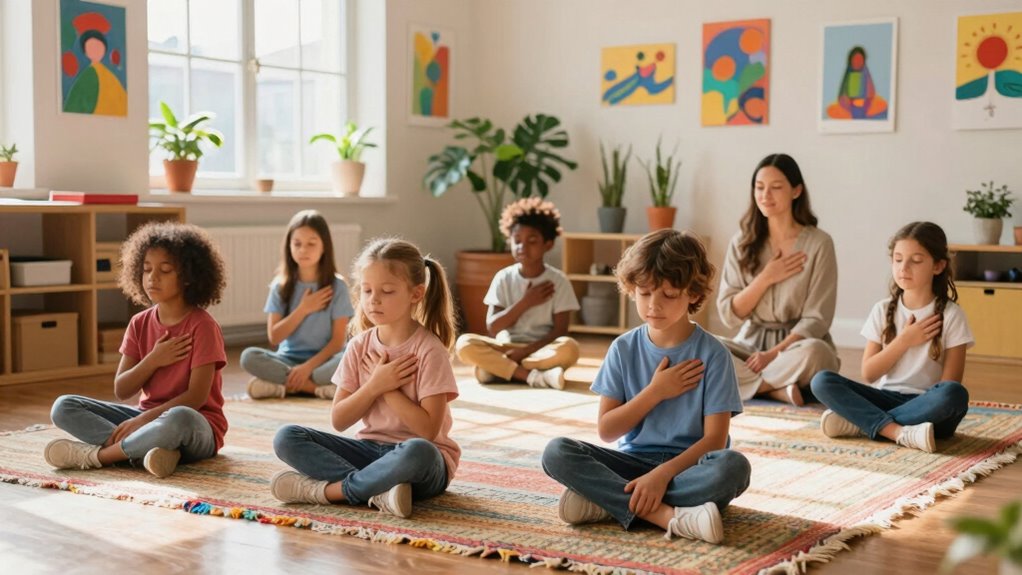
Another powerful tool is gratitude journaling, which helps children articulate what they’re thankful for and track their appreciation over time. You could introduce a simple journal where they write down three things they’re grateful for each day. This practice encourages a regular habit of reflection and shifts their focus from what they lack to what they have. Over time, kids begin to see their lives through a lens of abundance rather than scarcity, strengthening their emotional resilience and fostering a positive outlook. As they write, you can prompt them to include both big blessings, like family and health, and small moments, like a kind word from a friend or a beautiful sunset. This broadens their understanding of gratitude as a spiritual practice that encompasses all aspects of life. Incorporating mindfulness exercises and gratitude journaling into daily routines helps children internalize the importance of gratitude as a continual, meaningful practice. You might set aside a few minutes each morning or evening for these activities, making them a regular part of your family life. When kids see you practicing gratitude and mindfulness, they’re more likely to adopt these habits themselves. The key is to create a warm, non-judgmental environment where they feel safe expressing their feelings and recognizing their blessings. Cultivating an awareness of biodiversity and its significance can also deepen their appreciation for the natural world and enhance their sense of gratitude for the environment. Developing a mindful attitude towards their surroundings encourages children to recognize the interconnectedness of all living things and fosters a sense of responsibility to protect the planet. Understanding the interconnectedness of ecosystems encourages children to recognize their role within a larger ecological system. Engaging children in activities that highlight the interdependence of species can further strengthen their connection to nature and their sense of gratitude. Over time, these practices become natural, helping your children develop a compassionate, mindful attitude that extends beyond their immediate experiences to a broader sense of spiritual connection.

The 3 Minute Gratitude Journal for Kids: A Journal to Teach Children to Practice Gratitude and Mindfulness
As an affiliate, we earn on qualifying purchases.
As an affiliate, we earn on qualifying purchases.
Frequently Asked Questions
How Early Can Children Start Practicing Gratitude Spiritually?
You can start teaching kids gratitude as early as age 2, as part of their early development. By age 3 or 4, children begin reaching gratitude milestones, like recognizing kindness and expressing thanks. At this stage, you can encourage simple gratitude practices, such as sharing what they’re thankful for daily. Consistent, gentle guidance helps them understand gratitude as a meaningful spiritual practice that grows with them over time.
What Are Common Challenges in Teaching Kids Gratitude Spiritually?
You might face challenges like maintaining gratitude mindfulness consistently, as kids can easily become distracted or forgetful. Encouraging them to engage in spiritual journaling helps reinforce gratitude, but patience is key. Some children struggle to connect feelings with spiritual practices, so you need to make the experience engaging and relevant. Overcoming these challenges requires gentle persistence, creating a supportive environment where gratitude becomes a natural, meaningful part of their spiritual growth.
How Can Parents Model Spiritual Gratitude Effectively?
You can model spiritual gratitude effectively by practicing parenting empathy and engaging in mindfulness exercises together. Show genuine appreciation for small things, like nature or family moments, and verbalize your gratitude openly. Incorporate mindfulness exercises into your routine, such as deep breathing or gratitude journaling, to demonstrate reflection and thankfulness. Your consistent behavior teaches kids that gratitude is an essential part of a spiritual life, encouraging them to adopt similar practices.
Are There Specific Rituals or Ceremonies for Kids’ Gratitude Practice?
Did you know that kids who participate in gratitude journaling are 25% more likely to develop positive emotions? You can incorporate blessing rituals like saying a gratitude prayer before meals or creating a gratitude jar where children add notes of what they’re thankful for. These simple ceremonies help children recognize blessings, fostering a daily gratitude practice that nurtures their spiritual growth and emotional well-being.
How to Handle Ingratitude or Resistance From Children?
When kids show ingratitude or resistance, you should engage in mindful conversations to understand their feelings. Encourage emotional resilience by validating their emotions and gently guiding them to see gratitude’s value. Instead of punishment, model appreciation yourself and share stories that highlight gratitude. Over time, patience and open dialogue will help your children develop a genuine sense of gratitude, even when they initially resist or forget.
Conclusion
By guiding your kids to embrace gratitude as a daily spiritual practice, you help them build a foundation similar to the roots of a mighty oak—deep, resilient, and nourishing. As you nurture this virtue, remember the wisdom of Thoreau: “The best way to live is to live with gratitude.” In doing so, you plant seeds of abundance and contentment, guiding them to grow into souls who see the divine in every moment.