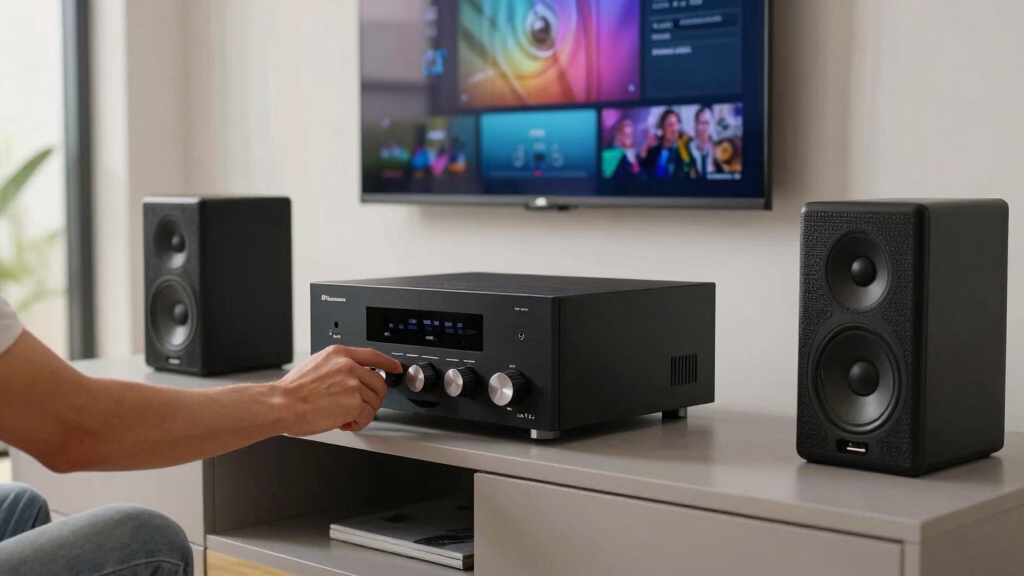

Finding the best AV receiver for 7.2 surround sound involves balancing power, features, and compatibility. The Denon AVR-S970H stands out as the overall top choice thanks to its 8K support, gaming features, and robust audio quality. For those prioritizing budget, the Sony STR-DH790 offers solid performance at a lower price, while the Yamaha RX-A2A provides a high-end experience with advanced video and audio capabilities. Each option faces tradeoffs such as price, complexity, and future-proofing, making it vital to pick one aligned with your specific needs. Continue reading for a detailed comparison to help you find the best fit for your home theater setup.
Key Takeaways
- The top picks balance power, compatibility, and future-proofing, with the Denon AVR-S970H leading overall.
- Many models now support 8K video, but real-world benefits depend on your display setup and sources.
- Built-in streaming and voice control features are common, yet vary in quality and ease of use across models.
- Price often correlates with features; budget options like Sony STR-DH790 deliver good value but lack advanced capabilities.
- Choosing the right AV receiver depends heavily on your current and planned home theater components, especially speakers and sources.


More Details on Our Top Picks
Denon AVR-S970H 8K Ultra HD 7.2 Channel (90W X 7) AV Home Audio Receiver, Built for Gaming, Music Streaming, 3D Audio & Video, Alexa + HEOS, Black, Bluetooth Amplifier
This model stands out for its versatile 8K support, immersive audio formats like Dolby Atmos, and seamless smart home integration with Alexa and HEOS. Compared to the Denon AVR-X1700H, it offers a slightly higher wattage per channel, making it better suited for medium-sized rooms that demand more power. However, its limitation is the inability to run both 7.2 channels and powered Zone 2 simultaneously—it’s either a full 7.2 system or a 5.2 with powered Zone 2. Setup is straightforward with Denon’s HD assistant and room calibration, and the multiple HDMI ports support the latest video standards. The Bluetooth and Wi-Fi streaming are reliable, though the lack of dedicated multi-room audio zones could be a drawback for larger homes. This receiver is ideal for users who want a robust all-in-one solution with excellent future-proofing but don’t need complex multi-zone configurations.
Pros:- Supports 8K/60Hz pass-through and upscaling for future compatibility
- Dolby Atmos and DTS:X for immersive surround sound
- Reliable HEOS multi-room streaming with Wi-Fi and Bluetooth
- Easy setup with Denon’s HD assistant and room calibration
Cons:- Cannot run 7.2 channels and powered Zone 2 simultaneously
- Limited to 90W per channel, which might be insufficient for very large or power-hungry speakers
Best for: Homeowners seeking a feature-rich, future-proof 7.2 receiver that can handle gaming, movies, and music in a medium-sized room.
Not ideal for: Large residences with multiple zones requiring independent audio controls or users wanting to run both 7.2 channels and powered Zone 2 at the same time.
- Power per channel:90W
- HDMI ports:8 (6 in / 2 out)
- Video pass-through:8K/60Hz
- Audio formats:Dolby Atmos, DTS:X
- Built-in streaming:HEOS, Bluetooth, Wi-Fi
- Supported HDR formats:Dolby Vision, HDR10, HDR10+
- Voice control:Alexa, HEOS
- Room calibration:Audyssey
Bottom line: This receiver offers a balanced mix of power, features, and future-proofing, making it a top pick for most home theater enthusiasts who prioritize performance and ease of use.
Onkyo TX-NR6100 7.2 Channel THX Certified Network AV Receiver – Black
This option excels in delivering high power with 100W per channel, making it ideal for larger rooms or demanding speakers. It outshines the Denon AVR-S970H in raw wattage, which benefits gamers and audiophiles seeking maximum volume without distortion. The THX certification guarantees precise sound reproduction, and its HDMI 2.1 support with 8K/60Hz pass-through aligns with the latest video standards. However, it’s more focused on power and less on smart features—lacking integrated streaming apps or voice control—so streaming needs external devices. The setup process is straightforward, but the absence of multi-room audio features limits its appeal for multi-zone systems. This receiver is best suited for users who prioritize high volume and clear sound in a single space over multi-room capabilities or advanced app controls.
Pros:- 100W per channel for large or demanding speakers
- THX Select certification ensures accurate sound reproduction
- Supports HDMI 2.1 with 8K/60Hz pass-through
- Rigorously tested for high-fidelity audio
Cons:- No built-in streaming apps or voice control
- Limited multi-room or multi-zone capabilities
Best for: Power-hungry gamers or large-room users seeking maximum volume and THX-certified audio without complex multi-zone features.
Not ideal for: Homeowners who want integrated streaming, multi-room audio, or voice control, as this model emphasizes power and precision over smart functionalities.
- Power per channel:100W
- HDMI ports:3 HDMI 2.1 inputs
- Video pass-through:8K/60Hz
- Audio formats:Dolby Atmos, DTS:X, THX Certified
- Streaming services:None built-in
- Supported HDR:HDR10, Dolby Vision
Bottom line: This receiver is perfect for those who need high power and precise sound quality, especially in larger spaces or gaming setups, but it sacrifices smart home features.
Denon AVR-S760H 7.2 Ch AVR – 75 W/Ch (2021 Model), Advanced 8K Upscaling, Dolby Atmos Height Virtualization, DTS Virtual:X & More, Built-in HEOS, Amazon Alexa Voice Control
This model offers a great entry point with 75W per channel, advanced 8K upscaling, and virtual surround features like Dolby Atmos Height Virtualization and DTS Virtual:X, making it highly versatile for newcomers. Compared to the Denon AVR-X1700H, it provides similar power but with additional virtualized surround options that don’t require extra speakers—ideal for smaller rooms or those new to home theater. The built-in HEOS allows easy multi-room streaming, and Alexa compatibility adds convenience. Setup is simplified with the on-screen guide, which is perfect for first-time users. However, its power output might be limiting for larger or more demanding speaker setups, and it lacks the more advanced features found in higher-end models like full 8K support on all inputs. It’s best suited for beginners or those who want a feature-rich, easy-to-use AV receiver that can grow with their needs.
Pros:- Supports 8K/60Hz and 4K/120Hz pass-through
- Dolby Atmos Height Virtualization and DTS:X virtual surround
- Built-in HEOS multi-room streaming
- Alexa voice control compatibility
Cons:- 75W per channel may be insufficient for large or power-hungry speakers
- Limited HDMI inputs compared to higher-end models
Best for: Home theater beginners or small to medium rooms wanting an easy setup and virtual surround effects without sacrificing modern features.
Not ideal for: Advanced users needing high power or extensive multi-zone configurations in larger rooms.
- Power per channel:75W
- HDMI ports:6 (3 dedicated 8K inputs)
- Video pass-through:8K/60Hz
- Audio formats:Dolby Atmos, DTS:X
- Streaming:HEOS, Alexa
- Built-in voice control:Amazon Alexa
Bottom line: This receiver offers excellent value for beginners and those seeking virtual surround effects, with modern features that are easy to set up and expand upon.
Denon AVR-X1700H 7.2 Channel AV Receiver – 80W/Channel, Advanced 8K HDMI Video w/eARC, Dolby Atmos, DTS:X, Built-in HEOS, Amazon Alexa Voice Control
This model excels with 80W per channel, providing ample power for most home setups, and supports the latest 8K HDMI standards with eARC for high-quality audio and video. Compared to the Denon AVR-S760H, it offers slightly more wattage, making it better suited for larger or more demanding speakers. The advanced HDMI section with 3 dedicated 8K inputs and 1 output ensures compatibility with future video standards, while Dolby Atmos and DTS:X create immersive sound experiences. The built-in HEOS facilitates multi-room streaming, and Alexa voice control simplifies operation. Setup is straightforward with the award-winning on-screen guide. However, it doesn’t include some of the virtual surround virtualization features of the AVR-S760H, and its power output may be overkill for small rooms. This receiver is ideal for users looking for a future-proof, powerful system that can handle the latest video and audio formats.
Pros:- 80W per channel for larger or demanding speakers
- Supports 8K/60Hz and eARC for high-quality audio/video
- Built-in HEOS multi-room streaming
- Alexa voice control compatible
Cons:- No Dolby Atmos Height Virtualization or DTS Virtual:X
- Higher power draw and potentially overpowered for small spaces
Best for: Homeowners wanting a high-power, future-proof AV receiver with extensive HDMI and streaming capabilities for medium to large rooms.
Not ideal for: Very small rooms or users seeking the most virtual surround options without the need for high wattage or advanced HDMI features.
- Power per channel:80W
- HDMI ports:7 (6 in / 1 out, all 8K)
- Video pass-through:8K/60Hz, eARC
- Audio formats:Dolby Atmos, DTS:X
- Streaming services:HEOS, Alexa
- Supported HDR:HDR10, Dolby Vision
Bottom line: This receiver is an excellent choice for those who prioritize power, advanced HDMI features, and future readiness, especially in larger rooms.
Pioneer VSX-935 7.2 Channel Surround Sound Network Receiver Dolby Atmos (2021)
This receiver provides a solid 75W per channel, with a focus on streaming and virtual surround features like Dolby Atmos Height Virtualization and Dolby Atmos Virtual:X, which are great for users who want immersive sound without complex speaker setups. Compared to the Denon AVR-S760H, it offers built-in support for Dolby Atmos virtualization, making it suitable for smaller or less cluttered rooms where adding height speakers isn’t feasible. It supports HDMI 2.1 with 8K enhancement, ensuring compatibility with the latest video standards. Its strength lies in streaming, with support for multiple platforms and a user-friendly interface. However, it lacks the multi-room streaming flexibility of models like the Denon AVR-X1700H and doesn’t have THX certification or as many HDMI inputs. This makes it ideal for users who prioritize virtual surround effects, streaming, and straightforward operation over raw power or extensive HDMI connectivity.
Pros:- Supports Dolby Atmos Virtualization and DTS:X Virtual:X
- HDMI 2.1 with 8K support
- Built-in streaming via network and apps
- Good for virtual effects without extra speakers
Cons:- Lacks THX certification and extensive multi-room features
- 75W per channel may limit large or power-hungry setups
Best for: Users wanting virtual surround effects and streaming in smaller or medium-sized rooms, with an emphasis on ease of use and modern features.
Not ideal for: Large rooms or users requiring extensive HDMI inputs or high power for demanding speakers.
- Power per channel:75W
- HDMI ports:4 (8K/60Hz support)
- Video pass-through:8K/60Hz
- Audio formats:Dolby Atmos Virtualization, DTS:X Virtual:X
- Streaming:Built-in network, Alexa compatible
- HDMI standard:HDMI 2.1
Bottom line: This receiver is a versatile choice for smaller rooms and users who want virtual surround effects combined with modern HDMI support.
Sony STR-DH790 7.2-ch Surround Sound Home Theater AV Receiver: 4K HDR, Dolby Atmos & Bluetooth Black
The Sony STR-DH790 stands out for delivering immersive Dolby Atmos and DTS:X sound at a very accessible price point, making it ideal for those upgrading from basic systems or entry-level models. Compared to the Yamaha RX-A2A, which offers higher build quality and more advanced room calibration, the Sony provides excellent sound for the money but lacks some of the premium features like eARC or full 8K support. Its low profile and simple setup are perfect for smaller spaces or cabinets, and the auto calibration (D.C.A.C.) ensures balanced sound even in challenging rooms. However, it doesn’t support Dolby Vision pass-through or HDMI 2.1, limiting future-proofing, and only offers 5 HDMI ports, which may be tight for many devices. This pick makes the most sense for budget-conscious buyers who prioritize sound quality over the latest video features and want a straightforward upgrade from older systems.
Pros:- Excellent Dolby Atmos and DTS:X surround sound for the price
- Supports 4K HDR pass-through with Dolby Vision and Hybrid Log Gamma
- Compact, low-profile design fits into most AV cabinets
- Auto calibration (D.C.A.C.) optimizes sound for room acoustics
Cons:- Lacks HDMI 2.1 support and full 8K pass-through
- Limited to 5 HDMI inputs, which may be insufficient for many setups
- No support for Dolby Vision passthrough for future-proofing
Best for: Cost-conscious home theater enthusiasts seeking solid surround sound and 4K HDR support without breaking the bank.
Not ideal for: Owners wanting full HDMI 2.1 support or future-proofing for 8K and gaming features.
- Number of channels:7.2
- HDMI ports:5
- Supports Dolby Atmos:Yes
- Supports 4K HDR pass-through:Yes
- Height channels:Dolby Atmos and DTS:X support
- Build height:5 1/4 inches
Bottom line: Ideal for budget-minded buyers wanting immersive surround sound and decent video quality in a compact package.
Denon AVR-X1800H 7.2 Channel AV Stereo Receiver – 80W/Channel, Wireless Streaming via Built-in HEOS, WiFi, & Bluetooth, Supports Dolby Vision, HDR10+, Dynamic HDR, & Home Automation Systems
The Denon AVR-X1800H makes a compelling case for buyers who want a versatile, feature-rich receiver capable of handling 8K video and immersive 3D audio, with excellent multi-room streaming via HEOS. Unlike the Yamaha RX-A2A, which excels in sound quality and premium build, the Denon offers more modern HDMI features, including three dedicated 8K/60Hz inputs and full Dolby Vision support, making it better suited for future upgrades. Its support for Dolby Atmos, DTS:X, and virtual height effects provides a flexible surround sound experience, while the user-friendly setup guide and color-coded connections simplify installation. The 80W per channel power output is sufficient for most small to medium rooms, but it may fall short if you have larger spaces or high-power speakers. This model is ideal for those wanting a balance of advanced video capabilities, multi-room audio, and good audio quality.
Pros:- Supports 8K/60Hz and 4K/120Hz with HDMI 2.1 inputs
- Full Dolby Vision, HDR10+, and Dynamic HDR pass-through
- Multi-room streaming with built-in HEOS
- Supports Dolby Atmos, DTS:X, and height virtualization
Cons:- Power output of 80W per channel may be insufficient for larger rooms
- Limited to 6 HDMI inputs, which might be tight for heavy device setups
- No built-in phono input for turntable connection
Best for: Home theater fans wanting 8K support, multi-room audio, and modern HDMI features at a reasonable price.
Not ideal for: Buyers seeking the highest power output or dedicated audiophile-grade sound quality without emphasis on 8K compatibility.
- Number of channels:7.2
- HDMI inputs:3
- Supports Dolby Atmos:Yes
- Supports 8K pass-through:Yes
- Power per channel:80W
- Wi-Fi and Bluetooth:Yes
Bottom line: Best suited for users wanting future-proof 8K video, multi-room streaming, and immersive sound in a mid-range package.
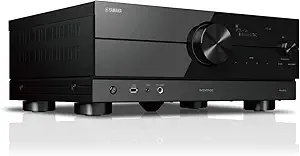
Yamaha RX-A2A AVENTAGE 7.2-Channel AV Receiver – 8K and 4K/120 HDMI, eARC, Dolby Atmos, DTS:X, Wi-Fi, Bluetooth, MusicCast
The Yamaha RX-A2A AVENTAGE offers a premium build, with Yamaha’s renowned YPAO R.S.C. multi-point room calibration, making it ideal for audiophiles who want precise sound in challenging spaces. Compared with the Denon AVR-X1800H, which is more feature-focused on 8K support, the Yamaha emphasizes sound quality, stability, and advanced calibration, including support for Dolby Atmos and DTS:X. Its 7 channels allow for immersive setups, and the support for 8K/60Hz and 4K/120Hz makes it a future-ready choice for high-end gaming and video. The inclusion of Wi-Fi, Bluetooth, and MusicCast enables seamless multi-room streaming, while the robust chassis and dedicated foot in the middle improve sound stability. The main tradeoff is its larger size and higher price, which might not suit smaller spaces or budget buyers. This is ideal for those who prioritize sound accuracy and premium features over basic affordability.
Pros:- Premium build quality with Yamaha’s signature stability
- Advanced YPAO R.S.C. multi-point room calibration
- Supports Dolby Atmos, DTS:X, and 8K/60Hz video
- Seamless multi-room audio with MusicCast and Bluetooth
Cons:- Larger physical footprint and higher price point
- Lacks some advanced HDMI features like full VRR support
- More complex setup for casual users
Best for: Audiophiles and home theater enthusiasts who want top-tier build quality, precise calibration, and future-proof video support.
Not ideal for: Budget-conscious buyers or those needing a compact system with fewer features.
- Number of channels:7.2
- HDMI ports:8
- Supports Dolby Atmos:Yes
- Supports 8K/60Hz:Yes
- Room calibration:YPAO R.S.C. multi-point
- Wireless streaming:MusicCast, Bluetooth
Bottom line: Best for audiophiles seeking top-tier calibration, build quality, and future-proofing for high-end home theaters.
How We Picked
To determine the best AV receivers for 7.2 surround sound, I focused on key factors that influence real-world performance and usability. Performance metrics such as power output, audio processing, and support for surround formats like Dolby Atmos and DTS:X were prioritized. Build quality, ease of setup, and future-proof features like 8K compatibility also played a major role. I considered user interfaces, streaming capabilities, and brand reliability to ensure each model offers a balanced combination of value and performance. The ranking reflects a mix of these factors, emphasizing versatility, sound quality, and long-term compatibility.Factors to Consider When Choosing Best AV Receiver For 7.2 Surround
When selecting the best AV receiver for 7.2 surround sound, it’s essential to think beyond specs. Your room size, speaker configuration, and future plans affect the ideal choice. Consider how much power you need to fill your space without distortion, and whether your source devices support advanced formats like 8K or Dolby Atmos. Ease of use, app support, and setup complexity also matter, especially if you’re new to home theater systems. Understanding these broader considerations helps avoid common pitfalls like overpaying for unnecessary features or choosing a model incompatible with your existing gear.Power and Channel Support
Power output per channel influences how loud and clear your system sounds, especially in larger rooms. For a 7.2 setup, look for receivers with at least 80W per channel to ensure ample volume without distortion. Channel support is equally critical; a true 7.2 system requires an AV receiver capable of driving two subwoofers and supporting multiple surround formats. Skimping on power or channels can lead to weak sound or limited flexibility in speaker placement and configuration.
Video Compatibility and Future-Proofing
Modern receivers increasingly support 8K video, HDR formats, and advanced upscaling. These features matter if you plan to upgrade your display or source devices soon. While 8K support is promising, it’s often overkill for now unless you have a compatible display. Look for HDMI inputs and outputs that support eARC, VRR, and ALLM to ensure seamless integration with current gaming consoles and streaming devices. Balancing current needs with future upgrades helps maximize your investment.
Ease of Use and Setup
Intuitive interfaces, clear on-screen menus, and mobile app controls make setup smoother, especially for those less experienced. Some models include automatic room calibration systems that optimize sound based on your space, saving time and improving performance. Consider whether the receiver supports voice control or smart home integration if these features matter to you. A complicated setup process can lead to frustration and suboptimal sound, so prioritize models with straightforward installation and user-friendly controls.
Streaming and Smart Features
Built-in Wi-Fi, Bluetooth, and streaming apps expand your audio options beyond traditional sources. Features like AirPlay, Spotify Connect, and Alexa or Google Assistant compatibility add convenience, but quality varies. Ensure the receiver supports your preferred services and offers stable connection options. However, don’t prioritize streaming features at the expense of core audio performance; they should complement a well-rounded system, not dominate it.
Price and Long-term Value
High-end models come with advanced features and better build quality, but may be unnecessary for casual users. Budget-friendly options can deliver excellent sound for smaller setups, but might lack future-proofing or advanced surround formats. Consider your long-term plans and how much you’re willing to invest in upgrades. Sometimes, saving on initial cost means missing out on key features that could be vital later, so weigh immediate needs against future expansion carefully.
Frequently Asked Questions
Will a 7.2 receiver work with my existing 5.1 speaker setup?
Yes, a 7.2 AV receiver can be configured to work with your current 5.1 speakers. It provides additional channels and subwoofers, which you can leave unused until you expand your system. Most receivers allow flexible speaker configurations, so you can start with your existing setup and upgrade over time. Keep in mind, to fully utilize 7.2 features, you’ll need to add compatible speakers and subwoofers in the future.
Is 8K support necessary if I don’t have an 8K TV?
While 8K support isn’t essential if your current TV is 4K, it offers some future-proofing. Many newer receivers include 8K HDMI ports that support higher bandwidths, HDR, and variable refresh rates, which can improve compatibility with upcoming devices and gaming consoles. If you plan to upgrade your display soon, choosing an 8K-compatible receiver makes sense. Otherwise, a 4K-focused model will suffice for now without losing much performance.
Should I prioritize built-in streaming or high power output?
Both features are important, but your choice depends on your priorities. Built-in streaming offers convenience if you prefer a clutter-free setup and easy access to services. High power output ensures your speakers perform well in larger rooms or at higher volumes. If you have a small to medium space and prioritize streaming, focus on models with strong connectivity. For larger rooms or more demanding speakers, power and sound processing might take precedence over streaming features.
Can I upgrade my existing speakers to support Dolby Atmos with a new AV receiver?
Yes, many AV receivers support Dolby Atmos through upward-firing or ceiling speakers. If your current speakers are traditional, you may need to add or replace some to enable Atmos effects. Check if your receiver supports the necessary speaker configuration and format. Upgrading to Atmos can significantly enhance your home theater experience, but ensure your room layout can accommodate overhead or upward-firing speakers for the best results.
Is it worth paying extra for a receiver with built-in voice control?
Built-in voice control adds convenience but may not be a priority for everyone. It allows you to control volume, input switching, and playback with voice commands, which can be useful in a smart home setup. However, many users find that dedicated smart speakers or remote controls suffice. If you already use smart home devices extensively, paying extra for integrated voice assistants could streamline your experience. Otherwise, it might be an unnecessary expense for some.
Conclusion
Choosing the best AV receiver depends on your specific needs and budget. The Denon AVR-S970H makes the most sense for those seeking overall performance, future-proofing, and versatile features—ideal for serious home theater enthusiasts. The Sony STR-DH790 offers excellent value for newcomers or casual users who prioritize straightforward operation and solid performance without breaking the bank. For audiophiles or those demanding premium build quality and advanced features, the Yamaha RX-A2A stands out as the best premium option. Ultimately, matching your current setup and future plans will lead you to the right choice for your home theater.