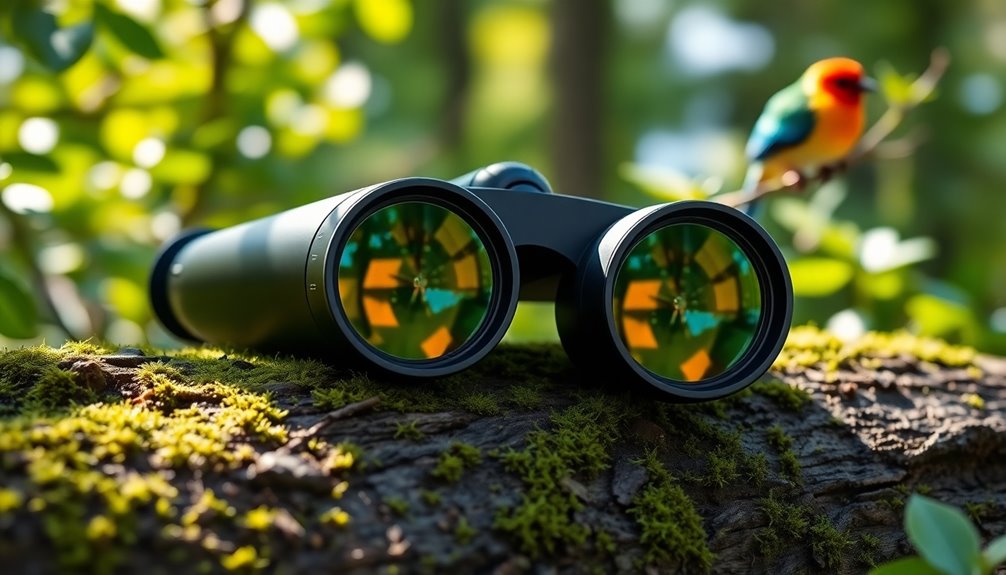
For most birders, the Celestron Nature DX 8×42 is the best overall choice here: its 8x magnification favors a steady view, and its 42mm objectives suit a range of daylight conditions. The Athlon Optics Midas UHD 8×42 is a strong alternative for buyers prioritizing optical refinement, while the Vortex Triumph HD 10×42 offers more reach for watching birds across open ground. The main tradeoff is between higher magnification, which can make distant subjects appear larger but harder to hold steady, and lower magnification, which is often easier for tracking movement. Compact models are easier to carry, though their smaller objectives can be less forgiving in dim light. Continue reading for the full comparison and guidance on matching binoculars to your birding habits.

Get the little things that make your day delivered free with Prime
- Fast, free delivery on millions of items
- Prime Video, Amazon Music and more included
- Member-only deals all year
Key Takeaways
- 8×42 models lead as general-purpose birding choices: the Celestron Nature DX and Athlon Midas UHD pair moderate magnification with larger objectives, a practical balance for varied outings.
- 10×42 is the reach-oriented middle ground: the Vortex Triumph HD and Crossfire HD suit open habitats better than compact 10×25 binoculars, while asking for steadier handling than 8x models.
- 12x and 20x magnification are specialized, not automatic upgrades: they can help with distant birds, but hand shake and a narrower view may make finding and following birds harder.
- Phone adapters and tripods serve a different purpose from birding optics: the Adorrgon and Adasion bundles may appeal to digiscoping-curious buyers, but included accessories do not by themselves make binoculars better for quick observation.
- Compact 25mm options trade low-light flexibility for portability: Occer and Hontry models are easier to pack, while 42mm binoculars are generally the safer choice for dawn, dusk, and longer viewing sessions.
| 15×52 High-Powered Binoculars for Adults with Smartphone Adapter |  | Best for Distant Birds and Phone Photos | Magnification: 15x | Objective lens diameter: 52 mm | Prism: Roof prism, BAK4 | VIEW ON AMAZON | See Our Full Breakdown |
| Vortex Triumph HD 10×42 Binoculars |  | Best Overall for Everyday Birding | Magnification: 10x | Objective lens diameter: 42 mm | Lens coating: Fully multi-coated | VIEW ON AMAZON | See Our Full Breakdown |
| Adorrgon 12×42 Binoculars with Phone Adapter and Tripod |  | Best Value for Lightweight Phone-Assisted Birding | Magnification: 12x | Objective lens diameter: 42 mm | Field of view: 367 ft at 1,000 yd | VIEW ON AMAZON | See Our Full Breakdown |
| Sfeoot 20×50 Binoculars for Adults |  | Best for High-Magnification Stationary Viewing | Maximum magnification: 20x | Objective lens diameter: 50 mm | Prism: BAK-4 Porro prism | VIEW ON AMAZON | See Our Full Breakdown |
| 20×50 Waterproof Binoculars with Low-Light Vision |  | Best for Tripod-Supported Long-Range Views | Magnification: 20x | Objective lens diameter: 50 mm | Field of view: 168 yd at 1,000 yd | VIEW ON AMAZON | See Our Full Breakdown |
| Occer 12×25 Compact Binoculars for Adults and Kids |  | Best Compact High-Magnification Pick | Magnification: 12x | Objective lens diameter: 25 mm | Field of view: 273 ft at 1,000 yd | VIEW ON AMAZON | See Our Full Breakdown |
| Adasion 12×42 Binoculars with Phone Adapter and Tripod |  | Best for Phone-Adapter Birding | Magnification: 12x | Objective lens diameter: 42 mm | Field of view: 367 yd at 1,000 yd | VIEW ON AMAZON | See Our Full Breakdown |
| Hontry 10×25 Compact Binoculars for Adults and Kids |  | Best Compact Pick for Families | Magnification: 10x | Objective lens diameter: 25 mm | Field of view: 362 ft | VIEW ON AMAZON | See Our Full Breakdown |
| Deesoo 20×52 Binoculars for Adults |  | Best for Distant, Stationary Birds | Magnification: 20x | Objective lens diameter: 52 mm | Field of view: 168 ft at 1,000 yd | VIEW ON AMAZON | See Our Full Breakdown |
| Celestron Nature DX 8×42 Waterproof Binoculars |  | Best Overall for Field Birding | Magnification: 8x | Objective lens diameter: 42 mm | Field of view: 7.4° | VIEW ON AMAZON | See Our Full Breakdown |
| Glosseek 10×42 ED Binoculars |  | Best for Wide-View Detail | Magnification: 10x | Objective lens diameter: 42 mm | Glass and prisms: ED glass; BAK4 | VIEW ON AMAZON | See Our Full Breakdown |
| Athlon Optics Midas UHD 8×42 Waterproof Binoculars |  | Best for Steady Handheld Birding | Magnification: 8x | Objective lens diameter: 42 mm | Angular field of view: 8.1° | VIEW ON AMAZON | See Our Full Breakdown |
| Vortex Triumph HD 12×50 Binoculars |  | Best for Distant Birds with Tripod Support | Magnification: 12x | Objective lens diameter: 50 mm | Eye relief: 16 mm | VIEW ON AMAZON | See Our Full Breakdown |
| Vortex Crossfire HD 10×42 Binoculars |  | Best Rugged All-Weather Pick | Magnification: 10x | Objective lens diameter: 42 mm | Field of view: 325 feet | VIEW ON AMAZON | See Our Full Breakdown |
| Compact 12x Binoculars for Adults and Kids |  | Best Pocketable Option for Casual Birding | Magnification: 12x | Objective lens diameter: 21 mm | Weight: 5.3 ounces | VIEW ON AMAZON | See Our Full Breakdown |
| binoculars for bird watching | Objective lens diameter | Magnification | Field of view | Eye relief |
|---|---|---|---|---|
| 15×52 High-Powered Binoculars | 52 mm | 15x | 5.8 degrees | 18 mm |
| Vortex Triumph HD 10×42 Binocu | 42 mm | 10x | — | 17 mm |
| Adorrgon 12×42 Binoculars with | 42 mm | 12x | 367 ft at 1,000 yd | 10 mm |
| Sfeoot 20×50 Binoculars for Ad | 50 mm | — | 42 degrees | — |
| 20×50 Waterproof Binoculars wi | 50 mm | 20x | 168 yd at 1,000 yd | — |
| Occer 12×25 Compact Binoculars | 25 mm | 12x | 273 ft at 1,000 yd | 20 mm |
| Adasion 12×42 Binoculars with | 42 mm | 12x | 367 yd at 1,000 yd | — |
| Hontry 10×25 Compact Binocular | 25 mm | 10x | 362 ft | 10 mm |
| Deesoo 20×52 Binoculars for Ad | 52 mm | 20x | 168 ft at 1,000 yd | 26 mm |
| Celestron Nature DX 8×42 Water | 42 mm | 8x | 7.4° | 17.5 mm |
| Glosseek 10×42 ED Binoculars | 42 mm | 10x | 7° (122 m/1,000 m) | 18 mm |
| Athlon Optics Midas UHD 8×42 W | 42 mm | 8x | — | 17.2 mm |
| Vortex Triumph HD 12×50 Binocu | 50 mm | 12x | — | 16 mm |
| Vortex Crossfire HD 10×42 Bino | 42 mm | 10x | 325 feet | 15 mm |
| Compact 12x Binoculars for Adu | 21 mm | 12x | 415 feet | 2.6 mm |
More Details on Our Top Picks
15×52 High-Powered Binoculars for Adults with Smartphone Adapter
The 15x magnification gives distant birds a larger view than the Vortex Triumph HD 10×42, but that reach narrows the margin for unsteady hands. Its 52 mm objectives and coated BAK4 roof prisms are aimed at gathering usable light, while the 5.8-degree field of view provides room to track a moving subject. The included smartphone adapter adds a way to capture what you see, though framing a bird through binocular eyepieces can take patience. Adjustable eyecups and 18 mm eye relief offer more flexibility for glasses wearers than the Adorrgon 12×42’s 10 mm eye relief. I’d choose this for stationary or distant viewing, not quick scans from a walking trail: high magnification makes locating and following birds harder without support.
Pros:- 15x magnification brings distant subjects closer than the 10x Vortex Triumph HD 10×42.
- 52 mm objectives and coated BAK4 roof prisms support viewing in lower light.
- 18 mm eye relief and adjustable eyecups provide useful viewing flexibility.
- Smartphone adapter is included for attempting photos and videos.
Cons:- High magnification makes handheld views more susceptible to shake.
- Narrower 5.8-degree field of view can make fast-moving birds harder to follow.
- Phone framing through the eyepieces may take patience.
Best for: Birders who mainly watch distant, relatively stationary birds and want to try phone photography through their binoculars.
Not ideal for: Beginners who need to follow birds in flight or scan woodland quickly; 15x magnification is harder to hold steady and aim than the Vortex Triumph HD 10×42.
- Magnification:15x
- Objective lens diameter:52 mm
- Prism:Roof prism, BAK4
- Field of view:5.8 degrees
- Eye relief:18 mm
- Exit pupil:3.47 mm
- Focus:Manual center focus
- Water resistance:Waterproof
- Included accessory:Smartphone adapter
Our verdict“Choose this for distant birding and phone-photo experiments if you can steady the 15x view.”
Vortex Triumph HD 10×42 Binoculars
For a general-purpose birding pair, the 10×42 format is a more balanced starting point than the 15×52 model in this roundup: it offers useful reach while being easier to keep on a moving bird. The fully multi-coated HD optics and 4.2 mm exit pupil suit varied outdoor light, and waterproof, fogproof, shockproof construction supports regular field use. Adjustable eyecups, diopter adjustment, and tripod adaptability add flexibility; the included GlassPak harness also gives you a practical way to carry these full-size binoculars. The tradeoff is weight: at 2.3 pounds, they are heavier than the 1.1-pound Adorrgon 12×42. I’d pick these over that lighter option for the more conventional 10x view and stated rugged build, but not for buyers prioritizing minimal pack weight or unusually distant subjects.
Pros:- 10x magnification is a steadier, versatile choice for tracking birds than the 15×52 model.
- Fully multi-coated HD optics and a 4.2 mm exit pupil suit varied outdoor lighting.
- Waterproof, fogproof, and shockproof construction is suited to field use.
- Includes adjustable eyecups, tripod adaptability, a neck strap, and a GlassPak harness.
Cons:- At 2.3 pounds, it is heavier than the Adorrgon 12×42 and other lighter options.
- Its 10x magnification offers less reach than the 15×52 and 20×50 models.
- Full-size dimensions take up more room in a compact day pack.
Best for: Birders seeking one full-size pair for regular walks, varied weather, and general wildlife viewing, with a carry harness included.
Not ideal for: Hikers who count every ounce or birders who want very high magnification for distant subjects; these weigh 2.3 pounds and offer 10x power.
- Magnification:10x
- Objective lens diameter:42 mm
- Lens coating:Fully multi-coated
- Eye relief:17 mm
- Exit pupil:4.2 mm
- Weight:2.3 lb
- Water resistance:Waterproof; also fogproof and shockproof
- Mount:Tripod adaptable
- Included accessories:Neck strap and adjustable GlassPak harness
Our verdict“Pick this as a versatile everyday birding pair if field-ready features matter more to you than low weight or maximum reach.”
Adorrgon 12×42 Binoculars with Phone Adapter and Tripod
The Adorrgon pairs 12x magnification with a 42 mm objective lens in a 1.1-pound body, making it a lighter alternative to the full-size 2.3-pound Vortex Triumph HD 10×42. Its 367-foot field of view at 1,000 yards is useful when searching across open ground, and BAK4 prisms with fully multi-coated optics support bright, detailed views. The included tripod can help steady the image and phone adapter when you want to attempt photos or videos. That kit makes this pick more appealing for casual outings than the Sfeoot 20×50, whose higher power is more demanding to hold steady. There are compromises: the 10 mm eye relief may be less comfortable for glasses wearers, and the 3.5 mm exit pupil is less suited to dim conditions than the Vortex’s 4.2 mm.
Pros:- At 1.1 pounds, it is lighter than the full-size Vortex Triumph HD 10×42.
- 367-foot field of view at 1,000 yards helps with scanning open areas.
- BAK4 prisms and fully multi-coated optics support detailed viewing.
- Includes both a smartphone adapter and tripod for steadier viewing and photo attempts.
Cons:- 10 mm eye relief may not suit glasses wearers as well as the Vortex’s 17 mm.
- The 3.5 mm exit pupil is less suited to dim conditions than the Vortex’s 4.2 mm.
- Manual focus requires adjustment as viewing distance changes.
Best for: Casual birders who want a relatively light pair with a supplied tripod and phone adapter for viewing and photo attempts.
Not ideal for: Glasses wearers who need generous eye relief, or birders who spend much of their time watching in dim light.
- Magnification:12x
- Objective lens diameter:42 mm
- Field of view:367 ft at 1,000 yd
- Prism:Roof prism, BAK4
- Lens coating:Fully multi-coated
- Eye relief:10 mm
- Weight:1.1 lb
- Water resistance:Waterproof
- Included accessories:Smartphone adapter and tripod
Our verdict“Choose the Adorrgon for a lighter, accessory-rich setup, but favor the Vortex Triumph HD 10×42 for longer eye relief and a larger exit pupil.”
Sfeoot 20×50 Binoculars for Adults
With 20x magnification, the Sfeoot is aimed at birds that are far away and not moving quickly, rather than the rapid scanning that makes a 10x model like the Vortex Triumph HD 10×42 more convenient. Its 50 mm objectives, BAK-4 Porro prisms, and fully multi-coated lenses provide a substantial optical package on paper, while center focus and diopter adjustment allow separate tuning for viewing. The rubberized exterior and stated water and fog resistance suit outdoor use, but the water-resistance note specifically says to avoid immersion. Its 2.5 mm exit pupil also limits the appeal as light fades compared with the Vortex’s 4.2 mm exit pupil. I’d choose it for supported, long-distance observation—not for following birds through trees or carrying an easy, quick-viewing pair on long walks.
Pros:- 20x magnification offers more reach than the 10x Vortex Triumph HD 10×42.
- 50 mm objectives pair with BAK-4 Porro prisms and fully multi-coated lenses.
- Center focus and ±4 diopter adjustment allow viewing adjustments.
- Rubberized exterior is described as water- and fog-resistant.
Cons:- High magnification is harder to hold steady and follow moving birds with.
- The 2.5 mm exit pupil is less suited to dim light than the Vortex’s 4.2 mm.
- Water resistance does not mean it can be immersed.
Best for: Birders watching distant, relatively stationary subjects from a fixed spot who can support high-magnification binoculars.
Not ideal for: People scanning for birds in flight, birding in dim conditions, or needing a compact, simple handheld pair.
- Maximum magnification:20x
- Objective lens diameter:50 mm
- Prism:BAK-4 Porro prism
- Exit pupil:2.5 mm
- Field of view:42 degrees
- Focus:Center focus
- Diopter adjustment:±4 diopters
- Water resistance:Waterproof; avoid immersing
- Included accessories:Carrying bag, neck strap, cleaning cloth, and manual
Our verdict“Choose the Sfeoot for supported views of distant, still birds, not as an all-purpose woodland or low-light pair.”
20×50 Waterproof Binoculars with Low-Light Vision
This 20×50 model is the lineup’s tripod-mount option for birders seeking a close view of distant subjects. Its 168-yard field of view at 1,000 yards is relatively narrow for locating birds, so it suits observing a known perch better than sweeping across a wide landscape. The BAK4 Porro prisms and fully multi-coated, anti-reflective lenses are designed to support clear views, while center focus keeps adjustments familiar. Compared with the Sfeoot 20×50, this model lists a mount and a specified field of view, but both share the main drawback of 20x magnification: handheld shake can frustrate bird tracking. Its 2.5 mm exit pupil also makes it a weaker choice as daylight fades than the Vortex Triumph HD 10×42. Waterproofing does not permit immersion.
Pros:- 20x magnification provides more reach than the Vortex Triumph HD 10×42.
- Tripod mount offers an option for stabilizing the high-power view.
- BAK4 Porro prisms and fully multi-coated, anti-reflective lenses support clear viewing.
- Rubber-coated body provides a secure grip and impact resistance.
Cons:- The 168-yard field of view at 1,000 yards is less useful for quickly finding moving birds.
- High magnification can make handheld viewing shaky without support.
- Waterproofing does not allow immersion, and the 2.5 mm exit pupil is a limitation in dim light.
Best for: Birders observing distant perches from a stationary position who want a tripod mount for steadier viewing.
Not ideal for: Birders who scan for fast-moving subjects, need a wide view, or often watch in dim light.
- Magnification:20x
- Objective lens diameter:50 mm
- Field of view:168 yd at 1,000 yd
- Prism:BAK4 Porro prism
- Exit pupil:2.5 mm
- Lens coating:Fully multi-coated, anti-reflective
- Focus:Manual center focus
- Weight:0.89 kg
- Mount:Tripod mount
Our verdict“Pick this for tripod-supported observation of distant birds, but choose a lower-magnification pair for scanning and following movement.”
Occer 12×25 Compact Binoculars for Adults and Kids
The Occer 12×25 packs 12x magnification into a small body, making it a portable choice for birders who want to pick out distant details without carrying full-size binoculars. Its 20 mm eye relief and adjustable eyecups can suit eyeglass wearers, while the BAK-4 prisms and fully multi-coated optics support a clear view. Compared with the Hontry 10×25, Occer gives you more magnification, but its higher power can make it harder to hold a bird steady and its 273-foot field of view is narrower. The 2.5 mm exit pupil also limits brightness at dawn and dusk, despite the low-light feature. This is a compact daytime option, not a substitute for larger lenses when light fades.
Pros:- 12x magnification offers more reach than the 10x Hontry 10×25.
- Compact 4.4 × 4 × 1.9-inch body is easy to pack.
- 20 mm eye relief and adjustable eyecups accommodate many eyeglass wearers.
- BAK-4 prisms and fully multi-coated optics support clear viewing.
Cons:- Small 2.5 mm exit pupil gives a dimmer view in low light.
- Narrower field of view and higher magnification make tracking moving birds harder.
- The compact form may be less steady in hand than larger binoculars.
Best for: Daytime birders who prioritize a small, easy-to-pack binocular and want extra reach for distant birds.
Not ideal for: Birders who often watch at dawn or dusk, or who need a wide view to follow fast-moving birds.
- Magnification:12x
- Objective lens diameter:25 mm
- Field of view:273 ft at 1,000 yd
- Prism type:BAK-4
- Coating:Fully multi-coated
- Eye relief:20 mm
- Exit pupil diameter:2.5 mm
- Weight:0.39 kg
Our verdict“Choose the Occer if compact size and 12x reach matter more than a bright, wide view for birding.”
Adasion 12×42 Binoculars with Phone Adapter and Tripod
The Adasion 12×42 pairs a large 42 mm objective lens with 12x magnification, offering more light-gathering area than compact models such as the Occer 12×25. That makes it the more suitable choice of the two for longer outdoor sessions, while its included phone adapter and tripod add a way to attempt digiscoping or steady a view. The tradeoff is weight: at 1.2 pounds, it is less appealing for all-day walking than a compact binocular, and 12x magnification can still make handheld views shaky. Its 367-yard field of view and 4 mm exit pupil provide useful viewing context, while IPX7 waterproofing and fog-proof construction suit changing weather. Phone fit can vary, so buyers should not rely on the adapter working with every device.
Pros:- 42 mm objectives gather more light than the compact Occer 12×25.
- Includes a phone adapter and tripod for supported viewing and photo attempts.
- IPX7 waterproof and fog-proof construction is suited to wet, changeable conditions.
- Fully multi-coated optics, BAK4 prisms, and adjustable eyecups support comfortable viewing.
Cons:- At 1.2 pounds, it can feel heavy on long walks.
- 12x magnification can amplify hand shake when viewing without support.
- Phone-adapter fit may vary between smartphones.
Best for: Birders who want full-size optics, weather protection, and included accessories for occasional phone photos or tripod viewing.
Not ideal for: Hikers seeking the lightest setup, or birders who need a broad, steady handheld view for following quick movements.
- Magnification:12x
- Objective lens diameter:42 mm
- Field of view:367 yd at 1,000 yd
- Prism type:Roof prism, BAK4
- Lens coating:Fully multi-coated
- Exit pupil diameter:4 mm
- Water resistance:IPX7 waterproof; fog-proof
- Weight:1.2 lbs
- Included accessories:Phone adapter, tripod, crossbody case
Our verdict“Pick the Adasion if you want a weather-resistant 12×42 with included phone and tripod accessories and can accept the extra carry weight.”
Hontry 10×25 Compact Binoculars for Adults and Kids
The Hontry 10×25 is the more approachable compact choice for families sharing binoculars: its 60–75 mm interpupillary adjustment can accommodate a range of face sizes, and 10x magnification is less demanding to steady than the Occer 12×25’s 12x. Fully multi-coated optics and Bak-4 prisms support a detailed daytime view in a small package, while the supplied neck strap and bag make it straightforward to carry on outings. The listed 362-foot field of view is useful for finding birds, though the description does not specify a distance for that figure. Its main comfort limitation is 10 mm eye relief, which may feel tight for eyeglass wearers compared with the Occer’s 20 mm. Small 25 mm objectives also make this a less compelling choice for dim conditions than a 42 mm model such as the Adasion.
Pros:- 10x magnification is easier to steady than the Occer 12×25’s 12x.
- Interpupillary adjustment from 60–75 mm suits many children and adults.
- Compact 0.6 lb design is convenient for travel and family outings.
- Includes a neck strap, nylon bag, and cleaning cloth.
Cons:- 10 mm eye relief may restrict a full view for eyeglass wearers.
- 25 mm objectives provide less light-gathering area than the Adasion 12×42.
- The listed field-of-view figure lacks a stated viewing distance.
Best for: Families and casual birders who want a compact shared binocular for daytime walks, travel, and general wildlife viewing.
Not ideal for: Eyeglass wearers who need generous eye relief, or birders who regularly watch in low light.
- Magnification:10x
- Objective lens diameter:25 mm
- Field of view:362 ft
- Prism type and material:Porro prism, Bak-4
- Coating:Fully multi-coated
- Eye relief:10 mm
- Interpupillary distance:60–75 mm
- Weight:0.6 lbs
- Water resistance:Waterproof
Our verdict“Choose the Hontry for shared daytime use and easy carrying, but look to a larger binocular if eye relief or low-light brightness is a priority.”
Deesoo 20×52 Binoculars for Adults
The Deesoo 20×52 is the specialist pick here for watching distant birds from a fixed position. Its 20x magnification offers substantially more apparent reach than the Celestron Nature DX 8×42, but that power narrows the view to 168 feet at 1,000 yards and makes hand shake more visible. A tripod mount is therefore useful for keeping distant details steady, though the tripod is not included. The 52 mm objectives and 5 mm exit pupil support a brighter image than compact 25 mm models, and 26 mm eye relief gives room for glasses. The key limitation for field birding is the lack of water resistance: this model is a poor match for wet trails or unpredictable weather. Its high magnification also makes it less convenient for scanning or tracking birds in flight.
Pros:- 20x magnification provides more reach than the Celestron Nature DX 8×42.
- 52 mm objectives and a 5 mm exit pupil suit brighter viewing than compact 25 mm models.
- 26 mm eye relief can accommodate eyeglass wearers.
- Tripod mount can help steady the high-power view.
Cons:- Not water resistant, limiting use in rain or damp field conditions.
- Narrow 168 ft field of view makes locating and tracking birds harder.
- Tripod is not included, and handheld 20x viewing can be difficult to steady.
Best for: Birders who watch distant, mostly stationary birds from a dry, sheltered location and can supply a tripod.
Not ideal for: Birders who walk in wet weather, scan broad areas, or need to follow birds in flight handheld.
- Magnification:20x
- Objective lens diameter:52 mm
- Field of view:168 ft at 1,000 yd
- Prism type:Roof prism, BAK-4
- Lens coating:Fully multi-coated
- Eye relief:26 mm
- Exit pupil diameter:5 mm
- Water resistance:Not water resistant
- Weight:2.18 lbs
Our verdict“Choose the Deesoo for distant birds viewed from a dry, tripod-supported position, not for general-purpose walks or changing weather.”
Celestron Nature DX 8×42 Waterproof Binoculars
The Celestron Nature DX 8×42 earns the broadest birding role in this group by balancing a steady 8x view, light-gathering 42 mm objectives, and a wide 7.4° field of view. That wider view makes it easier to locate birds and follow movement than with the high-power Deesoo 20×52, while the 6.5-foot close focus helps when a bird is nearby. Phase-coated BaK-4 prisms and fully multi-coated lenses support image clarity; waterproof, nitrogen-purged construction adds confidence in damp or changing conditions. Its 5.25 mm exit pupil also gives a more forgiving viewing window than the compact Occer 12×25. The tradeoff is less reach for far-off subjects than 12x or 20x models, and a tripod adapter is not included despite its tripod compatibility.
Pros:- 8x magnification and a 7.4° field of view make scanning and tracking easier than with the Deesoo 20×52.
- 42 mm objectives and a 5.25 mm exit pupil support bright, forgiving views.
- 6.5-foot close focus is useful for nearby wildlife.
- Waterproof, nitrogen-purged build suits outdoor birding in damp conditions.
Cons:- Lower magnification offers less reach than the Adasion 12×42 or Deesoo 20×52.
- Tripod adapter is not included.
- The listed focus type is individual focus, which may be less convenient for quick distance changes than center focus models.
Best for: Birders who want one weather-ready binocular for walking, locating moving birds, and viewing subjects at varied distances.
Not ideal for: Buyers who prioritize maximum magnification for distant stationary birds or need a tripod adapter in the box.
- Magnification:8x
- Objective lens diameter:42 mm
- Field of view:7.4°
- Close focus:6.5 ft
- Eye relief:17.5 mm
- Prism material:BaK-4
- Coating:Phase coating; fully multi-coated lenses
- Exit pupil diameter:5.25 mm
- Water resistance:Waterproof; nitrogen-purged
Our verdict“Pick the Nature DX 8×42 for a versatile, weather-ready birding view that favors easy scanning over extreme magnification.”
Glosseek 10×42 ED Binoculars
The Glosseek pairs 10x magnification with ED glass and a stated 7° field of view, a useful combination for following moving birds without giving up detail. Its 3 m close focus also makes it more versatile for nearby wildlife than the Vortex Crossfire HD 10×42, whose listed specs do not give a close-focus distance. At 1.4 lb, it matches that Vortex in listed weight, while adding 18 mm eye relief for a more accommodating fit with glasses. The IPX7-rated body and aluminum chassis suit wet, changeable outings. The tradeoff is that its 10x view can be harder to hold steady than the 8x Athlon Midas UHD, and the product details provide no independent performance evidence.
Pros:- ED glass, BAK4 prisms, and fully multi-coated optics are designed for clear, natural-color viewing.
- Stated 7° field of view and 3 m close focus suit scanning and nearby wildlife.
- 18 mm eye relief accommodates many glasses wearers.
- IPX7 waterproofing and an aluminum alloy body are suited to outdoor use.
Cons:- 10x magnification is less steady handheld than the 8x Athlon Midas UHD.
- At 1.4 lb, it is not a particularly light option for long periods of handheld viewing.
- The supplied product details do not establish real-world optical performance.
Best for: Birders who want a wide stated view, close focusing for nearby subjects, and 10x detail in a weather-sealed 42 mm binocular.
Not ideal for: Birders who prioritize a steadier handheld view or want a model with more documented real-world performance information.
- Magnification:10x
- Objective lens diameter:42 mm
- Glass and prisms:ED glass; BAK4
- Field of view:7° (122 m/1,000 m)
- Close focus:3 m
- Eye relief:18 mm
- Weight:1.4 lb
- Weather protection:IPX7 waterproof; fogproof
- Warranty:Lifetime
Our verdict“Choose the Glosseek if you want 10x detail, a wide stated view, and close focus; choose the 8x Athlon if steadier handheld viewing matters more.”
Athlon Optics Midas UHD 8×42 Waterproof Binoculars
For birders who scan for long stretches, the Athlon’s 8x magnification is a practical advantage: it gives a steadier view than the 10x Glosseek or 12x Vortex Triumph HD, especially when tracking a bird without support. The 8.1° field of view helps locate movement, while its 2 m close focus is useful for nearby subjects. ED glass, fully multi-coated lenses, and phase-corrected BaK-4 prisms are intended to preserve contrast and color. Argon purging supports its waterproof construction and thermal stability. At 25 oz, though, it weighs more than some birders may want around their neck all day, and its 17.2 mm eye relief is slightly shorter than the Glosseek’s. Color listings also conflict between gray and green.
Pros:- 8x magnification supports a steadier handheld view than the 10x and 12x options here.
- 8.1° angular field of view and 2 m close focus support scanning and nearby observation.
- ED glass and phase-corrected BaK-4 prisms are designed for clear, color-accurate images.
- Waterproof construction with argon purging and 17.2 mm eye relief.
Cons:- Listed weight of 25 oz may feel heavy during long outings.
- Eye relief is shorter than the Glosseek 10×42’s listed 18 mm.
- Product details list the color as both gray and green.
Best for: Birders who handhold binoculars for extended scanning and want a broad view, close focus, and eyeglass-friendly eye relief.
Not ideal for: Traveling birders focused on minimizing carried weight, or buyers who need an unambiguous color specification.
- Magnification:8x
- Objective lens diameter:42 mm
- Angular field of view:8.1°
- Field of view at 1,000 m:144 m
- Close focus:2 m (6.5 ft)
- Eye relief:17.2 mm
- Weight:25 oz
- Prisms:Roof prism, BaK-4 glass
- Weather protection:Waterproof; argon purged
Our verdict“Pick the Athlon if a steady, wide handheld view matters more than keeping your binoculars especially light.”
Vortex Triumph HD 12×50 Binoculars
The Triumph HD favors reach over easy handheld scanning: its 12x magnification can make distant birds appear larger than they do through the 8x Athlon Midas UHD, while the 50 mm objectives provide a larger light-gathering aperture than the 42 mm models in this group. That makes it a better fit for open habitats or watching from a fixed position than for quickly following birds through woodland. Vortex includes a tripod-adaptable design, a GlassPak harness, and a transferable lifetime VIP warranty. Those extras help with longer sessions, but they do not erase the main compromise: at 1.6 lb and 12x, handheld shake is more noticeable, and 16 mm eye relief is shorter than the Glosseek’s 18 mm. A tripod is a meaningful part of this choice, not an afterthought.
Pros:- 12x magnification brings distant subjects closer than the 8x Athlon Midas UHD.
- 50 mm objective lenses offer a larger aperture than the 42 mm models in this roundup.
- Tripod adaptable for steadier long-distance viewing.
- Waterproof, fogproof, shock resistant, and supplied with a GlassPak harness.
Cons:- 12x magnification makes handheld shake more apparent than with 8x or 10x binoculars.
- At 1.6 lb, it is heavier than the 42 mm options listed here.
- 16 mm eye relief is shorter than the Glosseek’s 18 mm.
Best for: Birders watching distant waterbirds or raptors from open viewpoints who can use a tripod for steadier observation.
Not ideal for: Woodland birders who need to acquire fast-moving subjects quickly, or anyone seeking a light binocular for extended handheld use.
- Magnification:12x
- Objective lens diameter:50 mm
- Eye relief:16 mm
- Exit pupil diameter:4.17 mm
- Weight:1.6 lb
- Focus type:Manual center focus
- Mounting:Tripod adaptable
- Weather and impact protection:Waterproof, fogproof, and shock resistant
- Warranty:Transferable lifetime VIP warranty
Our verdict“Choose the Triumph HD for distant birds when you can support its high magnification, but favor the Athlon for easier handheld scanning.”
Vortex Crossfire HD 10×42 Binoculars
The Crossfire HD is the straightforward choice for birders who want a conventional 10×42 format with rugged weather protection and an included GlassPak harness. Its 10x power offers more reach than the 8x Athlon Midas UHD, though the Athlon’s wider listed field of view—8.1° versus the Crossfire’s supplied 325 feet—may make broad scanning easier. Vortex specifies HD optics and fully multi-coated lenses, along with a waterproof, fogproof roof-prism body, making this a practical pick for variable field conditions. At 1.4 lb, it weighs the same as the Glosseek 10×42, but its 15 mm eye relief is shorter than the Glosseek’s 18 mm. It also lacks a listed close-focus distance, so buyers focused on nearby subjects have less information for comparing it.
Pros:- 10x magnification provides more reach than the 8x Athlon Midas UHD.
- HD optics and fully multi-coated lenses are designed for resolution and light transmission.
- Waterproof and fogproof body suits changing outdoor conditions.
- Includes a GlassPak harness and an unlimited, unconditional lifetime VIP warranty.
Cons:- 15 mm eye relief is shorter than the Glosseek 10×42’s 18 mm.
- At 1.4 lb, it is not lighter than the Glosseek despite the same 42 mm format.
- The supplied specifications do not list a close-focus distance.
Best for: Birders who want 10x reach in a weather-protected full-size binocular and value a supplied carrying harness and long-term warranty.
Not ideal for: Glasses wearers who need longer stated eye relief, or birders who require a confirmed close-focus distance before buying.
- Magnification:10x
- Objective lens diameter:42 mm
- Field of view:325 feet
- Eye relief:15 mm
- Exit pupil diameter:4.2 mm
- Weight:1.4 lb
- Focus type:Center focus
- Weather protection:Waterproof and fogproof
- Warranty:Unlimited, unconditional lifetime VIP warranty
Our verdict“Choose the Crossfire HD for a rugged, harness-equipped 10×42, but compare the Glosseek if longer eye relief and close-focus details matter.”
Compact 12x Binoculars for Adults and Kids
Portability is the main reason to choose these foldable binoculars: at just 5.3 ounces, they are far easier to stash for a walk or family outing than the 1.4 lb Vortex Crossfire HD. Their stated 12x magnification sounds powerful, but the 2.6 mm exit pupil and very short 2.6 mm eye relief signal a less forgiving viewing experience than the full-size 8×42 Athlon Midas UHD. The listed 415-foot field of view may help with scanning, but the small objectives are a limitation when light is low. Water resistance is only for splashes, not submersion, so this is better treated as a fair-weather backup than a primary birding optic for wet conditions. Its compact convenience comes with substantial compromises in comfort and low-light usefulness.
Pros:- At 5.3 ounces, it is much lighter and easier to carry than the full-size Vortex Crossfire HD.
- Foldable design and included nylon carrying bag suit travel and occasional use.
- Rubberized aluminum body offers a grippy, impact-resistant exterior.
- Center focus makes adjustment straightforward.
Cons:- The 2.6 mm eye relief is very short and can make viewing difficult, especially with glasses.
- The 2.6 mm exit pupil and 21 mm objectives are less suited to dim conditions than the 42 mm models.
- Water-repellent construction is not suitable for submersion or demanding wet-weather use.
Best for: Casual birders, families, and travelers who want a very light binocular for daytime walks and occasional wildlife viewing.
Not ideal for: Dedicated birders, glasses wearers, and anyone who watches in dim light or needs dependable protection in heavy rain.
- Magnification:12x
- Objective lens diameter:21 mm
- Weight:5.3 ounces
- Field of view:415 feet
- Eye relief:2.6 mm
- Exit pupil diameter:2.6 mm
- Prism type:Roof prism
- Focus type:Center focus
- Water resistance:Water repellent; not fully submersible
Our verdict“Pick this model for lightweight daytime carry, not as a replacement for the steadier, more comfortable full-size binoculars suited to regular birding.”

How We Picked
I ranked these binoculars around the needs of bird watchers: finding birds quickly, keeping them in view, and seeing useful detail across common habitats. I gave greater weight to a balanced magnification and objective-lens combination, practical handling, weather protection where specified, and optical features such as ED glass where listed. Size and intended use mattered too: a compact pair can be a better fit for travel, but it should not outrank a more capable all-rounder just because it is easy to carry.
The order favors models that appear better suited to extended, handheld bird observation over options built around very high magnification or bundled phone accessories. Among similar 8×42 and 10×42 choices, stated optical and build features helped separate likely roles, while compact and high-power models were ranked for narrower needs. Product names and supplied specifications do not establish real-world optical performance, so I avoid claiming hands-on results or treating unlisted details as confirmed.
Factors to Consider When Choosing Binoculars For Bird Watching
Choosing binoculars for bird watching is not just a matter of picking the biggest magnification number. The best fit depends on where birds tend to appear, how long you carry your gear, and whether you watch in bright or changing light. These broader tradeoffs can help narrow the field before you decide between the models above.
Choose Magnification for the Birds You Actually Follow
Magnification changes both apparent size and how much hand movement shows in the view. An 8x pair is often easier for following birds in branches or flight because the view is steadier and finding a subject can feel more forgiving. A 10x model can be useful over wetlands, fields, or shorelines where birds stay farther away. Moving to 12x or 20x does not guarantee more usable detail if the image wobbles or the bird leaves the view. A tripod can help with high magnification, but it slows down spontaneous observation. Match power to your typical distance rather than choosing the largest number on the box.
Treat Objective Size as a Light-and-Weight Tradeoff
The second number in a binocular specification refers to the objective lens diameter in millimeters. Larger objectives can gather more light, which may help during early and late birding, but they usually add bulk. A 42mm pair is a versatile starting point for people who spend long periods outdoors or bird in changing light. Smaller 25mm compacts are easier to stash in a day bag and carry on casual walks, though they may feel less suited to dim conditions. Do not assume a larger lens alone guarantees a brighter or sharper view; coatings, optical design, and your eyes also matter. Think about the hours you watch, not only the conditions at midday.
Check Field of View and Close-Focus Needs
Birding often means locating a small moving subject before studying its markings. A wider field of view can make that search easier, especially in woods or when tracking birds in flight. Close-focus distance matters when watching feeder visitors, butterflies, or birds nearby; a pair optimized for distant viewing may not suit those moments as well. Specifications can be reported differently, so compare field-of-view figures using the same unit and distance where possible. If you are new to binoculars, practice finding a stationary object with both eyes open before judging magnification. A usable view can matter more than extra reach when birds move quickly.
Prioritize Fit, Eye Relief, and Handling
Binoculars must fit your face as well as your hands. Eyeglass wearers should check the stated eye relief and whether the eyecups adjust enough to show the full field without pressing the lenses against their glasses. A hinge and focus wheel should be comfortable to reach, since repeated refocusing is part of birding. Weight becomes more noticeable during a long walk than during a quick look in a shop, so consider whether a neck strap or harness will be part of your setup. If possible, compare the view while wearing your usual glasses and hold the binoculars in your normal viewing position. A theoretically capable pair is a poor fit if you cannot use it comfortably.
Separate Weather Protection from Marketing Claims
Birding can mean drizzle, dust, temperature shifts, and damp hands, so look for clear information about waterproofing and fog resistance. A label that says waterproof is useful only when the product documentation explains the protection and the maker’s care guidance. Avoid treating phrases such as low-light vision as proof of night-vision capability; ordinary binoculars gather available light but do not create it. Keep lenses capped when not viewing, remove grit before wiping, and use a clean lens cloth rather than clothing. For wet outings, dry the exterior before storing the binoculars. Simple care helps preserve a clear view without requiring elaborate maintenance.
Decide Whether Accessories Match Your Birding Style
A phone adapter can be fun for sharing a distant view, but lining up a phone camera with binocular eyepieces takes time and may be awkward when a bird is moving. A tripod improves stability for prolonged observation, yet it adds weight and limits quick repositioning. These extras make more sense for stationary viewing, documentation, or group use than for fast-paced walks. Check that the adapter fits your phone and that the tripod connection suits the binoculars before relying on a bundle. If your priority is identifying birds in the moment, put optical suitability and comfortable handling ahead of accessory count. Buy add-ons for a clear use, not because they are included.
Frequently Asked Questions
Should I choose 8×42 or 10×42 binoculars for bird watching?
Choose 8×42 if you often watch birds in woods, follow movement, or want a steadier handheld view. Choose 10×42 if birds are commonly farther away in open country and you can hold the binoculars steadily. The Celestron Nature DX and Athlon Midas UHD represent the 8×42 approach in this lineup, while the Vortex Triumph HD and Crossfire HD offer 10×42 configurations. Neither format is universally better; comfort, field of view, and your usual habitat matter. If you are unsure, an 8x model is often the more forgiving starting point.
Are 20x binoculars a good choice for handheld birding?
They can make distant birds look larger, but high magnification also makes hand movement more visible and can make it harder to locate a bird quickly. That is a significant drawback for flight, woodland, or casual walking birding. A tripod or another stable support can make high-power viewing more manageable, especially for stationary subjects. For one-pair versatility, compare a 20x option with the lineup’s 8×42 or 10×42 models before choosing. Pick 20x mainly when long-distance observation is a frequent, specific need.
Will compact 12×25 binoculars work for bird watching?
Compact 12×25 models can suit occasional daytime outings when low weight and easy packing are the priority. Their small objectives are less forgiving in dim light, and the 12x magnification can make a handheld view more sensitive to shake than an 8x compact design. For frequent birding or long sessions, a larger model may be more comfortable and useful across changing light. The Occer and Hontry 10×25 options offer a different compact balance, with less magnification than the 12×25 choices. Choose by how and when you will use them, not by portability alone.
Do bundled phone adapters and tripods help with bird identification?
They can support record-keeping or sharing a view, but they are not required to identify birds through binoculars. A phone adapter may take time to align and is less convenient when a subject moves, while a tripod steadies the view but reduces mobility. Bundles such as the Adorrgon and Adasion options are most relevant if you expect to photograph through the binoculars or observe from one spot. Check phone compatibility and mounting details before treating the accessories as useful value. For field identification, clear optics and quick handling should come first.
What should eyeglass wearers check before buying binoculars?
Check the eye-relief specification and whether the eyecups can fold or adjust to let you see the full field while wearing glasses. If the eye relief is too short for your setup, the image may appear clipped around the edges. Try the binoculars with the glasses you normally wear if an in-person comparison is possible. Also check whether the focus wheel is easy to adjust without changing your grip. A comfortable, complete view is more useful than extra magnification that is difficult to access.
Conclusion
For a single pair to cover varied birding outings, I would start with the Celestron Nature DX 8×42 as the best overall pick, with the Athlon Optics Midas UHD 8×42 as the premium-leaning alternative for buyers who prioritize its listed optical features. For value-minded shoppers comparing straightforward birding formats, the Vortex Triumph HD 10×42 is a sensible reach-oriented option; beginners who want a steadier, more forgiving magnification should look first at an 8×42 model. Choose a compact Occer or Hontry if portability matters more than low-light flexibility, and reserve the 12x or 20x options for buyers who have a specific long-distance use or a stable support. The right choice comes down to whether your priority is steady tracking, added reach, compact carry, or accessory-supported viewing.
Halloween Picks
halloween
As an affiliate, we earn on qualifying purchases.