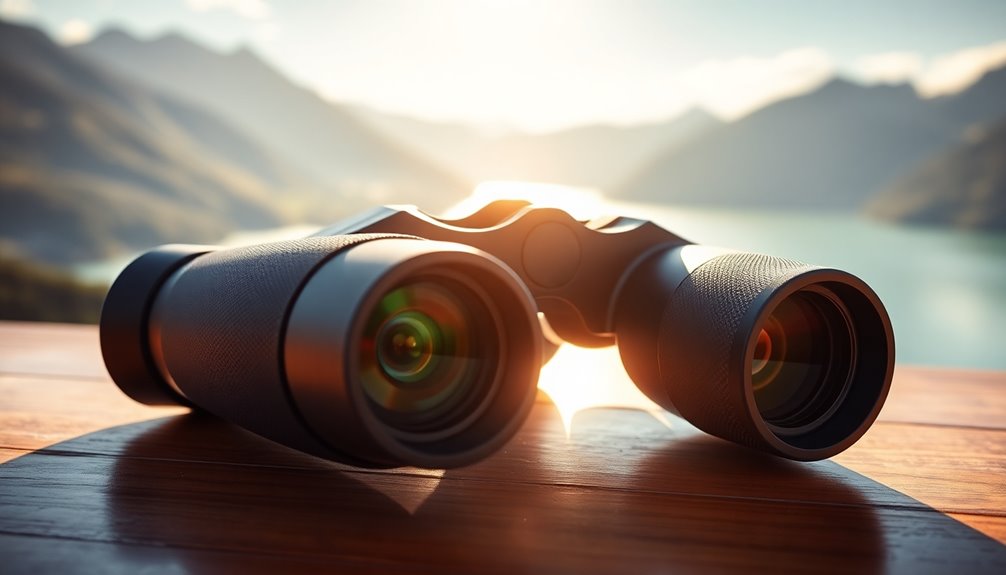

For most people, I’d start with the Vortex Diamondback HD 8×42: its lower magnification is easier to hold steady and its 42mm objectives suit a wide range of outdoor viewing. The Athlon Optics Midas UHD 8×42 is a premium alternative for buyers prioritizing optical refinement, while the Hontry 10×25 makes more sense when a compact, easy-to-carry pair matters most. Across these binoculars, the main tradeoff is between reach, brightness, steadiness, and size; bigger magnification is not automatically better if the view shakes or the binoculars are cumbersome. Read on for how all 15 options compare and which one best fits your use.

Get the little things that make your day delivered free with Prime
- Fast, free delivery on millions of items
- Prime Video, Amazon Music and more included
- Member-only deals all year
Key Takeaways
- 8×42 models lead as versatile all-rounders: the Vortex Diamondback HD 8×42 and Athlon Midas UHD 8×42 pair manageable magnification with larger objective lenses, a useful balance for extended outdoor viewing.
- Moving from 8x to 10x or 12x adds reach but raises the steadiness challenge: the Vortex 10×42 options suit viewers who want more detail at a distance, while the 12×50 models make more sense when extra reach outweighs hand shake and added bulk.
- Large advertised magnification is not a complete measure of usefulness: the 20×50, 20×52, and 20×70 models promise substantial reach, but high power can make handheld viewing difficult and may call for support.
- Compact pairs prioritize carrying ease over a bright, relaxed view: the Hontry 10×25, Occer 12×25, and AHFLRITO 8×21 are easier to pack, while their smaller objectives collect less light than the full-size 42mm and 50mm designs.
- The lineup separates by use more than by brand: Vortex offers multiple magnification and objective-size combinations, while compact and high-power alternatives address portability or reach; matching the format to your conditions matters more than choosing a single specification.
| Compact 12x Binoculars for Adults and Kids |  | Best Pocket Pick | Magnification: 12x | Objective lens diameter: 21 mm | Weight: 5.3 oz | VIEW ON AMAZON | See Our Full Breakdown |
| 20×50 Waterproof Binoculars with Low-Light Vision |  | Best for Long-Range Detail | Maximum magnification: 20x | Objective lens diameter: 50 mm | Weight: 0.89 kg | VIEW ON AMAZON | See Our Full Breakdown |
| Vortex Triumph HD 12×50 Binoculars |  | Best Full-Size 12x Pick | Magnification: 12x | Objective lens diameter: 50 mm | Weight: 1.6 lbs | VIEW ON AMAZON | See Our Full Breakdown |
| Vortex Diamondback HD 10×42 Binoculars |  | Best All-Round 10x Pick | Magnification: 10x | Objective lens diameter: 42 mm | Eye relief: 15 mm | VIEW ON AMAZON | See Our Full Breakdown |
| Vortex Diamondback HD 8×42 Binoculars | | Best for Steady, Wide-Area Viewing | Magnification: 8x | Objective lens diameter: 42 mm | Field of view: 393 ft at 1,000 yd | VIEW ON AMAZON | See Our Full Breakdown |
| Vortex Crossfire HD 10×42 Binoculars |  | Best All-Around Outdoor Pick | Magnification: 10x | Objective lens diameter: 42 mm | Prism type: Roof prism | VIEW ON AMAZON | See Our Full Breakdown |
| WOZEL 20×70 Binoculars for Adults |  | Best for Maximum Reach | Magnification: 20x | Objective lens diameter: 70 mm | Prism type: Roof prism | VIEW ON AMAZON | See Our Full Breakdown |
| Hontry 10×25 Compact Binoculars for Adults and Kids |  | Best Compact Pick | Magnification: 10x | Objective lens diameter: 25 mm | Prism type: Porro prism | VIEW ON AMAZON | See Our Full Breakdown |
| Deesoo 20×52 Binoculars for Adults |  | Best for Tripod-Assisted Long-Range Viewing | Magnification: 20x | Objective lens diameter: 52 mm | Field of view: 168 ft at 1,000 yards | VIEW ON AMAZON | See Our Full Breakdown |
| Sfeoot 20×50 Binoculars with BAK-4 Prisms |  | Best Weather-Resistant 20x Pick | Magnification: 20x | Objective lens diameter: 50 mm | Prism type: BAK4 Porro | VIEW ON AMAZON | See Our Full Breakdown |
| Occer 12×25 Compact Binoculars for Adults and Kids |  | Best Compact High-Magnification Pick | Magnification: 12x | Objective lens diameter: 25 mm | Field of view: 273 ft at 1,000 yds | VIEW ON AMAZON | See Our Full Breakdown |
| Athlon Optics Midas UHD 8×42 Waterproof Binoculars |  | Best for Bright, Wide-Field Viewing | Magnification: 8x | Objective lens diameter: 42 mm | Field of view: 426 ft at 1,000 yds | VIEW ON AMAZON | See Our Full Breakdown |
| Vortex Diamondback HD 12×50 Binoculars |  | Best for Tripod-Assisted Long-Range Viewing | Magnification: 12x | Objective lens diameter: 50 mm | Eye relief: 14 mm | VIEW ON AMAZON | See Our Full Breakdown |
| AHFLRITO Compact 8×21 Foldable Binoculars |  | Best Pocket Pick for Casual Outings | Magnification: 8x | Objective lens diameter: 21 mm | Field of view: 122 ft at 1,000 yds | VIEW ON AMAZON | See Our Full Breakdown |
| Vortex Triumph HD 10×42 Binoculars |  | Best Full-Size All-Rounder | Magnification: 10x | Objective lens diameter: 42 mm | Prism type: Roof prism | VIEW ON AMAZON | See Our Full Breakdown |
| binocular | Objective lens diameter | Magnification | Field of view | Prism type |
|---|---|---|---|---|
| Compact 12x Binoculars for Adu | 21 mm | 12x | 415 ft | Roof prism |
| 20×50 Waterproof Binoculars wi | 50 mm | — | 168 yards at 1,000 yards | BAK4 Porro prism |
| Vortex Triumph HD 12×50 Binocu | 50 mm | 12x | — | Roof prism |
| Vortex Diamondback HD 10×42 Bi | 42 mm | 10x | 330 feet | Roof prism |
| Vortex Diamondback HD 8×42 Bin | 42 mm | 8x | 393 ft at 1,000 yd | Roof prism |
| Vortex Crossfire HD 10×42 Bino | 42 mm | 10x | 325 ft | Roof prism |
| WOZEL 20×70 Binoculars for Adu | 70 mm | 20x | 175 degrees | Roof prism |
| Hontry 10×25 Compact Binocular | 25 mm | 10x | 362 ft | Porro prism |
| Deesoo 20×52 Binoculars for Ad | 52 mm | 20x | 168 ft at 1,000 yards | Roof prism |
| Sfeoot 20×50 Binoculars with B | 50 mm | 20x | 42 degrees | BAK4 Porro |
| Occer 12×25 Compact Binoculars | 25 mm | 12x | 273 ft at 1,000 yds | BAK-4 |
| Athlon Optics Midas UHD 8×42 W | 42 mm | 8x | 426 ft at 1,000 yds | — |
| Vortex Diamondback HD 12×50 Bi | 50 mm | 12x | 271 ft | Roof prism |
| AHFLRITO Compact 8×21 Foldable | 21 mm | 8x | 122 ft at 1,000 yds | — |
| Vortex Triumph HD 10×42 Binocu | 42 mm | 10x | 0.67 degrees | Roof prism |
More Details on Our Top Picks
Compact 12x Binoculars for Adults and Kids
At just 5.3 ounces, this is the easiest model here to keep on hand for travel, casual birdwatching, and events. Its 12x magnification brings distant details closer, while the 415-foot field of view gives a broader scene than the narrow view often associated with high magnification. Compared with the full-size Vortex Diamondback HD 8×42, it is far lighter and easier to stash, but its 21 mm objective lenses gather less light, so dim conditions are a poor match. The very short 2.6 mm eye relief may also make viewing uncomfortable for eyeglass wearers, and 12x magnification can be harder to hold steady than 8x. Its splash-resistant body and included case suit everyday outings, not immersion or rough wet-weather use.
Pros:- Very light at 5.3 ounces and pocket-sized for travel
- 12x magnification brings distant subjects closer
- 415-foot field of view helps keep more of the scene visible
- Includes a carrying case, neck strap, and cleaning cloth
Cons:- 2.6 mm eye relief can make full-viewing difficult for eyeglass wearers
- Small 21 mm lenses are a weak fit for low-light viewing
- Resists rain splashes but is not submersible
Best for: Travelers, families, and eventgoers who want a very light binocular to carry for occasional daytime viewing.
Not ideal for: Eyeglass wearers, dawn-and-dusk wildlife observers, and anyone needing waterproof protection or a steady view at high magnification.
- Magnification:12x
- Objective lens diameter:21 mm
- Weight:5.3 oz
- Prism type:Roof prism
- Eye relief:2.6 mm
- Field of view:415 ft
- Focus type:Center focus
- Water resistance:Water repellent; resists rain splashes, not submersible
Our verdict“Choose this for lightweight daytime carry, but pick the Vortex Diamondback HD 8×42 for more comfortable, better-supported viewing across varied conditions.”
20×50 Waterproof Binoculars with Low-Light Vision
This model prioritizes reach: 20x magnification can help bring distant subjects closer than the 10x Vortex Diamondback HD 10×42, making it appealing for fixed viewpoints and far-off details. The 50 mm objectives, multicoated lenses, and BAK4 Porro prisms are intended to support a bright image, though the listed 2.5 mm exit pupil and high magnification temper expectations in dim light and when handholding. At 0.89 kg, it is much heavier than the compact 12x model, and the magnified view may be more difficult to keep steady; the tripod mount is useful if you plan to observe from one spot. Its waterproof claim is qualified by the instruction not to immerse it. Choose it for reach over easy all-day carrying or quick, broad scanning.
Pros:- 20x magnification offers more reach than the 10x Diamondback HD 10×42
- 50 mm objective lenses paired with multicoated optics
- BAK4 Porro prisms are designed for clear viewing
- Center focus and tripod mount support deliberate observation
Cons:- 0.89 kg weight is substantial for extended carrying
- High magnification can make handheld views harder to steady
- Do not immerse despite the waterproof description
Best for: Outdoor observers who watch distant subjects from a stationary position and can use a tripod when needed.
Not ideal for: Hikers seeking lightweight gear, fast-moving wildlife watchers, or buyers who need an immersive-waterproof binocular.
- Maximum magnification:20x
- Objective lens diameter:50 mm
- Weight:0.89 kg
- Prism type:BAK4 Porro prism
- Exit pupil diameter:2.5 mm
- Field of view:168 yards at 1,000 yards
- Focus type:Center focus, manual
- Mount type:Tripod mount
Our verdict“Pick it when distant detail matters more than portability, and plan to use a tripod for steadier viewing.”
Vortex Triumph HD 12×50 Binoculars
The Triumph HD combines 12x magnification with 50 mm objectives, giving it more light-gathering area than the compact 12x model while keeping the same nominal magnification. That makes it the stronger choice for detailed outdoor viewing when bulk is acceptable. Its 16 mm eye relief is also a substantial step up from the compact model’s 2.6 mm, though eyeglass comfort still depends on fit. Multi-coated HD optics and a waterproof, fogproof, shock-resistant build suit changing outdoor conditions; the included GlassPak harness helps manage its 1.6-pound weight. Compared with the Vortex Diamondback HD 10×42, this model offers higher magnification and larger objectives, but the lower-power 10x option should be easier to hold steady and scan with. A tripod mount is useful for longer viewing sessions.
Pros:- 12x magnification and 50 mm objectives suit detailed long-range viewing
- Waterproof, fogproof, and shock-resistant construction
- 16 mm eye relief and adjustable eyecups support viewing comfort
- GlassPak harness and tripod mount add carrying and support options
Cons:- At 1.6 pounds, it is heavier than the 10×42 Diamondback HD
- 12x magnification can be difficult to hold steady by hand
- Full-size body takes more room than compact binoculars
Best for: Wildlife and outdoor observers who want full-size optics, 12x reach, and weather protection for field use.
Not ideal for: Travelers prioritizing a light pack or users who mainly need stable handheld views of moving subjects.
- Magnification:12x
- Objective lens diameter:50 mm
- Weight:1.6 lbs
- Eye relief:16 mm
- Exit pupil diameter:4.17 mm
- Prism type:Roof prism
- Lens coating:Multi-coated
- Water resistance:Waterproof
- Included accessories:Neck strap and adjustable GlassPak harness
Our verdict“Choose this full-size Vortex for weather-ready 12x viewing, provided you can manage its weight and steadiness demands.”
Vortex Diamondback HD 10×42 Binoculars
The 10×42 format makes this a balanced option for general outdoor viewing: 10x magnification offers useful reach without the added hand shake associated with the 12x Vortex Triumph HD 12×50, while 42 mm objectives keep the body more manageable than a 50 mm model. Its 330-foot field of view, fully multi-coated optics, and center focus suit scanning landscapes or following wildlife. Waterproof and fogproof construction adds confidence in wet or changing weather, and the GlassPak harness helps with carrying. Compared with the Diamondback HD 8×42, this version brings distant subjects closer, but its 15 mm eye relief and 10x view may feel less forgiving for eyeglass wearers or prolonged handheld use. This is a capable general-purpose choice, though buyers who prize the widest view and steadier handling may prefer the 8×42 sibling.
Pros:- 10×42 configuration balances magnification and manageable size
- 330-foot field of view supports landscape and wildlife scanning
- Waterproof and fogproof construction
- GlassPak harness, tripod compatibility, and adjustable eyecups
Cons:- 15 mm eye relief may be less accommodating for some eyeglass wearers
- 10x magnification is less steady handheld than the 8×42 sibling
- 42 mm objectives make it less compact than pocket binoculars
Best for: Hikers and wildlife watchers who want one weather-ready binocular for varied outdoor viewing and a useful balance of reach and size.
Not ideal for: Eyeglass wearers needing generous eye relief, or casual observers who prioritize the steadier, wider view of an 8x model.
- Magnification:10x
- Objective lens diameter:42 mm
- Eye relief:15 mm
- Exit pupil diameter:4.2 mm
- Field of view:330 feet
- Prism type:Roof prism
- Lens coating:Fully multi-coated
- Water resistance:Waterproof
- Warranty:Transferable lifetime VIP warranty
Our verdict“Choose this as a versatile outdoor 10×42 if you want more reach than the 8×42 without moving to a heavier 50 mm model.”
Vortex Diamondback HD 8×42 Binoculars
For scanning broad scenes or following movement, the Diamondback HD 8×42 favors a wide 393-foot field of view and a steadier 8x image over the extra reach of the 10×42 Diamondback HD. Its 5.25 mm exit pupil is also larger than the 10×42’s 4.2 mm figure, a useful advantage for comfortable viewing as light fades, though it does not guarantee strong performance in every dim setting. Fully multi-coated optics and waterproof, fogproof, shock-resistant construction suit regular outdoor use, while the GlassPak harness makes it easier to carry than its full-size format might suggest. The tradeoff is straightforward: distant details appear less enlarged than through the 10×42 or 12×50 models. I’d favor this version for birding, scenery, and handheld observation over maximum long-range magnification.
Pros:- 393-foot field of view helps track moving subjects and scan wide scenes
- 8x magnification is easier to hold steady than the 10×42 Diamondback HD
- 5.25 mm exit pupil supports comfortable viewing in changing light
- Waterproof, fogproof, shock-resistant, and supplied with a GlassPak harness
Cons:- Less magnification for distant detail than the 10×42 and 12×50 options
- Full-size 42 mm format is less packable than compact binoculars
Best for: Birdwatchers, hikers, and nature observers who value a broad view and easier handheld steadiness over maximum magnification.
Not ideal for: Buyers focused on distant fine detail or those who need pocket-sized binoculars for travel.
- Magnification:8x
- Objective lens diameter:42 mm
- Field of view:393 ft at 1,000 yd
- Eye relief:17 mm
- Exit pupil diameter:5.25 mm
- Prism type:Roof prism
- Coating:Fully multi-coated
- Protection:Waterproof, fogproof, and shock-resistant
- Warranty:Transferable lifetime VIP warranty
Our verdict“Pick the 8×42 for steady, wide-area outdoor viewing; choose the Diamondback HD 10×42 if bringing distant subjects closer matters more.”
Vortex Crossfire HD 10×42 Binoculars
The Crossfire HD is the most balanced choice here for regular outdoor viewing: 10x magnification brings distant subjects closer without the harder-to-steady view of the 20x WOZEL, Deesoo, and Sfeoot models. Its 42 mm objectives offer a more useful light-gathering balance than the Hontry’s compact 25 mm lenses, while the waterproof, fogproof, impact-resistant build better suits changing conditions than the non-water-resistant alternatives. Adjustable eyecups make it more accommodating for glasses wearers, and the included GlassPak harness helps with carrying. The tradeoff is that it is less pocketable than the Hontry and its 325-foot field of view is narrower than the Hontry’s listed 362 feet. Choose it for dependable versatility, not maximum reach or the smallest carry.
Pros:- Waterproof, fogproof, and impact-resistant construction suits variable outdoor conditions
- 10x magnification and 42 mm objectives balance reach with a practical field-use format
- Adjustable eyecups support viewing with or without glasses
- GlassPak harness is included, and the binoculars are tripod compatible
Cons:- At 1.4 lb, it is heavier and less compact than the Hontry 10×25
- 10x magnification offers less distant detail than the 20x options in this group
Best for: Birders and outdoor users who want a weather-resistant, general-purpose 10x binocular with eyecups that can accommodate glasses.
Not ideal for: Travelers who prioritize a pocket-sized pair, or viewers seeking the stronger reach of a 20x model for distant stationary subjects.
- Magnification:10x
- Objective lens diameter:42 mm
- Prism type:Roof prism
- Eye relief:15 mm
- Field of view:325 ft
- Weight:1.4 lb
- Weather protection:Waterproof and fogproof
- Included accessory:GlassPak binocular harness
- Warranty:Transferable lifetime VIP warranty
Our verdict“Pick the Crossfire HD if you want a versatile, weather-ready 10x binocular rather than pocketable size or 20x reach.”
WOZEL 20×70 Binoculars for Adults
The WOZEL’s defining advantage is its combination of 20x magnification and 70 mm objectives, a setup aimed at bringing faraway details into view and gathering more light than the 20×50 Sfeoot. That larger format comes with a meaningful carrying cost: at about 2.8 lb, it is twice the weight of the Crossfire HD and less appealing for long hikes. High magnification can also make hand-held viewing less steady, so this model makes more sense for patient observation than quick scanning. Its rubber-coated grip and fully multi-coated optics are useful, but the body is not water resistant, unlike the Crossfire HD and Sfeoot. I’d choose it when reach and large objectives take priority over all-weather use and easy portability.
Pros:- 20x magnification brings distant subjects closer than the 10x models
- 70 mm objectives are larger than those on the other listed binoculars
- BAK4 prisms and fully multi-coated optics
- Rubber-coated grip and included neck strap
Cons:- Not water resistant, making it a poor fit for wet-weather outings
- About 2.8 lb can be tiring to carry for extended periods
- 20x magnification can be harder to hold steady for casual, hand-held scanning
Best for: Stationary observers who want strong magnification and large objectives for distant daytime views and can carry a heavier binocular.
Not ideal for: Hikers and users who may encounter rain, since it weighs about 2.8 lb and has no water resistance.
- Magnification:20x
- Objective lens diameter:70 mm
- Prism type:Roof prism
- Exit pupil diameter:3.5 mm
- Field of view:175 degrees
- Focus type:Manual
- Diopter adjustment:±5 diopters
- Weight:About 2.8 lb
- Water resistance:Not water resistant
Our verdict“Choose the WOZEL for maximum listed magnification and large objectives when portability and weather protection are secondary.”
Hontry 10×25 Compact Binoculars for Adults and Kids
When pack space matters more than low-light performance, the Hontry is the easiest binocular in this group to bring along. Its 10×25 format weighs just 0.6 lb, compared with the 1.4 lb Crossfire HD, and the adjustable interpupillary distance supports a fit for children and many adults. The 362-foot field of view is also wider than the Crossfire HD’s listed 325 feet, which can help when following moving subjects. The small objectives are the compromise: they provide less light-gathering capacity than the Crossfire HD’s 42 mm lenses or the WOZEL’s 70 mm objectives, so this is less suited to dim conditions. Waterproofing adds reassurance for everyday outings, but buyers seeking a more substantial all-weather binocular should favor the Crossfire HD.
Pros:- Lightweight 0.6 lb body is easier to pack than the Crossfire HD
- Adjustable interpupillary distance fits children and many adults
- 10x magnification in a compact format
- Waterproof construction and a 362-foot field of view
Cons:- 25 mm objectives are smaller than the Crossfire HD’s 42 mm lenses and the WOZEL’s 70 mm objectives
- 10 mm eye relief may be less accommodating for some glasses wearers
- Compact size favors portability over the larger viewing format of full-size binoculars
Best for: Families and travelers who want a lightweight, shareable binocular for daytime birding, events, and sightseeing.
Not ideal for: Users who often watch wildlife at dawn or dusk, or who want the steadier, brighter-viewing potential of larger objectives.
- Magnification:10x
- Objective lens diameter:25 mm
- Prism type:Porro prism
- Interpupillary distance:60–75 mm
- Eye relief:10 mm
- Field of view:362 ft
- Weight:0.6 lb
- Water resistance:Waterproof
- Warranty:3 years
Our verdict“Pick the Hontry for shared family use and easy packing, but choose the Crossfire HD for larger objectives and tougher outdoor conditions.”
Deesoo 20×52 Binoculars for Adults
The Deesoo combines 20x magnification with a built-in tripod mount, giving it a clearer use case than a high-power model intended only for hand-held scanning. Mounting can help keep distant views steadier, while the 26 mm eye relief is more generous than the Hontry’s 10 mm and may suit some glasses wearers better. Its 52 mm objectives are larger than the Hontry’s 25 mm lenses but smaller than the WOZEL’s 70 mm, making this a middle ground in size rather than a light-gathering standout. The listed field of view is 168 ft at 1,000 yards, narrow beside the Hontry’s 362 ft. The rubber grip and coated optics are useful, but its water protection is limited; the Crossfire HD is a safer choice for wet outings.
Pros:- 20x magnification for distant viewing
- Tripod mount can help steady high-magnification observation
- 26 mm eye relief is longer than the Hontry’s listed 10 mm
- BAK4 prisms, fully multi-coated optics, and a non-slip rubberized grip
Cons:- Not water resistant, unlike the waterproof Crossfire HD and Hontry
- 168 ft field of view at 1,000 yards is narrow compared with the Hontry’s listed view
- At 2.18 lb, it is heavier than the 10x models and a tripod is not included
Best for: Viewers watching distant, relatively stationary subjects who can use a tripod and want 20x magnification with generous listed eye relief.
Not ideal for: People who need a rain-ready binocular, a wide view for tracking moving subjects, or an easy-carry option for long walks.
- Magnification:20x
- Objective lens diameter:52 mm
- Field of view:168 ft at 1,000 yards
- Eye relief:26 mm
- Prism type:Roof prism
- Focus type:Center focus
- Mount type:Tripod compatible
- Weight:2.18 lb
- Water resistance:Not water resistant
Our verdict“Choose the Deesoo if you plan to steady its 20x view on a tripod and can accept limited weather protection.”
Sfeoot 20×50 Binoculars with BAK-4 Prisms
Among the three 20x options here, the Sfeoot is the most practical for outdoor use when weather protection matters: its water- and fog-resistant construction contrasts with the non-water-resistant WOZEL and Deesoo. The 50 mm objectives keep it smaller than the WOZEL’s 70 mm version, though the tradeoff is less objective area for gathering light. A center focus wheel and ±4-diopter adjustment allow users to tune focus and account for differences between their eyes, while the rubber enclosure supports a secure grip. Its 2.5 mm exit pupil and stated 42-degree field of view are worth weighing against the more generous objectives on the WOZEL. This model is not for immersion or total darkness, but it offers a weather-conscious route to 20x viewing.
Pros:- Water- and fog-resistant construction offers more weather protection than the WOZEL and Deesoo
- 20x magnification with 50 mm objectives
- Center focus and ±4-diopter adjustment support individual focusing
- Rubber enclosure and carrying bag, neck strap, and cleaning cloth are included
Cons:- Should not be immersed in water, despite its stated water resistance
- 50 mm objectives are smaller than the WOZEL’s 70 mm lenses
- Not suitable for viewing in total darkness
Best for: Outdoor observers who want 20x magnification with water and fog resistance for ordinary exposure to the elements.
Not ideal for: Anyone needing a binocular for submersion, total darkness, or prolonged viewing in very low light.
- Magnification:20x
- Objective lens diameter:50 mm
- Prism type:BAK4 Porro
- Exit pupil diameter:2.5 mm
- Field of view:42 degrees
- Focus type:Manual center focus
- Diopter adjustment:±4 diopters
- Water resistance:Waterproof; avoid immersion
- Included accessories:Cleaning cloth, user manual, carrying bag, and neck strap
Our verdict“Choose the Sfeoot for 20x viewing with more weather protection than the WOZEL or Deesoo, but not for immersion or very dark conditions.”
Occer 12×25 Compact Binoculars for Adults and Kids
The Occer 12×25 packs 12x magnification into a compact body, making it a better fit for travel than the larger Vortex Diamondback HD 12×50. Its 273-foot field of view at 1,000 yards gives you a useful sweep for spotting distant subjects, while fully multi-coated optics and BAK-4 prisms support clear viewing. Adjustable eyecups and 20 mm eye relief also make it more accommodating for eyeglass wearers than its small size might suggest.
The tradeoff is the 25 mm objective lens: it gathers less light than the Vortex’s 50 mm lenses, so this is better suited to daylight outings than dim conditions. At 12x, hand movement can also make the view less steady. Choose it for portability, not for the brightest image or easiest long-distance viewing.
Pros:- Compact body is easier to pack than full-size 12×50 binoculars.
- 12x magnification helps bring distant subjects closer.
- Adjustable eyecups and 20 mm eye relief suit many eyeglass wearers.
- Waterproof build and rubberized grip support outdoor use.
Cons:- Small 25 mm lenses gather less light than larger binoculars such as the Diamondback HD 12×50.
- High magnification can make handheld viewing harder to keep steady.
- Not designed for viewing in complete darkness or other very dim conditions.
Best for: Travelers and families who want compact, high-magnification binoculars for daytime outdoor viewing and need adjustable eyecups for glasses.
Not ideal for: Wildlife watchers who often view at dawn or dusk, or anyone who wants a steady 12x view without using a tripod.
- Magnification:12x
- Objective lens diameter:25 mm
- Field of view:273 ft at 1,000 yds
- Prism type:BAK-4
- Eye relief:20 mm
- Exit pupil:2.5 mm
- Water resistance:Waterproof
- Dimensions:4.4 × 4 × 1.9 in
- Weight:0.39 kg
Our verdict“Choose the Occer if compact size and 12x reach matter more than low-light brightness and a steady handheld image.”
Athlon Optics Midas UHD 8×42 Waterproof Binoculars
The Athlon Midas UHD 8×42 is the lineup’s strong choice for a bright, easy-to-follow view. Its 8.1-degree field of view spans 426 feet at 1,000 yards, wider than the 271-foot view listed for the Vortex Diamondback HD 12×50. That broader view and lower magnification make it easier to follow moving wildlife or scan a landscape without as much hand-shake. ED glass helps limit color fringing, while dielectric-coated prisms and fully multi-coated lenses support bright, color-faithful images.
At 25 ounces, it is not as compact as the Occer 12×25, and its manual focus requires user adjustment. Its 17.2 mm eye relief is useful for many eyeglass wearers, though it is shorter than the Occer’s stated 20 mm. Pick this for broad, comfortable viewing rather than pocketable carry or maximum magnification.
Pros:- Wide 426-foot field of view helps track moving subjects.
- ED glass reduces color fringing for clearer detail.
- Fully multi-coated lenses and dielectric-coated prisms support bright, accurate color.
- Argon-purged waterproof construction supports use across changing conditions.
Cons:- At 25 oz, it is heavier than compact options such as the Occer 12×25.
- Manual focus requires the viewer to make adjustments.
- 8x magnification provides less reach than the 12x Occer or Diamondback HD 12×50.
Best for: Birders and nature watchers who prioritize a wide field of view, bright daytime images, and comfortable viewing with glasses.
Not ideal for: Buyers who need pocket-sized binoculars, maximum reach, or a particularly light setup for long hikes.
- Magnification:8x
- Objective lens diameter:42 mm
- Field of view:426 ft at 1,000 yds
- Angular field of view:8.1°
- Eye relief:17.2 mm
- Close focus:2 m (6.5 ft)
- Prism:Roof prism, BaK-4 glass
- Weight:25 oz
- Water resistance:Waterproof; argon-purged
Our verdict“Choose the Athlon Midas UHD if a bright, wide view and easier subject tracking matter more than compactness or high magnification.”
Vortex Diamondback HD 12×50 Binoculars
The Vortex Diamondback HD 12×50 is built for viewers who want substantial reach and large objective lenses. Compared with the compact Occer 12×25, its 50 mm lenses provide a larger light-gathering aperture, while the 12x magnification brings distant subjects closer. Fully multi-coated optics, waterproof and fogproof construction, and an included GlassPak harness suit extended outdoor use. A tripod mount offers a practical way to steady the high-power view during prolonged observation.
That reach comes with a clear handling tradeoff: 12x magnification is harder to hold steady than the 8x Athlon Midas UHD, and a tripod may be useful for detailed viewing. Its 14 mm eye relief is also shorter than the Athlon’s 17.2 mm, which can make eye placement less forgiving for some eyeglass wearers. This is a specialist choice for distance, not the easiest all-purpose binocular to carry and use.
Pros:- 12x magnification and 50 mm objectives suit distant observation.
- Tripod compatibility can steady the image during extended viewing.
- Waterproof, fogproof, and impact-resistant construction is suited to outdoor conditions.
- GlassPak harness and transferable lifetime VIP warranty are included.
Cons:- High magnification can make handheld viewing noticeably less steady than 8x options.
- Its larger 50 mm format is less convenient to carry than compact binoculars.
- 14 mm eye relief is shorter than the Athlon Midas UHD’s 17.2 mm.
Best for: Open-country observers and hunters who need 12x reach, prefer larger lenses, and can use a tripod or steady support.
Not ideal for: Casual walkers and eyeglass wearers seeking a lightweight, forgiving binocular for quick handheld viewing.
- Magnification:12x
- Objective lens diameter:50 mm
- Eye relief:14 mm
- Exit pupil:4.17 mm
- Field of view:271 ft
- Prism type:Roof prism
- Coating:Fully multi-coated
- Mount:Tripod mount
- Included accessories:GlassPak binocular case and harness
Our verdict“Choose the Diamondback HD 12×50 for distant subjects and tripod-supported viewing, not for light, quick handheld use.”
AHFLRITO Compact 8×21 Foldable Binoculars
The AHFLRITO 8×21 is the portability-first option here: its foldable body measures 4.1 × 1.6 × 2.9 inches, making it easier to tuck into a day bag than the full-size Vortex Triumph HD 10×42. An 8x view is also less demanding to hold steady than the 12x Occer 12×25, which can suit casual birdwatching, concerts, or family outings. BAK-4 prisms and a rubber-coated grip add useful features to a small, simple package.
The compact format limits light gathering, and its listed 122-foot field of view at 1,000 yards is narrow beside the Athlon Midas UHD’s 426 feet. The listing also gives conflicting weights—5.3 oz in the description and 17.87 g in product information—so the carry-weight claim is unclear. Choose it for easy packing, not broad scanning or demanding low-light viewing.
Pros:- Foldable, compact body is convenient to pack for outings.
- 8x magnification is easier to hold steady than 12x compact models.
- BAK-4 prisms and a rubber-coated grip add useful optical and handling features.
- Waterproof construction is suited to outdoor use.
Cons:- 21 mm objectives gather less light than full-size 42 mm binoculars.
- 122-foot field of view is much narrower than the Athlon Midas UHD’s 426-foot view.
- The listed weight conflicts between 5.3 oz and 17.87 g.
Best for: Concertgoers, casual hikers, and families who want foldable binoculars for occasional daytime use and easy packing.
Not ideal for: Birders who need a wide field of view, frequent dusk observers, or buyers who require a dependable published weight.
- Magnification:8x
- Objective lens diameter:21 mm
- Field of view:122 ft at 1,000 yds
- Prism:Roof prism, BAK-4
- Exit pupil:2.63 mm
- Focus type:Manual center focus
- Water resistance:Waterproof
- Dimensions:4.1 × 1.6 × 2.9 in
- Listed weight:Conflicting: 5.3 oz in description; 17.87 g in product information
Our verdict“Choose the AHFLRITO for occasional daytime viewing when foldable portability matters more than field width, low-light performance, or clear weight specifications.”
Vortex Triumph HD 10×42 Binoculars
The Vortex Triumph HD 10×42 balances useful reach with a full-size 42 mm format. Its 10x magnification offers more distant detail than the 8x Athlon Midas UHD, while being less demanding to hold steady than the Diamondback HD 12×50. Fully multi-coated HD optics and a 4.2 mm exit pupil suit general outdoor viewing, and adjustable eyecups plus 17 mm eye relief support a more personalized view. Waterproof, fogproof, and shockproof construction, along with the GlassPak harness, make it a practical companion for day trips.
This is not a lightweight alternative to the foldable AHFLRITO: the listed weight is 2.3 lbs, and the product description frames its use as light-duty glassing. Its listed field of view is 0.67 degrees, a narrow specification compared with the Athlon’s stated 8.1-degree angular field, so I would not choose it for broad scanning. It suits general-purpose use better than specialized long-range viewing.
Pros:- 10x magnification gives more reach than 8x models while avoiding 12x handling demands.
- Fully multi-coated HD optics and a 4.2 mm exit pupil support general-purpose viewing.
- Waterproof, fogproof, and shockproof construction suits variable outdoor conditions.
- Adjustable eyecups, diopter control, and GlassPak harness are included.
Cons:- Listed 2.3 lb weight makes it much less packable than the compact AHFLRITO or Occer.
- Product description characterizes it for light-duty glassing rather than demanding extended observation.
- Listed field of view is 0.67 degrees, much narrower than the Athlon Midas UHD’s stated 8.1 degrees.
Best for: Outdoor users who want a full-size 10×42 for general daytime viewing, with weather protection and a carry harness.
Not ideal for: Ultralight hikers, broad-field wildlife watchers, or users planning long sessions of demanding long-range glassing.
- Magnification:10x
- Objective lens diameter:42 mm
- Prism type:Roof prism
- Eye relief:17 mm
- Exit pupil:4.2 mm
- Field of view:0.67 degrees
- Water resistance:Waterproof
- Weight:2.3 lbs
- Included accessories:Neck strap and adjustable GlassPak harness
Our verdict“Choose the Triumph HD 10×42 for weather-protected, general outdoor viewing if its full-size weight and limited field-of-view specification fit your needs.”

How We Picked
I compared the 15 binoculars by the factors that shape real viewing choices: magnification and steadiness, objective-lens size and expected light gathering, portability, weather protection claims, and suitability for common uses such as birding, travel, and distant observation. I also weighed whether each format is likely to be comfortable for extended handheld use or whether its power and size point toward a more specialized role. Product names and specifications inform this comparison, but they do not substitute for independently verified optical testing.
The ranking gives priority to versatility and ease of use, so balanced 8×42 options lead for broad outdoor use. Models with greater reach rank well for buyers with a specific distance-viewing need, but their higher magnification or larger bodies make them less flexible as default choices. Compact binoculars are ranked for carry convenience rather than judged as direct substitutes for full-size pairs; similarly, entry-level high-magnification models are best treated as niche options unless the buyer can manage their steadiness and viewing compromises.
| binocular | Prism type | Water resistance |
|---|---|---|
| Compact 12x Binoculars for Adu | Roof prism | Water repellent; resists rain splashes, not submersible |
| 20×50 Waterproof Binoculars wi | BAK4 Porro prism | — |
| Vortex Triumph HD 12×50 Binocu | Roof prism | Waterproof |
| Vortex Diamondback HD 10×42 Bi | Roof prism | Waterproof |
| Vortex Diamondback HD 8×42 Bin | Roof prism | — |
| Vortex Crossfire HD 10×42 Bino | Roof prism | — |
| WOZEL 20×70 Binoculars for Adu | Roof prism | Not water resistant |
| Hontry 10×25 Compact Binocular | Porro prism | Waterproof |
| Deesoo 20×52 Binoculars for Ad | Roof prism | Not water resistant |
| Sfeoot 20×50 Binoculars with B | BAK4 Porro | Waterproof; avoid immersion |
| Occer 12×25 Compact Binoculars | BAK-4 | Waterproof |
| Athlon Optics Midas UHD 8×42 W | — | Waterproof; argon-purged |
| Vortex Diamondback HD 12×50 Bi | Roof prism | — |
| AHFLRITO Compact 8×21 Foldable | — | Waterproof |
| Vortex Triumph HD 10×42 Binocu | Roof prism | Waterproof |
Factors to Consider When Choosing Binoculars
Before choosing among these binoculars, I’d start with where and how long you plan to use them. A number printed on a spec sheet cannot tell you whether a pair will stay steady in your hands, fit in a day bag, or suit low-light viewing. These broader factors can help narrow the options beyond the individual model comparisons.
Choose Magnification You Can Hold Steady
Magnification makes distant subjects appear closer, but it also enlarges every hand movement. For many handheld users, 8x is easier to keep steady during long scans, while 10x can make sense when you regularly view more distant subjects. At 12x and above, image shake can make the extra reach frustrating without a resting point or tripod. A common mistake is choosing the biggest magnification number while overlooking how quickly an unsteady view tires the eyes. If you mostly observe birds, wildlife, or scenery while moving, comfort and a stable image may matter more than maximum reach.
Match Objective Size to Light and Carry Needs
The objective-lens number refers to the diameter of the front lenses in millimeters. Larger objectives can gather more light, which can help in dimmer conditions, but they also add weight and bulk. A 42mm format is a common middle ground for all-day outdoor use; 50mm and larger models may suit low-light or distant viewing if you are willing to carry more. Compact 21mm and 25mm pairs are easier to stash, but small objectives are a poor match for buyers who often watch at dawn, dusk, or under heavy tree cover. Compare the full format, not just the magnification, before deciding.
Think About the Conditions You Will Watch In
Outdoor use can expose binoculars to rain, dust, and temperature changes, so check what the maker specifically states about waterproofing and weather resistance. Water-resistant language is not always the same as a defined waterproof rating, and a sealed body does not automatically mean every accessory is equally protected. Fogging resistance can also matter when moving between cold air and a warm vehicle or building. If you mainly view from indoors or in fair weather, rugged protection may be less important than comfortable handling. For frequent hikes or boating, build protection becomes part of the buying decision rather than a bonus.
Check Fit, Eye Relief, and Adjustability
Binoculars must fit your face as well as your hands. People who wear glasses should check the stated eye relief and whether the eyecups can fold or adjust to provide a full field of view. Interpupillary adjustment—the distance between the eyepieces—also matters, especially when sharing binoculars with children or other adults. If possible, prioritize a return policy that allows a fit check, since listed dimensions cannot reveal whether the eyecups feel comfortable. A pair that is technically powerful but awkward to position can be less useful than a simpler model that quickly gives you a clear view.
Decide Whether You Need a Tripod
High magnification and a large body can make a tripod or other support a practical part of the setup. Before buying a powerful pair, check whether it has a tripod adapter connection and whether you are willing to carry the extra support. A tripod can reduce shake during long observations, though it adds setup time and works poorly for subjects that move quickly. For casual handheld use, a moderate-power binocular is often the simpler choice. Buy for the way you will actually observe, not for a distant-viewing scenario that rarely happens.
Treat Included Accessories as Secondary
Straps, cases, lens caps, and cleaning cloths affect convenience, but they should not outweigh the binoculars’ fit and intended use. A case can protect lenses in a pack, while a comfortable strap helps during long walks; neither fixes a view that is too shaky or a body that feels cumbersome. Check whether caps stay attached and whether the case gives enough room to pack the binoculars without forcing them. For regular outdoor use, a safe lens-cleaning method matters more than a long accessory list. Choose the optical format first, then judge whether the supplied extras meet your routine.
Frequently Asked Questions
Should I choose 8×42 or 10×42 binoculars for general outdoor use?
I’d choose 8×42 if you value a steadier view, easier subject finding, and comfortable scanning for longer periods. A 10×42 can show more detail on distant subjects, but it also magnifies hand movement and may feel less forgiving for beginners. Both formats use 42mm objective lenses, so the main difference is not the front-lens size but the balance between reach and steadiness. If you often watch from a fixed spot or have a steady resting position, 10x may suit you. For mixed walking, wildlife watching, and casual use, 8x is the safer starting point.
Are 20x binoculars a good choice if I want to see farther?
They can suit distant, relatively stationary viewing, but high magnification does not guarantee a more useful image. Small hand movements become much more apparent, making it harder to keep a moving subject in view. Check whether the binoculars can be mounted on a tripod and decide whether carrying support fits your plans. Large magnification also does not replace good light or clear optics, so compare the whole design rather than the power number alone. For handheld birding or travel, a lower-power pair may be easier to use and quicker to aim.
Are compact binoculars suitable as my only pair?
They can work well if carrying ease is your main priority and your viewing is mostly in daylight. Their small bodies fit more easily into a pocket or day bag, which can make them more likely to come along. The tradeoff is that compact objective lenses generally gather less light than full-size 42mm or 50mm models, and smaller bodies may feel less comfortable during long sessions. If you watch often at dawn or dusk, or want a relaxed view for extended wildlife observation, a full-size pair is usually a more practical primary choice. Think of compact models as convenience-focused, not as a direct substitute in every condition.
What should glasses wearers check before buying binoculars?
Check the manufacturer’s eye-relief specification and how the eyecups adjust, since both affect whether you can see the whole field of view while wearing glasses. Fold-down or twist-up eyecups may help you position your eyes correctly, but the listed number alone does not guarantee a comfortable fit. If you can, try the binoculars with your usual glasses and confirm that the image remains complete at the edges. Also see whether the interpupillary distance adjusts to your face. A pair that is otherwise well suited can still disappoint if you cannot comfortably align the eyepieces.
When is it worth choosing a premium binocular over a simpler model?
Paying more can make sense when you use binoculars often enough to value optical refinement, durable construction, and comfortable handling over time. It is less compelling if you only need an occasional daylight view or are not yet sure which magnification suits you. Before stepping up, compare the features that affect your own use, such as weather protection, eye relief, weight, and warranty terms. A premium label does not make a format automatically right for you; an uncomfortable high-power pair can be a worse choice than a more modest, balanced design. Prioritize a noticeable benefit for your routine rather than a broad promise of better performance.
Conclusion
For a single pair suited to varied outdoor use, my best overall pick is the Vortex Diamondback HD 8×42, thanks to its balanced magnification and full-size format. The best premium choice is the Athlon Optics Midas UHD 8×42 for buyers who place a higher priority on optical refinement, while the Vortex Crossfire HD 10×42 is a sensible best value direction for shoppers seeking a conventional full-size configuration without moving to a specialized high-power format. For beginners, I’d favor the Vortex Diamondback HD 8×42 because 8x magnification is easier to steady and use for broad scanning. Choose a compact pair such as the Hontry 10×25 for travel and easy carry, or consider a 12×50 or 20x model only when extra reach is a clear need and you can manage the added shake or support. The right choice is the one that fits your usual viewing conditions, not simply the one with the largest number on its body.
Evergreen bestsellers Picks
bestsellers
As an affiliate, we earn on qualifying purchases.