
For most households seeking energy storage batteries for blackout protection, I’d start with the EcoFlow DELTA Pro: its 3,600Wh capacity and 3,600W AC output make it a strong middle ground for running several essential devices. The Jackery HomePower 3600 Plus is another standout for substantial portable backup, while the ECO-WORTHY PowerMega suits buyers planning a larger, inverter-based home system. The main tradeoff is between portability and whole-home capacity: compact stations are easy to deploy but run out sooner, while large batteries need more space, compatible equipment, and careful installation. I’ll compare all 12 options by their blackout role, capabilities, and limitations so you can choose the right level of backup.

Get the little things that make your day delivered free with Prime
- Fast, free delivery on millions of items
- Prime Video, Amazon Music and more included
- Member-only deals all year
Key Takeaways
- The lineup divides into three distinct scales: sub-300Wh portable units for small electronics, roughly 2–3.6kWh power stations for several essential loads, and 16kWh-class batteries or systems for longer-running home backup.
- EcoFlow DELTA Pro is the strongest all-around portable pick in this comparison because its 3,600Wh capacity and 3,600W output offer more headroom than the 2,048Wh Dabbsson 2000L, without moving into a fixed battery-and-inverter setup.
- The 16kWh-class batteries are not interchangeable with ready-to-use power stations. KEEPNKNOW, AOUSK, and VPauexii list similar capacity, but buyers still need to verify inverter compatibility, installation requirements, and system protections.
- ECO-WORTHY PowerMega stands apart by pairing a 48V 314Ah battery with a 10kW hybrid inverter. That integrated system approach may suit planned home backup better than a battery-only option, but it calls for more setup than a portable unit.
- The smallest stations are emergency companions, not household backup systems. The 89.6Wh Daran, 292Wh Jackery Explorer 300, 296Wh EnginStar, and 300W ZeroKor are better matched to phones, lights, and select small devices than prolonged high-draw use.
| KEEPNKNOW PowerUltra 48V 314Ah LiFePO4 Battery with 16.07kWh Capacity |  | Best for Scalable Whole-Home Storage | Chemistry: LiFePO4 | Voltage: 48V | Capacity: 314Ah | VIEW ON AMAZON | See Our Full Breakdown |
| Jackery Explorer 300 Portable Power Station, 292Wh |  | Best for Essential Device Backup | Capacity: 292Wh | Battery chemistry: LiFePO4 | Peak output: 600W | VIEW ON AMAZON | See Our Full Breakdown |
| Dabbsson 2000L Portable Power Station, 2048Wh LiFePO4 Battery |  | Best Portable Balance for Outages | Battery capacity: 2048Wh | Battery chemistry: Semi-solid LiFePO4 | Continuous output: 2200W | VIEW ON AMAZON | See Our Full Breakdown |
| Jackery HomePower 3600 Plus Portable Power Station, 3584Wh, 3600W |  | Best Portable High-Output Backup | Battery capacity: 3584Wh | Output wattage: 3600W | Output in parallel: 7200W | VIEW ON AMAZON | See Our Full Breakdown |
| AOUSK 48V 314Ah LiFePO4 Battery, 16.07 kWh |  | Best for Easier Battery Positioning | Battery chemistry: LiFePO4 | Nominal voltage: 51.2V | Capacity: 314Ah | VIEW ON AMAZON | See Our Full Breakdown |
| ZeroKor 300W Portable Power Station with 60W Solar Panel |  | Best Starter Kit with Solar Included | Maximum output: 300W | Solar panel: 60W monocrystalline; 20.5% conversion efficiency | AC outlets: 2; 300W maximum | VIEW ON AMAZON | See Our Full Breakdown |
| ECO-WORTHY PowerMega 48V 314Ah LiFePO4 Energy Storage System with 10kW Hybrid Inverter |  | Best Integrated High-Capacity Home Backup | Battery chemistry: LiFePO4 | Battery voltage and capacity: 51.2V, 314Ah | Usable energy: 16.1kWh | VIEW ON AMAZON | See Our Full Breakdown |
| Daran Portable Power Station, 89.6Wh LiFePO4 Battery, 100W Output |  | Best Compact Backup for Personal Electronics | Battery capacity and type: 89.6Wh LiFePO4 | Maximum output: 100W; 200W peak | Output ports: 7 total, including 2 AC outlets | VIEW ON AMAZON | See Our Full Breakdown |
| EcoFlow DELTA Pro Portable Power Station, 3600Wh, 3600W AC Output | 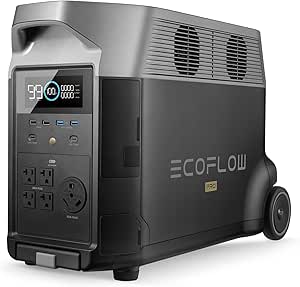 | Best Expandable Portable Backup | Battery capacity: 3,600Wh | Battery type: LFP | Running wattage: 3,600W | VIEW ON AMAZON | See Our Full Breakdown |
| EnginStar Portable Power Station, 300W, 296Wh |  | Best Small-Load Value for Sensitive Electronics | Battery capacity: 296Wh | AC output: 300W | AC outlets and voltage: 2 outlets; 110V | VIEW ON AMAZON | See Our Full Breakdown |
| ECO-WORTHY Cubix100 48V 600Ah LiFePO4 Battery System with RACK6 V3 Cabinet |  | Best for Whole-Home Backup Capacity | Chemistry: LiFePO4 | Nominal voltage: 51.2 V DC | Total capacity: 600 Ah; six 100 Ah batteries | VIEW ON AMAZON | See Our Full Breakdown |
| VPauexii 51.2V 314Ah LiFePO4 Battery with 16.07kWh Capacity |  | Best for Monitoring and Built-In Safety Features | Chemistry: LiFePO4 | Voltage: 51.2 V | Capacity: 314 Ah | VIEW ON AMAZON | See Our Full Breakdown |
| energy storage batteries for blackout protection | Weight |
|---|---|
| KEEPNKNOW PowerUltra 48V 314Ah | 288.81 lbs |
| Jackery Explorer 300 Portable | 7.1 pounds (specifications); 7.5 lbs (description) |
| Dabbsson 2000L Portable Power | 41 lb |
| Jackery HomePower 3600 Plus Po | 77.2 pounds |
| AOUSK 48V 314Ah LiFePO4 Batter | 291 pounds |
| ZeroKor 300W Portable Power St | — |
| ECO-WORTHY PowerMega 48V 314Ah | — |
| Daran Portable Power Station | 2.54 lbs |
| EcoFlow DELTA Pro Portable Pow | — |
| EnginStar Portable Power Stati | — |
| ECO-WORTHY Cubix100 48V 600Ah | 636 lb |
| VPauexii 51.2V 314Ah LiFePO4 B | — |
More Details on Our Top Picks
KEEPNKNOW PowerUltra 48V 314Ah LiFePO4 Battery with 16.07kWh Capacity
The 16.07kWh capacity makes this a better fit for a fixed home backup system than portable stations such as the Dabbsson 2000L, whose 2,048Wh capacity suits shorter outages or a smaller set of devices. KEEPNKNOW can also expand to 15 units in parallel, giving buyers room to build storage around a compatible inverter rather than replace the battery as needs grow. Its touchscreen and Bluetooth/Wi-Fi monitoring make system status easier to check, while IP65 protection and built-in aerosol fire suppression add useful safeguards. The tradeoff is practical: at nearly 289 pounds, this is not a grab-and-go backup, and freight delivery requires an accessible drop-off location. I would choose it for a planned stationary installation, not for flexible room-to-room power.
Pros:- 16.07kWh capacity can support a broader household backup plan than compact portable stations.
- Supports expansion to 15 parallel units.
- IP65 enclosure and built-in aerosol fire suppression add protective features.
- Touchscreen, Bluetooth, Wi-Fi, RS485, CAN, and RS232 support monitoring and inverter communication.
Cons:- At 288.81 pounds, it requires planned installation and is not easily repositioned.
- Freight delivery requires an accessible delivery location.
- Useful operation depends on compatibility with the buyer’s inverter and system setup.
Best for: Homeowners building a compatible 48V inverter-based backup system who want substantial storage and the option to add batteries later.
Not ideal for: Renters, apartment residents, or anyone needing a portable outage battery; its 288.81-pound weight and freight delivery make relocation difficult.
- Chemistry:LiFePO4
- Voltage:48V
- Capacity:314Ah
- Energy:16.07kWh
- BMS:200A smart BMS
- Cycle life:8000+ cycles at 80% DOD
- Parallel expansion:Up to 15 units
- Weight:288.81 lbs
- Warranty:10 years
Our verdict“Choose the KEEPNKNOW for expandable, stationary home storage if you have a compatible inverter and can manage freight delivery and installation.”
Jackery Explorer 300 Portable Power Station, 292Wh
The 7.1-pound Explorer 300 is the easiest option here to keep ready for a brief outage: it can recharge a laptop, phone, camera, or other modest electronics without taking up much space. Its 300W rated output is the main limit, not its portability; it is not a substitute for the Dabbsson 2000L when buyers need to run higher-wattage equipment or several household devices. Two AC outlets and USB ports allow a small mix of devices to charge, and solar charging offers a way to replenish it when the grid is down, though the panel is sold separately. The LiFePO4 battery is listed for over 4,000 cycles to 70% capacity. I’d treat this as a personal electronics reserve, rather than a home-backup system.
Pros:- Compact 7.1-pound specification makes it easier to store and carry than the larger Dabbsson 2000L.
- Two AC outlets plus USB-C, USB-A, and a car port support several small devices.
- LiFePO4 battery is rated for over 4,000 charge cycles to 70% capacity.
- Supports solar charging for off-grid replenishment when paired with a separately purchased panel.
Cons:- 292Wh capacity provides only a modest reserve for extended outages.
- 300W rated output limits the appliances it can power.
- Solar panel is not included.
Best for: People who want a light, compact reserve for phones, laptops, cameras, and other low-wattage essentials during short outages.
Not ideal for: Households seeking to run refrigerators, heating appliances, or multiple high-draw devices; the 300W rated output and 292Wh capacity are limiting.
- Capacity:292Wh
- Battery chemistry:LiFePO4
- Peak output:600W
- AC outlets:2
- Ports:100W USB-C PD, 2 USB-A, 120W car port
- Weight:7.1 pounds (specifications); 7.5 lbs (description)
- Solar charging:Approximately 80% in 2.8 hours with a 100W panel
- Charge cycles:Over 4,000 cycles to 70% capacity
Our verdict“Pick the Explorer 300 for portable backup of personal electronics, but choose a higher-capacity station for household appliances or longer outages.”
Dabbsson 2000L Portable Power Station, 2048Wh LiFePO4 Battery
For buyers who want useful outage capacity without committing to a fixed battery installation, the Dabbsson 2000L offers a middle ground: its 2,048Wh battery and 2,200W continuous output are a substantial step up from the Jackery Explorer 300, while its 41-pound weight keeps it more movable than the 77.2-pound Jackery HomePower 3600 Plus. Six AC outlets give multiple devices access to power, and the under-15ms EPS switch is designed for backup use with compatible equipment. It also accepts AC, solar, and 12V car charging, though solar panels are optional. The limitation is stored energy: 2,048Wh can run selected essentials, but it will not match the endurance of the 3,584Wh HomePower or 16.07kWh stationary batteries.
Pros:- 2,200W continuous output and 3,300W power boost support more demanding loads than the Jackery Explorer 300.
- Six AC outlets allow several devices to connect at once.
- At 41 pounds, it is lighter than the higher-capacity Jackery HomePower 3600 Plus.
- AC, solar, and 12V car charging provide multiple ways to recharge.
Cons:- 2,048Wh capacity may require careful load selection during a prolonged outage.
- Solar panels are not included.
- Actual runtime depends on the devices connected, so the listed runtime is not a guarantee for every setup.
Best for: Households or RV owners who need a movable power station for selected essentials and value higher output than a compact electronics battery.
Not ideal for: Buyers planning long outages with broad household loads; its 2,048Wh capacity is far below the large fixed batteries in this roundup.
- Battery capacity:2048Wh
- Battery chemistry:Semi-solid LiFePO4
- Continuous output:2200W
- Power boost:3300W
- AC outlets:6
- Charging options:AC, solar up to 800W MPPT, and 12V car charging
- Weight:41 lb
- EPS switch time:Under 15 ms
- Warranty:5 years
Our verdict“Choose the Dabbsson 2000L for movable backup with stronger output than a compact station, while accepting less runtime than larger home-storage options.”
Jackery HomePower 3600 Plus Portable Power Station, 3584Wh, 3600W
The 3,584Wh capacity and 3,600W output put the HomePower 3600 Plus ahead of the Dabbsson 2000L for buyers who want a portable station with more stored energy and greater output headroom. Expansion adds another distinction: parallel operation can provide 120V/240V output, and capacity can grow beyond a single unit. Four charging options, including solar and a gas generator, give outage planners more ways to recharge. Wheels and a telescopic handle help with movement, but at 77.2 pounds this is portable in the sense of being repositionable—not light enough for casual lifting. It also has only two listed outlets, so buyers should check whether that connection layout fits their setup. Compared with the fixed KEEPNKNOW battery, it is easier to move but has less base capacity.
Pros:- 3,584Wh capacity and 3,600W output exceed the Dabbsson 2000L’s capacity and continuous output.
- Parallel operation supports up to 7,200W output and 120V/240V operation.
- Hybrid AC+DC, AC, solar, and gas-generator charging suit varied outage conditions.
- Wheels and telescopic handle make repositioning easier than lifting the unit.
Cons:- At 77.2 pounds, it remains heavy to lift despite its wheels and handle.
- Only two outlets are listed, which may constrain how many devices connect directly.
- Solar panels are optional.
Best for: Homeowners who want a wheeled, higher-output backup station with expansion options and multiple charging methods.
Not ideal for: Buyers who need a lightweight carry-in unit, many built-in outlets, or the large base storage of a stationary 16.07kWh battery.
- Battery capacity:3584Wh
- Output wattage:3600W
- Output in parallel:7200W
- Voltage:120V; 240V in parallel
- Battery type:LFP
- Battery cycle life:6,000 cycles
- Expansion capacity:Up to 21kWh per unit; 43kWh with multiple units
- Charging options:Hybrid AC+DC, AC, solar, gas generator
- Weight:77.2 pounds
Our verdict“Choose the HomePower 3600 Plus if you need a high-output portable station with expansion and can accommodate its weight and outlet count.”
AOUSK 48V 314Ah LiFePO4 Battery, 16.07 kWh
The 16.07kWh capacity gives the AOUSK the same broad stationary-storage role as the KEEPNKNOW PowerUltra, but their practical differences matter. AOUSK includes wheels and handles, which can help with positioning before installation; they do not make a 291-pound battery easy to move. Its color display, Bluetooth/Wi-Fi app, and PC communication options offer several ways to monitor the system, while RS485 and CAN support connection to compatible inverters. It also supports up to 15 units in parallel. Compared with the KEEPNKNOW, the AOUSK lists a shorter five-year warranty and a cycle-life rating of up to 6,000 cycles at 80% state of health, so the KEEPNKNOW has the stronger stated longevity figures. Buyers should confirm inverter compatibility before choosing either battery.
Pros:- 16.07kWh capacity provides substantial stationary storage compared with portable options such as the Dabbsson 2000L.
- Wheels and handles can aid positioning before installation.
- Color display, Bluetooth/Wi-Fi app, and PC monitoring offer several status-checking methods.
- Supports up to 15 parallel units and RS485/CAN inverter communication.
Cons:- At 291 pounds, it is not a portable outage battery despite its wheels and handles.
- Five-year warranty is shorter than the KEEPNKNOW PowerUltra’s listed 10-year warranty.
- Inverter compatibility depends on the specific system.
Best for: Homeowners installing a compatible 51.2V storage system who want large capacity, multiple monitoring methods, and help positioning the battery.
Not ideal for: People who need a ready-to-use portable power station or buyers who cannot verify inverter compatibility and arrange a safe installation for a 291-pound battery.
- Battery chemistry:LiFePO4
- Nominal voltage:51.2V
- Capacity:314Ah
- Energy capacity:16.07 kWh
- BMS:200A
- Cycle life:Up to 6,000 cycles at 80% state of health
- Communication interfaces:RS485, CAN, RS232, Bluetooth, Wi-Fi
- Maximum parallel units:15
- Weight:291 pounds
Our verdict“Choose the AOUSK for expandable stationary storage when its inverter compatibility is confirmed and built-in wheels help with installation positioning.”
ZeroKor 300W Portable Power Station with 60W Solar Panel
The ZeroKor pairs a 300W power station with a 60W solar panel, so it arrives ready for basic backup and off-grid recharging without a separate panel purchase. Its AC, DC, and USB outputs can keep small electronics and other low-wattage essentials running, while the SOS flashlight adds a useful emergency feature. Compared with the EnginStar 300W, 296Wh, ZeroKor’s clearest advantage is the included solar panel; EnginStar instead lists a defined 296Wh capacity and pure sine wave AC output. Neither is suited to high-draw appliances, and the ZeroKor’s panel junction box is not waterproof, which limits carefree outdoor use. I’d choose it for modest loads and a ready-made solar option, not as a substitute for a whole-home battery.
Pros:- Includes a 60W monocrystalline solar panel, unlike the EnginStar 300W, which requires a compatible panel purchased separately.
- Offers AC, DC, and USB connections for a mix of small devices.
- Has AC, car, and solar recharge options.
- Built-in protection features and flashlight with reading and SOS modes.
Cons:- 300W maximum output rules out many household appliances.
- Solar panel junction box is not waterproof.
- Battery needs periodic charging and discharging during storage.
Best for: Buyers seeking a small blackout kit for phones, lights, and other low-wattage devices who want a solar panel included.
Not ideal for: Households needing to run refrigerators, heaters, or other appliances above 300W, or shoppers who need a weatherproof solar setup.
- Maximum output:300W
- Solar panel:60W monocrystalline; 20.5% conversion efficiency
- AC outlets:2; 300W maximum
- DC output:9V–12.6V, 10A maximum
- USB ports:3 USB ports up to 5V/3A and 1 quick-charge USB port
- Recharge options:AC outlet, DC5521 solar input (13V–23V), 12V car port
- Protection:Short circuit, over-current, over-voltage, overload, and overheating
Our verdict“Choose the ZeroKor for basic device backup with solar hardware included, but skip it if your blackout plan depends on high-wattage appliances.”
ECO-WORTHY PowerMega 48V 314Ah LiFePO4 Energy Storage System with 10kW Hybrid Inverter
For buyers planning backup around household circuits rather than a few portable devices, the PowerMega combines a 16.1kWh usable battery with a 10kW hybrid inverter. Its 120V single-phase and 240V split-phase output gives it a broader home-backup role than the EcoFlow DELTA Pro, which is a portable power station with 120V output and a 3,600W running rating. The PowerMega also includes monitoring and multiple communication protocols, plus a BMS and aerosol fire suppression. The tradeoff is installation and delivery complexity: this is a substantial home system, not a grab-and-go battery, and the listing includes only one battery with no parallel connection cables. Truck freight and a randomly selected inverter exterior version add practical constraints. I’d shortlist it for planned fixed backup, not casual portable use.
Pros:- Provides 16.1kWh of usable energy for longer household backup than portable units such as the EcoFlow DELTA Pro’s 3,600Wh base capacity.
- 10kW inverter supports 120V single-phase or 240V split-phase output.
- Monitoring options include WiFi, Bluetooth, RS485, CAN, and RS232.
- Includes an active-balancing BMS, circuit breaker, aerosol fire suppression, and buzzer alarm.
Cons:- Single-battery package does not include parallel connection cables.
- Truck freight requires a delivery address that can accommodate it.
- Inverter exterior version is selected at random.
Best for: Homeowners planning a fixed backup or off-grid system who need substantial stored energy, 240V split-phase support, and an integrated inverter.
Not ideal for: Renters, apartment dwellers, and buyers who need a portable battery or want a simple plug-in setup without freight delivery and system planning.
- Battery chemistry:LiFePO4
- Battery voltage and capacity:51.2V, 314Ah
- Usable energy:16.1kWh
- Inverter output:10,000W
- Output voltage:120V single-phase or 240V split-phase
- Cycle life:9,000+ cycles at 80% DoD
- Safety features:Active-balancing BMS, circuit breaker, aerosol fire suppression, and buzzer alarm
- Communication:RS485, CAN, RS232, WiFi, and Bluetooth
Our verdict“Pick the PowerMega for a planned, high-capacity home backup system with 240V output, not for portable or plug-and-play emergency power.”
Daran Portable Power Station, 89.6Wh LiFePO4 Battery, 100W Output
At 2.54 pounds and 89.6Wh, the Daran is a personal-scale backup for keeping a phone, small computer, or light powered—not a battery for sustaining household appliances through an extended outage. Its seven ports and two AC outlets give it more connection flexibility than its tiny capacity might suggest, while the LiFePO4 battery is rated for 3,500+ cycles. That compactness comes with a firm 100W output ceiling; the EnginStar 300W, 296Wh offers more than three times the stated energy capacity and higher output, though it is heavier at 6.5 pounds. Daran is easier to stash in a desk drawer or emergency bag, but solar charging requires a separately sourced panel and cable. I’d choose it for personal electronics and portability, not multi-device household backup.
Pros:- Lightweight 2.54-pound design with a carrying handle is easier to store and move than the EnginStar 300W.
- Seven output ports include two AC outlets, USB-C, USB-A, and DC.
- LiFePO4 battery is rated for 3,500+ cycles.
- Built-in flashlight includes steady and SOS modes.
Cons:- 89.6Wh capacity provides limited runtime for blackout use.
- 100W maximum output excludes many appliances and higher-draw devices.
- Solar panel and cable are not included.
Best for: Travelers, remote workers, and individuals who want a lightweight reserve for phones, small laptops, and other devices below 100W.
Not ideal for: Households seeking overnight appliance backup or anyone whose essential device needs more than 100W of output.
- Battery capacity and type:89.6Wh LiFePO4
- Maximum output:100W; 200W peak
- Output ports:7 total, including 2 AC outlets
- USB-C output:45W and 15W
- USB-A output:18W and 15W
- Weight:2.54 lbs
- Dimensions:6.5 × 3.3 × 4 inches
- Battery life:3,500+ cycles
Our verdict“Choose the Daran when compact personal-device backup matters more than runtime or appliance compatibility.”
EcoFlow DELTA Pro Portable Power Station, 3600Wh, 3600W AC Output
The DELTA Pro occupies the middle ground between small portable stations and fixed home systems: 3,600Wh of capacity and 3,600W running output can cover a wider set of blackout needs than the Daran or EnginStar, while its portable format avoids the PowerMega’s home-system scale. Expansion to 25kWh gives buyers a path to longer runtime, and 15 output connections plus app control support varied loads and monitoring. Those capabilities do not make it light: at 99 pounds, moving it is a two-person or planned-placement task for many households. The fastest listed wall charging also requires a 240V outlet. Compared with the PowerMega, it is more adaptable as a portable unit but offers lower stated usable energy at its base configuration and no listed 240V split-phase output. I’d pick it when expansion and mobility matter more than easy lifting.
Pros:- 3,600Wh capacity and 3,600W running output exceed the Daran and EnginStar for larger blackout loads.
- Expandable capacity reaches up to 25kWh with compatible batteries or generators.
- 15 output connections accommodate multiple devices.
- Five charging methods and Wi-Fi/Bluetooth app connectivity support flexible recharging and monitoring.
Cons:- At 99 pounds, it is difficult to move frequently or carry up stairs.
- Fastest listed wall charging requires a 240V outlet.
- Base capacity is substantially below the PowerMega’s 16.1kWh usable energy.
Best for: Homeowners who want a high-output portable battery for essential circuits or appliances and may expand capacity over time.
Not ideal for: Buyers who need a lightweight emergency pack, 240V split-phase output, or the fastest wall charging without a 240V outlet.
- Battery capacity:3,600Wh
- Battery type:LFP
- Running wattage:3,600W
- Maximum output:4,500W with X-Boost
- Expandable capacity:Up to 25kWh
- Total power outlets:15
- Weight and dimensions:99 lbs; 25 × 11.2 × 16.4 inches
- Charging methods:EV station, solar, wall outlet, smart outdoor generator, and car outlet
Our verdict“Choose the DELTA Pro for expandable, high-output portable backup if you can plan around its weight and charging requirements.”
EnginStar Portable Power Station, 300W, 296Wh
The EnginStar’s 296Wh capacity and 300W pure sine wave AC output make it a more capable compact backup than the Daran when a CPAP machine, laptop, or camera setup needs more headroom. Its 6.5-pound weight and car, wall, or compatible solar charging keep it practical for moving between home and vehicle. The key limitation is shared with the ZeroKor: a 300W ceiling rules out many household appliances. Unlike ZeroKor, the EnginStar does not include a solar panel, but its stated battery capacity is higher than the ZeroKor’s description provides, and its pure sine wave output is specified for sensitive electronics. A listed 65W maximum charging speed and 12-month warranty also temper its role as an outage workhorse. I’d use it for a small set of essential devices, not prolonged whole-home backup.
Pros:- 296Wh capacity provides more stated stored energy than the Daran’s 89.6Wh.
- Pure sine wave AC output is suited to sensitive electronics.
- Recharge options include wall outlet, 12V car socket, and a compatible solar panel.
- Compact 6.5-pound design is easier to move than the 99-pound EcoFlow DELTA Pro.
Cons:- 300W maximum AC output excludes many appliances.
- Compatible solar panel is not included.
- Maximum charging speed is 65W, and the listed warranty is 12 months.
Best for: People who need a portable reserve for a CPAP machine, laptop, camera, or other sensitive electronics drawing less than 300W.
Not ideal for: Buyers who need to power high-draw appliances, want a solar panel included, or need extended backup for multiple household loads.
- Battery capacity:296Wh
- AC output:300W
- AC outlets and voltage:2 outlets; 110V
- USB-C output:18W
- DC outputs:2 regulated outputs (12V/24V)
- Weight and dimensions:6.5 lbs; 9 × 5.5 × 7.5 inches
- Charging methods:Wall outlet, 12V car socket, compatible 12–25V solar panel
- Battery cycle life:More than 1,000 charge cycles
Our verdict“Pick the EnginStar for portable backup of a few sensitive, low-wattage devices, but choose a larger system for longer outages or appliance loads.”
ECO-WORTHY Cubix100 48V 600Ah LiFePO4 Battery System with RACK6 V3 Cabinet
For buyers planning a substantial fixed backup installation, the ECO-WORTHY Cubix100 stands out for its 30.72 kWh capacity and included six-battery rack cabinet. That much stored energy can support longer outages than a single 16.07 kWh battery such as the VPauexii 51.2V 314Ah, though actual runtime depends on household loads and inverter setup. CAN and RS485 communication, plus Bluetooth and Wi-Fi monitoring, give owners several ways to check system status; closed-loop inverter functions still require compatible equipment. The cabinet and setup accessories make this a more integrated package than buying separate rack batteries, but the 636-pound system calls for planned delivery, placement, and installation. Its expansion support suits growing systems, although this is far beyond what buyers need for a few essential circuits.
Pros:- Six batteries and an enclosed cabinet provide 30.72 kWh in one system package.
- CAN, RS485, Bluetooth, and Wi-Fi support inverter communication and remote monitoring.
- Supports parallel expansion up to 32 units for larger future storage needs.
- Includes installation and communication accessories.
Cons:- At 636 lb, the system needs careful delivery, placement, and installation planning.
- Closed-loop communication requires a compatible inverter.
- Its rack-based scale is excessive for buyers who only need portable backup for a few devices.
Best for: Homeowners planning a professionally installed, high-capacity backup system for extended outages or off-grid use.
Not ideal for: Renters, apartment dwellers, and buyers seeking a portable or simple plug-in backup; the cabinet system weighs 636 lb and needs a compatible inverter and fixed installation.
- Chemistry:LiFePO4
- Nominal voltage:51.2 V DC
- Total capacity:600 Ah; six 100 Ah batteries
- Energy capacity:30.72 kWh
- Configuration:Six batteries with RACK6 V3 cabinet
- Maximum parallel units:32
- Communication:CAN, RS485, Bluetooth, Wi-Fi
- Weight:636 lb
- Warranty:10 years
Our verdict“Choose the ECO-WORTHY Cubix100 if you need a large, expandable fixed battery bank and have the space and compatible inverter to support it.”
VPauexii 51.2V 314Ah LiFePO4 Battery with 16.07kWh Capacity
The VPauexii 51.2V 314Ah suits buyers who want substantial home-storage capacity in a single battery, with useful system feedback built into the unit. Its 16.07 kWh capacity is roughly half the ECO-WORTHY Cubix100 system’s 30.72 kWh, so it is a more contained starting point rather than a comparable whole-home reserve. An LCD touchscreen and app access over Wi-Fi or Bluetooth make status checks more direct, while automatic fire suppression adds a safety feature not listed for the ECO-WORTHY package. Multiple communication protocols and parallel support can help it fit into a larger installation, but inverter compatibility and setup remain part of the buyer’s workload. The five-year warranty is shorter than ECO-WORTHY’s ten years, and stated cycle life depends on operating conditions.
Pros:- Stores 16.07 kWh in one battery for substantial home or off-grid backup.
- LCD touchscreen and Wi-Fi or Bluetooth app monitoring offer several ways to check status.
- RS485, CAN, and RS232 communication support a range of system connections.
- Includes automatic fire suppression and supports parallel connection of up to 15 units.
Cons:- The five-year warranty is shorter than the ECO-WORTHY Cubix100’s ten-year warranty.
- Requires a compatible inverter and careful communication setup.
- Published lifespan and cycle-life figures depend on recommended operating conditions.
Best for: Solar-storage owners who want a single 16.07 kWh battery with an onboard display, app monitoring, and an automatic fire-suppression feature.
Not ideal for: Buyers seeking a turnkey, cabinet-based large battery bank or those who need a longer stated warranty; inverter compatibility and system setup also require planning.
- Chemistry:LiFePO4
- Voltage:51.2 V
- Capacity:314 Ah
- Energy storage:16.07 kWh
- BMS:200 A
- Parallel connection:Up to 15 units
- Communication:RS485, CAN, RS232, Bluetooth, Wi-Fi
- Display:LCD touchscreen
- Warranty:5 years
Our verdict“Pick the VPauexii if you want a single large-capacity battery with detailed monitoring and built-in fire suppression, and can handle inverter matching.”

How We Picked
I ranked these products by how well their stated design and specifications fit blackout protection, not by capacity alone. I compared energy capacity and output power, then looked at whether each product is a portable station, a battery that needs other system components, or a more complete battery-and-inverter setup. For backup use, those distinctions affect which appliances a buyer can run, how long they may run, and how much planning is needed before an outage.
The ranking favors options that provide a useful balance of usable backup capacity, practical output, and setup fit. Larger batteries score well for extended or expandable home storage but rank below ready-to-use stations when they depend on separately sourced equipment or installation. Compact stations remain relevant for limited emergency loads, though their lower capacity keeps them out of the leading positions for household blackout coverage. I also weighed the tradeoffs in portability, system complexity, and the need to confirm compatibility; listed capacity alone cannot establish runtime or whole-home suitability.
Factors to Consider When Choosing Energy Storage Batteries For Blackout Protection
Before choosing a battery, I’d work backward from the outage you want to handle. A device that can keep a phone and lamp running is a different purchase from a system intended to support refrigeration, a pump, or several household circuits. These checks help connect capacity and output figures to a realistic backup plan.
Match Battery Capacity to Outage Duration
Capacity, usually stated in watt-hours or kilowatt-hours, describes stored energy rather than a guaranteed number of hours. List the devices you need during an outage, estimate their wattage, and multiply by the hours you expect to use them; then allow for conversion losses and changes in actual consumption. A small station can cover communications and lighting but may offer little reserve once a larger appliance is added. A 16kWh battery can store far more energy, yet runtime still depends on its inverter, system losses, and the loads drawing from it. Avoid buying solely by the headline capacity: prioritize the loads you cannot do without and plan for a realistic outage length.
Check Running Watts and Startup Surges
Output power determines which devices a station can operate at the same time. Motors in refrigerators, pumps, and some other appliances can draw more power at startup than they use while running, so a unit that meets the steady wattage may still fail to start the appliance. Add together the running loads you expect to use concurrently, then check appliance labels or manufacturer documentation for startup requirements. A higher capacity battery does not automatically mean higher output; energy storage and inverter power solve different problems. If you need to run motor-driven equipment, verify both continuous output and surge capability before choosing.
Choose Between a Portable Station and a Home Battery System
Portable power stations combine a battery, inverter, and outlets in a package intended for direct use. Battery-only products, such as the large 48V units in this roundup, generally require compatible inverter equipment and a suitable installation before they can supply household AC loads. A system that includes a hybrid inverter may reduce the number of components to source, but it still needs compatibility checks and may require professional electrical work. Do not assume a battery can connect directly to a home panel or feed every circuit. Decide whether you want plug-in backup for selected devices or a designed home system, then compare products within that category.
Plan for Safe Connection and Transfer
A portable station with household outlets usually powers devices plugged directly into it; backing up hardwired circuits is a different task. Connecting a battery system to home wiring can require a transfer switch or other approved equipment and must follow local electrical rules. Never feed a home circuit through an improvised connection, since that can create hazards for occupants and utility workers. Before buying a battery-only system, confirm who will install it, what components are needed, and whether the product supports the intended inverter and electrical setup. The cost and complexity of integration belong in the decision alongside the battery specifications.
Think Through Recharging During a Long Outage
Stored energy only covers the first part of an outage unless you can recharge the system. Check the charging methods each product supports and whether its input limits match your available power source, such as a wall outlet, vehicle, or compatible solar panels. A solar panel included with a compact kit may help replenish a small station, but it does not make that unit a high-capacity home system. Solar output also varies with weather, shading, season, and placement, so do not plan around an ideal day. For multi-day outages, estimate both the energy you’ll use and the energy you can realistically restore.
Leave Headroom for Essential Loads
Emergency plans often grow once people start using them: a phone charger becomes a lamp, then a router, fan, or refrigerator. Reserve capacity for those additions rather than sizing a system exactly to a single appliance’s normal consumption. At the same time, avoid treating every household circuit as essential; powering fewer priority loads can make a smaller system more practical and can extend runtime. Check whether the system supports expansion if your backup needs may increase, and verify how added batteries affect compatibility and installation. A clear list of priority circuits or plug-in devices is more useful than a vague goal of running the whole house.
Frequently Asked Questions
Can a 16.07kWh battery power my house directly during an outage?
Not necessarily. The KEEPNKNOW, AOUSK, and VPauexii products are listed as 48V or 51.2V batteries, so you should confirm what inverter, transfer equipment, and installation are needed to supply household AC power. Battery capacity tells you how much energy is stored; it does not tell you which appliances the system can start or how it connects to home wiring. Ask the seller or installer to confirm compatibility with your intended inverter and backup setup. If you want a plug-in solution without system design, compare portable power stations instead.
How do I know whether a portable station can start my refrigerator?
Check the refrigerator’s running wattage and its startup surge, then compare both figures with the station’s continuous and surge output ratings. The battery’s watt-hour capacity affects how long it may run, while output limits affect whether it can start and operate at all. A larger-capacity station is not automatically able to handle a stronger startup surge. Leave room for other devices if you plan to run them at the same time. If the appliance label does not show startup requirements, ask the manufacturer or use a suitable power meter to get a better estimate.
Should I choose the EcoFlow DELTA Pro or the Jackery HomePower 3600 Plus?
Both are in the roughly 3.6kWh class, so the deciding factors are their complete output, charging, expansion, and connection specifications rather than capacity alone. The EcoFlow DELTA Pro lists 3,600W AC output, which gives a clear reference point for matching loads. The Jackery HomePower 3600 Plus lists 3,584Wh and 3,600W, putting it in a similar broad capacity and output category. Compare the ports and charging methods you need, plus whether either unit supports your planned backup arrangement. For hardwired circuits, confirm the required transfer equipment instead of assuming either portable station can connect directly to a panel.
Is a 300Wh power station enough for a full night without power?
It can be enough for limited loads, such as charging phones and running a few efficient lights, but it is not a dependable choice for larger appliances or broad household coverage. Actual runtime depends on the devices’ power draw, how often they run, and conversion losses. The Jackery Explorer 300 and EnginStar are close in stated capacity, while the Daran is much smaller at 89.6Wh; their suitability depends on the load you plan to support. Add up your expected use across the night rather than relying on capacity alone. If refrigeration, a heater, or a pump is part of your plan, look beyond this compact class and check output ratings carefully.
Can I use solar panels to keep a battery running through a multi-day blackout?
Potentially, but solar charging is not a guaranteed replacement for grid power. Confirm that the battery or power station accepts the panel’s voltage and input power, and check whether the panels are included or sold separately. Actual production changes with weather, daylight hours, shading, panel angle, and seasonal conditions. For a multi-day plan, compare expected daily solar energy with the loads you intend to run and keep a reserve for low-production days. A small included panel, such as the one listed with the ZeroKor kit, may help with modest devices but should not be assumed to replenish a large home battery system.
Conclusion
For a flexible, ready-to-use balance of capacity and output, I’d choose the EcoFlow DELTA Pro as the best overall. Buyers seeking a comparable portable format should also weigh the Jackery HomePower 3600 Plus, while the Dabbsson 2000L is a smaller-capacity alternative for a more limited set of essential loads. For larger planned storage, the ECO-WORTHY PowerMega is my pick for buyers who want a battery paired with a 10kW hybrid inverter; the ECO-WORTHY Cubix100 is the premium-scale option for shoppers focused on a high-capacity rack system, with compatibility and installation checks required. The Jackery Explorer 300 is the most approachable choice for beginners who only need basic device backup, while the ZeroKor, EnginStar, and Daran fit compact, low-demand needs. I’d reserve the KEEPNKNOW, AOUSK, and VPauexii batteries for buyers who can verify inverter fit and system installation before purchase; their capacity is substantial, but the battery alone does not complete a home backup setup.