
If you’re looking to upgrade your smart home in 2025, I recommend checking out premium hubs like the Hubitat Elevation C-8 Pro, which offers robust Zigbee and Z-Wave support, or the Homey Pro, with its wide protocol compatibility including Matter and Thread. The SmartThings Hub 3rd Gen is compact and versatile, while accessories like the SONOFF Zigbee USB Dongle add flexibility. For energy management, devices like the Emporia Vue 3 shine. Keep exploring these options to find the perfect fit for your smart home ambitions.
Key Takeaways
- Top-tier hubs like Hubitat Elevation C-8 Pro and Homey Pro support extensive device compatibility and multiple protocols for advanced automation.
- Premium hubs offer robust connectivity with long-range mesh networks, external antennas, and wired options for large or complex smart homes.
- Advanced features include energy monitoring, security integration, and compatibility with Matter and emerging standards for future-proofing.
- User-friendly interfaces, centralized control panels, and voice assistant integration enhance ease of use and automation flexibility.
- Considerations include setup complexity, protocol support, and ecosystem compatibility to ensure optimal smart home expansion.
Hubitat Elevation Home Automation Hub (Model C-8 Pro)

If you’re looking for a home automation hub that offers extensive device compatibility and advanced customization, the Hubitat Elevation C-8 Pro is an excellent choice. I appreciate its support for over 1,000 devices across 100+ brands, including Aqara, Philips Hue, and Nest. It works seamlessly with Alexa, Apple HomeKit, Google Home, Zigbee, Z-Wave, and Matter, making integration straightforward. The hub processes automations locally, ensuring faster response times, better privacy, and more reliability. Its external antennas boost signal range, ideal for larger homes. Overall, it’s perfect for those who want a powerful, flexible, and future-proof smart home hub.
Best For: smart home enthusiasts seeking extensive device compatibility, advanced customization, and local automation processing for larger or complex homes.
Pros:
- Supports over 1,000 devices from 100+ brands, including popular brands like Aqara, Philips Hue, and Nest
- Processes automations locally, ensuring faster response times, increased privacy, and higher reliability
- Built-in Zigbee 3.0 and Z-Wave 800 chips with external antennas for improved signal strength and range
Cons:
- Slightly higher price point compared to basic hubs, which may be a consideration for budget-conscious users
- Requires some technical knowledge for setup and advanced customization
- Limited information on software updates and long-term support beyond initial release
Homey Pro Smart Home Hub

The Homey Pro Smart Home Hub stands out for its unparalleled device compatibility, supporting over 50,000 devices from more than 1,000 brands. I love how it unifies brands like Sonos, Philips Hue, Yale, Ecobee, and Govee, making integration seamless. It supports seven communication protocols—Wi-Fi, Zigbee, Z-Wave Plus, Bluetooth, Infrared, Matter, and Thread—making it the most versatile local-first hub I’ve encountered. It allows me to control, automate, and monitor my entire home in real-time, all while prioritizing local processing for privacy and reliability. Voice assistant integration with Alexa, Google, and Siri ensures hands-free control, making my smart home truly intuitive.
Best For: homeowners and smart home enthusiasts seeking a highly versatile, secure, and comprehensive hub to unify and automate a wide range of connected devices.
Pros:
- Supports over 50,000 devices from more than 1,000 brands, ensuring broad compatibility.
- Integrates seven communication protocols—Wi-Fi, Zigbee, Z-Wave Plus, Bluetooth, Infrared, Matter, and Thread—for maximum versatility.
- Prioritizes local processing and data storage, enhancing privacy, reliability, and security.
Cons:
- The extensive device compatibility and features can make setup and configuration complex for beginners.
- Advanced automation and integrations may require a learning curve or technical expertise.
- The high level of versatility and hardware options may come at a higher initial cost compared to simpler hubs.
SmartThings Hub 3rd Generation Smart Home Automation Hub

For those seeking a versatile smart home hub that seamlessly integrates multiple protocols, the SmartThings Hub 3rd Generation stands out as an excellent choice. It supports Wi-Fi, Ethernet, Zigbee, and Z-Wave, making device pairing straightforward. Compatible with Alexa, Google Assistant, and various smartphone apps, it offers flexible control options. Its compact 5-inch size fits easily in any room, while features like motion sensors and night vision enhance monitoring. Easy to install and designed for reliable performance, it’s backed by a 1-year warranty. This hub truly centralizes your smart home, simplifying automation and device management across different brands and protocols.
Best For: smart home enthusiasts seeking a versatile, easy-to-install hub that supports multiple protocols and integrates seamlessly with popular voice assistants.
Pros:
- Supports multiple protocols including Wi-Fi, Zigbee, Z-Wave, and Ethernet for wide compatibility
- Compact and wall-mountable design fits easily in any room
- Compatible with Alexa, Google Assistant, and smartphone apps for flexible control
Cons:
- Price and availability may vary depending on retailer and location
- Limited to a 1-year warranty which may not cover all issues long-term
- Some users might require additional hubs or devices for advanced automation
SONOFF Zigbee 3.0 USB Dongle Plus Gateway
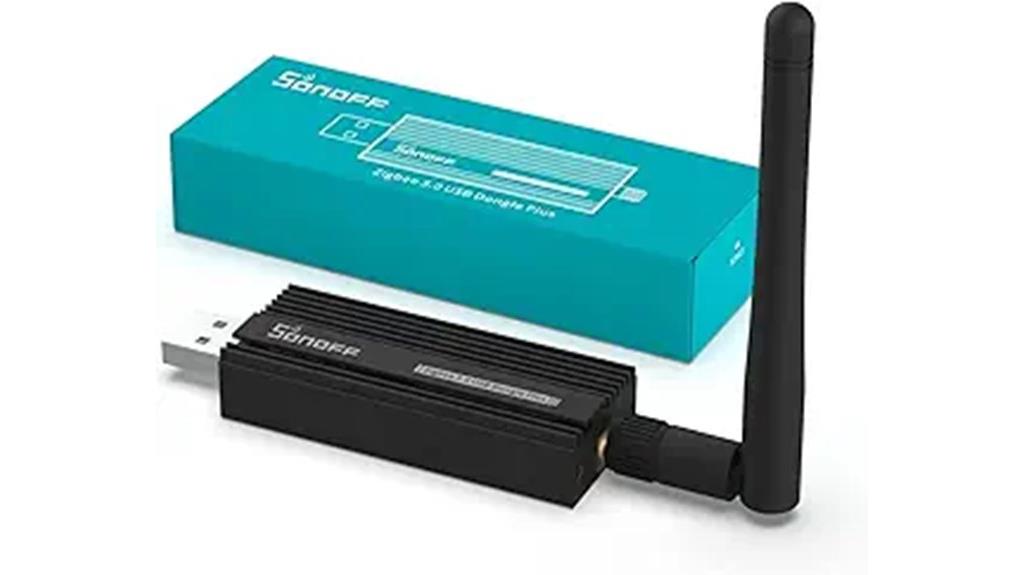
The SONOFF Zigbee 3.0 USB Dongle Plus Gateway stands out as an excellent choice for those seeking reliable, flexible home automation integration. It’s a universal Zigbee USB adapter, pre-flashed with Z-Stack 3.x.0 firmware, making it compatible with platforms like Home Assistant and Zigbee2MQTT. Its TI CC2652P chip and external antenna ensure strong signal and range, while the aluminum housing reduces interference. Compact and lightweight at just over an inch long, it’s easy to install using detailed tutorials. Customers rate it highly for ease of use, compatibility, and performance, making it a top-tier option for elevating your smart home in 2025.
Best For: home automation enthusiasts seeking a reliable, versatile Zigbee gateway compatible with popular platforms like Home Assistant and Zigbee2MQTT.
Pros:
- Easy to install with detailed tutorials and QR code guidance
- Compatible with multiple smart home platforms, ensuring flexibility
- Strong signal range and stability due to external antenna and aluminum housing
Cons:
- Limited to Zigbee protocol; not suitable for other wireless standards
- Requires external power source via USB, which may need additional setup
- Slightly larger size compared to some USB adapters, potentially affecting portability
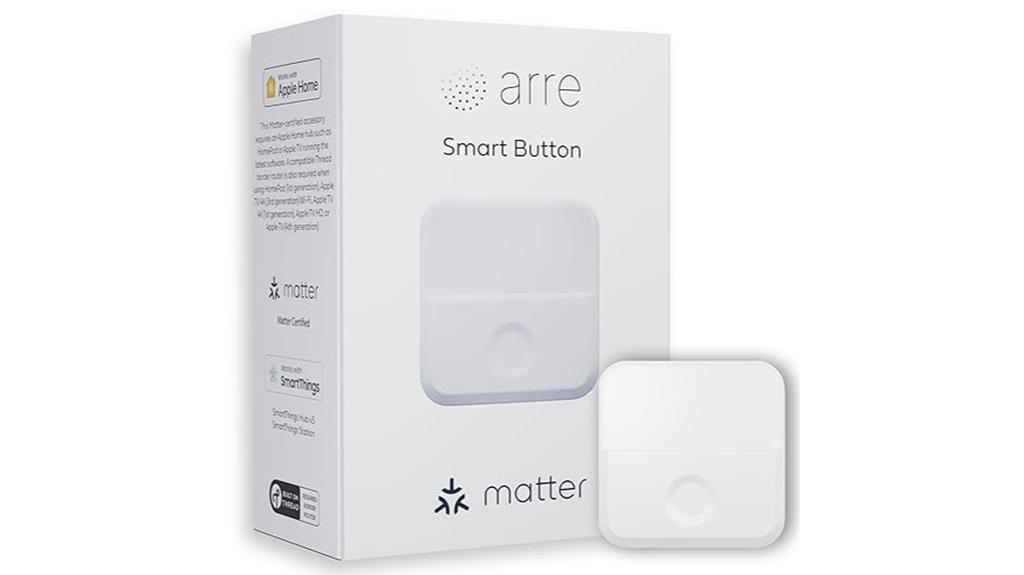
If you’re looking to streamline your smart home setup, the arre Smart Button stands out thanks to its Matter and Thread support, ensuring seamless interoperability across various ecosystems. It’s Matter Certified, so it works effortlessly with platforms like Apple HomeKit and Samsung SmartThings. The Thread protocol offers low-latency, reliable connections, making device responses quick and smooth—though a Thread Border Route is needed for full functionality. The button controls your smart accessories with single, double, or long presses, and it’s customizable with fun stickers, including glow-in-the-dark options. Overall, it’s a versatile, personalized addition to any modern smart home.
Best For: smart home enthusiasts seeking a versatile, interoperable, and customizable control solution compatible with multiple ecosystems.
Pros:
- Certified for Matter, ensuring broad compatibility across leading platforms like Apple HomeKit and Samsung SmartThings
- Supports Thread protocol for quick, reliable device communication with low latency
- Customizable with included stickers, including glow-in-the-dark options for personalization
Cons:
- Requires a Thread Border Route for full Thread network functionality
- Limited to pressing actions (single, double, long), which may not suit all control needs
- May need additional setup or hubs for integration with certain ecosystems or advanced automation
MOES Tuya ZigBee 3.0 Hub/Wired Gateway, WiFi Smart Home Bridge

The MOES Tuya ZigBee 3.0 Hub/Wired Gateway stands out as an excellent choice for those seeking a reliable, wired ZigBee hub with broad coverage, boasting over 200 meters. I appreciate its seamless integration with Tuya ZigBee smart devices, making it easy to expand my smart home setup. Its wired connection guarantees stability and security, while its compact design fits neatly into my tech space. With a 4.2-star rating from hundreds of users, it’s a proven performer. The hub’s straightforward setup, no batteries needed, and compatibility with WiFi make it a versatile and dependable central controller for elevating any smart home ecosystem.
Best For: those seeking a reliable, wired ZigBee hub with extensive coverage and seamless integration for their smart home systems.
Pros:
- Broad coverage over 200 meters ensures strong connectivity across large spaces
- Compatible with Tuya ZigBee smart devices for easy expansion and integration
- Wired connection provides stability, security, and no reliance on batteries
Cons:
- Requires a wired setup, which might be less flexible for some users compared to wireless hubs
- No mention of additional accessories or advanced features beyond basic connectivity
- Available first in February 2025, so current availability and user reviews are limited
Emporia Vue 3 Home Energy Monitor
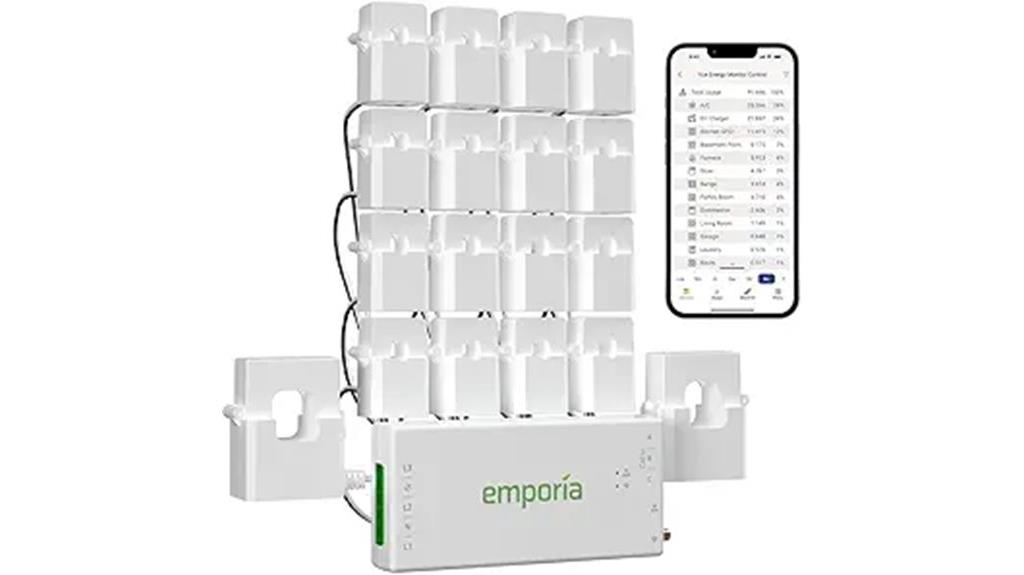
For homeowners seeking precise energy monitoring and seamless automation integration, the Emporia Vue 3 Home Energy Monitor stands out as an excellent choice. It offers real-time electricity usage data, supports solar and net metering, and integrates smoothly with home automation systems. Certified for safety with UL and CE listings, it’s built to meet rigorous standards. Installation is straightforward, fitting most circuit panels with clamp-on sensors. With WiFi connectivity, you can access detailed energy data and control settings via your phone or web app. Its ability to monitor critical loads and optimize energy use helps reduce costs and enhance efficiency, making it a top premium option for smarter homes.
Best For: homeowners seeking precise, real-time energy monitoring and seamless integration with home automation systems for cost savings and efficiency.
Pros:
- Provides accurate, real-time energy usage data with ±2% precision.
- Supports solar/net metering and integrates with smart home automation.
- Easy installation within most home circuit panels with included clamp-on sensors.
Cons:
- Requires WiFi (2.4 GHz) connection for full functionality, which may be limited in some homes.
- Additional sensors needed for 3-phase or 4-wire Wye systems can increase overall cost.
- 1-year warranty may be limited compared to longer-term support options.
ecobee Smart Thermostat Premium with Sensors
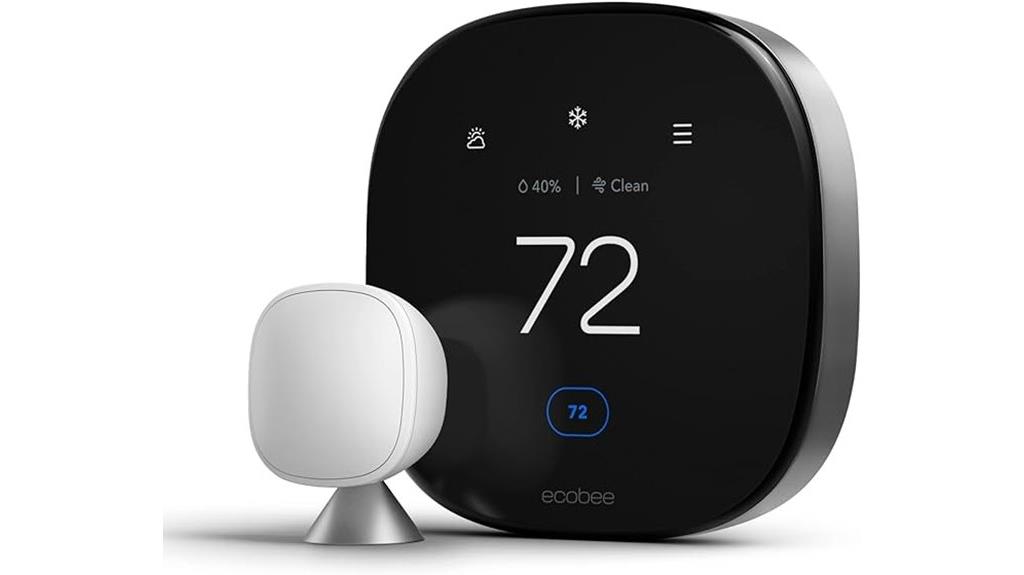
The ecobee Smart Thermostat Premium with Sensors stands out as an excellent choice for homeowners seeking both energy efficiency and enhanced comfort. I appreciate its potential to save up to 26% annually on heating and cooling, thanks to its smart sensors that target specific rooms, minimizing hot or cold spots. It also monitors air quality, alerts me to issues, and reminds me to change filters. Its sleek design, vibrant display, and built-in voice support make it a modern, user-friendly hub. Compatible with most HVAC systems and voice assistants, it seamlessly integrates into my smart home setup, offering convenience, safety, and energy savings.
Best For: homeowners seeking energy savings, room-specific comfort, and a modern, integrated smart thermostat solution.
Pros:
- Up to 26% annual savings on heating and cooling costs with ENERGY STAR certification.
- Includes SmartSensor for targeted room temperature control, reducing hot/cold spots.
- Features built-in air quality monitoring, alerts, and compatibility with popular voice assistants.
Cons:
- Higher initial investment compared to basic thermostats.
- Requires Wi-Fi and compatible smart home ecosystem for full functionality.
- Installation may be complex for those unfamiliar with HVAC wiring or C-wire-less setups.
Lockin Wi-Fi Gateway and Electronic Lock Component for Smart Lock and Wireless Lock Box

Looking to upgrade your smart home security with reliable remote access? The Lockin Wi-Fi Gateway is a sleek, easy-to-install device that connects with compatible smart locks like Q3, Q1, and L1. It offers seamless pairing, monitoring lock status, and controlling access remotely via app or voice commands through Alexa. Its compact design supports multiple device connections and guarantees stable, secure Wi-Fi connectivity within 10 feet of your lock. With features like activity logs and battery status monitoring, it enhances security and convenience. Setting it up takes just two minutes, making it a smart, reliable addition to your home automation system.
Best For: homeowners and renters seeking a reliable, easy-to-install Wi-Fi gateway to enhance their smart lock security and remote access capabilities.
Pros:
- Easy setup within 2 minutes, no complex wiring required
- Compatible with popular smart locks like Q3, Q1, and L1 for flexible integration
- Supports remote control and monitoring via app and voice commands through Alexa
Cons:
- Not compatible with Lockin Veno series locks
- Requires Wi-Fi within 10 feet for optimal connectivity
- Batteries are not included, so additional purchase may be necessary
YoLink Water Leak Detection & Shut-Off Starter Kit

If you want reliable water leak protection that keeps working even during outages, the YoLink Water Leak Detection & Shut-Off Starter Kit is an excellent choice. It includes sensors, a smart valve controller, and a hub, providing a thorough, easy-to-install system. Thanks to its unique Device-to-Device communication, the sensors can detect leaks and shut off water even if power or internet fails. With LoRa technology, devices communicate over long distances, making placement flexible. The system offers customizable alerts via SMS, app, or email, and integrates with voice assistants like Alexa and Google. Its long-lasting batteries ensure continuous protection, giving you peace of mind in any situation.
Best For: homeowners and business owners seeking reliable, long-lasting water leak protection with easy installation and smart automation features.
Pros:
- Reliable Device-to-Device communication ensures operation during power outages and network disruptions.
- Long-range LoRa connectivity allows flexible placement, even in hard-to-reach areas.
- Long-lasting batteries (up to 5 years for sensors) provide maintenance-free, continuous protection.
Cons:
- Initial setup may require some technical familiarity with smart home devices.
- The system’s reliance on batteries means periodic replacement is necessary over years.
- Integration with third-party smart home platforms may have limited advanced automation features compared to dedicated systems.
15W Power Supply Adapter for Google WiFi Router and Google Hub
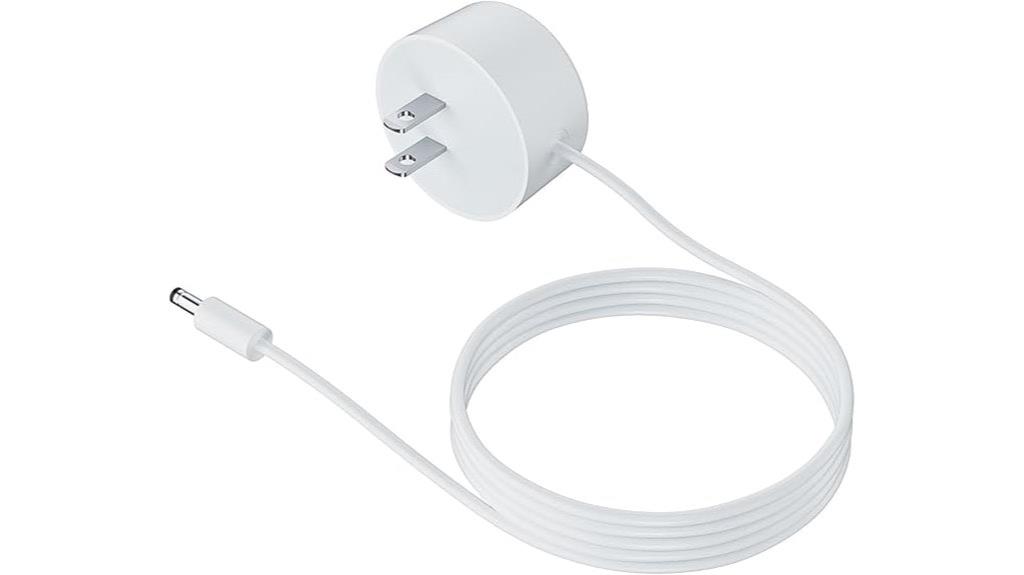
Are you searching for a reliable power solution to keep your Google Nest devices running smoothly? The 15W Power Supply Adapter is designed specifically for Google WiFi Router (2nd Gen), Google Hub, and Google Mini. It features a 1.5-meter white cable, ensuring flexibility and easy placement. Lightweight at just 0.08kg, it’s perfect for home or travel use. This adapter has been rigorously tested for safety and compatibility, delivering consistent power without interruption. Keep your smart home connected and functioning seamlessly with this dependable power supply, ensuring your Google Nest devices stay operational and ready to serve your needs.
Best For: homeowners and travelers seeking a reliable, compatible power supply for their Google Nest devices like Google WiFi Router (2nd Gen), Google Hub, and Google Mini.
Pros:
- Compatible with multiple Google Nest devices, ensuring versatile use.
- Rigorously tested for safety and reliable power delivery.
- Lightweight and 1.5-meter cable for flexible placement and easy portability.
Cons:
- Not compatible with Google Nest Audio, Nest Hub Max, or Google Home devices requiring different power specs.
- Limited to 15W output; will not work for devices needing more power.
- Only available in white, with no color options.
Kasa Smart Plug HS103P4, Wi-Fi Outlet for Alexa & Google, 4-Pack

The Kasa Smart Plug HS103P4 stands out as an ideal choice for anyone seeking easy-to-use, reliable home automation. With Wi-Fi connectivity, it works seamlessly with Alexa, Google Assistant, and IFTTT, making voice control simple. You can control devices remotely via the Kasa app from anywhere—home or away—and set schedules or timers to automate lamps, fans, or holiday lights. No hub is needed, and setup is straightforward. Certified for safety and trusted by over 5 million users, this 4-pack provides an affordable, convenient way to enhance your smart home ecosystem effortlessly.
Best For: those seeking an affordable, easy-to-install smart plug that integrates seamlessly with Alexa and Google Assistant for remote control and automation.
Pros:
- Easy setup with no hub required, compatible with Android 5.0+ and iOS 10.0+ devices
- Supports scheduling, timers, and remote control via the Kasa app from anywhere
- UL certified for safety and trusted by over 5 million users
Cons:
- Operates only on 2.4GHz Wi-Fi, not compatible with 5GHz networks
- Limited to 15 amps per outlet, which may not suit high-power appliances
- Requires an internet connection for remote control and automation features
Smart Home Control Panel for Home Automation
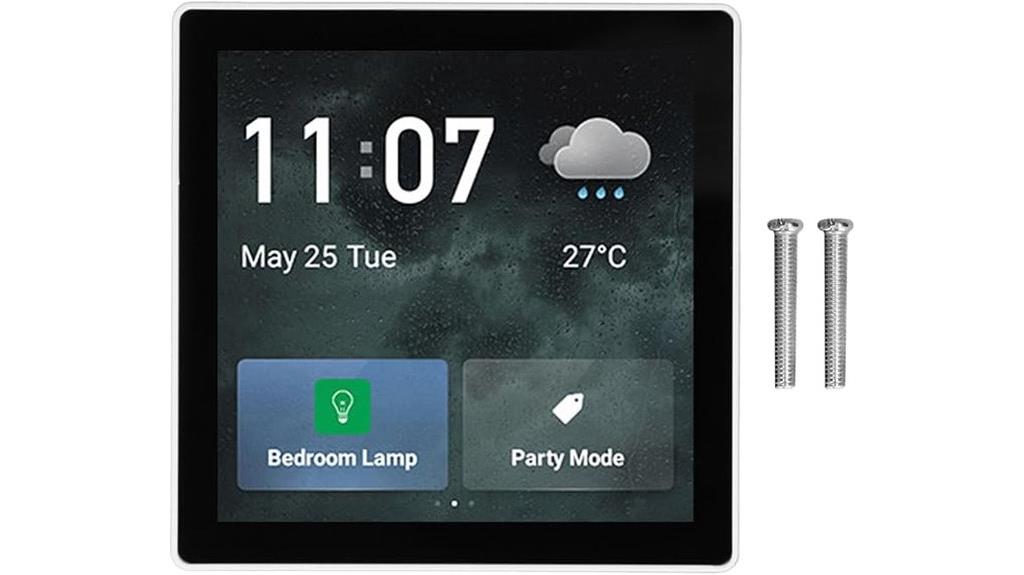
A smart home control panel with a high-resolution Android touchscreen offers an intuitive, centralized interface that simplifies managing your entire smart home. Its vibrant display makes interaction easy even in low-light conditions, providing seamless control over lighting, security, and automation devices. Acting as a hub, it supports advanced voice commands and works with platforms like HomeAssistant and HomeSeer, boosting convenience. Designed for global use with a wide voltage range, it fits various electrical systems. Crafted from durable ABS plastic, it’s lightweight yet sturdy, promising long-term reliability. This all-in-one control center elevates your smart home experience with straightforward, robust management.
Best For: homeowners and smart home enthusiasts seeking an intuitive, centralized control panel compatible with multiple automation platforms for seamless management of lighting, security, and automation devices.
Pros:
- High-resolution touchscreen with vibrant display enhances user interaction and visibility in all lighting conditions
- Supports advanced voice control and compatibility with popular platforms like HomeAssistant and HomeSeer for added convenience
- Durable ABS plastic construction ensures long-term reliability while maintaining a lightweight profile
Cons:
- Price may vary and could be higher compared to simpler control solutions
- Requires a stable power supply within the 100-240V range; no battery backup included
- Setup and configuration might require some technical knowledge for optimal integration with various systems
Emporia Vue 3 Home Energy Monitor
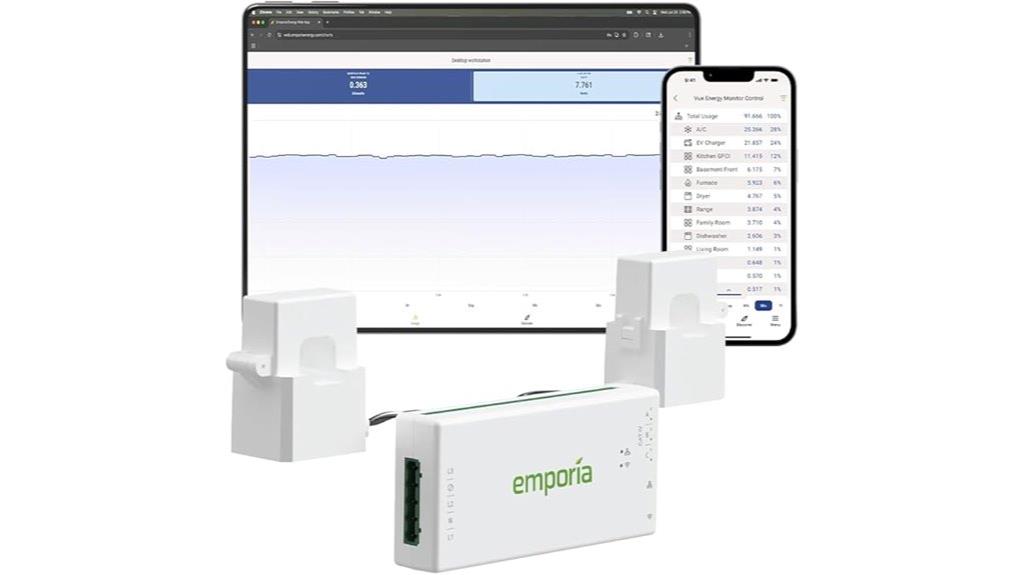
For homeowners seeking precise energy management and cost savings, the Emporia Vue 3 Home Energy Monitor stands out as a top choice. It offers real-time electricity usage data, supports solar and net metering, and allows remote control via apps for iPhone, Android, or web. With the ability to add multiple sensors, it monitors appliances like air conditioners and water heaters, providing detailed insights. Certified UL and CE, it installs easily in circuit panels with clamp-on sensors, supporting various electrical systems. Its advanced features help optimize energy consumption, reduce bills, and improve efficiency, making it an invaluable tool for smarter, more sustainable living.
Best For: homeowners and energy-conscious individuals seeking precise, real-time energy monitoring, cost savings, and remote control of their home’s electricity usage.
Pros:
- Supports solar and net metering for comprehensive energy insights
- Easy installation with clamp-on sensors compatible with various electrical systems
- Allows remote management and detailed appliance monitoring via app or web
Cons:
- Requires 2.4 GHz WiFi and internet access for full functionality
- Data visibility limited to when the app is open, with some data retention constraints
- Additional sensors for higher amperage appliances are sold separately
SofaBaton X1S Universal Remote with Hub and App

If you’re looking for a universal remote that combines extensive device compatibility with seamless automation, the SofaBaton X1S Universal Remote with Hub and App stands out. It supports over 6,000 brands and 500,000 device models, ensuring reliable control across IR, Bluetooth, and WiFi devices. You can create custom activities like “Watch TV” to control multiple devices at once, and even add virtual buttons for quick access. The powerful hub offers 360-degree control, stable signals, and eliminates blind spots. Compatible with Alexa and Google Assistant, it responds to voice commands and features a backlit LCD screen for easy use in low light.
Best For: tech-savvy home entertainment enthusiasts seeking comprehensive device control and automation capabilities with easy customization.
Pros:
- Supports over 6,000 brands and 500,000 device models for wide-ranging compatibility.
- Custom activities and virtual buttons enable seamless multi-device control and personalized shortcuts.
- Integrates with Alexa and Google Assistant for voice command convenience.
Cons:
- Customer ratings are average at 3.8/5, indicating potential usability or feature concerns.
- The remote’s size and weight may be less ergonomic for some users.
- Requires a lithium polymer battery, which may need replacement or charging over time.
Factors to Consider When Choosing Premium Home Automation Hubs
When selecting a premium home automation hub, I focus on protocol compatibility to guarantee it works seamlessly with my devices. I also consider automation flexibility and device integration range so I can customize and expand my smart home easily. Ultimately, privacy, security, and ease of setup are vital for a smooth and safe experience.
Protocol Compatibility
Choosing a premium home automation hub requires careful attention to protocol compatibility, as it determines how well your devices communicate and work together. I look for hubs that support multiple protocols like Zigbee, Z-Wave, Wi-Fi, Bluetooth, and Thread to guarantee broad device compatibility. It’s also essential to verify if the hub works seamlessly with my preferred ecosystems, such as Apple HomeKit, Google Home, or Amazon Alexa. I pay attention to emerging standards like Matter, which promise better interoperability across brands. Additionally, I consider whether the hub supports both cloud-based and local control protocols for reliability and privacy. Finally, I check if it can handle protocol updates and firmware upgrades to stay compatible with future devices, ensuring my smart home remains flexible and future-proof.
Automation Flexibility
To guarantee your smart home adapts to your lifestyle, a premium automation hub must support multiple protocols like Zigbee, Z-Wave, and Thread, maximizing device compatibility. This flexibility allows you to incorporate a wide range of devices without restrictions. Equally important is the ability to create complex, multi-step automation rules and scenes, enabling tailored experiences that match your routines. Supporting local processing ensures automations run reliably even during internet outages, adding robustness to your setup. Compatibility with various voice assistants and ecosystem platforms streamlines control and integration, making automation routines effortless. For advanced users, an open API or support for custom scripting expands customization options, empowering you to craft highly personalized automation scenarios beyond basic functionalities.
Device Integration Range
A broader device integration range is essential for ensuring your smart home functions seamlessly across multiple rooms and larger spaces. With a wider range, your hub can control more devices without signal loss or dead zones, making your setup more reliable. Using external antennas or signal boosters can considerably boost communication distance, especially in sizable homes. Support for protocols like Zigbee, Z-Wave, and Thread also influences range, as some penetrate walls better and extend coverage. Placing the hub centrally within your home optimizes communication, reducing weak spots. Additionally, devices with mesh networking capabilities can relay signals through connected nodes, further expanding coverage and ensuring every corner of your home stays connected. This extensive range is vital for a truly integrated smart home experience.
Privacy and Security
While expanding your device integration range helps guarantee seamless connectivity throughout your home, safeguarding your smart home’s privacy and security is equally important. I look for hubs that use local processing for automation rules, which reduces reliance on cloud services and minimizes data breach risks. Built-in encryption protocols like AES or TLS are essential to secure device communication and prevent unauthorized access. I also verify that firmware can be regularly updated, ensuring vulnerabilities are patched and security standards stay current. Multi-factor authentication adds an extra layer of protection when accessing the control interface, making it harder for intruders. Ultimately, I check transparency in privacy policies, ensuring data isn’t shared with third parties and that data collection practices are clear. These factors help keep my smart home safe and private.
Ease of Setup
Choosing a premium home automation hub becomes much easier when it offers a straightforward setup process. A user-friendly experience means clear instructions and minimal steps, saving you time and frustration. Compatibility with various devices and protocols ensures seamless integration, so you don’t need extra hardware or complex configurations. Features like quick-start guides, auto-detection of connected devices, and plug-and-play design make installation simple for both beginners and tech-savvy users. Support for multiple installation methods—Ethernet, Wi-Fi, or USB—adds flexibility, fitting different home network setups. Visual indicators such as LED lights or app prompts help you monitor progress and troubleshoot issues effortlessly. Overall, a hassle-free setup process enhances your smart home experience from the very beginning.
Frequently Asked Questions
How Do Premium Hubs Integrate With Existing Smart Home Ecosystems?
Premium hubs seamlessly integrate with existing smart home ecosystems by supporting multiple protocols like Zigbee, Z-Wave, and Wi-Fi, allowing me to connect various devices effortlessly. I use the hub’s app to add new gadgets, ensuring compatibility and smooth communication. It centralizes control, so I don’t need separate apps for each device. This integration simplifies managing my smart home and enhances overall automation performance.
What Security Features Are Standard in Top-Tier Home Automation Hubs?
Top-tier home automation hubs typically include robust security features like end-to-end encryption, multi-factor authentication, and regular firmware updates. I always look for hubs that have secure cloud storage and device isolation to prevent hacking. These features give me peace of mind knowing my smart home is protected. I recommend choosing a hub that prioritizes security, so your data stays safe and your devices stay secure.
Can These Hubs Support Future Smart Device Protocols?
You’ll be pleased to know that top-tier home automation hubs are built with future-proofing in mind. They often support a range of protocols like Zigbee, Z-Wave, and Wi-Fi, ensuring compatibility with upcoming devices. I’ve found that manufacturers are increasingly adopting standards like Matter, which promises seamless integration across brands. So, yes, these hubs are designed to support future protocols, keeping your smart home adaptable and ready for what’s next.
How Do Premium Hubs Enhance Energy Management Capabilities?
Premium hubs boost energy management by seamlessly integrating all your devices into one platform, giving you real-time control and insights. I can set schedules, optimize energy use, and monitor consumption easily. They also support smart algorithms that learn your habits, helping reduce waste and lower bills. With these hubs, I feel more in control of my home’s energy efficiency, making it smarter and more sustainable every day.
What Customer Support Options Are Available for High-End Hubs?
You’ll find that high-end hubs typically offer robust customer support options, like 24/7 live chat, phone assistance, and extensive online resources. I’ve personally appreciated when brands include dedicated apps for troubleshooting and firmware updates. Many also offer premium support plans with expedited service and personalized help. It’s reassuring to know that when issues arise, you can get quick, expert help to keep your smart home running smoothly.
Conclusion
Think of a home automation hub as the captain of your smart ship, guiding every device smoothly through a sea of technology. Choosing the right one guarantees your home sails effortlessly, with all systems in harmony. Remember, the perfect hub isn’t just about features but how well it navigates your unique needs. With the right captain at the helm, your smart home will always reach its destination—comfort, convenience, and peace of mind.