Running a refrigerator on solar power requires a battery bank with sufficient capacity to handle compressor startup surges and continuous cooling cycles. BLUETTI FridgePower stands out as the best overall choice for most households, offering dedicated inverter technology that stabilizes power for sensitive appliances. For those needing a compact, entry-level solution for a mini-fridge, the Jackery Solar Generator 1000 V2 provides excellent portability and reliability. The main tradeoff in this category is between capacity and portability; larger units like the BLUETTI can run a full-size fridge for days but are heavy, while smaller units like the ZeroKor 300W are lightweight but may only support a fridge for a few hours. This guide breaks down the specific power requirements and solar integration capabilities of each model to help you match the right battery bank to your refrigeration needs.

Get the little things that make your day delivered free with Prime
- Fast, free delivery on millions of items
- Prime Video, Amazon Music and more included
- Member-only deals all year
Complete the kit


Key Takeaways
- Refrigerator startup surges often exceed 1000W, meaning units under 600W surge capacity will likely trip their safety shutoffs immediately.
- Pure sine wave inverters are non-negotiable for compressor-based refrigerators, as modified sine waves can overheat and damage motor windings.
- LiFePO4 chemistry (found in the DARAN and BLUETTI models) offers a significantly longer lifespan than standard Li-ion, crucial for long-term backup reliability.
- Solar input speed matters less than battery capacity; a small panel can eventually charge a large battery, but it takes days rather than hours.
- Integrated solar panels on portable units are often insufficient for rapid recharging, making external panel compatibility a more valuable feature.
| ZeroKor 300W Portable Power Station, 280Wh |  | Best Entry-Level Backup | Capacity: 280Wh | AC Output Power: 300W | Weight: 5.1 lbs | VIEW ON AMAZON | See Our Full Breakdown |
| DARAN Portable Power Station, 288Wh LiFePO4 Battery, 350W (600W Surge) |  | Best Value Longevity | Capacity: 288Wh | Battery Type: LiFePO4 | Surge Power: 600W | VIEW ON AMAZON | See Our Full Breakdown |
| BLUETTI FridgePower Portable Power Station, 2016Wh, 1800W |  | Best for Dedicated Refrigerator Backup | Capacity: 2016Wh | Output Power: 1800W | UPS Transfer Time: 10ms | VIEW ON AMAZON | See Our Full Breakdown |
| powkey 200W Portable Power Station with 40W Solar Panel, 146Wh |  | Best Ultra-Compact Solar Kit | Capacity: 146Wh | Max Output: 200W | Weight: 3 lbs | VIEW ON AMAZON | See Our Full Breakdown |
| BROWEY S1600 Portable Power Station with Built-In Solar Panel |  | Best High-Power Portable Solar | Capacity: 1024Wh | Output Power: 1600W | Battery Type: LiFePO4 | VIEW ON AMAZON | See Our Full Breakdown |
| ZeroKor 300W Portable Power Station with 60W Solar Panel | 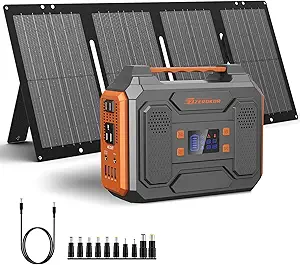 | Best for Minimalist Off-Grid Needs | Max AC Output: 300W | Battery Capacity: Approx. 280-300Wh (Est.) | Solar Panel Included: Yes, 60W Monocrystalline | VIEW ON AMAZON | See Our Full Breakdown |
| BROWEY 1600W Portable Power Station with Built-In Solar Panel |  | Best Value for High-Wattage Appliance Support | Continuous Output: 1600W | Peak Output: 3200W | Battery Capacity: 1024Wh | VIEW ON AMAZON | See Our Full Breakdown |
| Apowking 300W Portable Power Station, 220Wh |  | Best Compact for Light Electronics | Peak Output: 600W | Continuous Output: 300W | Battery Capacity: 220Wh | VIEW ON AMAZON | See Our Full Breakdown |
| Jackery Solar Generator 1000 V2 with 200W Solar Panel |  | Best Overall for Performance and Connectivity | AC Output: 1500W | Surge Peak: 3000W | Battery Capacity: 1070Wh | VIEW ON AMAZON | See Our Full Breakdown |
| solar powered battery bank for refrigerator | Weight | Capacity | Battery Type |
|---|---|---|---|
| ZeroKor 300W Portable Power St | 5.1 lbs | 280Wh | Li-ion |
| DARAN Portable Power Station | 8.2 lbs | 288Wh | LiFePO4 |
| BLUETTI FridgePower Portable P | 41.9 lbs | 2016Wh | — |
| powkey 200W Portable Power Sta | 3 lbs | 146Wh | — |
| BROWEY S1600 Portable Power St | — | 1024Wh | LiFePO4 |
| ZeroKor 300W Portable Power St | Lightweight/Portable | — | — |
| BROWEY 1600W Portable Power St | — | — | LiFePO4 |
| Apowking 300W Portable Power S | 5 lbs | — | — |
| Jackery Solar Generator 1000 V | 23.8 lbs | — | LiFePO4 |
More Details on Our Top Picks
ZeroKor 300W Portable Power Station, 280Wh
This unit serves as a gateway option for those testing solar compatibility with small appliances. While most modern refrigerators require 150W-300W running power, the 280Wh capacity limits this model to short-term backup or powering the fridge’s control board and light rather than the compressor continuously. Compared to the BLUETTI FridgePower, which offers dedicated UPS features, this ZeroKor model is strictly a portable battery. It shines in versatility with seven output ports and a built-in LED light, making it suitable for camping trips where you might also charge phones and laptops. However, the 300W continuous limit is a hard ceiling; if your refrigerator’s compressor kicks in with a high surge, this unit will shut down. It is a lightweight, affordable entry point, but not a reliable standalone solution for long-term off-grid refrigeration.Pros:- Lightweight at 5.1 lbs for easy transport
- Versatile with seven total output ports
- Built-in LED light with SOS mode adds utility
- Multiple charging methods including solar and car
Cons:- Solar panel is sold separately
- Cannot handle appliances exceeding 300W
- Low capacity requires frequent recharging
Best for: Campers needing a lightweight backup for small appliances or emergency phone charging during brief power blips.
Not ideal for: Homeowners seeking reliable long-term refrigerator backup — the capacity is too low for sustained compressor cycles.
- Capacity:280Wh
- AC Output Power:300W
- Weight:5.1 lbs
- Charging Methods:AC, Solar, Car
- Total Ports:7
- Battery Type:Li-ion
Our verdict“Choose this if you need a versatile, lightweight power source for camping and only need to keep a fridge running for a few hours during a minor outage.”
DARAN Portable Power Station, 288Wh LiFePO4 Battery, 350W (600W Surge)
The DARAN 288Wh distinguishes itself from the ZeroKor model by using a LiFePO4 battery, which typically offers significantly more charge cycles and a longer lifespan. This makes it a smarter long-term investment for occasional backup use. With a 350W rated output and 600W surge, it handles the startup spikes of many compact refrigerators better than the 300W ZeroKor. However, it still lacks the dedicated UPS transfer speed found in the BLUETTI FridgePower, meaning there may be a brief interruption in power when switching sources. The included USB-C PD port is a modern convenience that the older USB-A heavy designs lack. While it weighs more than the ZeroKor, the durability of the battery chemistry justifies the bulk for users who prioritize longevity over minimal weight.Pros:- LiFePO4 battery offers longer lifespan
- 600W surge handles compressor startup better
- Includes USB-C PD for fast device charging
- Compact footprint for its capacity
Cons:- Solar panels sold separately
- No built-in UPS for seamless switching
- Heavier than basic lithium-ion competitors
Best for: Budget-conscious buyers who want a durable LiFePO4 battery for occasional short-term fridge backup.
Not ideal for: Users needing uninterrupted power during outages — it lacks the fast UPS transfer of dedicated backup units.
- Capacity:288Wh
- Battery Type:LiFePO4
- Surge Power:600W
- Weight:8.2 lbs
- Warranty:1 year
Our verdict“This is the smart choice for those who value battery longevity over raw capacity, provided they accept a brief power interruption during outages.”
BLUETTI FridgePower Portable Power Station, 2016Wh, 1800W
This unit is purpose-built for the specific task of keeping refrigerators alive, unlike the general-purpose portable stations like the DARAN. Its standout feature is the 10ms UPS transfer time, ensuring your fridge compressor doesn’t stop and restart dangerously during a power cut. The 2016Wh capacity is substantial enough to run a standard refrigerator for days, not just hours. The slim 75mm profile allows for wall mounting, saving floor space in tight utility areas. While it is significantly more expensive and heavier than the ZeroKor, it offers the reliability required for critical food preservation. The ability to expand capacity up to 8064Wh means you can scale this system as your needs grow. It also integrates with smart home systems, letting you monitor power usage remotely.Pros:- 10ms UPS transfer prevents fridge damage
- High 2016Wh capacity for long runtimes
- Expandable capacity up to 8064Wh
- Slim design supports wall mounting
Cons:- Heavy at 41.9 lbs
- Expansion batteries sold separately
- Higher cost than general-purpose stations
Best for: Homeowners who need reliable, uninterrupted power for their refrigerator during frequent outages.
Not ideal for: Campers or those with limited space — it is too heavy and stationary for portable outdoor use.
- Capacity:2016Wh
- Output Power:1800W
- UPS Transfer Time:10ms
- Battery Chemistry:LFP
- Weight:41.9 lbs
- Expandability:Up to 8064Wh
- Smart Home Support:Alexa & Google Home
Our verdict“The definitive choice for protecting your refrigerator and essential appliances from power fluctuations with professional-grade reliability.”
powkey 200W Portable Power Station with 40W Solar Panel, 146Wh
The powkey HP200 is the smallest option in this lineup, including a 40W solar panel right out of the box. This makes it an attractive entry point for beginners who want to test solar charging without buying accessories separately. However, its 146Wh capacity and 200W output are strictly for tiny, efficient mini-fridges or camping coolers with low power draw. It cannot compete with the DARAN or BLUETTI for standard household refrigerators. The pure sine wave output is a positive for sensitive electronics, but the low wattage means it will trip if a compressor surges. It is best viewed as a supplemental power source for a very small fridge or a device that runs intermittently. For serious refrigeration backup, it lacks the reserve capacity, but for a weekend camping trip, it is highly portable.Pros:- Includes 40W solar panel in box
- Ultra-lightweight at 3 lbs
- Pure sine wave for safe electronics
- Low barrier to entry for solar beginners
Cons:- Very low 146Wh capacity
- 200W limit excludes most fridge compressors
- Conflicting capacity specs on label
Best for: Campers with small 12V or low-wattage mini-fridges who want an all-in-one solar kit.
Not ideal for: Anyone trying to power a standard household refrigerator — the capacity and output are too low.
- Capacity:146Wh
- Max Output:200W
- Weight:3 lbs
- Solar Panel:40W Included
- Output Type:Pure Sine Wave
- Recharge Time:5–6 Hours
Our verdict“Ideal for minimalist campers with tiny fridges, but too underpowered for any standard home refrigerator application.”
BROWEY S1600 Portable Power Station with Built-In Solar Panel
The BROWEY S1600 bridges the gap between portable camping units and home backup systems. With 1024Wh capacity and 1600W output, it can handle the running wattage of most standard refrigerators, unlike the lower-wattage powkey or ZeroKor. The inclusion of a built-in solar panel with an MPPT controller is a unique convenience, though the 40W charging rate means it takes a long time to recharge fully via sun alone. The LiFePO4 battery ensures long life, similar to the DARAN, but with much higher capacity. It lacks the fast UPS transfer of the BLUETTI FridgePower, so it is better suited for off-grid living or camping where you control the power switch, rather than seamless home outage coverage. It is a robust, high-capacity portable unit that can definitely run a fridge for 12-24 hours depending on efficiency.Pros:- High 1600W output handles most fridges
- Built-in solar panel with MPPT controller
- LiFePO4 battery rated for 3000+ cycles
- Fast charging via AC and USB-C simultaneously
Cons:- Built-in solar is slow (40W)
- No UPS for seamless outage switching
- Heavy for a portable unit
Best for: Off-grid enthusiasts or RV owners who need high power output and integrated solar charging.
Not ideal for: Users needing instant switchover during blackouts — it lacks UPS functionality for seamless transfer.
- Capacity:1024Wh
- Output Power:1600W
- Battery Type:LiFePO4
- Solar Charging:Built-in 40W
- Battery Cycles:3000+
- Ports:8
Our verdict“A powerful, self-sufficient portable station ideal for RVs and off-grid cabins where you can manually manage power sources.”
ZeroKor 300W Portable Power Station with 60W Solar Panel
This unit stands out for its complete solar kit at an entry-level price point, making it a strong contender for beginners. Unlike the Apowking 300W, which requires a separate solar purchase, the ZeroKor includes a 60W monocrystalline panel right out of the box. However, its 300W maximum output is a significant limitation for this specific roundup. Most standard household refrigerators require 800W to 1200W of starting wattage. Consequently, this battery bank will likely trip its overload protection if you attempt to run a full-sized fridge. It is better suited for powering 12V compressor fridges, often used in camping, rather than standard AC appliances. The built-in battery protections offer peace of mind, but users must remember to cycle the battery regularly, as it is not designed for long-term emergency storage.Pros:- Includes a foldable 60W solar panel in the package
- Offers diverse output options including AC, DC, and USB
- Features comprehensive safety protections against overheating and over-voltage
Cons:- 300W output cannot handle the startup surge of most standard refrigerators
- Solar panel junction box lacks waterproofing for heavy rain exposure
- Battery chemistry requires periodic charging to maintain health
Best for: Campers using 12V DC compressor fridges or those needing to power small electronics off-grid
Not ideal for: Homeowners looking to backup a standard 110V kitchen refrigerator due to insufficient wattage
- Max AC Output:300W
- Battery Capacity:Approx. 280-300Wh (Est.)
- Solar Panel Included:Yes, 60W Monocrystalline
- Ports:2 AC, 3 USB, 1 USB-C, 1 DC
- Recharging Methods:AC, Solar, 12V Car
- Weight:Lightweight/Portable
- Safety Features:Short-circuit, Overload, Over-heat
Our verdict“Choose this if you need a ready-to-go solar setup for DC-powered camping fridges, but skip it for standard AC appliances.”
BROWEY 1600W Portable Power Station with Built-In Solar Panel
The BROWEY 1600W is a robust option that bridges the gap between portability and power. With a 1600W continuous output and 1024Wh capacity, it comfortably handles the startup surge of most modern refrigerators, a task the ZeroKor 300W simply cannot perform. The inclusion of a built-in solar panel and MPPT controller is a unique convenience, though the 40W solar input is modest for such a large battery. This means solar recharging will be slow, making it better suited for occasional top-ups rather than primary off-grid generation. The LiFePO4 battery offers a long lifespan of 3000+ cycles, ensuring durability for long-term use. While it lacks the app connectivity of the Jackery Solar Generator 1000 V2, its raw wattage and integrated solar features make it a compelling value proposition for emergency home backup.Pros:- 1600W output easily powers standard refrigerators and small appliances
- Long-life LiFePO4 battery rated for over 3000 cycles
- Built-in solar panel with MPPT controller eliminates the need for external panels
Cons:- Built-in solar panel is limited to 40W, resulting in slow recharge times
- Reaching 80% capacity in 3 hours requires simultaneous AC and USB-C charging
- Heavier than smaller units, reducing portability for hiking or light camping
Best for: Users needing reliable backup for standard 110V refrigerators and appliances without buying separate solar gear
Not ideal for: Those who prioritize fast solar recharging, as the 40W built-in panel is too slow for rapid recovery
- Continuous Output:1600W
- Peak Output:3200W
- Battery Capacity:1024Wh
- Battery Type:LiFePO4
- Solar Charging:Built-in 40W Panel
- USB-C Output:100W PD
- Recharge Time:3 hours to 80% (AC + USB-C)
Our verdict“This is the ideal choice for home backup where high wattage is non-negotiable, provided you accept slow solar charging speeds.”
Apowking 300W Portable Power Station, 220Wh
At just 5 lbs and 220Wh, the Apowking is the smallest option in this lineup, designed for ultra-portability rather than heavy lifting. It is significantly lighter than the Jackery Solar Generator 1000 V2, making it easy to carry on hikes or store in tight spaces. However, its 300W output and low capacity render it unsuitable for powering a standard refrigerator. The battery will drain rapidly if connected to a compressor, and the startup surge may exceed its limits. This unit shines when powering multiple small devices like phones, tablets, and LED lights. Since the solar panel is not included, it relies on AC or car charging for reliability. It serves best as a ‘day pack’ power source for digital nomads, but it fails the primary requirement of this roundup: sustaining a fridge.Pros:- Extremely lightweight at 5 lbs and compact dimensions
- Supports charging up to seven devices simultaneously via multiple ports
- Includes a built-in LED light for emergency illumination
Cons:- Solar panel is sold separately, increasing the total cost for off-grid use
- 220Wh capacity is too small to sustain any appliance with a motor
- 300W peak output cannot handle refrigerator startup surges
Best for: Travelers needing to charge multiple small electronics on the go without carrying heavy gear
Not ideal for: Anyone intending to run a refrigerator, as the 220Wh capacity and 300W limit are insufficient
- Peak Output:600W
- Continuous Output:300W
- Battery Capacity:220Wh
- Weight:5 lbs
- AC Outlets:2 x 110V Pure Sine Wave
- USB Ports:4
- Solar Panel Included:No
Our verdict“Skip this for refrigerator backup; it is strictly a lightweight charger for personal electronics.”
Jackery Solar Generator 1000 V2 with 200W Solar Panel
The Jackery Solar Generator 1000 V2 represents the premium tier of this comparison, offering a balanced blend of capacity and smart features. With 1,500W output and a 1,070Wh LiFePO4 battery, it reliably runs refrigerators, unlike the Apowking or ZeroKor. The included 200W solar panel is more efficient than the BROWEY’s built-in 40W solution, allowing for faster energy recovery when off-grid. A key differentiator is the app connectivity, which lets you monitor battery health and select charging modes, including an emergency one-hour fast charge. However, this convenience comes at a cost: the unit and panel ship separately, and the 23.8 lb weight makes it less portable. It is the most capable all-rounder for users who want reliable fridge backup and modern monitoring tools.Pros:- 1500W output and 3000W surge easily handle refrigerator startup
- Includes a high-efficiency 200W solar panel for faster recharging
- App control allows for customizable charging modes and battery monitoring
Cons:- Battery and solar panel ship in separate packages, complicating setup
- Emergency fast-charge mode must be manually enabled in the app
- Heavier at 23.8 lbs compared to more portable alternatives
Best for: Tech-savvy users who want app monitoring, fast charging capabilities, and reliable fridge backup
Not ideal for: Budget-conscious buyers who don’t need app features or those who require extreme portability under 10 lbs
- AC Output:1500W
- Surge Peak:3000W
- Battery Capacity:1070Wh
- Battery Type:LiFePO4
- Solar Panel:200W (Included)
- Weight:23.8 lbs
- Warranty:5 Years
- Ports:3 AC, 2 USB-C, 1 USB-A, 1 DC
Our verdict“The best choice for users who want a smart, high-capacity system that can reliably keep a fridge running off-grid.”

How We Picked
I evaluated these nine portable power stations based on their ability to sustain the specific electrical load of residential refrigerators. The primary filter was inverter type and surge capacity; units lacking pure sine wave output or sufficient surge headroom for compressor kick-starts were excluded from higher rankings. I then assessed battery chemistry, prioritizing LiFePO4 options for their durability and cycle life, which is critical for a device that may cycle daily during off-grid use or frequent outages.
Secondary criteria included solar input efficiency and portability. I compared the integrated solar capabilities against external panel compatibility, recognizing that built-in panels often serve more as emergency trickle chargers than primary power sources. The final ranking reflects a balance between raw capacity, appliance safety, and the realistic time required to recharge from solar sources alone.
| solar powered battery bank for refrigerator | Battery Type |
|---|---|
| ZeroKor 300W Portable Power St | Li-ion |
| DARAN Portable Power Station | LiFePO4 |
| BLUETTI FridgePower Portable P | — |
| powkey 200W Portable Power Sta | — |
| BROWEY S1600 Portable Power St | LiFePO4 |
| ZeroKor 300W Portable Power St | — |
| BROWEY 1600W Portable Power St | LiFePO4 |
| Apowking 300W Portable Power S | — |
| Jackery Solar Generator 1000 V | LiFePO4 |
Factors to Consider When Choosing Solar Powered Battery Bank For Refrigerator
Selecting a battery bank for a refrigerator is distinct from powering lights or laptops. Refrigerators are inductive loads with unique power profiles that can confuse smaller inverters. Here are the critical factors to weigh before making your decision.
Understanding Inverter Surge Requirements
A refrigerator’s power rating on its nameplate usually indicates running watts, not starting watts. Compressors require a massive spike of energy, often 3 to 5 times their running wattage, to start. If you buy a battery bank rated for 300W running power, it might fail to start a fridge that requires 600W of surge capacity. Always check the surge rating of the portable power station, not just the continuous output. The BLUETTI FridgePower is designed specifically to handle these spikes, whereas smaller units like the powkey 200W may struggle or shut down entirely when the compressor kicks on.
Battery Chemistry and Lifespan
Most portable power stations use either Li-ion NMC or LiFePO4 (Lithium Iron Phosphate) cells. LiFePO4 is heavier but lasts 3 to 4 times longer in terms of charge cycles. Since a refrigerator backup might cycle daily during an outage, battery longevity is a major cost factor over time. LiFePO4 batteries like those in the DARAN model maintain their capacity better over years of storage, making them safer for emergency preparedness. Standard Li-ion batteries degrade faster if left at 100% charge for long periods, a common scenario for backup units.
Real-World Solar Charging Speeds
Manufacturers often quote ideal solar charging times under perfect, direct sunlight. In reality, weather, panel angle, and atmospheric conditions reduce efficiency. A 100W panel rarely delivers 100W; it might average 50-60W. If your goal is to run a fridge indefinitely, you need enough battery capacity to last through cloudy days or nights. Solar input speed determines how quickly you recover from a drain, but capacity determines if you survive the outage. Look for units with high-capacity solar input ports (like the Jackery or BLUETTI) to maximize energy harvest from available panels.
The Hidden Cost of AC Conversion
When a battery bank powers a refrigerator via an AC outlet, energy is lost during the conversion from DC battery power to AC grid-like power. This conversion process typically consumes 10-15% of the stored energy. Additionally, the inverter itself generates heat, which can further reduce efficiency in hot environments. Inverter efficiency varies by model; premium units manage heat better and waste less power. Cheaper units may drain their batteries faster than expected simply because the inverter is inefficient, reducing the effective runtime for your fridge.
Portability vs. Capacity Tradeoffs
There is a direct correlation between weight and energy storage. A 2000Wh battery bank weighs significantly more than a 300Wh unit. If you need to move the power station frequently or store it in a tight space, capacity must be sacrificed. However, if the unit stays in one place near the fridge, weight is irrelevant compared to runtime. Do not buy a heavy, high-capacity unit if you plan to carry it on camping trips, and do not buy a lightweight unit if you need to keep a full-size fridge running for 24+ hours.
Frequently Asked Questions
Can a 300W portable power station run a standard household refrigerator?
In most cases, no. While a fridge might run at 150W, the startup surge can hit 1000W or more. A 300W unit with a 600W surge rating will likely trip its overload protection when the compressor starts. You generally need a unit with at least a 1000W surge rating to reliably start a standard residential refrigerator. Smaller units are better suited for mini-fridges or 12V car refrigerators.
How long will a 1000Wh battery bank run a refrigerator?
Assuming the refrigerator runs at 150W average and the inverter is 10% efficient, you have about 900W of usable power. This translates to roughly 6 hours of continuous runtime. However, refrigerators cycle on and off; a modern, efficient fridge might only run 30% of the time, extending the runtime to 20 hours or more. Older or poorly insulated fridges will drain the battery much faster. Always check your specific fridge’s average daily energy consumption (kWh) for a more accurate estimate.
Is it safe to use a modified sine wave inverter for a refrigerator?
It is not recommended. Modified sine wave power can cause compressor motors to run hotter, hum loudly, and potentially burn out over time. While a fridge might technically run on modified sine wave power for a short period, it risks damaging the motor and reduces energy efficiency. Pure sine wave inverters are the only safe choice for inductive loads like refrigerators, microwaves, and air conditioners.
Do I need a separate solar panel if the power station has a built-in one?
Yes, for any meaningful recharging speed. Built-in solar panels on portable power stations are typically small (20W-40W) and designed for emergency trickle charging, not rapid recovery. To recharge a 1000Wh battery in a reasonable time frame (under 10 hours of good sun), you need an external panel array of 200W or more. Relying solely on built-in panels will take several days to fully recharge a drained battery bank.
Can I charge the battery bank while it is powering the refrigerator?
Most modern portable power stations support ‘pass-through charging,’ allowing you to use the AC output while the unit is being charged via solar or AC input. This feature is helpful for extending runtime during prolonged outages if you have solar access. However, charging generates heat, and running a high-load appliance also generates heat. Monitor the unit’s temperature closely, as excessive heat can throttle performance or trigger safety shutdowns in some models.
Conclusion
Choosing the right solar battery bank for your refrigerator depends entirely on your appliance’s size and your outage duration expectations. For most homeowners with a standard full-size fridge, the BLUETTI FridgePower is the best overall pick due to its dedicated high-capacity design and pure sine wave stability. If you are looking for a more budget-friendly option that still handles startup surges well, the Jackery Solar Generator 1000 V2 offers a great balance of portability and power. For beginners or those with only a mini-fridge, the ZeroKor 300W provides an accessible entry point, though it lacks the capacity for full-size appliances. Finally, if longevity and heavy-duty cycling are your priorities, the DARAN Portable Power Station with its LiFePO4 chemistry is the smartest long-term investment. Match the surge rating to your fridge’s startup needs, and you will have reliable backup power.
Halloween Picks
halloween
As an affiliate, we earn on qualifying purchases.