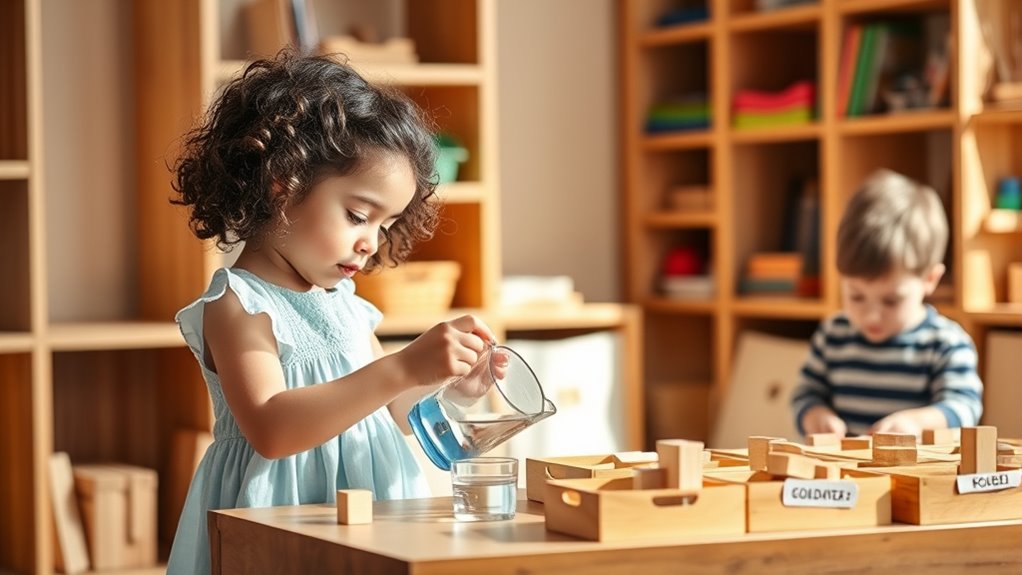

To encourage independence in little ones at home, create a Montessori-inspired environment with accessible, child-sized furniture and organized spaces that promote autonomy. Use age-appropriate tools for activities like dressing, feeding, and practical life tasks. Offer choices to empower decision-making and foster responsibility through daily routines. Model respectful communication and patience to support emotional growth. If you keep exploring, you’ll discover more ways to nurture confident, independent children in your own home.
Key Takeaways
- Create accessible spaces with child-sized tools, clothing, and organized storage to promote autonomy and confidence.
- Incorporate age-appropriate materials and activities that encourage exploration and develop practical skills.
- Support self-feeding, dressing, and personal choices to foster independence and self-expression.
- Encourage decision-making through choice stations and involve children in daily routines and tasks.
- Model respectful behavior, assign responsibilities, and use positive reinforcement to nurture responsible and confident little ones.
Setting Up an Organized and Accessible Environment
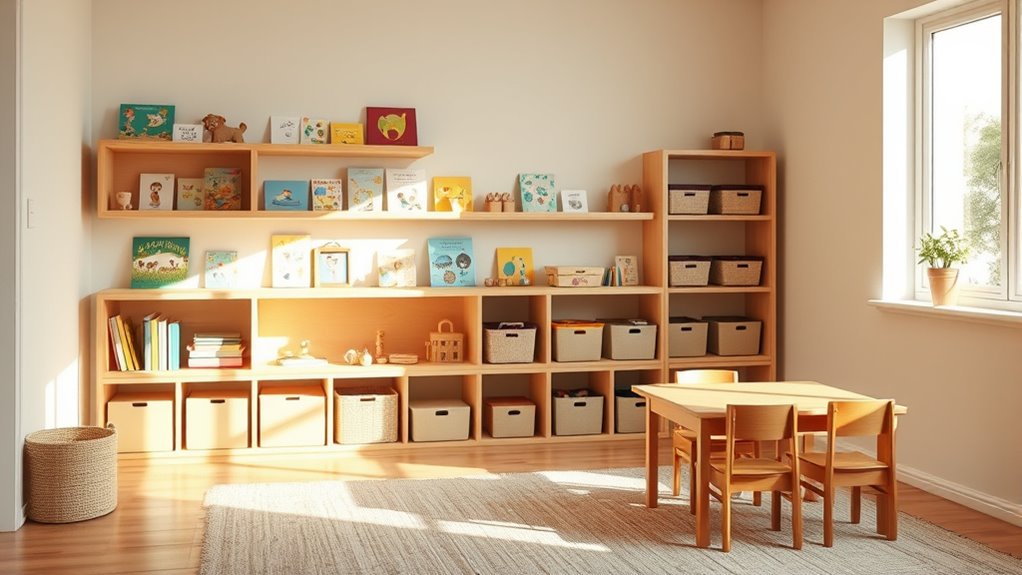
Creating an organized and accessible environment is essential for fostering independence and curiosity in young children. When you design your space thoughtfully, children can easily find and return materials, encouraging self-directed exploration. Incorporate music integration by providing simple instruments or a music corner, inspiring creativity and auditory development. Outdoor play areas should be safe, inviting, and well-equipped with age-appropriate toys and natural elements, inviting children to engage actively with nature. Keep items at their eye level, stored in open containers or low shelves, so they can choose activities independently. This setup promotes confidence and decision-making skills. Additionally, safety features in children’s furnishings and equipment ensure a secure environment, further supporting their independence and exploration. An environment that balances order and freedom motivates children to explore, learn, and develop their natural curiosity with minimal adult intervention. Regularly practicing decluttering helps maintain a tidy space that is conducive to independent play and learning. Incorporating child-friendly storage solutions makes it easier for children to access and put away their belongings, reinforcing their autonomy. Moreover, positive reinforcement can encourage children to participate willingly in tidying up and organizing their space. Furthermore, understanding the optimal angles for pinball machines can serve as a fun analogy for arranging play areas at appropriate heights and angles, promoting better engagement and safety.
Choosing Age-Appropriate Tools and Materials
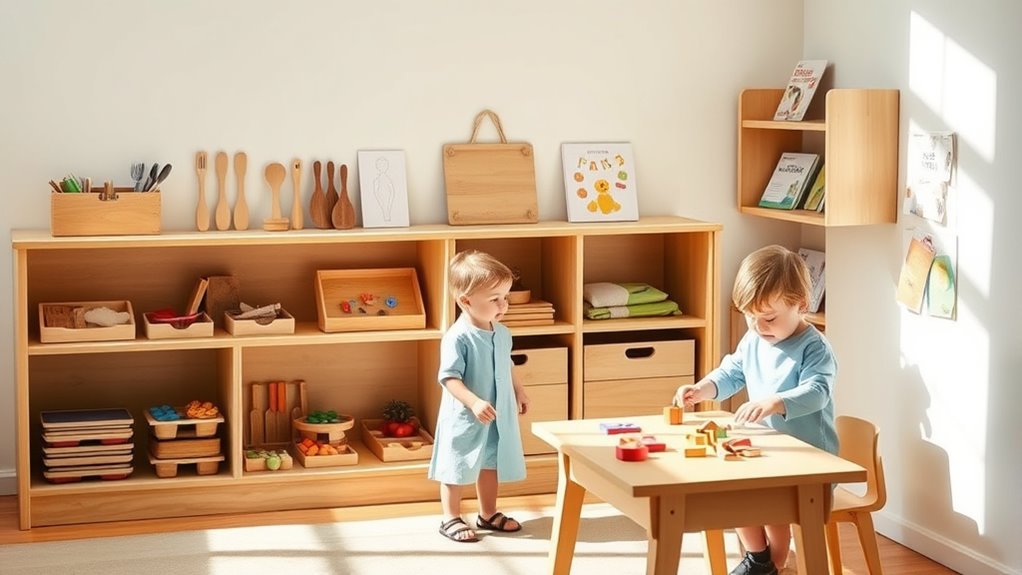
Selecting the right tools and materials for young children means paying close attention to their developmental stages and interests. For sensory activities, choose items that are safe, textured, and easy to manipulate, like soft fabrics, textured balls, or water play setups. These help develop their senses and coordination. When selecting artistic tools, opt for non-toxic crayons, washable paints, and chunky brushes that fit comfortably in little hands. Age-appropriate materials encourage exploration and creativity without frustration. Keep in mind that children thrive with simple, accessible options that match their skill level. By providing tools tailored to their growth, you foster independence and confidence, making learning engaging and fun while supporting their natural curiosity and developmental progress. Incorporating developmentally appropriate tools can further enhance their learning experience and promote autonomous exploration. Additionally, using safe and durable materials ensures the tools remain reliable and secure as children practice new skills. Being mindful of educational value helps select items that support both fun and learning effectively.
Encouraging Self-Feeding and Dressing Skills

To help your little one develop self-feeding and dressing skills, start by choosing utensils and clothing that suit their size and abilities. Practice daily routines, like managing buttons or zippers, to build confidence and independence. Creating a supportive environment with accessible tools encourages your child to practice these essential skills on their own. Incorporating age-appropriate tools can further enhance their learning experience. Additionally, using specialized utensils designed for small hands can make self-feeding more manageable and enjoyable.
Choosing Appropriate Utensils
Choosing the right utensils plays a crucial role in encouraging your little one to develop self-feeding and dressing skills. Using child-sized, easy-to-hold utensils helps build confidence and promotes independence. Select utensils with textured grips and lightweight materials to make handling easier. This encourages good food etiquette and table manners, as your child learns proper use over time. Recognizing the importance of trust issues can also help caregivers understand the emotional readiness of children as they begin to master these new skills. Additionally, selecting utensils made with quality ingredients and formulations can ensure safety and durability during your child’s developmental process. Emphasizing motor skill development can further support your child’s ability to manipulate utensils effectively. Understanding developmental milestones can guide you in choosing appropriate utensils that match your child’s growing abilities. Being mindful of age-appropriate tools can help you select utensils that are suited to your child’s current developmental stage.
Practicing Clothing Management
Encouraging your child to practice clothing management complements their self-feeding skills and fosters independence. Start by introducing simple clothing items, like shirts with clear clothing patterns, to help them recognize how to dress themselves. Encourage them to choose from their seasonal wardrobe, which helps them understand appropriate clothing choices for different weather conditions. Let them practice buttoning, zipping, and pulling on socks, making these tasks engaging and manageable. Label clothing with pictures or words to build their understanding of different garments. As they gain confidence, gradually introduce more complex clothing, always supporting their efforts. Incorporating visual aids such as charts or pictures can further enhance their comprehension of clothing items and dressing steps. This approach nurtures their autonomy and helps develop fine motor skills essential for dressing independently. Using child-friendly clothing that is easy to manipulate can significantly boost their confidence in dressing. Providing clothing management tools, like dressing frames or adaptive clothing, can make the process even more accessible and enjoyable. Additionally, integrating organized storage solutions for clothing helps children learn about tidiness and responsibility in managing their wardrobe. Patience and positive reinforcement make this a rewarding learning experience, especially when understanding the importance of city dynamics and how they relate to daily routines.
Creating Supportive Environment
Creating a supportive environment is essential for helping your child develop self-feeding and dressing skills. You can foster independence by setting up accessible spaces and encouraging positive routines. To enhance your child’s progress:
- Offer child-sized utensils and clothing to promote autonomy.
- Model proper techniques to guide learning through parent involvement.
- Keep routines consistent, giving your child confidence and predictability.
- Engage with community resources, like parenting groups or local workshops, to share tips and support.
Creating Opportunities for Decision-Making
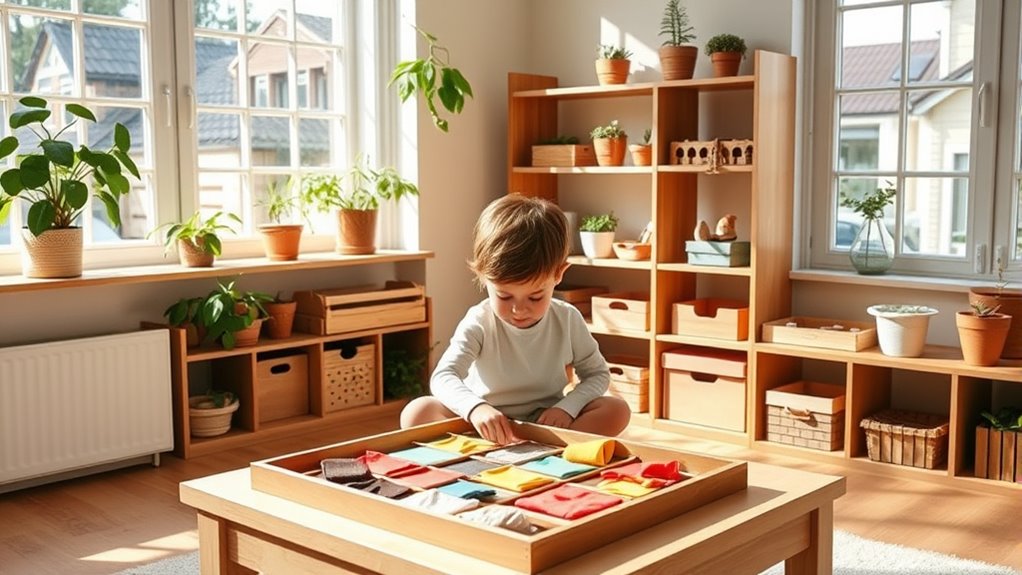
You can foster decision-making by offering your little one choices in daily activities, like selecting what to wear or play. Set up simple choice stations with options to encourage independence and confidence. By paying attention to their personal preferences, you help them develop a sense of ownership and self-awareness.
Choice of Daily Activities
How can children develop confidence and independence? By giving them opportunities to choose their daily activities. When you involve your child in decision-making, they learn to trust their judgment and feel empowered. To support this:
- Offer a curated selection of activities aligned with their interests.
- Encourage peer interactions to foster social skills and shared decision-making.
- Maintain parental involvement to guide choices without taking control.
- Observe their preferences to adapt options over time, promoting autonomy.
This approach helps your little one feel capable and respected, boosting their confidence. It also creates a supportive environment where they can explore interests at their own pace. Balancing guidance with freedom cultivates independence, making daily routines more engaging and meaningful.
Setting Up Choice Stations
Setting up choice stations transforms the concept of decision-making into tangible, accessible opportunities for children. By creating areas dedicated to activities like sensory exploration, you give your little ones the chance to choose what interests them most, fostering independence. These stations encourage children to engage their senses, helping them discover textures, smells, and sounds, which enhances sensory exploration. Additionally, choice stations support language development as children describe their experiences and communicate preferences. Keep the stations simple and organized, offering a variety of options that align with your child’s developmental stage. When children select activities themselves, they build confidence in making decisions and develop critical thinking skills—all within a safe, nurturing environment that promotes autonomy and discovery.
Encouraging Personal Preferences
Encouraging personal preferences helps children develop confidence and a sense of ownership over their choices. By honoring their individual preferences, you foster their personal autonomy and support self-expression. To create opportunities for decision-making, consider these steps:
- Offer a variety of options in daily activities, letting your child choose what excites them.
- Respect their choices, even if they differ from your expectations.
- Guide them to weigh options, helping them understand the consequences of their decisions.
- Celebrate their preferences to boost confidence and reinforce their independence.
This approach nurtures their ability to trust their judgment and embrace their unique interests, laying a foundation for lifelong decision-making skills rooted in personal autonomy.
Supporting Practical Life Skills at Home
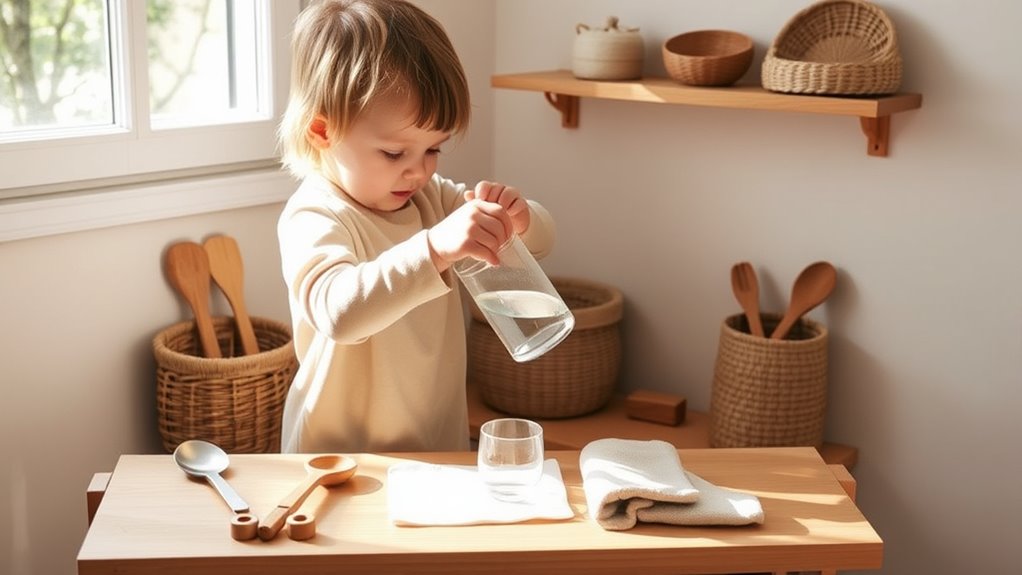
Have you ever wondered how to help your child develop essential life skills right at home? Supporting practical life skills involves creating simple, meaningful activities that foster independence. Use storytelling techniques to make routines engaging, helping your child understand and enjoy daily tasks like tidying up or setting the table. These stories promote emotional development by encouraging patience, responsibility, and confidence. Demonstrate tasks step-by-step, allowing your child to imitate and practice at their own pace. Keep instructions clear and positive, celebrating their efforts. By integrating practical activities into your daily routine, you help your child build essential skills naturally, while nurturing a sense of achievement and emotional resilience. This foundation prepares them for future independence and self-confidence.
Fostering Respect and Responsibility in Daily Routines

As you incorporate practical life activities into daily routines, you also lay the groundwork for teaching your child respect and responsibility. Encourage respectful communication by modeling polite words and listening actively. Involve your child in responsibility sharing by assigning simple tasks like setting the table or tidying up. To reinforce these values:
- Use gentle, respectful language even during disagreements.
- Give your child age-appropriate chores to foster responsibility.
- Discuss the importance of kindness and consideration for others.
- Praise efforts to promote a sense of pride and accountability.
This approach helps your little one understand that respect and responsibility are integral to daily life, empowering them to develop independence while nurturing positive social skills.
Frequently Asked Questions
How Can I Adapt Montessori Principles for Different Household Environments?
To adapt Montessori principles for different household environments, start by observing your space and family routines. Organize your environment to be accessible and safe for your child, regardless of the size or layout. Incorporate routines that promote independence, like simple chores or self-care tasks. Flexibility is key—adjust activities and space organization to fit your family’s unique needs, encouraging your child’s natural curiosity and self-directed learning in any home setting.
What Are Common Challenges in Encouraging Independence at Home?
Encouraging independence at home can be tricky because you might struggle with setting boundaries and managing expectations. You may find it hard to let your child try things on their own without stepping in too much. It’s important to be consistent, communicate clearly, and give them age-appropriate responsibilities. By balancing freedom with boundaries, you help your child build confidence and develop independence naturally.
How Do I Balance Guidance and Freedom for My Child’s Growth?
Think of guiding your child as steering a ship—you’re there to set boundaries but also to encourage exploration. You balance guidance and freedom by creating clear limits that keep them safe while giving them space to discover. Set boundaries wisely, so your child feels secure, yet motivated to explore independently. This approach nurtures confidence and independence, helping your little one grow into a curious, self-reliant explorer.
When Should I Introduce New Skills or Tools to My Child?
You should introduce new skills or tools when timing considerations align with your child’s skill readiness. Watch for signs they’re curious or enthusiastic to learn, and make certain they can handle the task without frustration. Avoid rushing, and give them time to master previous skills. By observing carefully, you’ll naturally find the right moments to introduce new challenges that promote growth without overwhelming them.
How Can I Involve Siblings in Fostering Independence?
Imagine your older sibling helping a younger one set up a snack station. You can encourage sibling teamwork by assigning shared responsibilities, like tidying up or organizing activities together. This involvement fosters independence, teaches cooperation, and builds bonds. When siblings work side by side, they learn valuable skills and develop a sense of pride in contributing. You empower both children, creating a supportive environment that nurtures independence through shared efforts.
Conclusion
By creating an organized, inviting space and offering age-appropriate tools, you help your little ones build independence and confidence. Encourage decision-making and practical skills daily, and teach respect and responsibility in routine activities. Remember, “Give a man a fish, and you feed him for a day; teach a man to fish, and you feed him for a lifetime.” With patience and consistency, you’re guiding your child toward a confident, self-reliant future.