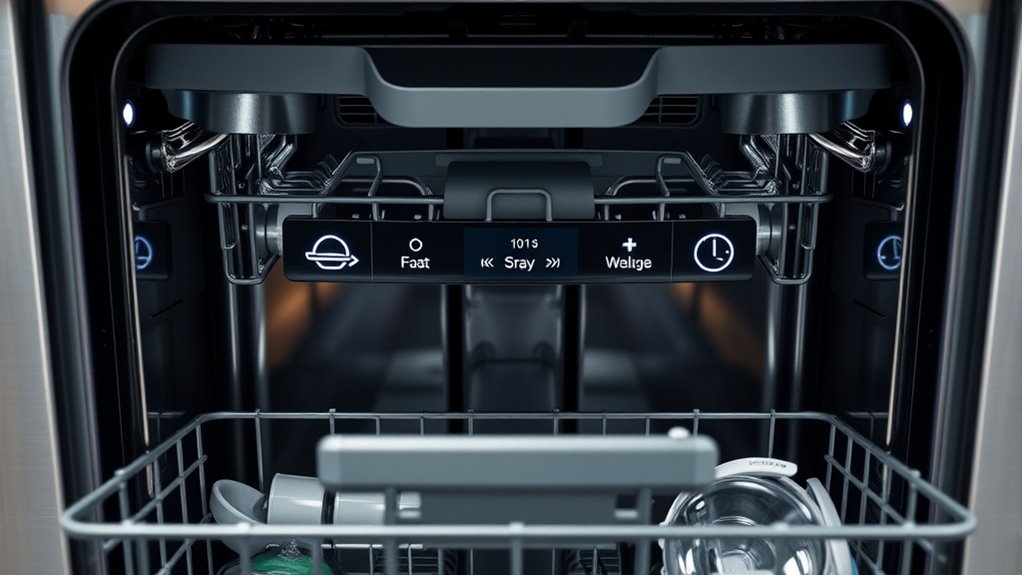

Understanding your dishwasher’s buttons helps you choose the best cycle for each load. The normal or auto cycle handles everyday dishes, while heavy or intensive is great for baked-on food. Quick cycles save time, and specialized options like sanitize ensure hygiene. Many dishwashers let you modify water temperature, soil level, and drying, making cycles more efficient. Knowing what each button does helps you clean better and save energy—discover more tips for smarter washing.
Key Takeaways
- Dishwasher buttons typically select cycles like Normal, Heavy, Quick, or Specialized, each designed for specific soil levels and dish types.
- Many models include customizable options such as soil level, water temperature, drying intensity, and cycle duration.
- Sanitize buttons activate high-temperature cycles to eliminate bacteria and ensure hygienic cleaning.
- Eco or eco-friendly buttons reduce water and energy use, often with shorter cycle durations.
- Understanding each button’s function helps optimize cleaning performance, efficiency, and resource conservation.

Understanding the different dishwasher cycles can help you clean your dishes more effectively and save energy. When you choose the right cycle, you’re not only ensuring your dishes come out spotless but also optimizing the machine’s energy efficiency. Many dishwashers now offer cycle customization options, allowing you to tailor the wash to suit your specific needs. Recognizing what each button does empowers you to make smarter decisions about how you run your dishwasher, which can lead to better results and lower utility bills.
For everyday loads with lightly soiled dishes, the normal or auto cycle is your go-to. These cycles balance cleaning power with energy efficiency, using moderate water temperatures and cycle durations. If your dishes are heavily soiled or have baked-on food, selecting a heavy or intensive cycle is more effective. These cycles typically run longer and use higher water temperatures, providing the extra cleaning oomph needed to tackle stubborn grime. Conversely, if you’re in a hurry or only need a quick refresh, the quick or express cycle saves time while still getting your dishes reasonably clean. However, keep in mind that quick cycles might not be as energy-efficient if your dishes are heavily soiled.
Many modern dishwashers include specialized cycles designed for specific needs. For example, a sanitize cycle uses high water temperatures to eliminate bacteria and ensure your dishes are hygienic. If you’re concerned about energy efficiency, look for eco or eco-friendly cycles. These are designed to use less water and energy by adjusting wash times and temperature settings without sacrificing cleaning quality. Cycle customization further enhances this by allowing you to adjust settings like water temperature, soil level, or drying options. This flexibility helps you optimize each wash for your current load, reducing energy consumption and extending the life of your dishes and dishwasher.
Additionally, some dishwashers incorporate detergent efficiency features that work in tandem with cycle selection to further reduce resource use. Understanding how to navigate these options means you can tailor your wash cycles to maximize energy efficiency and cleaning performance. For lighter loads, opt for shorter, eco-friendly cycles that conserve water and electricity. For heavily soiled dishes, a longer, more intensive cycle might be necessary, but you can still customize settings to reduce unnecessary energy use when possible. By mastering these options, you’re not just cleaning smarter—you’re also being more environmentally conscious and saving money over time. The key is knowing which cycle to select for each situation and adjusting it as needed. When you do, you’ll find your dishes come out spotless, your energy bills stay manageable, and you make the most of your dishwasher’s features.
Frequently Asked Questions
Can I Customize Dishwasher Cycles for Specific Loads?
Yes, you can customize dishwasher cycles for specific loads. Many models offer cycle customization options, allowing you to adjust settings for different dishes. Use load-specific settings to select the right combination of water temperature, cycle length, and drying options. This way, you optimize cleaning performance and energy efficiency based on the type of load you’re washing. Always check your dishwasher’s manual for instructions on how to customize cycles effectively.
Do All Dishwasher Buttons Work the Same Across Brands?
Imagine pressing a button and feeling a familiar click, but across brands, those buttons don’t always perform the same. Brand variations mean button functionalities can differ—what starts a heavy wash on one might be a quick rinse on another. You need to read each dishwasher’s manual because button labels and functions aren’t universal. Understanding these differences guarantees you’ll select the right cycle for each load, avoiding surprises and ensuring sparkling dishes every time.
How Do Energy-Efficient Cycles Differ From Standard Ones?
Energy-efficient cycles, like eco-friendly settings, use less power and water compared to standard ones. You’ll notice they often run longer but save on power consumption differences, making them better for the environment and your utility bills. These cycles focus on lower temperatures and gentle washing, which helps reduce energy use without sacrificing cleanliness. If you’re looking to save energy, choosing eco-friendly settings is a smart move that benefits both your wallet and the planet.
Are There Any Safety Features Linked to Cycle Buttons?
You’re right to ask if cycle buttons have safety features—absolutely, they do. Many dishwashers include safety sensors that detect issues like leaks or overloading, preventing accidents. A child lock feature acts as a guardian angel, keeping little hands from tampering with buttons mid-cycle. These safety measures are designed to give you peace of mind, so you can rest assured your dishwasher operates safely and efficiently.
Can I Cancel a Cycle Once It Has Started?
Yes, you can usually cancel a cycle once it has started by using the cycle interruption feature. To do this, press the cancel or reset button, which often acts as a button reset for the dishwasher. This stops the current cycle and allows you to restart or select a new one. Keep in mind that some models might have specific steps, so check your user manual if needed.
Conclusion
Now that you know what each dishwasher cycle does, you’re practically a cleaning superhero. With just a few button presses, you can conquer even the messiest dishes in record time—no stain or leftover food stands a chance! Remember, choosing the right cycle saves water, energy, and your sanity. So go ahead, master your dishwasher, and turn your kitchen into a spotless paradise—you’re now equipped to handle anything the mess throws your way!