Induction cooking heats food quickly by directly transferring electromagnetic energy into compatible cookware, making it faster and more efficient than traditional stoves. It only heats when a ferromagnetic pan is placed on the surface and turns off if the pan is removed, reducing safety risks. However, some pans fail because they aren’t made of the right material or don’t make proper contact. Keep exploring to understand how to choose the right cookware for your induction stove.

Get the little things that make your day delivered free with Prime
- Fast, free delivery on millions of items
- Prime Video, Amazon Music and more included
- Member-only deals all year
Key Takeaways
- Induction cooking heats cookware directly via electromagnetic fields, enabling rapid and efficient heat transfer.
- Compatibility depends on using ferromagnetic pans like cast iron or certain stainless steels; incompatible pans won’t heat.
- Pans with warped or thin bases can cause uneven heating or fail to activate the induction process.
- Proper contact between the pan and the cooktop is essential for optimal performance and speed.
- Safety features turn off the induction stove if incompatible or no cookware is detected, preventing mishaps.
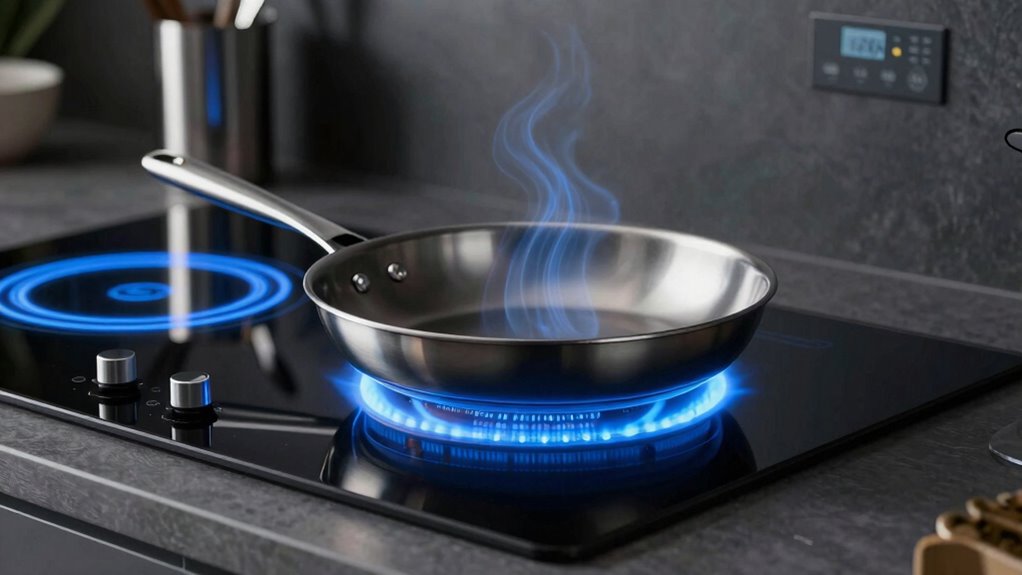
Have you ever wondered how induction cooking works? It’s a fascinating process that uses electromagnetic fields to directly heat your cookware, making it one of the fastest ways to cook. Unlike traditional methods that heat the cooktop surface first, induction technology transfers energy directly into the pan, which then heats your food quickly and efficiently. But with this innovative method come important safety considerations. Because induction cooktops only generate heat when a compatible pan is placed on them and are designed to turn off automatically if the pan is removed, they reduce the risk of accidental burns or fires. This makes induction cooking one of the safest options available, especially in households with children. However, it’s still essential to follow manufacturer guidelines and ensure your cookware is suitable, as incompatible pans won’t heat up and could cause frustration or safety issues.
Energy efficiency is another big advantage of induction cooking. Since it transfers energy directly into the pan, there’s less heat loss compared to gas or traditional electric stoves. This means you use less energy to cook your meals, which can save you money and reduce your household’s environmental footprint. In addition, because the cooktop surface itself doesn’t get hot unless a pan is present, there’s minimal wasted heat, and the kitchen stays cooler overall. This efficiency not only shortens cooking times but also helps maintain a comfortable kitchen environment. For busy households looking to save time and energy, induction offers a compelling solution.
However, not all pans work with induction cooktops, which is a common reason some pans fail during use. The key requirement is that the cookware must be made of or contain a ferromagnetic material, such as cast iron or some stainless steels. If your pan isn’t compatible, it won’t respond to the electromagnetic field, and you’ll see no heat transfer. Sometimes, even with the right material, the base of the pan might be too thin or warped, preventing proper contact and resulting in uneven heating or complete failure to heat. It’s important to check whether your cookware is induction-compatible before you start cooking, as using incompatible pans can lead to frustration and the perception that the induction stove isn’t working properly. To conclude, while induction cooking offers speed, energy efficiency, and safety, understanding the right cookware and following safety considerations ensures you get the best experience without surprises.
As an affiliate, we earn on qualifying purchases.
Frequently Asked Questions
Can Induction Cooktops Be Used Outdoors?
Yes, you can use induction cooktops outdoors, especially if you want portable cooking options. Just make certain the cooktop is designed for outdoor durability, meaning it can withstand moisture, temperature changes, and rough handling. Keep it on a stable surface, protect it from direct rain, and use appropriate cookware with ferrous bases. This way, you enjoy fast, efficient cooking outside without worrying about damage.
Are Induction Cooktops Energy-Efficient Compared to Gas?
Imagine your kitchen as a garden where energy savings bloom. Induction cooktops are more energy-efficient than gas because they transfer heat directly to your pans, reducing wasted energy. This means lower electricity bills and a smaller environmental impact. You’ll cook faster, use less power, and help preserve the environment, making induction a smart, eco-friendly choice that’s both efficient and sustainable for your home.
What Safety Features Do Induction Stoves Have?
Induction stoves come with safety features like safety sensors that detect overheating or unusual activity, automatically shutting off to prevent accidents. You’ll also find a child lock function, which locks the controls to keep little hands from changing settings or turning on the stove unexpectedly. These features make induction cooking safer, giving you peace of mind while preparing meals, especially in households with kids.
How Do I Clean an Induction Cooktop Properly?
Cleaning your induction cooktop is like tending a delicate garden. To keep it shining, use gentle cleaning tips and avoid abrasive scrubbers. Start by wiping with a soft cloth and a mild cleaner, then tackle stubborn stains with a mixture of baking soda and water. For stain removal, apply the paste, let it sit, and gently buff away residue. Regular care guarantees your cooktop stays sleek and efficient.
Do Induction Cooktops Emit Harmful Radiation?
You don’t need to worry about harmful radiation from induction cooktops. They emit electromagnetic fields, but these are low-level and controlled, posing minimal biological effects. Experts say that when used properly, induction cooking is safe because the electromagnetic energy doesn’t escape the cooktop’s surface. So, while electromagnetic fields are present, they’re not strong enough to cause health issues, making induction a safe and efficient cooking method.
Conclusion
So, now you know the incredible speed and precision of induction cooking—it’s like having a secret culinary superpower! But beware, not every pan can handle this high-tech magic; some will flat-out refuse to work, no matter how much you wish they would. Embrace the challenge, choose the right cookware, and watch your kitchen transform into a lightning-fast, ultra-efficient wonderland. Once you go induction, there’s no turning back—your cooking will never be the same again!
Fall Picks
fall essentials
As an affiliate, we earn on qualifying purchases.