To keep your air purifier working well, understand that HEPA filters trap tiny particles like dust, pollen, and bacteria, so regular cleaning or replacement is key—usually every 6 to 12 months. Check the CADR rating to guarantee it cleans effectively for your room size, and place the unit in an ideal spot for airflow. Proper maintenance and understanding filtering capabilities help maximize performance, so explore further to enhance your indoor air quality.

Get the little things that make your day delivered free — and shop member deals
- Fast, free delivery on millions of items
- Access to Prime Big Deal Days deals on October 6–7
- Prime Video, Amazon Music and more included
Key Takeaways
- HEPA filters effectively trap microscopic particles like dust, pollen, and bacteria, improving indoor air quality.
- CADR ratings measure how quickly and thoroughly an air purifier cleans specific room sizes for pollutants like smoke, dust, and pollen.
- Regular filter maintenance, including timely replacements, ensures optimal purifier performance and prevents reduced airflow.
- High-quality filters enhance pollutant removal efficiency and should be replaced every 6 to 12 months for consistent effectiveness.
- Proper placement of the purifier in the room maximizes airflow and pollutant removal, boosting overall air cleaning efficiency.
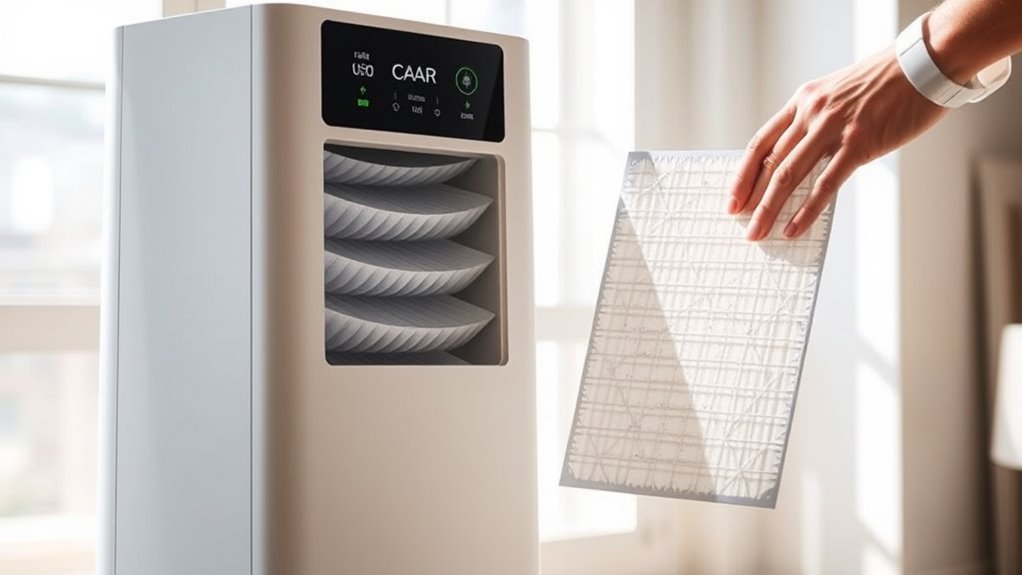
Have you ever wondered how air purifiers improve the quality of indoor air? The secret lies in their filters and how effectively they remove pollutants. One of the most efficient options available is HEPA filtration. HEPA filters are designed to trap tiny particles, including dust, pollen, pet dander, smoke, and even some bacteria and viruses. When air passes through a HEPA filter, these microscopic contaminants get caught, greatly reducing airborne pollutants. This makes HEPA-equipped purifiers ideal for allergy sufferers or anyone looking to enhance overall air quality. But it’s not just about having a HEPA filter; understanding the purifier’s CADR ratings is equally crucial. CADR, or Clean Air Delivery Rate, measures how quickly and effectively an air purifier can clean a specific size of room. Think of it as the purifier’s performance score—higher CADR ratings mean faster and more thorough air cleaning. For example, if you have a large living room, you’ll want a purifier with a high CADR to ensure it can cycle all the air multiple times per hour. When choosing an air purifier, check the CADR ratings for smoke, dust, and pollen, as these give you a good idea of how well the unit handles different pollutants. The higher the ratings in these categories, the better it is at removing those specific particles. Keep in mind, a high CADR doesn’t just mean faster cleaning; it also indicates that the purifier is suitable for your room size. If you buy a model with a low CADR for a large space, it won’t be as effective, and pollutants may linger longer. Besides filter quality and CADR, maintenance plays a crucial role in maintaining your purifier’s effectiveness. Regularly replacing or cleaning filters guarantees peak performance. HEPA filters typically need changing every 6 to 12 months, depending on usage and air quality. Some purifiers have indicator lights that notify you when it’s time for a new filter, which helps prevent you from forgetting. Neglecting maintenance can lead to clogged filters, reducing airflow and overall efficiency, and potentially allowing pollutants to bypass the filter altogether. Proper placement of your air purifier also matters—placing it in the center of a room or near pollution sources maximizes its efficiency. Keep vents unobstructed and avoid placing it in corners or tight spaces. Additionally, understanding air quality factors can help you select the right device and optimize its performance. By understanding the importance of HEPA filtration, paying attention to CADR ratings, and maintaining your device regularly, you’ll ensure your indoor air stays clean and healthy. This simple knowledge can make a noticeable difference in your environment, helping you breathe easier and enjoy a fresher, healthier space.
HEPA air purifier replacement filters
As an affiliate, we earn on qualifying purchases.
As an affiliate, we earn on qualifying purchases.
Frequently Asked Questions
How Often Should I Replace My Air Purifier Filters?
You should replace your air purifier filters every 6 to 12 months, depending on usage and filter lifespan. Check your device’s replacement schedule and monitor filter condition regularly. If you notice reduced airflow or odors persisting, it’s time for a replacement. Regularly maintaining and replacing filters guarantees peak performance, improves indoor air quality, and extends your purifier’s lifespan. Don’t wait until the filter is clogged; stay proactive with your maintenance schedule.
What Size Room Is My Air Purifier Suitable For?
Imagine breathing cleaner air every day—you need a purifier that matches your space. Your air purifier suits a room size that aligns with its filter capacity and CADR rating. If you choose one too small, pollutants linger; too large, and you’re wasting energy. Check the manufacturer’s recommendations for room size compatibility, ensuring your filter capacity handles your space perfectly. Don’t settle—optimize your air quality now.
Can Air Purifiers Remove Viruses and Bacteria Effectively?
Yes, many air purifiers can effectively remove viruses and bacteria through viral removal and bacteria filtration. Look for models with HEPA filters, which trap particles as small as 0.3 microns, including airborne viruses and bacteria. Regular maintenance enhances their effectiveness, so change filters as recommended. Keep in mind, while they reduce airborne pathogens, they shouldn’t replace other health precautions like vaccination and good hygiene.
Do All Filters Require Replacement at the Same Time?
Not all filters need replacement simultaneously. Different filter types, like HEPA, activated carbon, or pre-filters, have varying replacement schedules based on usage and dirt accumulation. You might find your pre-filter needs changing every few months, while HEPA filters last longer. Check your purifier’s guidelines and monitor filter condition regularly. This way, you guarantee peak air quality without replacing all filters at once, saving you money and effort.
How Does CADR Impact Real-World Air Cleaning Performance?
The CADR significance lies in how it measures an air purifier’s efficiency at clearing specific pollutants, directly impacting real-world air cleaning performance. A higher CADR means faster air exchange rate, so you’ll notice cleaner air more quickly. It helps you choose a purifier suited to your room size, ensuring it keeps up with pollution levels. Ultimately, a higher CADR improves the overall air quality in your space efficiently.
Conclusion
Now that you know the essentials of filters, CADR, and maintenance, you’re better equipped to choose and care for your air purifier. Think of it as tending a garden—you need to nurture it regularly to keep the air invigorating and clean. With simple steps and a little attention, your purifier will work like a gust of fresh air every day, turning your space into a sanctuary of pure, clean air you can truly enjoy.
NFL season / tailgating Picks
team gear
As an affiliate, we earn on qualifying purchases.