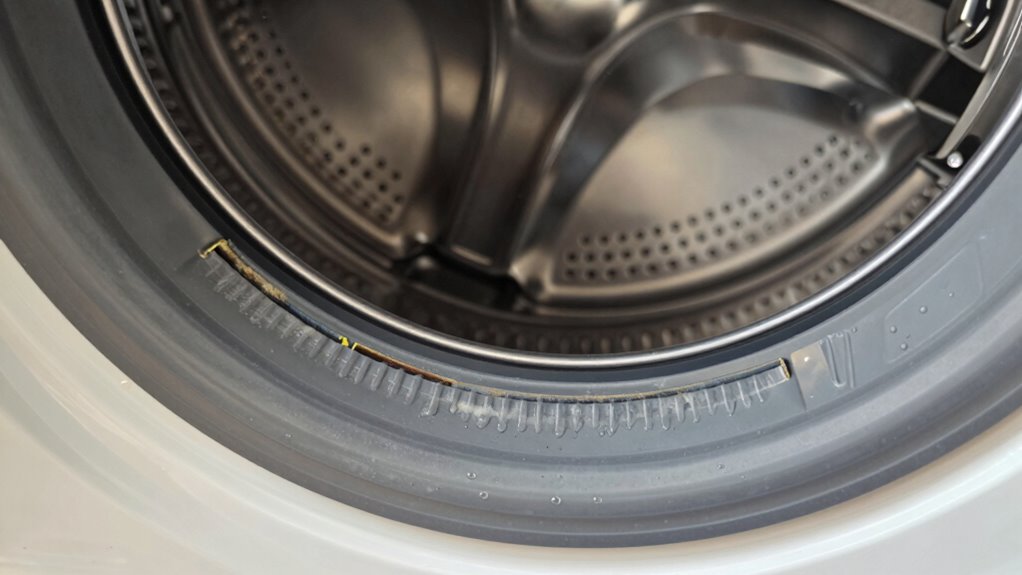

Many people overlook the rubber gasket when trying to fix washer odors, but it’s often the main cause. Soap residue, dirt, and mold hide in the gasket folds, creating persistent musty smells. Regularly wiping down this area with water and mild cleaner, and leaving the door slightly open after each cycle, can prevent mold buildup. Want to discover the best techniques to keep your washer fresh? Keep going for essential tips you shouldn’t miss.
Key Takeaways
- Regularly wipe the rubber gasket folds to remove mold, soap residue, and dirt where odors originate.
- Leave the washer door slightly ajar after cycles to allow the gasket to dry completely.
- Clean the gasket with water and a mild mildew cleaner to prevent mold buildup.
- Avoid overusing detergent, which can cause residue and mold in gasket creases.
- Run periodic hot water cycles with vinegar or washer cleaner to eliminate hidden mold and odors.

If your washer starts to smell musty or sour, you’re not alone—this is a common issue many homeowners face. The culprit is often detergent buildup and mold that develop in hidden areas of your machine. Many people overlook the rubber gasket around the door, but it’s a vital spot for mold prevention and odor control. When soap, fabric softener, and dirt accumulate in the gasket folds, they create a breeding ground for mold and mildew, leading to persistent smells. Regular cleaning of this area is essential to keep your washer fresh and odor-free.
Regularly clean the rubber gasket to prevent mold and odors in your washing machine.
To tackle this, you should wipe down the rubber gasket regularly, especially after each laundry cycle. Use a mixture of water and a mild detergent, or a dedicated mildew cleaner, to remove any residue. Pay close attention to the folds and crevices where dirt and detergent tend to hide. It’s also helpful to leave the door slightly ajar after washing to allow the gasket and drum to dry completely. This simple step prevents moisture buildup that promotes mold growth, effectively supporting mold prevention.
In addition to cleaning the gasket, it’s essential to address detergent buildup inside the machine itself. Excess detergent often doesn’t rinse out completely, especially if you’re using too much or if your washer isn’t draining properly. Over time, this buildup can harbor bacteria and mold, causing unpleasant odors to linger. To prevent this, always measure your detergent carefully and run regular cleaning cycles with hot water and a washer cleaner or white vinegar. This helps break down soap scum and residues, reducing the chances for mold and mildew to form.
Another tip is to wipe down the detergent dispenser regularly, since leftover soap and fabric softener can accumulate there as well. These areas are often forgotten but are just as important for odor control and mold prevention. Running an occasional hot wash cycle with a cup of vinegar or baking soda can keep your washer smelling fresh and functioning efficiently. Remember to leave the door open after cleaning cycles, particularly if you notice any lingering dampness, to allow everything to dry thoroughly. Proper maintenance routines help prevent mold buildup in hidden areas like the rubber gasket, which is key to avoiding persistent odors.

ACTIVE Mold Stain Remover Gel Cleaner Heavy Duty Stain Cleaner for Front Loader Washing Machine Seal, Bathroom Grout, Shower, Caulk – Front Load Washer Cleaning Solution – 7 Fl Oz
- Fast and Effective Cleaning: Instantly removes mold and grime
- Versatile Cleaning Uses: Cleans washers, grout, showers, and more
- Easy to Apply: Gel formula for targeted application
As an affiliate, we earn on qualifying purchases.
As an affiliate, we earn on qualifying purchases.
Frequently Asked Questions
How Often Should I Clean My Washer’s Rubber Gasket?
You should clean your washer’s rubber gasket at least once a month to prevent odors. Follow a regular maintenance schedule to keep mold and mildew at bay. Use simple cleaning techniques like wiping the gasket with a mixture of vinegar and water or a mild detergent. Make sure to reach into crevices and dry thoroughly afterward. Consistent cleaning guarantees your washer stays fresh and odor-free.
Can Using Too Much Detergent Cause Washer Odors?
Imagine your laundry room, where a cloud of soap residue lingers like a forgotten secret. Using too much detergent causes buildup, trapping moisture and creating a breeding ground for odors. This excess soap doesn’t rinse away completely, leading to persistent smells. So, you should stick to the recommended amount. Less detergent means less buildup, helping your washer stay fresh and odor-free, just like that first clean load.
Are There Specific Products Recommended for Gasket Cleaning?
You should use gentle, effective products like white vinegar or specialized gasket cleaning sprays for gasket cleaning. Avoid harsh chemicals that could damage the rubber. Look for product recommendations from the manufacturer or trusted appliance brands to guarantee compatibility. Regularly cleaning the gasket with these recommended products helps prevent mold and odor buildup, keeping your washer fresh and functioning properly. Always follow the instructions for the best results.
Does Frequent Opening of the Washer Prevent Odors?
Yes, frequent opening of your washer can help prevent odors by allowing moisture to escape, reducing moisture retention that fosters bacteria and mold growth. This helps prevent detergent buildup and keeps the gasket dry, which are common causes of unpleasant smells. Just make sure to leave the door slightly ajar after each use, so air circulates and the gasket stays dry, minimizing odor-causing moisture and buildup.
What Are Signs of Mold Growth on the Gasket?
Ever wonder how to spot mold growth on your washer gasket? Look for visible black or greenish spots, a musty smell, or slimy residue around the gasket edges. These signs indicate mold, risking odor and damage. To prevent mold, focus on gasket maintenance and keep the seal dry after each wash. Regular inspections help catch issues early, ensuring your washer stays fresh and mold-free.
Conclusion
Don’t let a hidden rubber gasket mistake keep your washer smelling fresh. By regularly inspecting and cleaning this small detail, you prevent mold buildup and lingering odors. Imagine opening your laundry room and being greeted by a clean, crisp scent every time. It’s a simple step that makes a big difference—so take a moment to check that gasket today. Your clothes will thank you, and so will your nose!