
To prevent splatter, always guarantee your pressure cooker’s safety features are in top shape before use. Check that the pressure valve and sealing ring are clean, intact, and properly installed. Lock the lid tightly and set the pressure valve correctly. Regularly inspect and maintain these parts to avoid leaks or buildup. Paying attention to these safety habits keeps cooking mess-free and safer. Keep going to find out more tips to ensure safe, splatter-free pressure cooking.

Get the little things that make your day delivered free with Prime
- Fast, free delivery on millions of items
- Prime Video, Amazon Music and more included
- Member-only deals all year
Key Takeaways
- Always release pressure safely before opening the lid to prevent splatter.
- Regularly inspect and maintain the sealing ring for a proper airtight seal.
- Check and clean the pressure valve before each use to ensure proper pressure regulation.
- Lock the lid securely and set the pressure valve correctly during operation.
- Avoid forcefully opening the cooker while still under pressure to prevent splatter and accidents.
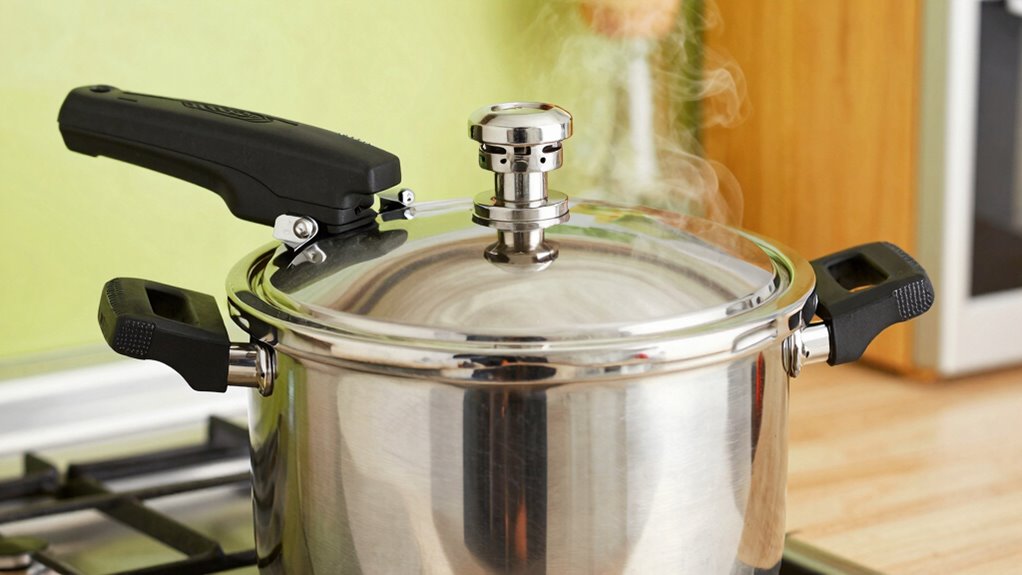
Have you ever wondered what it takes to cook safely with a pressure cooker? It’s not just about throwing ingredients into the pot and turning on the heat. A key part of safe pressure cooking is understanding how your cooker’s safety mechanisms work, especially the pressure valve and sealing ring. These components are your first line of defense against accidents, and taking care of them is essential to prevent splatter and ensure your meals come out perfectly.
Understanding your pressure cooker’s safety features is essential for safe, mess-free cooking.
The pressure valve is designed to regulate the internal pressure of your cooker. It releases steam when the pressure reaches a certain level, preventing dangerous buildup. To keep this safety feature functioning correctly, always check that the pressure valve is clean and free of debris before each use. A clogged valve can cause pressure to build up unexpectedly, risking leaks or even explosions. Make it a habit to inspect and, if necessary, clean the valve with a soft brush or a toothpick. Never force it, and always follow the manufacturer’s instructions. Regular pressure relief component inspections are vital for maintaining safety. Additionally, understanding the pressure regulation process helps you operate your cooker more confidently. Proper pressure management also involves knowing how to adjust heat levels to maintain consistent pressure throughout cooking. Maintaining these safety features is crucial for preventing splatter and ensuring a smooth cooking experience.
The sealing ring, often overlooked, plays a critical role in maintaining the correct pressure inside the cooker. It creates an airtight seal between the lid and the pot, allowing pressure to build safely. Over time, the sealing ring can deteriorate, crack, or become warped, which compromises the seal. Always examine the sealing ring before cooking; if you notice any damage or if it’s become hard or brittle, replace it immediately. Proper installation of the sealing ring is also essential—make sure it sits snugly in its groove without any twists or gaps. Regularly inspecting the pressure release components helps ensure your cooker remains safe to use.
Using your pressure cooker correctly also involves following the right procedures. Always lock the lid firmly in place and ensure the pressure valve is set to the proper position. When you start cooking, keep an eye on the pressure indicator or gauge to monitor pressure levels. If you see steam escaping from anywhere other than the pressure valve, turn off the heat immediately and release the pressure. This quick response can prevent splatter and messy accidents.
Lastly, once cooking is complete, always release pressure safely before opening the lid. Use the natural release method or follow the manufacturer’s instructions for quick release, but never force the lid open while the cooker is still pressurized. Proper maintenance of the pressure valve and sealing ring, combined with attentive operation, makes pressure cooking safer and helps you avoid splatter or other hazards. With these habits, you’ll master pressure cooker safety and enjoy stress-free cooking every time.
pressure cooker sealing ring replacement
As an affiliate, we earn on qualifying purchases.
As an affiliate, we earn on qualifying purchases.
Frequently Asked Questions
Can I Open a Pressure Cooker During Cooking?
You shouldn’t open a pressure cooker during cooking. Always wait for the steam release and guarantee the lid is unlocked before opening. The lid locking mechanism prevents accidental opening when the cooker is under pressure, which can cause dangerous splatter. Rushing to open it risks burns or other injuries. Stay patient, follow the safety instructions, and let the pressure release completely before opening, keeping yourself safe from splatter or burns.
How Often Should I Replace Pressure Cooker Gaskets?
You should replace your pressure cooker gasket every 1 to 2 years, or sooner if you notice cracks, tears, or a persistent odor. Regular gasket inspection helps catch signs of wear early, preventing leaks and ensuring safety. Think of the gasket as an essential seal, like a tire’s valve, that needs replacing when it loses its flexibility or shows visible damage. Keep a close eye, and replace on the recommended schedule for peace of mind.
Is It Safe to Cook With a Damaged Pressure Cooker?
You shouldn’t cook with a damaged pressure cooker, as it compromises kitchen safety tips and overall safety. Damaged parts can lead to leaks, pressure buildup, or even explosions. Proper pressure cooker maintenance is essential—regularly check gaskets, valves, and seals for wear. If you notice any damage, replace faulty parts immediately. Always make sure your pressure cooker is in good condition before use to prevent accidents and guarantee safe, efficient cooking.
What Are Common Signs of a Faulty Pressure Release Valve?
You’ll notice a faulty pressure release valve if there’s a pressure release malfunction or if the valve shows signs of corrosion. Common signs include difficulty releasing steam, hissing sounds, or if the valve feels sticky or stuck. Corrosion can weaken the valve, leading to potential safety hazards. If you see these issues, it’s best to replace the valve immediately to prevent accidents and guarantee your pressure cooker functions safely.
Can Pressure Cookers Be Used on Induction Stovetops?
Absolutely, you can use pressure cookers on induction stovetops—if they’re induction compatible! Just imagine, your fancy cooker dancing happily on the magnetic field, performing stovetop safety magic. Check the bottom of your pressure cooker for an induction-compatible symbol; otherwise, you’re risking a kitchen fireworks show. Using an incompatible cooker on induction isn’t just unsafe; it’s like bringing a spoon to a gunfight. Choose wisely!
Conclusion
To keep yourself safe, always release pressure properly and avoid overfilling your cooker. Imagine you’re preparing a hearty stew, and suddenly, the lid blows off due to excess pressure—messy and dangerous. By developing the habit of checking your cooker’s valves and following safety guidelines, you prevent splatters and accidents. Remember, a little caution goes a long way in making pressure cooking both safe and enjoyable, so stay vigilant with each use.
NFL season / tailgating Picks
team gear
As an affiliate, we earn on qualifying purchases.