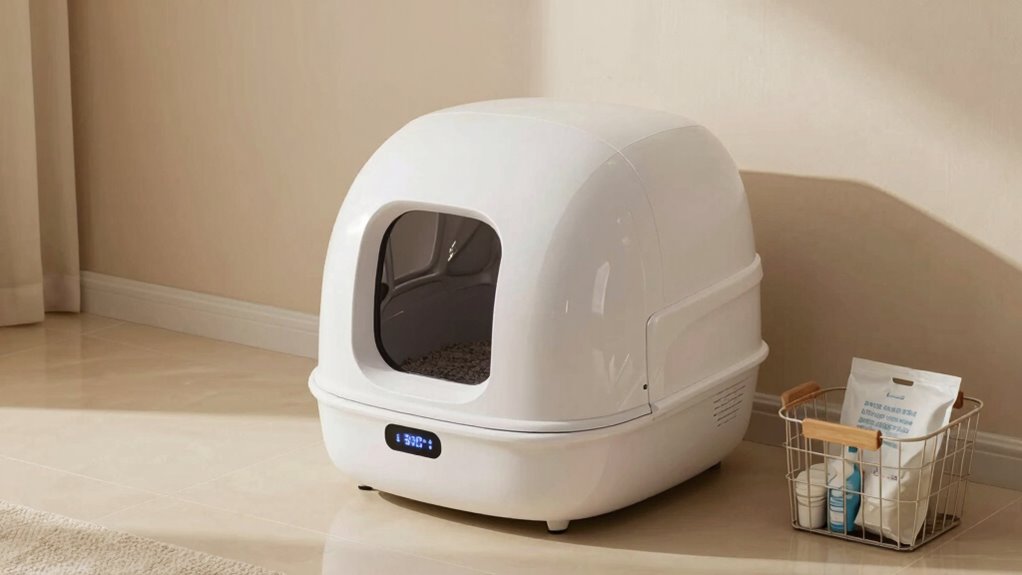

To fix smells in your self-cleaning litter box, stick to a regular maintenance routine. Check and replace the litter weekly or biweekly, depending on usage, and choose quality, odor-control types. Clean the exterior and filters often, and keep the unit in a well-ventilated spot. Proper ventilation and consistent upkeep prevent odors from accumulating. If you keep up this schedule, you’ll find it easier to keep your home smelling fresh. More tips await if you continue.
Key Takeaways
- Regularly replace and top off litter to prevent saturation and odor buildup.
- Clean filters and ventilation components weekly to maintain scent neutralization.
- Place the litter box in a well-ventilated area to disperse odors effectively.
- Wipe down the exterior and surrounding surfaces regularly to reduce odor particles.
- Establish a consistent maintenance schedule aligned with your cat’s habits for optimal odor control.
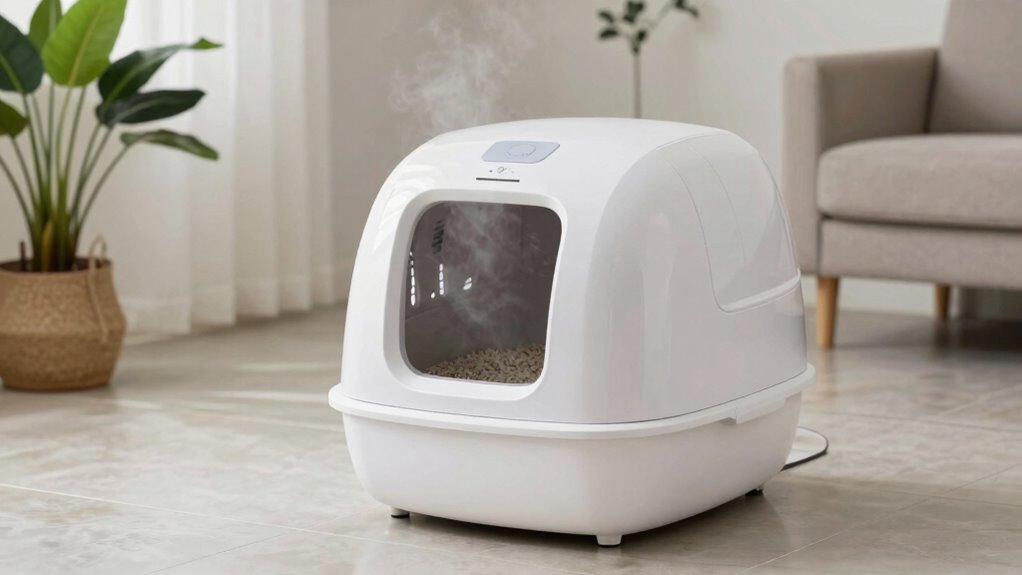
If you’ve ever been overwhelmed by the persistent smell of a litter box, you’re not alone. Even with a self-cleaning litter box, odor can still become an issue if you don’t establish a proper maintenance rhythm. The key lies in understanding how to optimize odor absorption and scent neutralization, guaranteeing your space stays fresh and inviting. Self-cleaning units are designed to handle most of the work, but they aren’t magic. To keep smells at bay, you need to stay proactive and consistent.
One of the most effective ways to maintain a fresh environment is to regularly check and replace the litter. Even the best self-cleaning systems rely on quality litter to absorb moisture and trap odors. When you use clumping or odor-control litter, you’re giving yourself an advantage because these types are formulated for odor absorption. Replacing the litter at regular intervals prevents it from becoming saturated, which can cause the smell to seep out. Depending on your cat’s usage, this might mean every week or every two weeks, but sticking to a schedule is vital. Ensuring you use the right litter type can make a significant difference in odor control.
In addition to changing the litter, you should pay attention to the built-in ventilation features of your self-cleaning box. Many models come with filters or activated charcoal components designed for scent neutralization. These filters work best when replaced or cleaned as recommended by the manufacturer. Regular maintenance of the filtration system ensures that odors don’t accumulate and leak into your home. Pairing this with a good air purifier nearby can further help trap any residual smells, creating a double layer of odor control. Understanding the importance of proper ventilation can greatly enhance your odor management efforts. Additionally, ensuring proper air circulation around the unit can help disperse any lingering odors more effectively.
Cleaning the exterior of the unit is another step that shouldn’t be overlooked. Dust, pet hair, and residual odor particles can settle on surfaces, adding to the overall smell. Wiping down the exterior with a mild cleaner keeps the area hygienic and reduces the chance of odors escaping from unnoticed buildup. Also, consider the placement of your litter box—placing it in a well-ventilated area or inside a designated, ventilated enclosure can make a notable difference in scent control.
Finally, establishing a maintenance rhythm that aligns with your cat’s habits and your schedule guarantees that odor absorption and scent neutralization happen seamlessly. Staying consistent—whether that’s weekly litter changes, filter replacements, or exterior cleanings—prevents odors from building up. When you make this routine a habit, you’ll find that your self-cleaning litter box becomes an efficient tool for odor control, rather than a source of frustration. Incorporating proper ventilation features and understanding your unit’s capabilities can significantly enhance odor management. With a little effort and planning, you can enjoy a fresh-smelling home without constantly battling odors from your feline friend’s litter box.

Replacement Filter for PETLIBRO Luma Automatic Self Cleaning Litter Box, Odor Control Filter Insert, Easy Installation, Cat Litter Box Accessory
- Compatible with Luma Litter Box: Fits original filter compartment
- Odor Reduction: Activated carbon controls odors
- High-Quality Carbon: 800 iodine value for stability
As an affiliate, we earn on qualifying purchases.
As an affiliate, we earn on qualifying purchases.
Frequently Asked Questions
How Often Should I Replace the Litter in a Self-Cleaning Box?
You should replace the litter in your self-cleaning box every 1 to 2 weeks, depending on usage. Regular litter disposal helps control odors and maintain odor absorption. Keep an eye on how your cat uses the box, and if you notice strong smells or clumping, it’s time for fresh litter. Frequent cleaning and timely litter replacement guarantee your box stays odor-free and fresh for both you and your cat.
Can I Use Air Fresheners With a Self-Cleaning Litter Box?
Yes, you can use air fresheners with a self-cleaning litter box, but you should prioritize air freshener safety. Choose scent alternatives like natural sprays or activated charcoal filters that don’t interfere with your cat’s health or the box’s operation. Avoid strong chemical air fresheners, as they might upset your cat’s senses or cause respiratory issues. Always monitor your pet’s reactions and opt for gentle, pet-safe options.
What Are Common Causes of Persistent Odor Despite Maintenance?
Did you know that up to 70% of persistent odor comes from poor ventilation? If odors stick around despite regular maintenance, it’s likely due to insufficient odor absorption or airflow. Improve ventilation to help odors escape, and consider using odor-absorbing materials around the box. Regularly clean the area and check filters or vents. These steps can drastically reduce lingering smells, keeping your space fresher longer.
Is There a Specific Type of Litter That Reduces Smell Better?
Yes, some litters are better at reducing smell. Look for a litter with strong odor control features and high litter absorption capacity. Clumping litters with activated charcoal or baking soda can trap odors effectively, while silica-based options absorb moisture and odors quickly. Regularly changing and cleaning the box also enhances odor control, but choosing the right litter makes a noticeable difference in keeping your space fresher.
How Do I Train My Cat to Use the Self-Cleaning Litter Box?
Imagine your cat was hesitant to use the self-cleaning litter box at first. To train her, start by placing the box in a quiet, accessible spot with familiar litter. Show her how it works by gently placing her inside or mimicking the use. Encourage positive cat behavior with treats nearby. Consistency and patience will help her associate the new box with comfort, making her more likely to use it regularly.
Conclusion
To keep your self-cleaning litter box smelling fresh, stick to a simple maintenance rhythm. Think of it as tuning a delicate instrument—regular care guarantees harmony and keeps unwanted notes at bay. With a little consistent effort, you’ll enjoy a more pleasant space without the need for harsh scents or heavy cleaning. Embrace this routine, and your home will stay inviting, subtly whispering comfort rather than announcing its secrets.