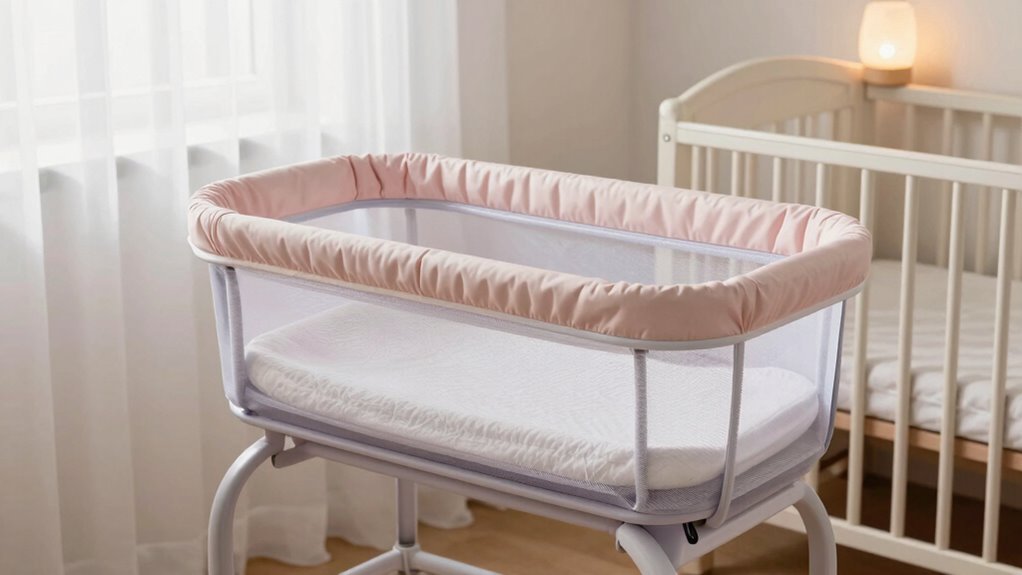

A “bedside” bassinet means it’s placed close to your bed, but it shouldn’t share the same sleep surface. It should be securely attached or positioned to guarantee safe proximity without the risks of bed-sharing or suffocation. Keep it on a flat, stable surface, away from hazards, with breathable sides for airflow. Properly understanding “bedside” helps keep your baby safe, and there’s more to know about setting it up correctly for peace of mind.

Get the little things that make your day delivered free with Prime
- Fast, free delivery on millions of items
- Prime Video, Amazon Music and more included
- Member-only deals all year
Key Takeaways
- “Bedside” means the bassinet is securely attached to the parent’s bed, not shared sleep surface.
- It should be positioned on a flat, stable surface, ensuring no gaps or hazards.
- Proper attachment and design promote airflow and prevent accidental falls or entrapment.
- The bassinet must be kept at a safe distance, allowing easy access without sharing the same sleep space.
- Regular safety checks ensure the bassinet remains securely attached and free from damage.
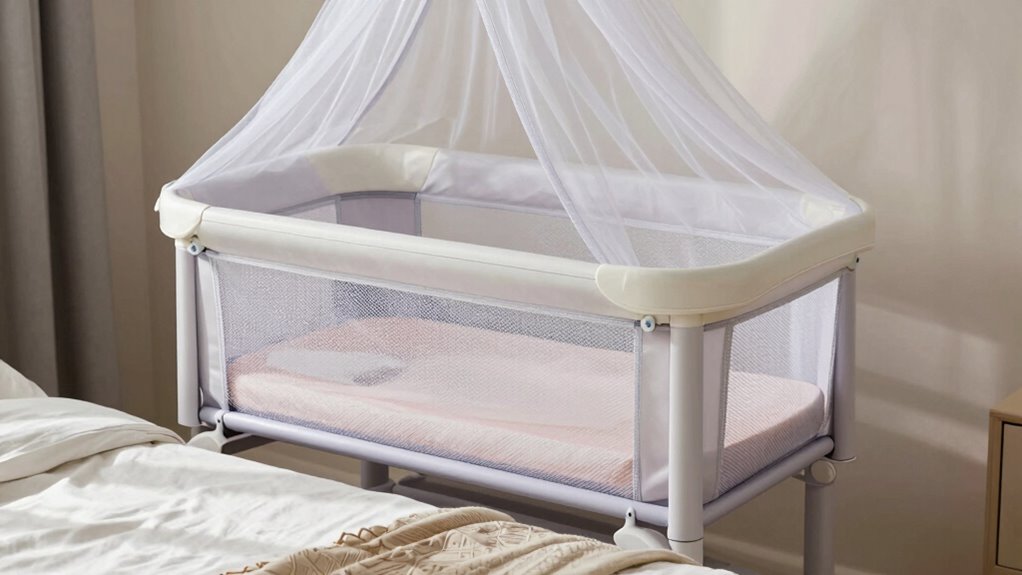
A safe bassinet is vital for your baby’s well-being during those early months. As a parent, you want to create the safest sleep environment possible, especially when considering the idea of co-sleeping or keeping your baby close at night. While bedside bassinets can feel comforting, it’s important to understand what “bedside” should really mean to guarantee your baby’s safety. Co sleeping risks are a real concern; studies show that sharing a sleep surface increases the chances of accidental suffocation or strangulation. Even if your intention is to keep your baby close for convenience or bonding, it’s imperative to maintain a safe sleep environment that minimizes hazards.
A safe bassinet is essential for protecting your baby’s early months and ensuring a secure sleep environment.
When setting up a bassinet beside your bed, make sure it adheres to safety standards. The bassinet should have a firm mattress that fits snugly without any gaps where your baby could get trapped or suffocate. Avoid soft bedding, pillows, or stuffed animals inside the bassinet—these items can pose suffocation risks. The sleep environment safety isn’t just about the bassinet itself but also about how you position it in relation to your bed. It should be stable and placed on a flat surface, with no risk of tipping over or sliding. The bassinet’s sides should be breathable and well-ventilated, reducing any chance of overheating or suffocation. Ensuring that the bedside attachment is secure and designed for safety can help prevent accidents and promote proper airflow. Additionally, choosing a safety-approved bassinet that meets recognized standards can give you peace of mind. Regularly inspecting the bassinet for any wear and tear can further ensure ongoing safety and stability.
Many parents mistakenly believe that keeping their baby close by means sleeping in the same bed, but this can greatly increase co sleeping risks. Instead, a bedside bassinet that attaches securely to your bed can be a safer alternative, allowing you to tend to your baby easily without sharing the same sleep surface. It’s also important to understand that bedside does not mean sharing a sleep surface, but rather positioning the bassinet correctly for safety and accessibility. Remember, the American Academy of Pediatrics recommends placing babies in their own sleep space to reduce sudden infant death syndrome (SIDS). Even if your bassinet is right next to your bed, it should be a separate, sturdy structure that obeys all safety guidelines. Proper sleep environment practices are essential for reducing risks and ensuring your baby’s safety during sleep.
Always keep your baby’s sleep area free of hazards like cords, loose bedding, or gaps that could trap or suffocate your infant. Regularly check that the bassinet remains stable and that no parts are loose or broken. When it’s time to sleep, position your baby on their back—never on their stomach—and ensure the sleep environment is cool, dark, and quiet. Creating a safe, cozy, and hazard-free sleeping space isn’t just about comfort; it’s about protecting your little one during those vital early months. Proper ventilation and avoiding overheating are key components of a safe sleep environment, which can be supported by the right air quality measures in your home.
bedside bassinet with secure attachment
As an affiliate, we earn on qualifying purchases.
As an affiliate, we earn on qualifying purchases.
Frequently Asked Questions
Are There Specific Bassinets Approved for Overnight Sleep?
Yes, there are bassinets approved for overnight sleep, but you should check for safety certifications first. When choosing one, consider nursery decor to match your space, and look closely at bassinet materials—opt for breathable fabrics and sturdy construction. Always follow the manufacturer’s guidelines for safe sleep, and verify the bassinet remains stable and free from hazards. This way, your baby sleeps safely and comfortably overnight.
How Close Should the Bassinet Be to the Parents’ Bed?
You should keep your bassinet within arm’s reach, ideally no more than a few inches away from your bed. This bedside positioning guarantees safe sleep proximity, making nighttime feedings and comforting easier without risking separation. The closer, the better—so you can respond quickly if your baby stirs or needs you. Remember, maintaining this safe distance promotes both your peace of mind and your baby’s safety throughout the night.
What Are the Risks of Using a DIY or Homemade Bassinet?
Using a DIY or homemade bassinet can pose serious safety risks. DIY hazards include unstable structures, sharp edges, or weak materials that could collapse or cause injury. Homemade safety might lack proper ventilation, secure fastenings, or tested stability, increasing the risk of suffocation, falls, or entrapment. Always prioritize safety by choosing a certified bassinet or carefully following safety guidelines when creating a homemade option. Your baby’s safety depends on it.
Can a Bassinet Be Used for Twins or Multiples?
You can use a bassinet for twins or multiples, but safety is key. Studies show that multiple sleeping arrangements increase the risk of Sudden Infant Death Syndrome (SIDS). For twin safety, opt for a spacious, sturdy bassinet designed for multiples, ensuring proper ventilation and firm bedding. Always follow manufacturer guidelines, keep babies separate if needed, and monitor them closely to promote safe sleep for both infants.
How Often Should I Check My Baby During Sleep in the Bassinet?
You should check your baby frequently during sleep in the bassinet, ideally every 2 to 3 hours, to guarantee safe sleep practices are maintained. Regular sleep monitoring helps you spot any signs of distress or potential hazards, ensuring your baby remains safe and comfortable. Trust your instincts and look for any unusual breathing, fussiness, or discomfort, and always follow safe sleep guidelines to reduce risks like SIDS.
Conclusion
Remember, your baby’s safety is paramount. When it comes to bedside bassinets, make sure they’re sturdy, well-designed, and meet all safety standards—no matter if it’s the roaring twenties or today’s modern age. Don’t let the lullabies of the past lull you into complacency; instead, stay vigilant and informed. After all, protecting your little one is the greatest act of love, and with the right precautions, you’ll both sleep peacefully, like a mother humming a gentle lullaby in a cozy nursery.
Columbus Day / Indigenous Peoples' Day Picks
long weekend sales
As an affiliate, we earn on qualifying purchases.