

To navigate food allergies at school and home, you need careful meal planning, diligent label reading, and clear communication with teachers, caregivers, and food providers. Teach children to recognize safe foods and advocate for allergy-friendly policies. Always carry emergency medication and have an action plan in place. Staying vigilant and proactive helps minimize risks while allowing your child to feel confident and supported. Keep exploring ways to create a safe environment for your child’s well-being.
Key Takeaways
- Develop a comprehensive allergy management plan and communicate it with school staff and caregivers.
- Carefully read labels, select, and prepare allergy-safe foods, storing allergen-containing items separately.
- Train children to recognize safe foods, communicate their allergies, and practice safety routines regularly.
- Ensure school staff are trained to handle allergic reactions and keep emergency medications accessible.
- Advocate for allergy-friendly policies, allergen-free zones, and open communication to promote a safe environment.
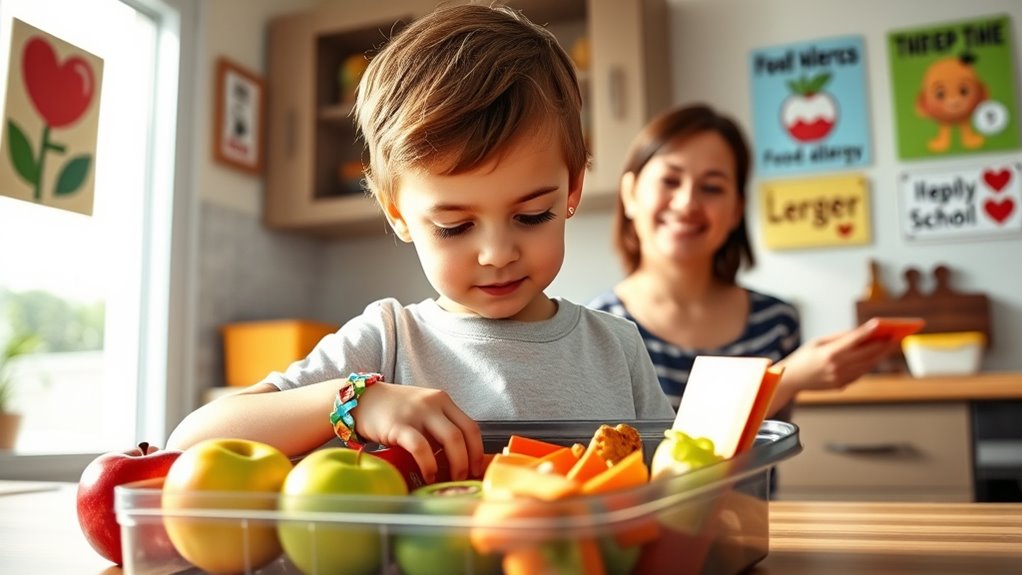
Food allergies can pose serious risks both at school and at home, affecting children’s safety and well-being. If your child has food allergies, you need to be proactive about managing their diet and making certain they’re protected in every setting. Meal planning becomes a essential part of this process. You’ll want to carefully select allergy-safe foods, read labels meticulously, and prepare meals that avoid all trigger ingredients. When packing school lunches or snacks, double-check that all items are free from allergens and are stored separately to prevent cross-contact. Consistency is key—teaching your child to recognize safe foods and encouraging them to communicate about their allergies helps build their confidence and independence. Establishing clear routines around allergy management can also help reinforce safety habits and reduce anxiety.
But meal planning is just one piece of the puzzle. Emergency preparedness is equally important. Despite your best efforts, accidental exposure can happen, so having a clear plan in place is critical. Make sure your child’s school is aware of their allergies and that staff are trained to handle allergic reactions. Keep an emergency action plan visible and up-to-date, and ensure your child knows how to recognize early signs of a reaction. Carrying allergy medication, like antihistamines and an epinephrine auto-injector, at all times is essential. Teach your child how to use these devices and when to seek help. Regularly review and practice emergency procedures with your child and the school staff so everyone knows what to do in a crucial situation.
Communication is a cornerstone of effective allergy management. Build a close relationship with your child’s teachers, school nurses, and cafeteria staff to stay informed about what’s being served and discuss any concerns. Advocate for allergy-friendly policies and request accommodations, such as allergen-free zones or dedicated snack areas. At home, keep all allergen-containing products out of reach and educate your child about the importance of avoiding foods that could cause a reaction. Reinforce the importance of reading labels and asking questions about ingredients when eating outside the home, whether at friends’ houses or restaurants. Developing a comprehensive allergy management plan can also help ensure consistency and safety across all environments.
Ultimately, managing food allergies requires vigilance, planning, and collaboration. When you approach meal planning thoughtfully and prepare for emergencies, you create a safer environment for your child. This proactive approach minimizes risks and helps your child enjoy school and home life with confidence. While it may feel overwhelming at times, your consistent efforts and open communication will go a long way in protecting your child and giving them the support they need to thrive despite their allergies.
Frequently Asked Questions
How Can I Identify Hidden Allergens in Processed Foods?
To identify hidden allergens in processed foods, you should carefully read ingredient labels every time you shop. Look for any unfamiliar ingredients or preservatives that might hide allergens, like soy lecithin or certain colorings. Be vigilant about identifying hidden preservatives, which can sometimes mask allergens. If you’re unsure about an ingredient, contact the manufacturer for clarification. Staying informed helps you avoid accidental exposure and keeps you safe.
What Are the Legal Rights of Students With Food Allergies?
Your legal protections guarantee that students with food allergies have the right to a safe learning environment. You can advocate for your child’s needs through school policies and federal laws like Section 504 and IDEA, which require reasonable accommodations. Rights advocacy helps you secure allergen-free zones, proper emergency plans, and clear communication. You’re entitled to a supportive atmosphere where your child’s health is prioritized without fear of discrimination or neglect.
How Do I Explain Food Allergies to Young Children Effectively?
To explain food allergies to young children effectively, use storytelling techniques that make the concept relatable and engaging. Keep explanations age-appropriate by comparing allergies to something they understand, like a superhero protecting their body from harmful invaders. Use simple language, visuals, or role-playing to help them grasp the importance of avoiding allergenic foods. This approach makes the information memorable and empowers children to understand and respect food allergies.
What Are the Best Emergency Response Steps for Allergic Reactions?
If someone has an allergic reaction, you should immediately activate their emergency action plan. Administer epinephrine promptly using the auto-injector, then call 911 for medical help. Keep the person calm and lying down if they’re feeling dizzy, avoiding food or drinks. Stay with them until emergency responders arrive. Quick epinephrine administration can prevent severe reactions, so act fast and follow the plan carefully.
How Can I Prevent Cross-Contact During Meal Preparation at Home?
An ounce of prevention is worth a pound of cure. To prevent cross-contact during meal prep, you should prioritize kitchen cleanliness by thoroughly washing all surfaces, utensils, and cookware. Use separate cutting boards and utensils for allergenic ingredients, and always source ingredients carefully, checking labels for potential cross-contamination. Keeping your kitchen organized and mindful of allergen sources helps protect your loved ones from accidental exposure, ensuring safe and worry-free meals.
Conclusion
By staying vigilant and working together, you can turn every school and home into a fortress against food allergies. Imagine a world where allergic reactions are so rare, they’re almost impossible—like finding a needle in a haystack the size of a mountain! With your careful planning, awareness, and teamwork, you hold the power to create a safe, allergy-free environment. Together, you can conquer food allergies and make safety your absolute top priority!