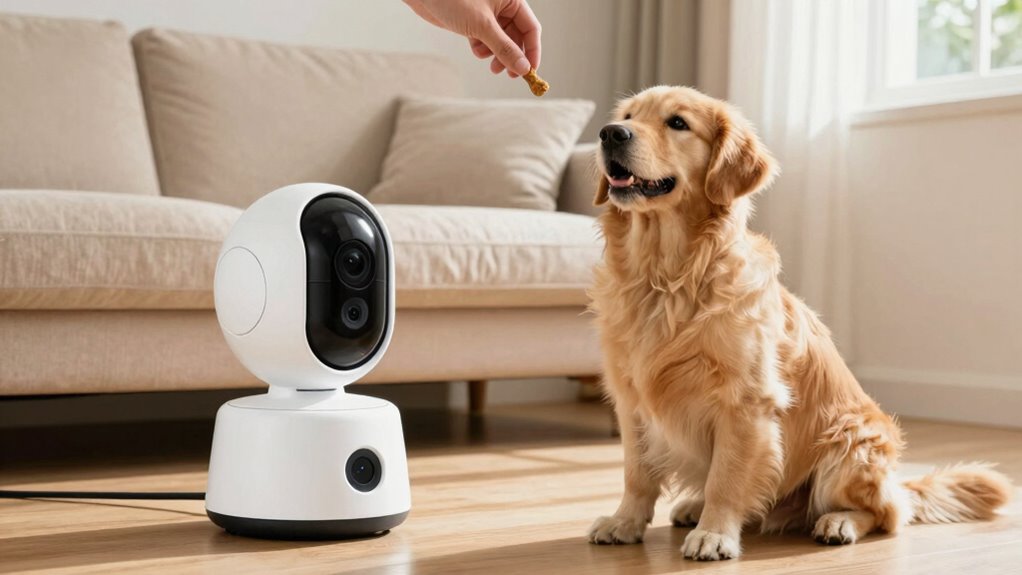

To use treat tossing effectively with your pet camera without creating bad habits, position the camera to get a clear view of your dog’s usual activity areas. Use consistent cues and toss treats immediately after correct responses, avoiding random rewards. Balance treats with verbal praise or petting, and focus on reinforcing desired behaviors without over-relying on treats. Maintaining this method guarantees steady progress—continue exploring these strategies to achieve reliable, happy training results.
Key Takeaways
- Use consistent cues and toss treats immediately after correct responses to reinforce desired behaviors.
- Limit treat tossing to specific behaviors, avoiding random rewards that may encourage bad habits.
- Combine treat rewards with verbal praise or play to diversify reinforcement and prevent dependency on treats.
- Maintain training consistency by using the same cues and timing, gradually reducing treats as behaviors solidify.
- Ensure the camera provides a clear view of activity areas to monitor responses and adjust training techniques effectively.
Using a pet camera can be an effective way to monitor and train your furry friend, but it’s important to start with proper techniques. When it comes to training your dog with a camera setup, understanding dog behavior is key. Dogs respond best to clear, consistent signals, and your camera can be a powerful tool to reinforce good habits or correct unwanted ones. However, if you’re not careful, certain training methods, like treat tossing, can inadvertently lead to bad habits or confusion. To avoid that, you need a strategic approach that encourages positive behavior without creating reliance on random rewards.
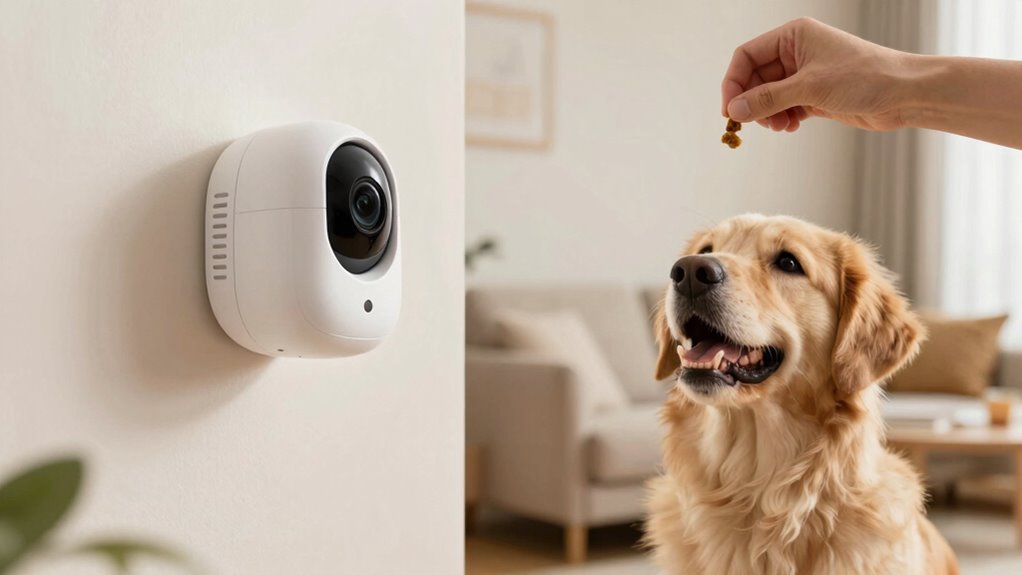
Treat tossing from the camera can be effective for training, but it’s easy to fall into the trap of overusing it or doing it inconsistently. You want your dog to learn that specific cues lead to desirable behavior, not just random treats. When setting up your camera, position it to give you a clear view of your dog’s usual activity areas. This way, you can observe their responses and understand their dog behavior better. A well-thought-out camera setup helps you see exactly when and why your dog might be misbehaving, so you can address issues more effectively.
Position your camera to clearly observe your dog’s usual activity areas for better responses.
When you toss treats through the camera, make sure your commands are precise and consistent. Use a specific cue for each behavior you want to reinforce, like “sit” or “stay.” Once your dog complies on command, toss the treat immediately, so they associate the action with the reward. This quick feedback reinforces the desired dog behavior and helps your pet understand what you expect. Avoid tossing treats randomly or too frequently, as this can create a pattern where your dog only performs when they see a treat coming, which can lead to bad habits like begging or ignoring commands when treats aren’t visible.
Additionally, it’s vital to balance treat tossing with other training techniques. Use verbal praise, petting, or play as alternative rewards, so your dog doesn’t become solely dependent on treats from the camera. Consistency is essential; if your dog learns that treats only come from specific cues, they’ll be more likely to respond reliably, even without treats in hand. Over time, this technique can help shape good dog behavior while preventing the development of bad habits like jumping or excessive barking for treats.
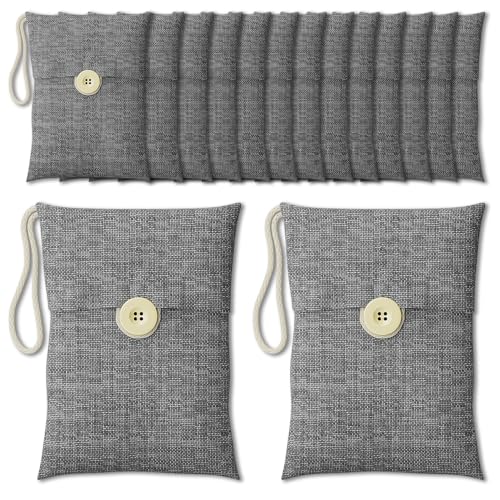
Charcoal bags Odor Absorber Activated Bamboo Charcoal Air Purifying Bag for Home Odor Eliminator Car Air Freshener for Closet Deodorizer Shoe Room Basement Litter Box Pet safe Bag 15Packs×100g
【GREAT VALUE PACK】Charcoal bags value pack provides 1.5kg of Activated charcoal. Each bag provides more absorbency than the...
As an affiliate, we earn on qualifying purchases.
Frequently Asked Questions
How Can I Prevent My Pet From Becoming Food Aggressive During Training?
To prevent your pet from becoming food aggressive during training, keep a calm environment and use consistent cues. Avoid rushing meals or grabbing treats abruptly, which can trigger aggression. Reward calm behavior and teach your pet to associate treats with positive experiences. Gradually introduce treat tossing, ensuring your pet remains relaxed. Over time, this builds trust and reduces food-related anxiety, helping your pet stay calm and well-behaved around food.
What Are the Signs My Pet Is Developing Bad Treat-Tossing Habits?
You’ll notice your pet over relying on treats if they start demanding treats constantly or become impatient during training. Signs of aggressive behavior include growling, snapping, or guarding treats fiercely. To prevent this, avoid giving treats every time and mix in praise or play. Keep treat-tossing balanced, so your pet learns to stay calm without becoming overly dependent on treats for attention.
How Often Should I Practice Treat Tossing Sessions for Effective Training?
Think of your training like planting seeds; consistent care yields growth. You should practice treat tossing 3-4 times a week, keeping sessions around 5-10 minutes to maintain your pet’s engagement. Follow frequency guidelines to avoid overfeeding or boredom, and keep sessions short and fun. Regular, focused practice helps your pet learn quickly without developing bad habits, making each session a step toward better behavior and bonding.
Can Treat Tossing Be Effective for All Types of Pets?
Treat tossing can be effective for many species because of their adaptability, but success depends on your training consistency. Some pets, like dogs and cats, respond well, while others might need different approaches. Pay attention to your pet’s reactions, adjust your methods as needed, and stay consistent. This way, you’ll build a positive association with treat tossing, enhancing your training effectiveness across various species.
What Alternative Rewards Can I Use Besides Treats During Camera Training?
Think of your pet as a young artist, motivated by different colors. Instead of treats, try clicker training and praise reinforcement. When your pet responds well, immediately click or praise; it’s like adding bright strokes to their canvas. This method strengthens your bond without creating bad habits. Many pets respond equally well to verbal praise or a favorite toy, making training more engaging and less reliant on treats.

SMELLS BEGONE 1-Gallon Gel Odor Eliminator – High-Capacity, Long-Lasting Odor Absorber for Large Basements, Garages, Workshops & Commercial Areas – Removes Odors with Essential Oils (Fresh Cotton)
LONG-LASTING ODOR ABSORPTION FOR LARGE SPACES – This high-capacity 1-gallon solid gel continuously absorbs and neutralizes odors for...
As an affiliate, we earn on qualifying purchases.
Conclusion
Think of your pet camera as a gentle lighthouse guiding your furry friend. When you toss treats wisely, you’re illuminating trust and good habits without casting shadows of bad ones. Each successful fetch is a beacon of confidence, showing your pet that you’re there, cheering them on. Keep your signals clear and consistent, and you’ll build a relationship as steady and bright as a lighthouse, guiding your pet safely toward positive behaviors and happy moments together.

12 Pack Bamboo Air Purifying Bag, Activated Charcoal Bags Odor Absorber, Moisture Absorber, Natural Car Air Freshener, Shoe Deodorizer, Odor Eliminators For Home, Pet, Closet (6x50g, 6x150g)
EFFECTIVELY ODOR ABSORBER: Our activated bamboo charcoal carbon adsorption capacity is three times than ordinary carbon, as we...
As an affiliate, we earn on qualifying purchases.

Air Ionizers Plug In Negative Ion Air Purifiers Quiet Air Freshener for Home Bedroom Office Basement - Portable Mini Air Cleaner Odor, Smoke, Dust, Pet Smell (2, Black)
This compact ionizer is incredibly easy to use—just plug it into any standard outlet, and it begins purifying...
As an affiliate, we earn on qualifying purchases.