
To raise kind kids, focus on modeling respectful actions daily. Show patience, listen actively, and speak kindly, demonstrating humility by admitting mistakes. Create an environment where emotions are openly discussed, and acts of kindness are celebrated—like helping neighbors or sharing. Reinforce respectful behavior with praise, and stay consistent to reinforce values. These small habits build lasting character. Keep practicing these daily routines, and you’ll discover how simple actions can shape your child’s kindness over time.
Key Takeaways
- Model respectful behavior consistently through polite language, patience, and humility to set a positive example.
- Engage in routine conversations about feelings and empathy to encourage honest emotional expression.
- Reinforce kindness with specific praise and positive feedback to promote repeated considerate actions.
- Create an environment that values sharing, helping, and understanding to nurture social responsibility.
- Teach broader values like environmental respect and social norms to deepen children’s sense of empathy.
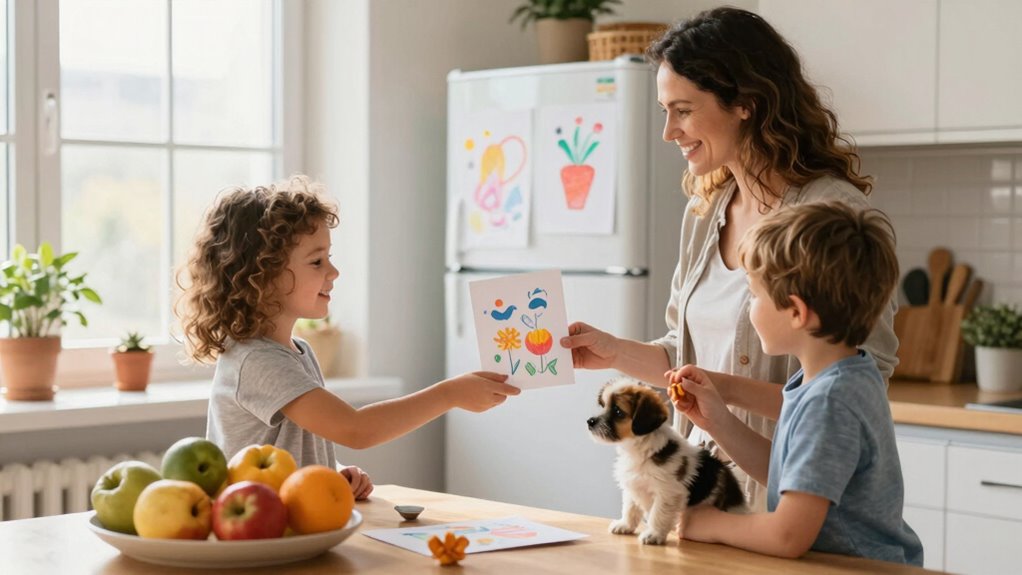
Modeling respect is equally important. Children learn a lot by watching how you treat other people — whether it’s a cashier, a neighbor, or a family member. When you speak politely, show patience, and consider others’ perspectives, your child observes that respect isn’t just a word but a way of living. If you make a mistake or lose your temper, acknowledge it openly. Say something like, “I was wrong to speak that way, and I’ll try to do better,” which teaches humility and accountability. These examples help children understand that respect is a continuous practice, not a one-time lesson.
Creating an environment where sharing empathy and modeling respect are routine makes a big difference. Engage in conversations about feelings and encourage your children to express theirs honestly. When they see you listening intently and validating their emotions, they learn to do the same with others. Incorporate small acts of kindness into your daily routine—like helping a neighbor or donating to charity—and talk about why these actions matter. This reinforces that kindness isn’t just about big gestures but about everyday choices. Developing a strong understanding of biodiversity can also inspire children to appreciate the importance of respecting all living things and their environments. Recognizing social norms helps children navigate interactions more thoughtfully and kindly. Additionally, understanding psychological concepts such as empathy development can deepen their ability to connect with others on a meaningful level. Building awareness of AI safety can also teach children about the importance of responsible decision-making in a digital age.
Additionally, praise your children when they demonstrate empathy or respectful behavior. Recognize their efforts specifically, such as saying, “I noticed how you waited patiently for your turn—that shows respect.” Positive reinforcement encourages them to repeat those behaviors. Remember, kids are always watching and learning from your actions, so consistency is key. The more you practice sharing empathy and modeling respect every day, the more these qualities become natural parts of their character. Ultimately, your consistent example will shape your children into kind, compassionate individuals who understand the true value of caring for others.
children's kindness and empathy books
As an affiliate, we earn on qualifying purchases.
As an affiliate, we earn on qualifying purchases.
Frequently Asked Questions
How Can I Model Kindness Effectively for My Children?
You can model kindness by consistently engaging in acts of service, like helping neighbors or volunteering together. Show gratitude through daily practices, such as thanking others sincerely and discussing what you’re thankful for. When your children see you practicing kindness and gratitude, they learn to imitate these behaviors. Your actions speak louder than words, and demonstrating genuine kindness creates a positive example your kids will want to follow.
What Are Quick Ways to Teach Empathy Daily?
To teach empathy quickly, incorporate simple compassion exercises like asking your kids how they’d feel in others’ situations. Share empathy stories from books or your day to help them understand different perspectives. You can also encourage them to practice active listening and ask questions that show genuine interest. These daily habits make empathy a natural part of their lives, fostering kindness and understanding effortlessly.
How Do I Handle My Child’s Unkind Behavior Kindly?
When your child displays unkind behavior, handle it with calmness and empathy. Address the behavior by explaining why it’s hurtful, emphasizing kindness and bullying prevention. Use kindness challenges to teach alternative, positive actions. Reinforce good behavior with praise and model kindness yourself. By staying patient and consistent, you help your child learn self-control and develop empathy, fostering a kind attitude that can prevent future unkind acts.
What Are Age-Appropriate Kindness Activities for Kids?
Think of your child as a tiny knight in shining armor, learning kindness daily. Age-appropriate activities include sharing volunteer opportunities like planting a garden or donating toys. Encourage gratitude practices by having them say thank you or keep a gratitude journal. For younger kids, simple acts like complimenting a friend or helping with chores work well. These activities nurture empathy and kindness, helping your child grow into a compassionate, caring individual.
How Can Schools Support Kindness Outside the Classroom?
You can support kindness outside the classroom by implementing bullying prevention programs and encouraging peer mentoring. Schools that promote anti-bullying policies create safer environments where students feel valued. Peer mentoring fosters positive relationships, helping students develop empathy and leadership skills. By organizing community service projects or kindness campaigns, you empower students to practice kindness daily, reinforcing a culture of respect and compassion beyond academics.
Conclusion
By practicing these daily habits, you’re shaping your kids into kindness superheroes who can change the world—one small act at a time. Remember, every moment you spend teaching compassion plants a seed that can grow into a towering tree of goodness. Keep showing love, patience, and understanding, because your efforts aren’t just influencing today—they’re creating a future where kindness spreads like wildfire. You’ve got the power to raise the kindest kids the world has ever seen!