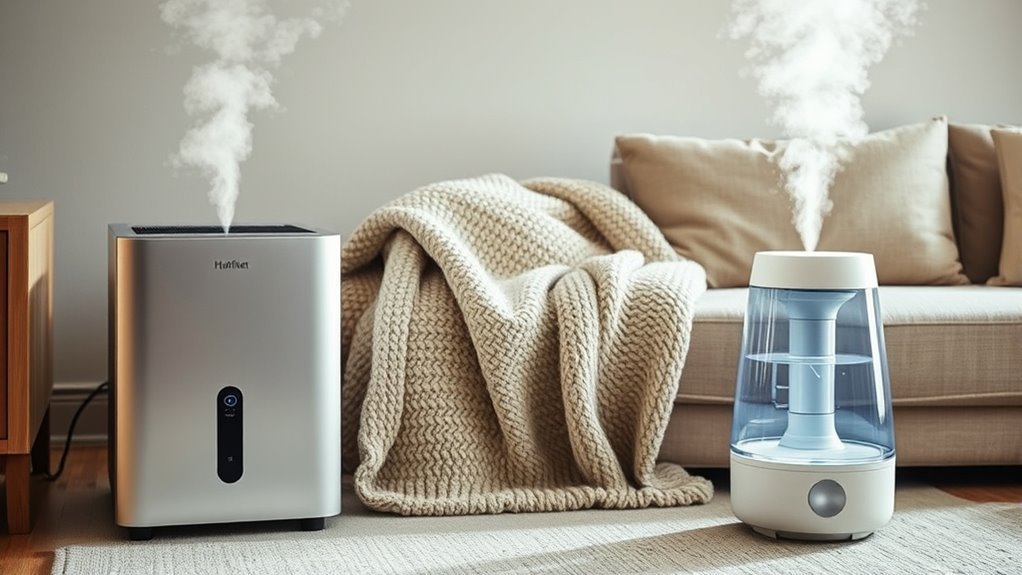

If your indoor space feels damp, moldy, or has excessive condensation, you need a dehumidifier to lower moisture levels and prevent issues like mold growth and dust mites. On the other hand, if you experience dry skin, respiratory irritation, or your indoor air feels uncomfortably dry, a humidifier will add moisture for better comfort and air quality. Choosing the right device depends on your specific environment, and understanding when to use each helps create a healthier home.
Key Takeaways
- Use a dehumidifier in damp, mold-prone areas to reduce moisture and prevent mold growth.
- Use a humidifier in dry environments or during winter to add moisture and relieve dry skin or respiratory issues.
- Choose a dehumidifier when indoor humidity consistently exceeds 60%, indicated by musty smells or condensation.
- Opt for a humidifier if indoor air feels dry, especially in heated spaces or during cold seasons.
- Consider energy consumption: dehumidifiers generally use more power, so select based on room size and humidity levels.
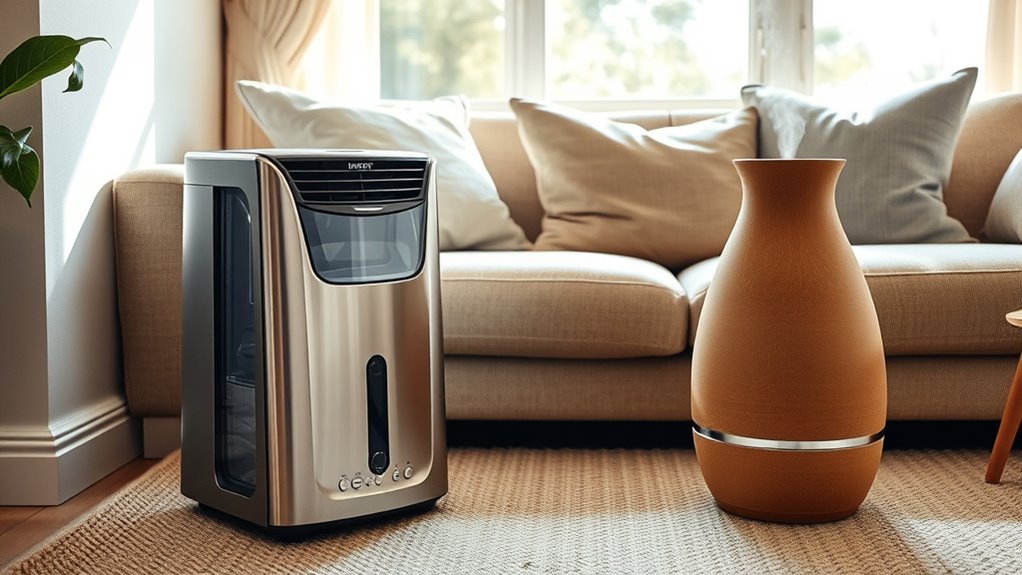
When indoor air feels damp or musty, a dehumidifier can help reduce excess moisture, while a humidifier adds moisture to dry air. Understanding which device to use depends heavily on your air quality needs and energy consumption concerns. If the air in your home is consistently humid, you might notice a musty smell, mold growth, or condensation on windows. In such cases, a dehumidifier is your best choice. It works by pulling excess moisture out of the air, improving overall air quality and creating a more comfortable environment. Reduced humidity levels can also prevent mold and dust mites, which thrive in damp conditions. However, keep in mind that dehumidifiers tend to consume more energy because they run continuously to remove moisture, especially in highly humid spaces. This increased energy use can lead to higher electricity bills, so if energy efficiency is a priority, you’ll want to select a model with a good energy-star rating or consider the size of the unit relative to your space. Additionally, maintaining proper humidity levels can contribute to overall lifestyle comfort and health.
Conversely, if your indoor air is dry, especially during winter or in heated environments, a humidifier can restore ideal moisture levels. Dry air can cause discomfort, skin irritation, respiratory issues, and exacerbate allergies. A humidifier introduces moisture into the air, making it easier to breathe and improving overall air quality. This is particularly beneficial for those with asthma or sinus problems. Since humidifiers generally operate at lower power levels than dehumidifiers, they tend to be more energy-efficient, especially for small to medium-sized rooms. However, if overused, they can lead to excessive humidity, which might promote mold growth and dust mites—ironically worsening air quality. Therefore, monitoring humidity levels with a hygrometer is advisable when using a humidifier.

CLEVAST Small Dehumidifier for Home, Mini Quiet Fast Moisture Removal
- Effective Moisture Removal: Removes up to 10 oz daily in small spaces
- Energy Efficient & Quiet: 0.55 kWh/day; operates at 24 dB
- Compact & Portable Design: Measures 4.48×6.48×9 inches with 30 oz tank
As an affiliate, we earn on qualifying purchases.
As an affiliate, we earn on qualifying purchases.
Frequently Asked Questions
Can Dehumidifiers and Humidifiers Be Used Together Safely?
Yes, you can safely use a dehumidifier and humidifier together if you monitor your indoor air quality closely. Keep both devices well-maintained, cleaning filters regularly to prevent mold or bacteria buildup. Using them in balance helps maintain ideal humidity levels, improving air quality. Always check the humidity levels with a hygrometer to avoid over or under-humidifying, ensuring comfort and respiratory health in your home.
How Do I Know if My Home Needs a Dehumidifier or Humidifier?
You can tell if your home needs a dehumidifier or humidifier by checking your indoor air quality and seasonal effects. If you notice excessive humidity, mold, or musty odors, a dehumidifier helps improve air quality. During dry seasons or if you experience respiratory discomfort, a humidifier adds moisture. Pay attention to how your home feels and any allergy symptoms to choose the right device for a healthier environment.
Are There Health Risks Associated With Improper Use of These Devices?
Improper use of dehumidifiers or humidifiers can pose health risks, like allergy aggravation or mold proliferation. If you run a dehumidifier too long in damp spaces, you might dry out your skin or eyes. Conversely, overusing a humidifier can increase mold growth, worsening allergy symptoms. Always monitor humidity levels and follow manufacturer instructions to prevent these issues, ensuring your devices support your health instead of harming it.
What Are the Energy Consumption Differences Between Them?
You’ll find that dehumidifiers generally consume more power than humidifiers, making them less energy-efficient if used continuously. Dehumidifiers work harder to remove moisture, which increases their power consumption, especially in large spaces. Humidifiers usually use less energy, so they’re more cost-effective for maintaining ideal indoor humidity. To save energy, choose devices suited to your room size and only run them as needed, balancing comfort and efficiency.
How Often Should I Clean or Replace Filters in These Devices?
Think of your device like a trusted sidekick; regular filter maintenance keeps it running smoothly and extends its lifespan. You should clean filters every 1-3 months, depending on usage, and replace them annually or when they show signs of wear. Neglecting this can reduce efficiency and strain the device, much like ignoring a trusty compass. Stay vigilant with filter care to make certain your dehumidifier or humidifier performs at its best.
Conclusion
Choosing between a dehumidifier and a humidifier is like selecting the right brush for your landscape—each shapes your environment differently. If your space feels damp and musty, a dehumidifier clears the air like a gust of fresh air. Conversely, if your skin and throat feel parched, a humidifier adds much-needed moisture like a gentle rain. Knowing when to use each helps create a balanced, comfortable oasis—your home’s perfect weather, in your hands.