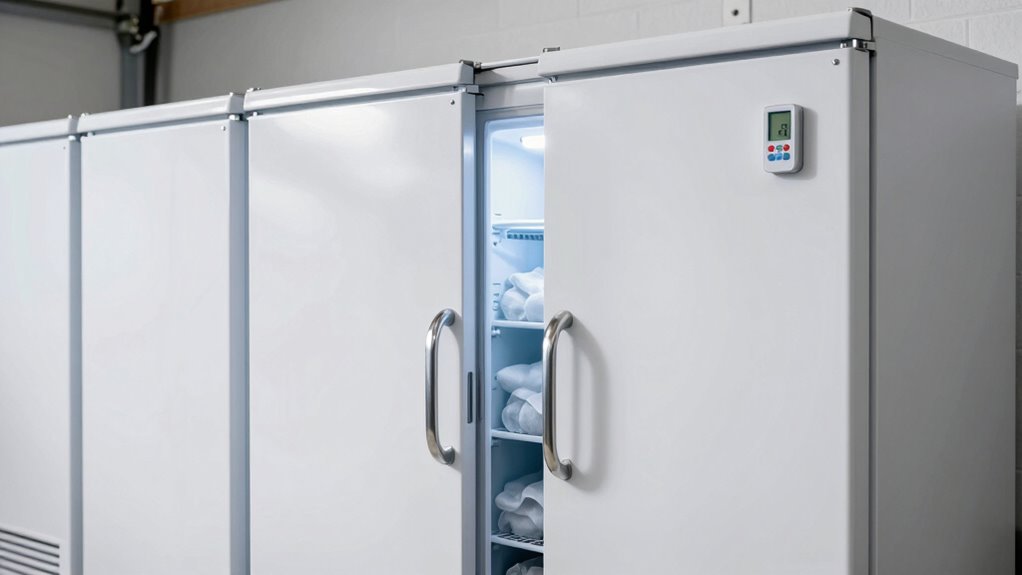

Garage freezers face temperature swings due to outdoor conditions, which can affect food quality and increase energy costs. Fluctuations happen when ambient temperatures rise or fall, causing your freezer to work harder or sometimes get too cold. Insulation, proper placement, and a garage-specific thermostat can help stabilize temperatures. Maintaining good seals and cleaning coils also boost efficiency. Keep these tips in mind, and you’ll discover how to manage temperature swings more effectively.

Get the little things that make your day delivered free with Prime
- Fast, free delivery on millions of items
- Prime Video, Amazon Music and more included
- Member-only deals all year
Key Takeaways
- Outdoor temperature fluctuations cause garage freezers to experience inconsistent internal temperatures.
- Increased compressor cycling due to temperature swings leads to energy inefficiency and potential equipment wear.
- Proper insulation and a garage-specific thermostat help stabilize internal temperatures.
- Temperature fluctuations can result in uneven food freezing and storage challenges.
- Regular maintenance of door seals and coils minimizes cold air leaks and enhances temperature stability.
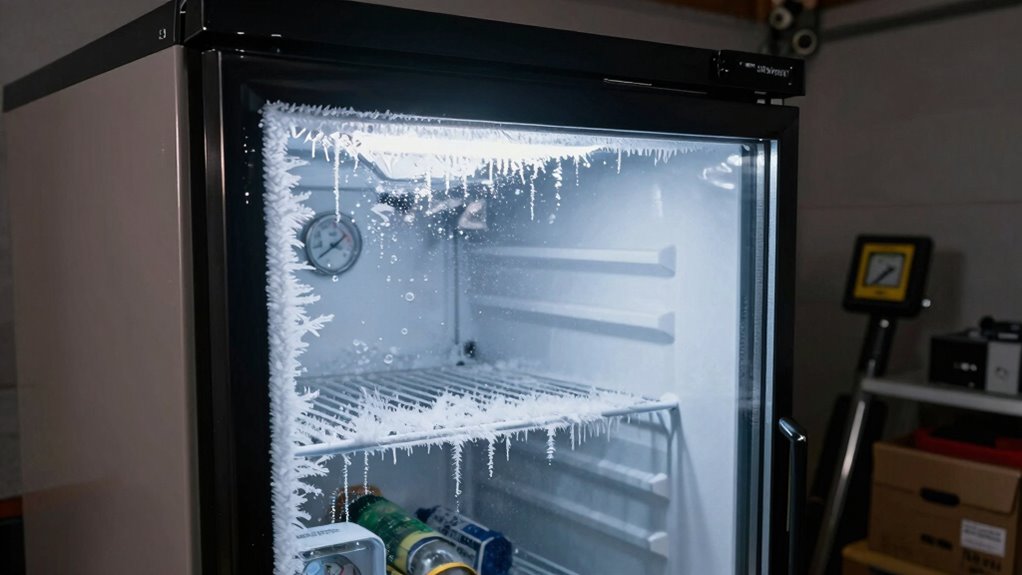
Garage freezers are a practical addition for anyone looking to increase their food storage capacity beyond what a standard kitchen freezer provides. They give you extra space for bulk items, seasonal foods, or homemade preserves, making meal planning more flexible. However, one common challenge with garage freezers is managing temperature swings caused by the outdoor environment. These fluctuations can affect the freezer’s efficiency and, in turn, impact your storage organization and energy consumption.
Temperature swings happen because garage freezers are exposed to the outdoor elements, unlike indoor models that stay in climate-controlled environments. When outdoor temperatures rise, the compressor has to work harder to keep the interior cold, which can lead to increased energy use. Conversely, during cold weather, the freezer might not need to run as often, but if the temperature drops too low, it can cause the freezer to become too cold, risking freezer burn or damaging some food items. These fluctuations can also cause the compressor to cycle on and off more frequently, leading to inconsistent temperatures inside the freezer. This inconsistency can make it tricky to maintain proper storage organization because some items may freeze solid while others remain slightly softer.
Garage freezer temperature fluctuations cause inconsistent storage and increased energy use due to outdoor exposure.
To combat this, you need to think about both energy efficiency and storage organization. Properly insulating your garage can help stabilize the temperature around your freezer, reducing the workload on the compressor. Installing a garage-specific thermostat or temperature control device can also help you maintain a more consistent internal temperature, regardless of outside weather. This not only improves energy efficiency but also guarantees your stored food stays fresh longer. When organizing your storage, keep frequently accessed items at the front for convenience, and place less-used items in the back. Using clear bins and labels helps you see everything at a glance, preventing unnecessary door openings that can worsen temperature swings. Additionally, understanding outdoor temperature effects can help you better manage your garage freezer’s performance. Regular maintenance is key, too. Check the door seals for gaps or tears, and clean the condenser coils to keep the freezer running smoothly. Proper environmental control can significantly reduce the temperature fluctuations and extend the lifespan of your appliance. Being aware of climate considerations can help you make informed adjustments to your setup and optimize your freezer’s performance. Recognizing the importance of insulation can further help you reduce energy costs and temperature instability. Properly managing the environment around your garage freezer through environmental control techniques can make a noticeable difference. By controlling the environment around your garage freezer and organizing your storage efficiently, you reduce the impact of temperature swings. This approach saves energy and keeps your food safer, fresher, and more accessible. Overall, understanding and managing temperature fluctuations is vital for getting the most out of your garage freezer, ensuring it remains a reliable and efficient part of your food storage system.
As an affiliate, we earn on qualifying purchases.
Frequently Asked Questions
How Does Outdoor Temperature Affect Garage Freezer Performance?
Outdoor temperature fluctuations directly impact your garage freezer’s performance. When temperatures rise, insulation effectiveness decreases, causing the freezer to work harder and experience temperature swings. Conversely, colder outdoor conditions help maintain a stable internal temperature, easing the compressor’s workload. You should monitor these fluctuations and guarantee your freezer’s insulation is adequate to minimize temperature swings, keeping your frozen goods safe and the appliance running efficiently.
Are Garage Freezers More Energy-Efficient Than Indoor Models?
Think of your garage freezer as a steadfast guardian battling the wild whims of outdoor temperatures. It’s often more energy-efficient than indoor models because it’s designed to handle temperature swings, reducing energy consumption. Its robust insulation and specialized temperature regulation systems prevent overworking, even when weather shifts. This resilience keeps energy use low, making your garage freezer a smart, reliable choice, saving you money and peace of mind amid fluctuating outdoor conditions.
What Is the Ideal Placement for a Garage Freezer?
You should place your garage freezer in a location with good temperature stability, ideally away from direct sunlight and heat sources. Consider placement considerations like a level, ventilated area with enough space around the unit for airflow. This helps maintain consistent temperature, preventing temperature swings that can compromise food safety. Keep it away from doors or windows that open frequently, ensuring the freezer stays at a steady temperature.
How Often Should I Defrost My Garage Freezer?
Think of your freezer like a winter landscape—frost buildup is nature’s snow, but too much can cause trouble. You should defrost your garage freezer every 6 to 12 months, depending on frost buildup. Regular defrosting maintains the temperature steady and prevents unwanted ice layers. When frost becomes 1/4 inch thick, it’s time to defrost. Keeping this routine guarantees your freezer runs efficiently and your food stays fresh.
Can Garage Freezers Be Used in Unheated Garages?
Yes, you can use garage freezers in unheated garages, but be aware that temperature fluctuation may affect their performance. The insulation effectiveness of the freezer plays a vital role in maintaining a consistent internal temperature despite colder external conditions. If your garage experiences extreme cold, it could cause the freezer to cycle more frequently or struggle to stay cold enough, possibly leading to temperature swings that impact food safety.
Conclusion
So, next time your garage freezer decides to throw a temper tantrum with temperature swings, just remember—it’s not malfunctioning, it’s just showcasing its dramatic flair. Who needs a stable environment when you can have the thrill of unpredictable frosty adventures? Embrace the chaos, because in the wild world of garage freezers, consistency is overrated. After all, what’s life without a little frosty unpredictability? Cheers to your freezer’s spirited personality!
NFL season / tailgating Picks
team gear
As an affiliate, we earn on qualifying purchases.